

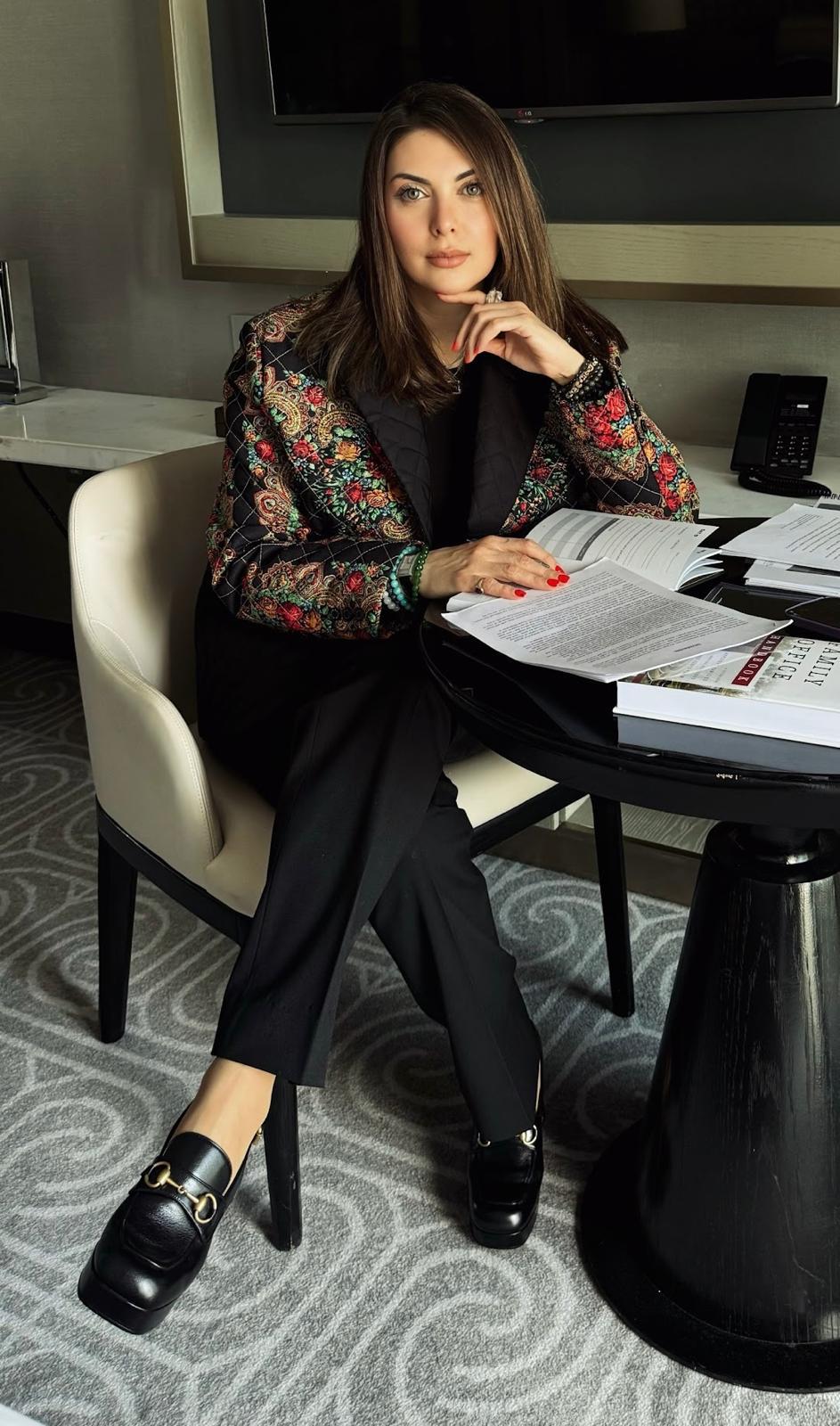

Today we’d like to introduce you to Naila Mehrabova
Hi Naila, can you start by introducing yourself? We’d love to learn more about how you got to where you are today?
I am an Executive Director, Entrepreneur, Solutionist and Executive Board Advisor specialising in corporate growth strategy, transformation and international business development. One of my latest passions is in food security and the use of water regenerative technologies to increase production yields – something I believe to be integral to the future of humankind. Globally, over 70% of available water is used for growing crops, so I’m passionate about how technology can be utilised to optimise water usage. Through refined industrial waters, I hope to find solutions to agricultural instability in the years to come. I am excited to be speaking on the topic of water resilience publicly during the Azersun session at this year’s COP29 conference in Baku, Azerbaijan.
I work across private and public sectors with government ministers, businesses and industry leaders to craft bespoke strategies that facilitate “spins” and increase profit margins. Through seminars, workshops and 1-1 consultations, I am proud to provide unparalleled solutions to those who are on the frontlines of their industries. By giving individuals the tools to feel empowered and inspired, I feel I am granting them access to new dimensions in which they can achieve success – above anything, this is my passion in life.
In addition to teaching leadership skills to individuals, I am deeply fascinated by the patterns of leadership which emerge within nation states and international governmental bodies. I am currently applying for a PhD (to start in 2025) which focuses on these patterns of leadership in foreign policy alliances.
We all face challenges, but looking back would you describe it as a relatively smooth road?
Has it been easy to get to where I am now? Certainly not.
I believe that everyone faces challenges, but it is how we respond to and navigate those challenges that determines who we are as individuals. Looking back, the struggles I’ve faced have made me stronger and more resilient to future bumps in the road as well as future successes.
The first notable struggle I faced was trying to start a career in the oil industry whilst working towards my master’s degree in Oriental Studies. Not only did I have to juggle two full-time roles simultaneously, but this was happening during the time when the Soviet Union collapsed. I have a distinctive memory of studying for my final exams in my coat and by candlelight due to the electricity blackouts. When I achieved my goal and became External Relations Advisor to ConocoPhillips aged 21, I thought the trial was over, but being a woman in a male-dominated industry came with a whole new set of tasks to complete.
After that, I fought hard to become the first woman from the former Soviet Union to get a master’s degree in General Management from Stanford university. Whilst I was there, I was proud to be featured in Professor Pfeffer’s series, Leadership in Focus. And, more recently, I obtained a diploma from Oxford university whilst caring for my two young daughters in London.
But when people ask me how to manage rejection, I advise them to think in non-linear ways. I tell them that they can overcome any refusal in three simple steps:
Step 1: Self-fascination
Establish intimate knowledge of who you are as a person by first imagining your ten-year-old self. What would you find fascinating about that ten-year-old? Which of their core capabilities do you think are admirable? This exercise (originally adapted from Neil Landau) helps actors to feel empathy and connect with a new role, but can be reconfigured as an exercise in encouraging self-respect. We often respect others before ourselves, but by creating this strong emotional bond (a bond that is deeper than words allow), we can find a self-fascination that is both genuine and inspirational.
Step 2: Vision
Your vision can elevate you to a higher plane, one that soars above that of any rejection – this is why many refer to it as your “higher purpose”. Regardless of whether the rejection comes at the beginning or end of your journey, it can always be reframed as a new Point A when connected to a strong vision.
Step 3: Alignment
After establishing a fascination with both yourself and your vision, the final step is to become fascinated by others. The best way to overcome an obstacle is to put great minds together and brainstorm a creative solution. This alignment with colleagues, teammates and those who will benefit from your vision forges an even greater resilience towards trials and tribulations.
So yes, whilst everyone does indeed face challenges, that does not mean we must let them hinder our plans. Rejection may be inevitable, but self-doubt is a choice. These three steps have helped me, and many others, to navigate the challenges that come with pursuing a worthwhile endeavour.
Alright, so let’s switch gears a bit and talk business. What should we know about your work?
In recent years I have evolved from teaching general leadership strategy, to prioritising the education of specific groups and the connection between leadership and authenticity. In 2024, I became an ambassador for the growing International Women’s Alliance (IWA), a startup organisation which seeks to elevate businesswomen by creating invaluable networking opportunities worldwide across different industries. My role as ambassador has helped me to specialise in developing leadership skills within women – I am able to draw upon my own experiences and understanding of theoretical frameworks to deliver bespoke lessons which (I’m thrilled to learn) are now transforming women’s careers.
At the same time, I am delivering leadership workshops to children in a central London school with the aim of shaping the next generation of world leaders. My mission is to help these young people feel empowered and learn how to be a force for good in the world. In our most recent lesson, I taught the children about the net positive principle, the idea that you should give back more than you receive. I first heard this term during my Oxford graduation ceremony, when Paul Polman gave an engaging speech, but I believe it applies to every individual on the planet and is one that should be understood and adopted from a young age. The children were immediately taken with the notion and, even after the lesson was over, remained enraptured with ideas for how they could be net positive leaders in their own lives.
Before any of these recent developments though, my leadership teaching centred around nurturing leadership skills in today’s heirs – those select individuals who are the descendants of the world’s wealthiest 1%. Throughout my career I have become acquainted with heirs and felt heartbroken as they described their unique set of struggles. Having previously been called upon to discuss leadership on prime-time radio and television, I soon began receiving calls to put together a guide which helps heirs reach their full potential. This year, I finished writing ‘The Heir’s Handbook: Standing on the Shoulders of Atlas’ and am in the process of finding allies to support publication.
Over time I have learnt that what differentiates me from others who study and teach leadership is my commitment to authenticity and to finding an aligned vision. I firmly believe that an individual has to understand their authentic selves before they can discover a vision, become an expert and align with other people. I’ve heard leadership taught solely through theoretical frameworks, which are no doubt useful tools, but individuals can only thrive as leaders once they have become authentic.
I am proud to emphasise this (often ignored) facet of leadership, and I am proud in my belief that there no boundaries to achieving your dreams. My passion for helping others to identify and solve problems – from lack of motivation to sustainable food security – also makes me incredibly proud.
Where do you see things going in the next 5-10 years?
I expect resource scarcity (both fresh water and in terms of food security) to become bigger buzzwords across multiple industries, not just farming and renewable technologies. Just like climate change spans all sectors, resource scarcity will be similarly widespread and cause issues for companies and nations in the coming years. In response to this, I will continue to advocate for and invest in sustainable, innovative agricultural technologies that can maintain and increase our quality of life.
In ten years, I imagine that fewer heirs will be in positions of leadership. It is my belief that, without proper instruction and guidance, heirs will not feel inspired to find their visions, success or even true happiness. This is why I plan to continue my efforts to help heirs realise their vision; as the saying goes, ‘to whom much is given, much will be required’.
As improving technologies and travel enables people, businesses and countries to communicate more fluidly than ever before, I want to focus on how patterns of leadership develop on a global stage. How will this scale of leadership affect individual leaders? How will leaders need to adapt in future environments? Will the foundations of leadership remain viable? These are questions I hope to be able to answer with continued dedication and by closely studying the shifting goalposts.
Last, but certainly not least, I would like to continue to empower women to be on the frontlines of whatever they do. I hope to see more legislative advancements in gender equality enforced in the next ten years, but regardless of their efficacy, my focus will always be on how to help individual women achieve their visions.
Contact Info:
- Website: https://nailamehrabova.com/
- Instagram: https://www.instagram.com/nailamehrabova/?hl=en-gb
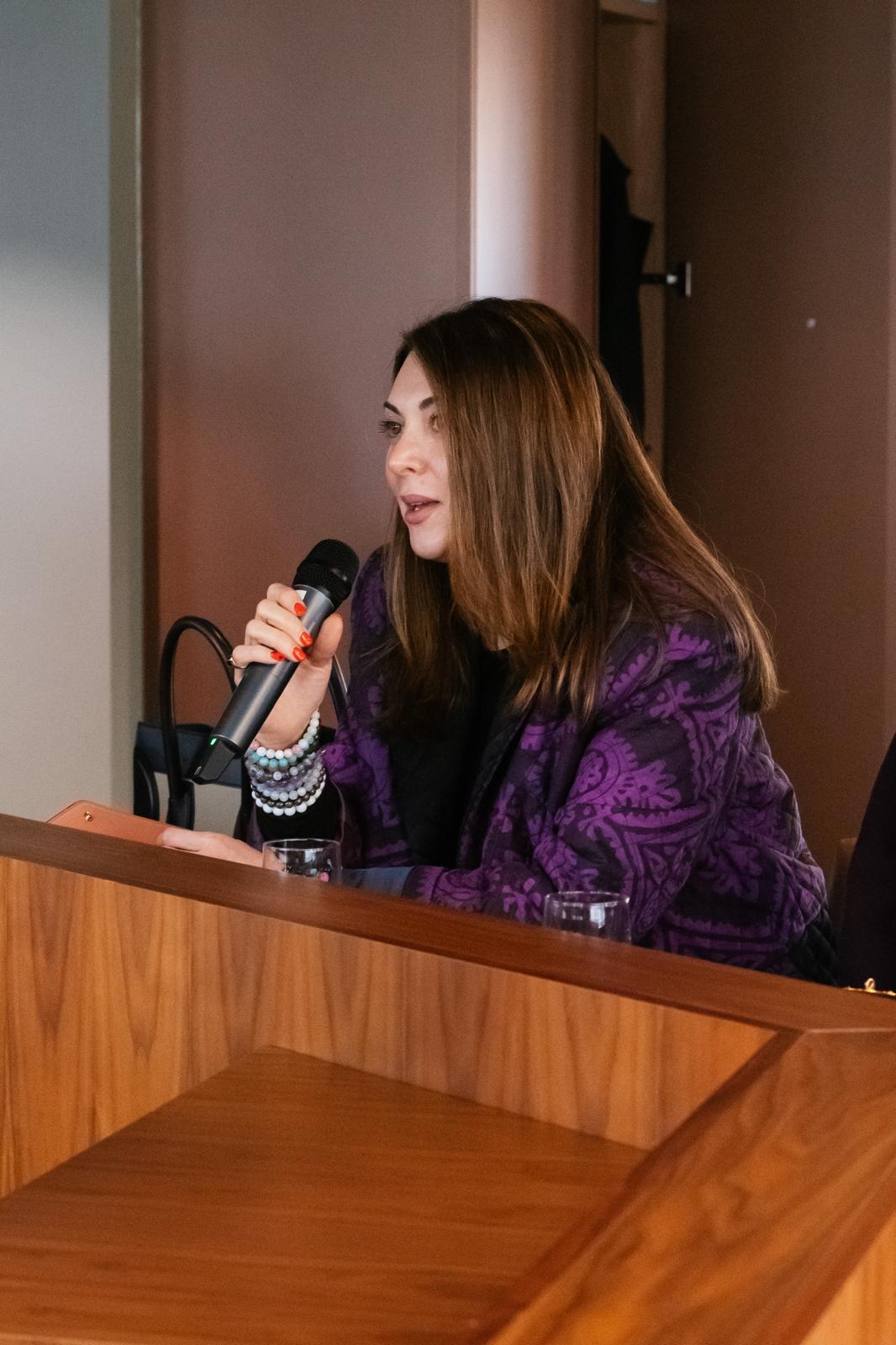

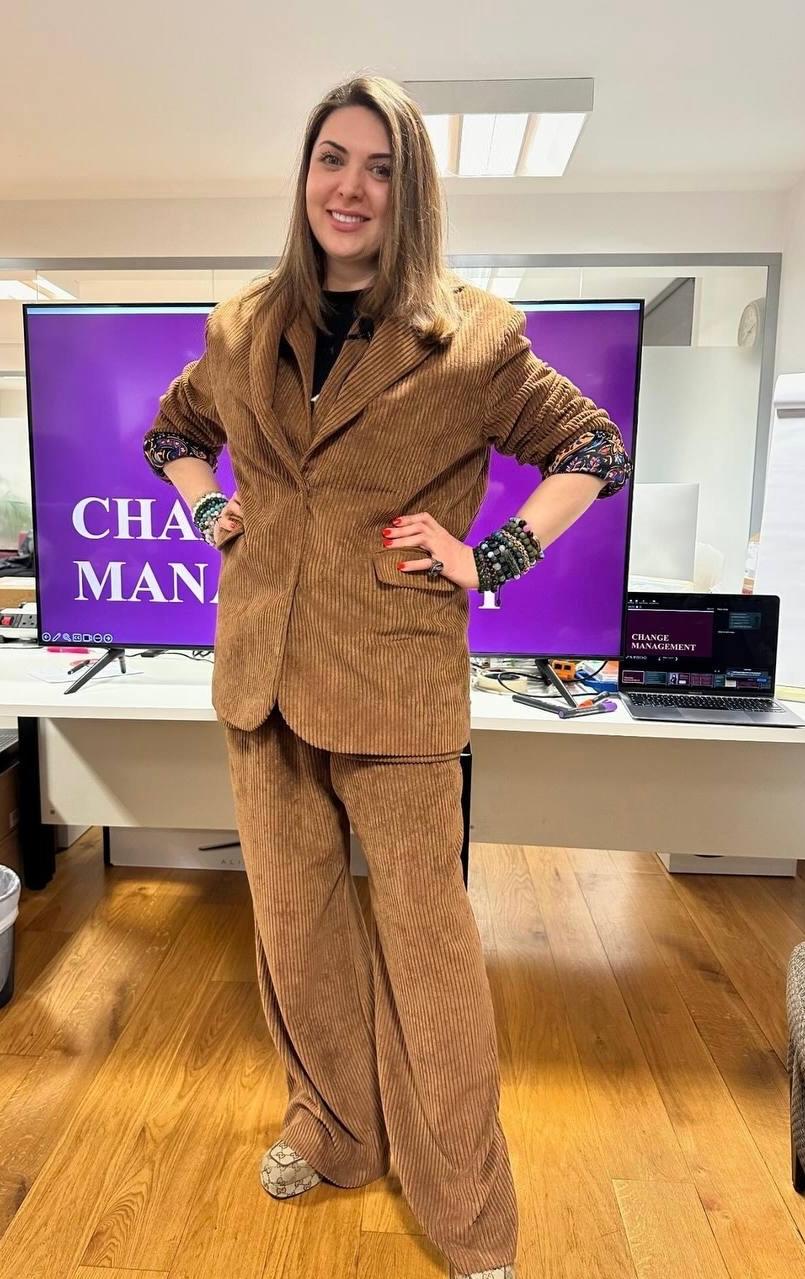
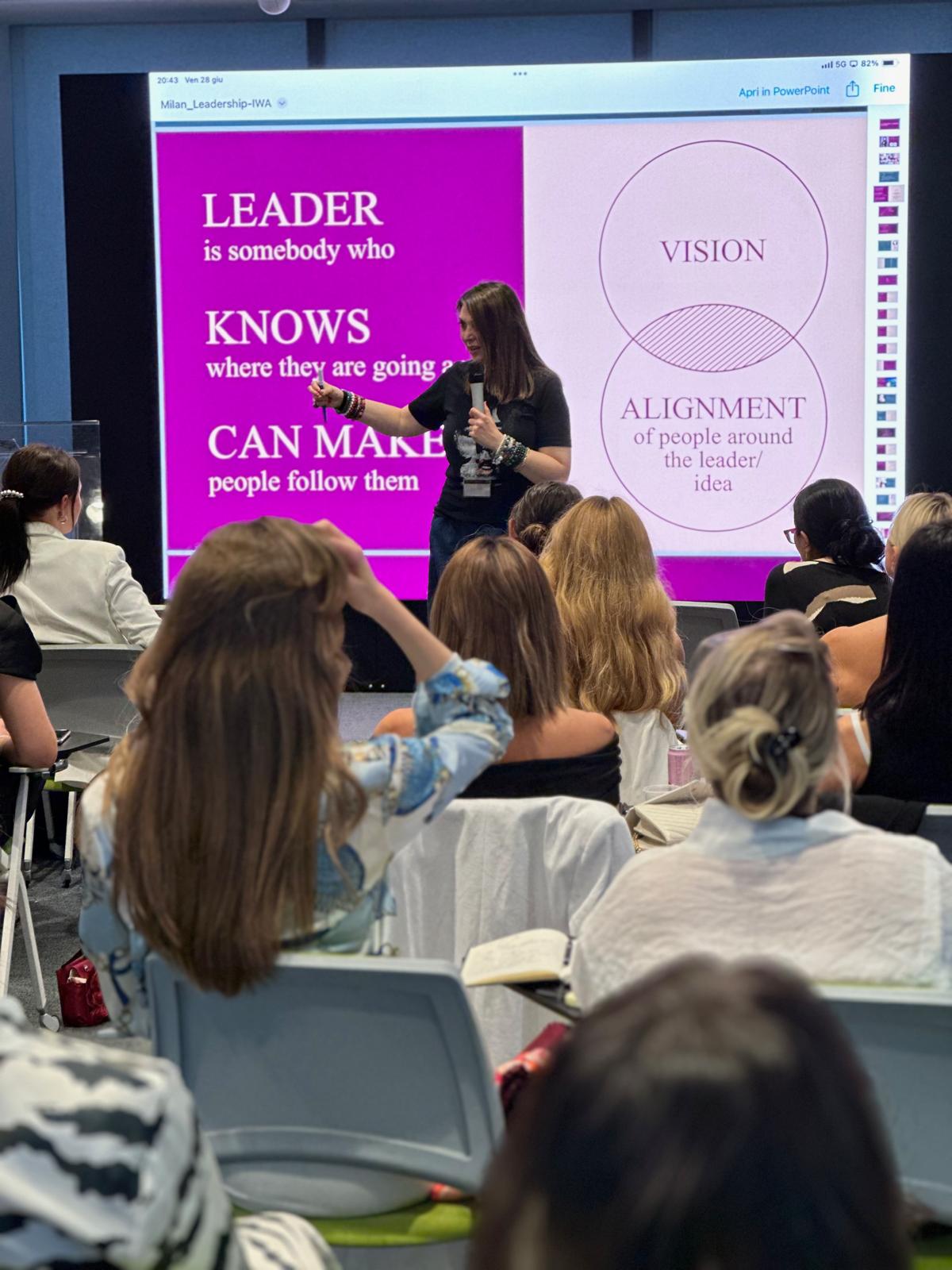
Image Credits
Photo 1: Nataliya Verbitskaya (personal)
Photo 2 & 4: Marina Westley-Richards (additional)