Today we’d like to introduce you to Louis Southard
Alright, so thank you so much for sharing your story and insight with our readers. To kick things off, can you tell us a bit about how you got started?
I must be honest in saying that that’s a bit of a loaded question *haha*. If we’re talking life, the origin point traces back to the sunny vista of where I was born: New Jersey. I grew up there the son of an elderly junkman and a Colombian immigrant housewife, where we lived in the shadow of a scrapyard. We spent our weekends living on a farm in the Pennsylvania country where I, as a child, cut the heads off of chickens and skinned deer with my Uncle Paul. I even gutted a great, big, black bear once when I was only twelve using a blunt, rusty axe. However, my early life was not just centered around garbage and meat. There was so much more.
You see, in my family, there was a lot of drama. Lots of arguments and drugs and affairs and violence and deaths and twists and turns. I knew no one my own age and didn’t have a friend in the world.
I did have my imagination though… and it’s my imagination that’s got me as far as it has. I think a lonely child can only escape to worlds of fantasy when they haven’t anywhere else to go. So, I had my books and my comics and my toys and the stories I dreamt up in my head. My mind could take me to those unlimited and comfortable places that only exist in make believe.
So, as far as getting started, my family’s goals for me could only go as high as the mountain of scrap sitting in the junk pile next door. Unfortunately for them, I had other desires. I wanted to get out of that environment and make something out of life built around my own sense of identity. So, I did well in school and took every opportunity I could. Eventually, my chance to leave everything behind arrived in the form of an acceptance letter to university. A joint campus program between New York University and Sorbonne University. At age eighteen, I had a ticket to Paris, France with my name on it.
Then, after a single month into studying abroad, I unexpectedly dropped out of college. My life’s goal was finally here and I rejected it. I squandered it. For what reason?
Well, the only answer is stupid. It’s dumb. But, it’s real.
I think I had lived most of my young life aspiring towards a goal out of necessity and survival as opposed to passion or desire. Simply put, I think I got so lost in doing what I thought I had to do, that I never stopped to ask myself: what do I want? My answer was to create stories. I already had my imagination. In that moment then, my mind was met with this intense inferno that felt like flames erupting through a cracked glass window that’s been waiting to break my whole life. That was passion. That felt so real. I had everything I’d need to go out on my own and challenge the world to get what I wanted.
Success or failure. Sink or swim. You can’t win if you don’t play. Take the risk. No one will ever notice if you did or not. So, with this newfound fire in my belly and chip on my shoulder, I recollected my tuition money and made a break for the next plane back to the United States. From there, I would begin my journey to write and cry and fail and succeed. In a studio apartment above a drug lab and next door to an at home music teacher. Me and the world. That’s where it started.
It’s been seven years now, and I am a respected figure in the independent comic book scene. I’ve hired hundreds of artists to work with me. Some of my work was being adapted for television. My work is all over the world.
If you were to go back in time and tell that blood soaked boy in the middle of nowhere that any of this has happened, he’d tell you that good things like those wouldn’t happen to him. He already tells me that now in the cold whispers when I’m all alone.
Would you say it’s been a smooth road, and if not what are some of the biggest challenges you’ve faced along the way?
None whatsoever *haha*. I kid. In the early days, it was rough. I had no formal education so a good portion of it was teaching myself how to make comics.
Scriptwriting. Meeting artists. Thinking in terms of the page and form. Securing funds to make the books. Crafting a style. Anything you can think of in terms of creative writing, I had to teach myself. Everything else came from meeting people and experience. I credit the first artist I ever worked with, Ben Matsuya, for intentionally and unintentionally teaching me a great deal when it comes to comics.
Other than that, the early years were plighted by odd jobs and tons of rejection.
The “odd jobs” was me hiring myself as a freelance creative consultant. People would hire me out to meet with them at cafes and the sort to discuss their stories. Through those experiences, I learned my strengths and weaknesses by viewing the work of others. A common practice among many clients was to world-build this epic and sprawling history of their fictional realms. People could go on for hours as to what powers their impossible machines and what the imaginary creatures eat for dinner, but would go silent once you asked them who the main character was.
The rejection came from me thinking it seemed impossible to find a publisher at that point in my life. Keep in mind, I was only nineteen years old with no credits or experience to my name. Anyone I did reach out to, I was met with silence or a rejection letter. But, I never gave up and I’d keep trying. I believed in my work and myself. All it would take was to be at the right place at the right time.
Then, later in that year, I signed my first comic book publishing deal with Action Lab Entertainment. I felt like I could do anything that day. Ironically, working with that now-defunct company is one of my largest professional regrets *haha*. What can you do?
On the more personal side of things, I dealt with a healthy mix of support and concern from my friends and family. Some thought I should follow my heart and do what I thought was right. Others figured I was chasing a dangerous dream with no chance at success. In retrospect, I find that both were necessary to being realistic. Everyone needs to consider a backup plan if we can’t get what we want. There was this pressure though. The fear of letting down the people who believed in me. The anxiety of proving the naysayers right. Those feelings are perfectly normal when one goes out on their own. I can’t even say they go away when you’re more established.
Such is the high cost of going out on your own.
As you know, we’re big fans of you and your work. For our readers who might not be as familiar what can you tell them about what you do?
I am a comic book writer, which means I mostly write scripts for artists to draw series, short stories, or even singular illustrations. However, like many comics professionals, I have picked up other skills involved in the craft such as graphic design, editing, lettering, inking, coloring, and even my most dreadful skill of drawing *haha*.
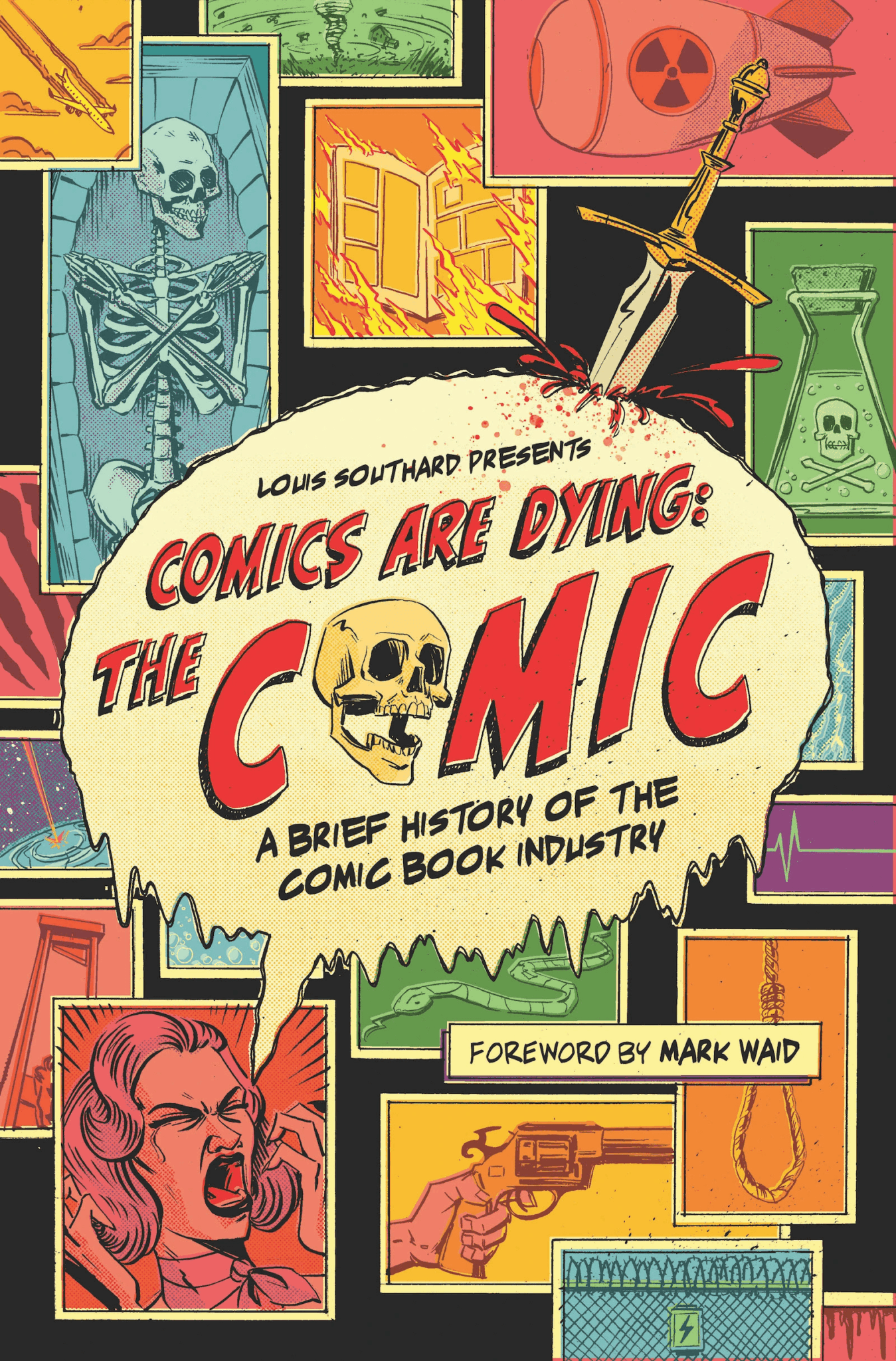
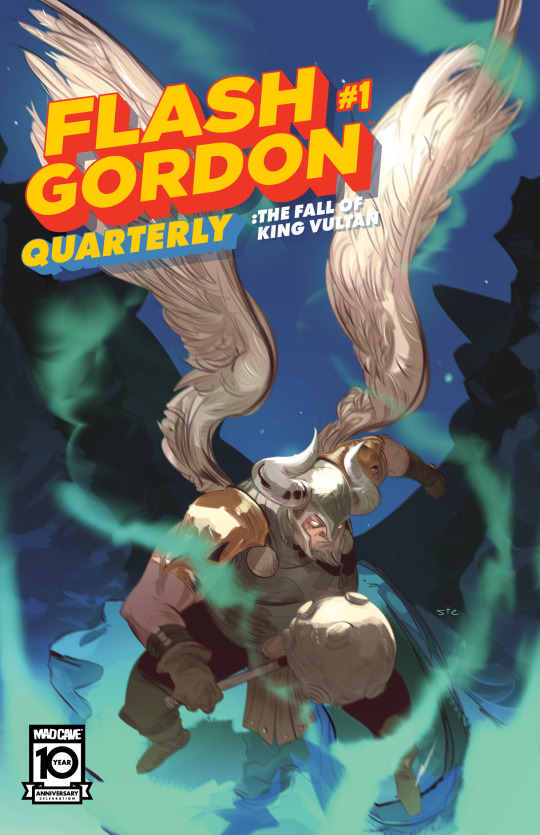
My bibliography thus far includes the science-fantasy FLASH GORDON QUARTERLY (with Mad Cave Studios), the historical satire COMICS ARE DYING: THE COMIC (with Zoop), the noir-comedy THE BLACKOUT BOMBSHELL (with Sumerian Comics / MASSIVE Publishing), and more.
I think, when you’re going into a Southard original story, humor is a staple. I love comedy, uncomfortable situations, and outlandishness, so that’s always going to be in there. I love villains you can’t but help like a little bit. Conversely, I do enjoy writing someone absolutely diabolical. On the more protagonist side of story, a good team of dysfunctional misfits always hits a certain spot for me.
For what I’m most proud of, I have to say it’s the connections and relationships I’ve made with my fellow creators along the way. I’ve always said that comics are a people business, and it’s just really cool to have positive friendships or working partnerships with people who really hit the same creative beat as you. I’d have to cite artists Puré, Frederik Hornung, Alison Sampson, Butch K. Mapa, and Alex Moore as only a few. Other writers include James Patricks, Meghan Fitzmartin, Oscar Osorio, Buddy Beaudoin, and Jared Bird.
What sets me apart from others though? I guess the only thing I can really say is that I’m me and I can do what only I can. Boring answer, I know, but it’s fairly true.
Do you have any advice for those looking to network or find a mentor?
As a youth, I had different mentors for different things.
My Uncle Paul taught me the value of hard work and how you have to get your hands dirty to do the job right. One of the speeches he once gave me was the pathways of the hunter or the quitter. During a blizzard, we were trekking through the wilderness looking for deer to shoot. I was freezing the entire time and he sat me down to give me the ultimatum. He said what we were doing was uncomfortable and tiresome, that much was true. But, he also said that we committed to doing this hunt and it would only do us good to see things out until the end. That way, we can at least say we tried our best, even if we failed. The other option was to quit now and just go home, saying we just couldn’t do it at all. I chose the way of the hunter and we continued forward. In hindsight, I can definitely acknowledge that was a very toxic male ultimatum and lesson, given the circumstances and delivery. However, I still value the sentiments behind it to this day.
Another mentor was a high school English teacher Mister Slotoroff, who decided to personally take me under his wing. He had decided that I was already a good writer, now he wanted to make me a great one. I tremendously value the time spent with him to evaluate what I was good at versus what I absolutely sucked at *haha*. It was also just very kind of him to take the time to do everything he did.
The final mentor was perhaps the most unconventional: Calvin D. West. Calvin was the first African-American councilman of Newark, NJ back in the 60s. He was also an eighty-something year old man by the time I met him. Around that point in my life, I was thinking about getting into politics and he had elected to become my mentor in such a field. One day, we were having lunch and he asked me if my heart was really into the government. When I revealed that I wanted to be a writer, he laughed and said, “I used to be a writer too! What do you want to know?”. The advice he gave me was to give it a shot if that’s what I really wanted. If it didn’t work out, politics would always be there waiting for me.
I think, when it comes to mentors, they usually just showed up and integrated themselves into my life. I think the solution is to put yourself out there, and soon someone will just cling on *haha*.
Contact Info:
- Website: https://www.louissouthard.com
- Instagram: https://www.instagram.com/louissouthard/#
- Twitter: https://x.com/louisjsouthard
- Other: https://leagueofcomicgeeks.com/people/36976/louis-southard