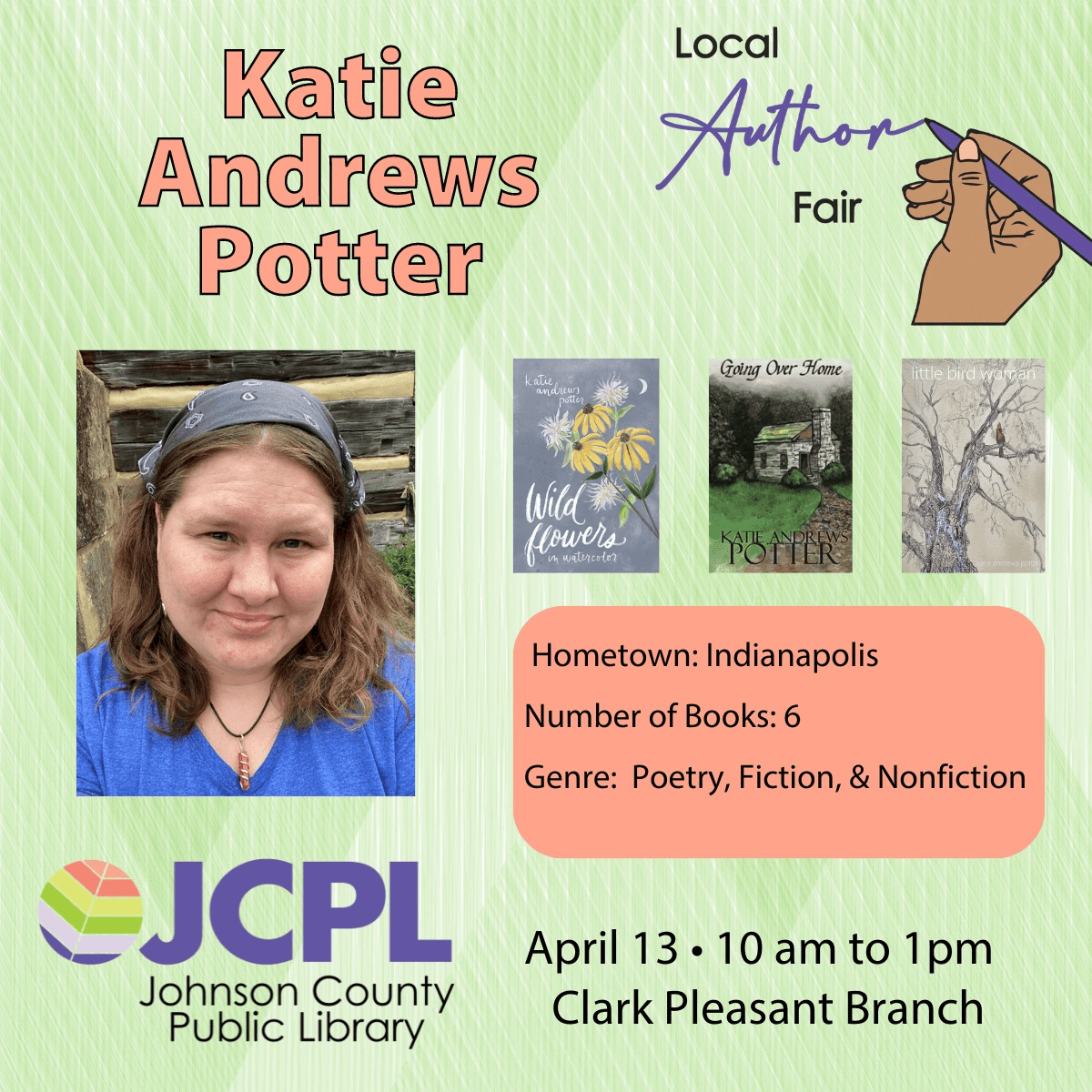
Today we’d like to introduce you to Katie Andrews Potter
Hi Katie, we’d love for you to start by introducing yourself.
As an author, when people ask me how long I have been writing, my answer is usually: since before I can remember! And it’s true! I wrote my first book when I was in Kindergarten, and continued to write and illustrate dozens of stories in spiral-bound notebooks all throughout my childhood and youth. I always wanted “to be an author when I grew up.” When I entered college, I declared History and Writing as my majors, because I wanted to write historical fiction (especially for kids). And yet, I found myself pressured to switch to a more “sensible” career path. I changed my major to Elementary Education, and ended up graduating with that degree. I couldn’t let my writing go, though. All throughout student teaching I was writing my first novel in my “spare time.” That time of my life was incredibly stressful and took its toll on my health, but I think that that story kept me going. I self-published that book in 2012. Over the next few years, I wrote here and there, but often found my creativity blocked. It’s been through a lot of inner work and leaning on my support system that I clawed my way into the creative career I have now. Two years ago I discovered I was autistic and was soon also diagnosed with ADHD. Learning about my neurodivergence has opened so much for me, and allowed me to thrive in ways I never imagined possible. I have independently published several more books in recent years, and have more on the way. And wouldn’t you know it– my books are all historical fiction for young readers!
I’m sure it wasn’t obstacle-free, but would you say the journey has been fairly smooth so far?
Oh, no, it has never been a smooth road. I have struggled with my health for years and was diagnosed with fibromyalgia a few years ago. Also, looking back at my first 30-some years of living life with no idea I was autistic and ADHD, I can see just how much more I struggled than I even realized then. I process things differently than most, and express myself differently, too. I think that’s why I turned to writing so young, because it’s somewhere I could better communciate and connect with others.
A few years ago, I entered an MFA program to try and reclaim my writing after years of neglect. Unfortunately, I soon found myself confused and frustrated by expectations and communications, and too often misunderstood. Even though it was a difficult decision, leaving that program was the best thing I could have done for my writer self. And though I never got the degree, I did learn an awful lot in the program and grew as a writer. I say, that counts for a whole lot. It opened doors for me, and for that I am thankful.
As a longtime hiker, I look at life like a trail. It helps to have that analogy when things get tough, to realize that even then, life is beautiful.
Thanks – so what else should our readers know about your work and what you’re currently focused on?
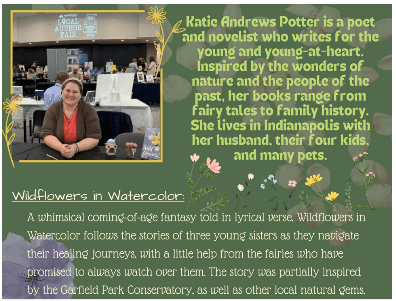
My writing is inspired by the people of the past and the wonders of nature. I’ve written everything from family history to fairy tales. Mainly, my books are historical fiction intended for young readers, but they have been enjoyed by people across many generations. I have always been a student of history, from my own personal research to studying at the graduate level. I absolutely love plucking the stories of real people out of the past and tell them in an original way.
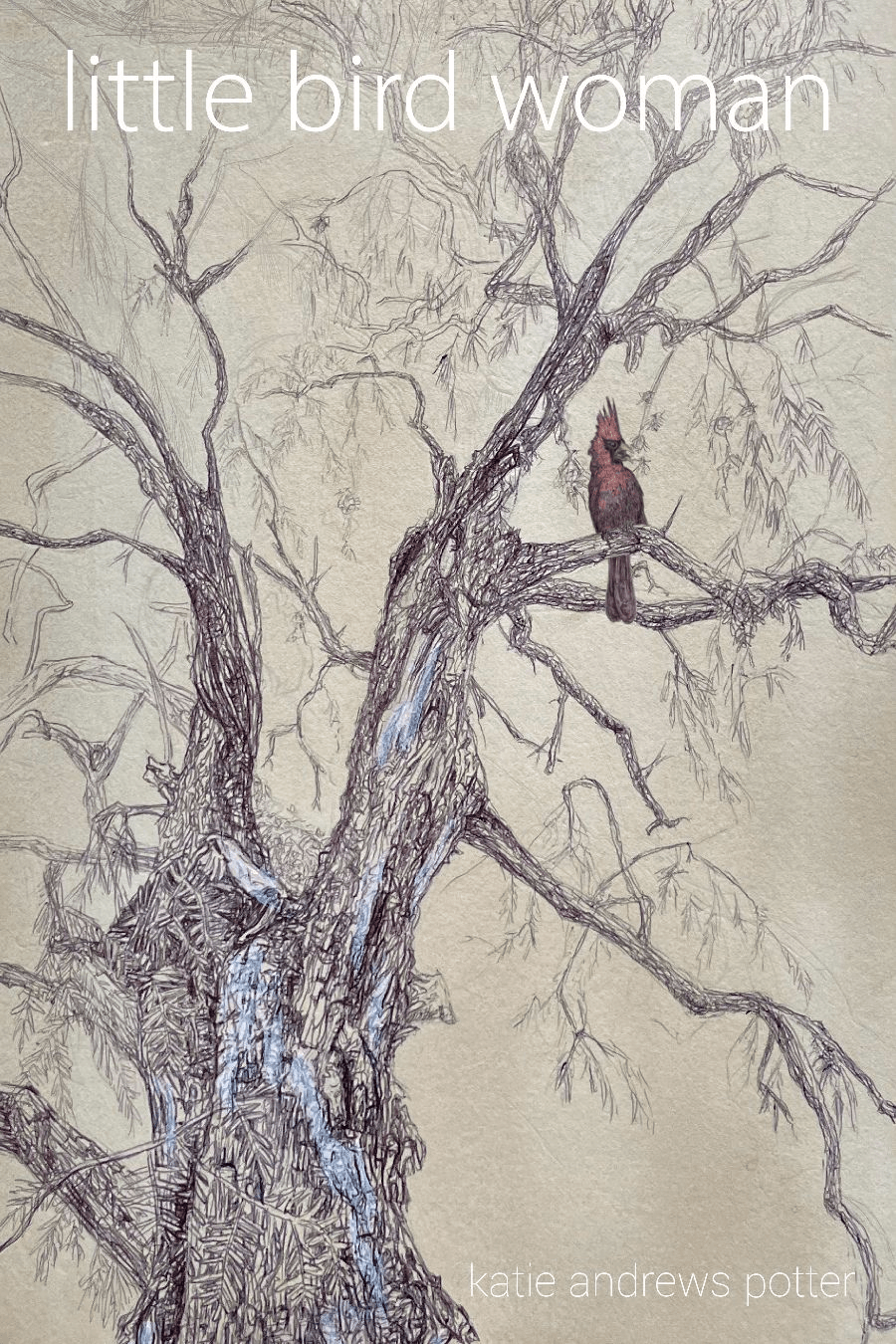
My latest book, Little Bird Woman, is about a childhood experience of Indiana author and naturalist Gene Stratton-Porter. The book I am releasing in the fall is about the true story behind Indiana poet James Whitcomb Riley’s most famous poem, Little Orphant Annie. My newest work-in-progress is loosely drawn on a story of the pirates Anne Bonny and Calico Jack.
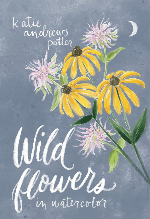
Fun (and maybe) quirks about me? My stories and books have almost always been inspired by a visit to a cemetery. Even the idea for modern-tale fairy tale, Wildflowers in Watercolor, came from hiking by a tiny pioneer cemetery in a local nature preserve. Exploration and interactive research has always been part of my process. My best writing comes from when I let loose– from drawing my characters and scenes to nonlinear, experimental writing.
What has been the most important lesson you’ve learned along your journey?
The most important lesson I have learned, and perhaps still learn every day, is that there is no right way to do something. There are infinite ways to do anything!
From math to creative writing to gardening to driving, even!
For too long I limited myself in my writing and creative caeer because I believed there was only one right and perfect way I “should” be doing something. And for me, I often couldn’t do it well, so I deemed myself a failure. Too many times I wanted to give up.
I finally had to come to terms with the truth that that’s really a big lie. I think that’s something that neurodivergent people can teach the world– we can do things differently! I am now putting this lesson into practice in my daily life. I am tuning into my own inner voice to guide my way, and doing my best to teach my children– and perhaps my young readers– to do similarly. We get to do things differently, and it is still good.
Pricing:
- Storytime Monthly Membership – $10/month
Contact Info:
- Website: https://www.katieandrewspotter.com
- Instagram: https://www.instagram.com/katieandrewspotter
- Facebook: https://www.facebook.com/authorkatieandrewspotter
- Other: https://www.katieandrewspotter.com/storytime-membership-landing-page