


We were lucky to catch up with Randolph Colosky recently and have shared our conversation below.
Alright, Randolph thanks for taking the time to share your stories and insights with us today. Can you open up about a risk you’ve taken – what it was like taking that risk, why you took the risk and how it turned out?
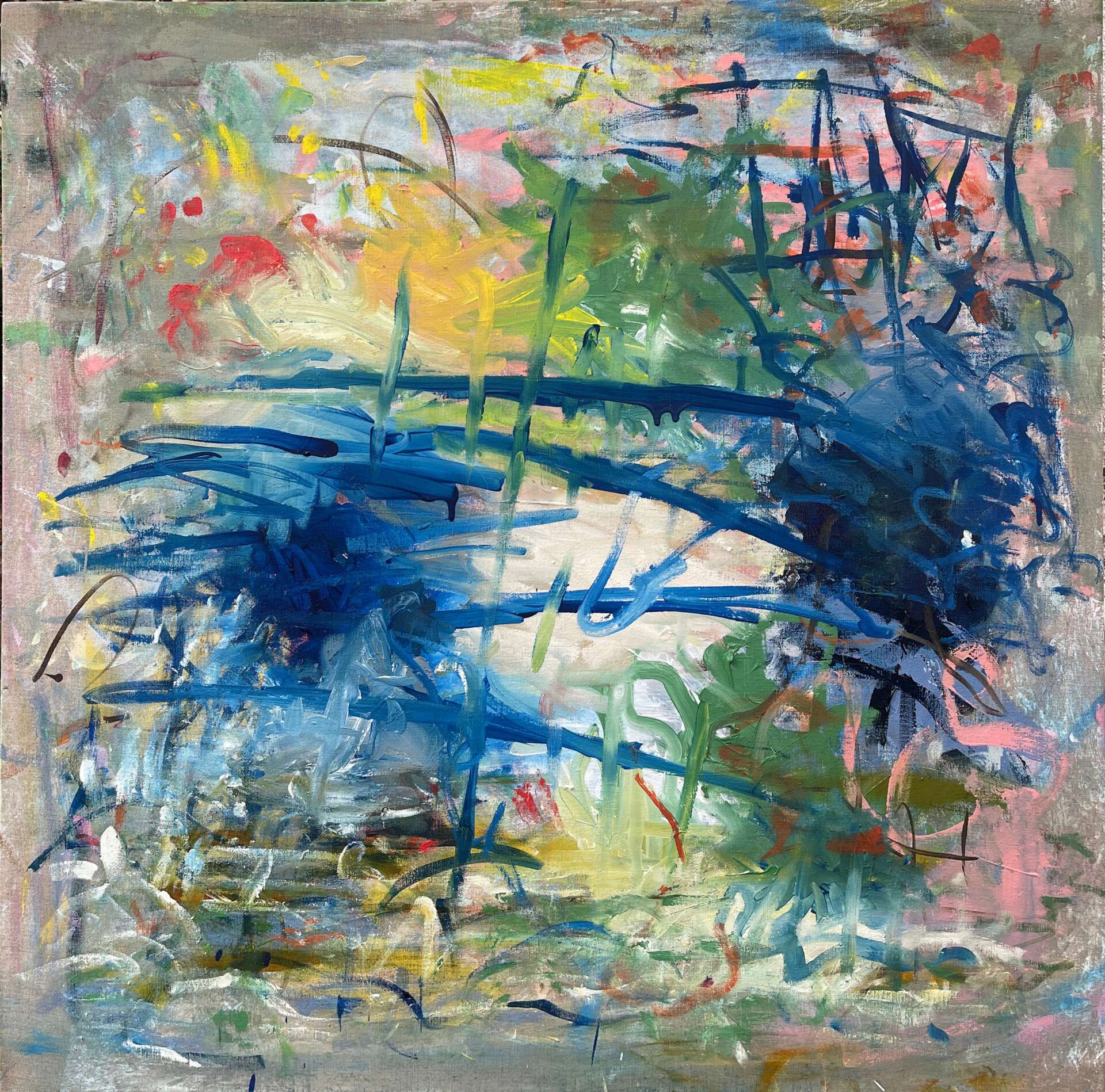
I currently feel like I’m taking one of the biggest risks Ive taken as an artist. After decades of being known as a sculpture and working on public art projects, Ive decided at 58 to pare my practice down to the most conceptual sculpture works I make and take on a new exploration with painting based on improvisation and gesture. I think navigating the pandemic, getting older and doing some work on myself had made me question the trajectory I was on. During the pandemic and the few years before I was having some success in the public art realm as well as fabricating for other artists. I have extensive construction experience and public art was a good avenue for me to utilize these skills to make large scale works. During the pandemic I was actually under contract for several pieces, so I was basically in the studio everyday working and navigating the public art realm.
The pandemic was challenging for all of us on some level for sure, but as we came out of it, I didn’t feel like I was in a good place. I felt like something was not clicking for me, with the people I was working with, and the consuming nature of working on public art was wearing on me. As the pandemic lifted, I had done a show in San Francisco and had to make new work for it. I realized how far I had strayed from the process of exploration and trying new ideas. At that same time, I was asked to do a book that is a survey of 30 years of my art production. As I went through the images to compile for the book, I had this realization that my art practice has been predicated on curiosity and exploration. I was doing far less of that while working on these big projects. I had to strip things down again and get back into a regular groove in the studio. I stopped working on public art and scaled down my studio. I started taking carpentry jobs which have more regular hours and stretched a bunch of canvases. My 2D works have historically had some established geometry to work onto but my sculptural work was more improvisational at least in its initial inception. My new exploration was to take the improvisational qualities of my 3d work and create 2d works that had the same qualities my sculptures had like materiality, process, and gesture. It’s been about a year now and I feel like I finally broke the code with my new paintings and I’m feeling more in myself being in the studio on more of a schedule and having some separation from how I make a living and my art practice. I can also spend more time doing studio visits and outreach with new work that I feel confident about.

.
Randolph, love having you share your insights with us. Before we ask you more questions, maybe you can take a moment to introduce yourself to our readers who might have missed our earlier conversations?
I am severely dyslexic and back when I was a kid there was a little recognition of this in the education system but there wasn’t much, they would do about it. School was stressful, my home life was stressful, and I was looking for something I could do that I might be good at to get everyone off my back about what I wasn’t doing right. When I was maybe 12, I arrived at a new school and the art room had a potter’s wheel. I took to it like a bee to honey. The art teacher let me work on it after school and by 14 I had a kiln and wheel in my house. I was making pottery to sell at craft fairs and trying to meet adult potters in the area to learn more. Remember this is well before the internet. By 15 I was cooking in restaurants on the Jersey shore, making pottery and failing out of high school. I was very fortunate to have an amazing art teacher who helped me graduate and get into college for ceramics. I think at that point I knew I wanted to be a professional artist whatever it took. After college I moved around the country for a few years chasing jobs in the ceramic industry and working in the studio. In 93 I ended up in San Francisco. and put some roots down there. I got into music for a few years but ultimately ended up back in visual art. It took years after that to understand how to get shows and build a portfolio of quality work. In my 40s I started doing solo shows and I’d say at that point I was selling enough work to make a living. In my late 40s I started getting public art commissions and that became my focus. There is a ton of talent out there and people who navigate the art world way better than I do, I think I can honestly say my work carried me because I look back and I made every mistake you can make personally navigating the art world and commerce of art. I think people responded to how I work with materials, the ever-changing nature of what I work on and the sustained energy I put into all my work. Surviving as an artist is challenging and probably not for most people. The ups and downs, the emotional drain, and the failures can test your fortitude as a human, but I just really don’t feel engaged with the world unless I’m making things and stretching my intelligence.


What do you find most rewarding about being a creative?
I think I became an artist to some degree to feel better about myself spend time alone and process mental health issues but now Im actually making art about metal health issues I have felt challenged by. Most of the time Im in the studio making improvisational paintings they look terrible. Im making moves and applying paint more instinctually and I feel from a subconscious place. I used to map out my paintings and utilize geometries like lines and patterns and then execute the works but now its emotional and unhinged. The ideas of risk, restraint, invention and instincts become a sort of vortex of thought. Ive been doing this for 40 years now and I know if I keep going and push through I will find my way to a place where the painting transcend that vortex and gains its own identity. I think its a lot like therapy, you focus on something you cant resolve but then you realize maybe the answer isn’t in the problem. Its rewarding to come to a new understanding about how you might have though or felt about something in you life. I feel mature enough now to talk about it in my work.


We often hear about learning lessons – but just as important is unlearning lessons. Have you ever had to unlearn a lesson?
I think the idea that if you make good work, someone will find you and offer to show or work with you is the biggest obstacle Ive had to unlearn. There is a ton of talent everywhere. Making work is probably the easiest part of the whole journey as a career artist. Ive had to learn to have the humility to go out and engage people, be tenacious, fill out applications and swallow my pride and do whatever opportunity that comes. My career has had arches. There have been times where Im being asked to show regularly and selling and then it drops off. Then you have to have to go out and start all over again. Ive done this many times. It’s ultimately like any business it has to be nurtured and maintained.

Contact Info:
- Website: www.randycolosky.com
- Instagram: Randy_Colosky
- Facebook: Randolph Colosky