

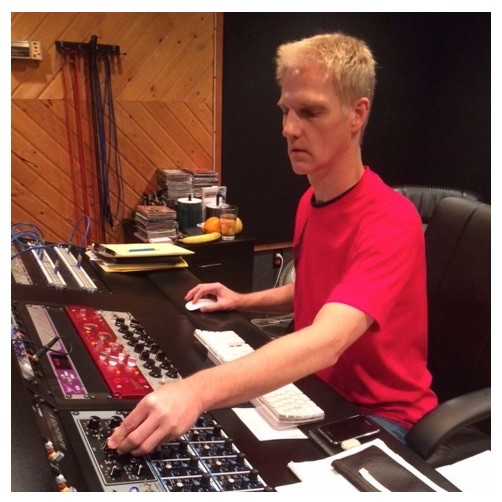

We’re excited to introduce you to the always interesting and insightful Paul Tavenner. We hope you’ll enjoy our conversation with Paul below.
Hi Paul, thanks for joining us today. Can you open up about a risk you’ve taken – what it was like taking that risk, why you took the risk and how it turned out?
Risk is an interesting word. If you think about it, risk and stress are practically synonymous and that’s important to understand. Why is this important? It’s because we humans need some stress in our lives to grow. This is especially true for artists. If we’re not growing, our art becomes stagnant. Therefore, if we’re not taking risks, we’re becoming stagnant.
Here’s a story. One day, I had an extraordinary world-class pianist in my studio. There’s not much he can’t play or do on the piano. One of the composers brought him a piece of music that wasn’t on the agenda that day to see if they might give it a try. He said he could try it, but that it was not in his wheelhouse. He told him he could call 5 other people right then who would just nail it. For him, it would take hours to get right if at all. As I witnessed this interaction, I realized that’s truly when a musician has achieved the highest level. What I mean is that he was completely aware of his limits and, as a professional, advised his employer appropriately. That was not a good time to take a risk at his client’s expense.
This was important to me because I had recently been presented with an opportunity not in my wheelhouse that I was on the fence about. However, in my situation, I had lots of time to prepare. Observing how this world-class pianist approached it made a lightbulb go off in my head. I realized the answer is that taking risks, and handling the associated stress that comes with it, is important, but equally important is knowing WHEN to take those risks.
This is where risk and stress diverge, though. Risk involves the possibility of a loss. Stress involves the toll that it takes on the risk-taker personally. Having a clear understanding of that can help to determine if the opportunity (risk) is worth taking. And it goes both ways. If the risk presents too much stress, then it’s important to listen to that. That’s an indication that more preparation is needed and intermediate steps and risks need to be taken before this one can be taken. On the other hand, it’s not generally possible to prepare for every possible issue that may come up in a risky opportunity. This is where stress management comes in. Stress management is a skill that needs to be honed. The bigger the risk, the more stress management skills are needed. These skills can be learned and mastered…. in time. And that’s the key.
Our growth as musicians and artists requires that we take risks and overcome the stress associated. Learning how much risk and stress to take on is vitally important to our well being as creatives. If we take on too little stress, then over time, every opportunity will seem too stressful. If we take on too much risk/stress, then every opportunity has the potential to break us down and maybe make us quit altogether.

Great, appreciate you sharing that with us. Before we ask you to share more of your insights, can you take a moment to introduce yourself and how you got to where you are today to our readers.
I grew up in a musical family… sort of. My parents were not musicians. My mom regretted it terribly and forced all of us kids to pick and play one instrument for one year. If we hated it, we were done. She got two (out of five) professional musicians out of the deal.
I started out playing piano, but then fell madly in love with the drums. I did my first professional drum gig at age 14. Here’s how that happened: I had performed in a talent show. The leader of the talent show house band called me a week later needing a sub for a gig. I thought a buddy of mine was playing a joke on me, but the gig was real. All I had to do was show up Friday at 7pm with my drums – no rehearsal. I was a little nervous, but they liked me and I became their full-time drummer. I played almost every weekend with them all through high school.
When I went to college, I started playing in several bands, including one with my brother. We became very popular in our region, but I had decided to go to a music college on the east coast, so that ended our career with that group. At school, I learned that my skill level was better than average but that there were drummers that were way ahead of me. I had a lot to learn still. I also learned that I had a strong aptitude for music production. I decided that I needed something to separate me from all the other great drummers out there. Even if I was as good or better than them, the competition was fierce, so I got my degree in Music Production & Engineering at Berklee in Boston. The combination of performance and production abilities really set me apart and opened up doors that wouldn’t have been opened if I had chosen just one or the other career paths. This was in the mid 1980’s. Having a professional recording rig at home was not yet possible, unless you were a millionaire (in 1980 dollars). I was lucky that I made that choice, because today, it is expected for musicians to have at least some knowledge about recording and production. And it’s even better if a musician can record professional sounding tracks at home. This has been a major lift to my career.
When I graduated, I moved to Los Angeles. I looked for opportunities to work in studios as well as perform as a drummer. It was difficult to balance the two. I ended up getting a job at Capitol Records. My job title was “Setup” and my job was set up all the sessions coming AND be a runner, which means to get their food and handle any other errands the artist might need. It wasn’t a glamorous job, but I learned a lot. It wasn’t really possible to also take gigs – the job was too demanding. I left Capitol after a year so because I couldn’t see a clear path anytime soon to becoming a mixing engineer there. An opportunity to work in film/TV at CBS-TV came way. I took it, but now I was working on TV shows, not music. I didn’t know it at the time, but that exposure prepared me for starting my first business: CD mastering. It turns out that video editing and the early days of CD mastering shared the same equipment and editing techniques which I was learning at CBS. I ultimately left a high-paying union job to start my own CD mastering company which I still own today. Speaking of risk, it was a BIG risk, but one that I had to take. The stress of not taking it was equal to the stress of taking it, so the choice was clear.
I’d like to add one other thing about stress: I often recommend that younger folks take on more risk (stress) because there’s less to lose and more time to bounce back. Some people mistakenly think that older people don’t handle stress as well. I don’t think that’s true at all. I think older people have more to lose, so it’s more important to carefully consider risk/stress when there’s more to lose. It’s a math problem.
My life’s conundrum has generally been that it’s hard to choose just one or two things to focus on when I have so many different interests. Mastering something takes a lot of time. Mastering two things takes even more time. However, if you can find the common cord that runs through the different things you’re interested in, you can weave them together to essentially be one thing. That’s been my life’s work so far. On the surface, it would appear that I’m a jack of all trades (drummer, engineer, producer, writer, entrepreneur, etc), but digging deeper reveals that I’m a first and foremost a music producer with a specific palate of skills. In a sense, I can’t have any of my skills without having all of them. They all work together… in harmony. That’s been the key to my personal success.
I’ll add that it takes time to develop several sets of skills, even if they all work together in harmony. There are no shortcuts other than not wasting time and seeking mentors and teachers to help you focus on the most relevant things to develop based on your goals. One mantra I follow: everything I do is either in line with my goals or not. Being intentional about the things I choose to do or not do is ruled by my goals.

We’d love to hear a story of resilience from your journey.
Everybody gets nervous… right? Well, not everybody. And each person feels and responds to nervousness differently. A close friend and colleague of mine who has been a concert pianist for years told me he doesn’t have time for nervousness. When I told him I was quite nervous for a challenging upcoming performance, he told me not to be nervous. I was shocked at his answer. How do you just turn nervousness off? How does he just turn it off?
Sadly, I don’t have an answer to either of those questions. I do, however, offer this slightly light-hearted answer to people who ask me about nervousness: I say, “no musician has ever died or cause a death by making a mistake. However, an airline pilot….” And I leave it there. There is truth to my quip, though. It also illustrates several points.
One point is that it’s important to understand what the worst possible outcome could be with failure. Oftentimes, it’s not such a bad outcome. For example, if we’re talking about a live performance and the concern is making mistakes, I have found that audiences are VERY forgiving of mistakes. More over, they’re rooting for the performer to win out. And if the performer can’t recover, it’s just not the worst thing in the world.
Another point is that every situation is a learning experience. Yes, maybe this time mistakes were made, but next time will be better. And next time may open better doors.
Yet another way to look at it is that failure is an equally important step toward success. Failing at something, even repeatedly, can push us in a new direction to find our creative home. My mom used to tell me that it doesn’t matter where you start. People are watching and some of those people will see something in you that you’re not aware of and offer you and opportunity EVEN IF they’re noticing something about you while you think you’re failing. The point is that every situation is a learning opportunity and a potential path to achieving maximum self-actualization. So, I say embrace these opportunities AND failures.
I’ve had some opportunities that scared the heck out of me. I didn’t take all of these opportunities, but I took most of them. As I have been learning to manage my own fears and stress, my growth as an artist has increased substantially. What helps me the most is realizing that every opportunity is a step toward the next opportunity even if I fail miserably. Thinking like this makes it easier for me to say “yes” to opportunities that in the past I may have turned down.

Can you tell us about a time you’ve had to pivot?
I mentioned earlier that I was given an opportunity to work as a post production engineer at CBS-TV. It was a great opportunity both professionally and financially. However, over time, I realized it wasn’t the right path for me. My dream was, and still is, to make records. Because I was still in my early/mid 20’s, single and with almost zero financial responsibilities, I knew that if I was going to make a major change in my career direction, now would be a good time. This is one of the biggest benefits of being young! You have less to lose, more to gain and lots of time to recover from failures and bad choices, so take advantage of that.
This was a tough choice for me to make because I would be giving up what was essentially a guaranteed long-term well-paying job. Union jobs provide a lot of protection for job stability. But, that’s also the problem. Stability on that scale encourages, in my opinion, getting too comfortable. There’s less stress and less risk which translates (to me) as less growth. Also, because unions generally operate on seniority system, working harder than your colleagues doesn’t get you ahead. That’s good or bad depending on how you look at it. For me, it was bad because I was willing to work harder than most of my colleagues to get ahead sooner. That environment was not going to reward me. For others, especially those starting families, buying homes and taking on other big, long-term financial commitments, that’s the best scenario.
The transition I had to make was to leave the company, drop out of the union and forge a new path as a business owner. It was a tough choice, but in the end, the right choice for me.


Contact Info:
- Website: www.bigcityrecording.com