

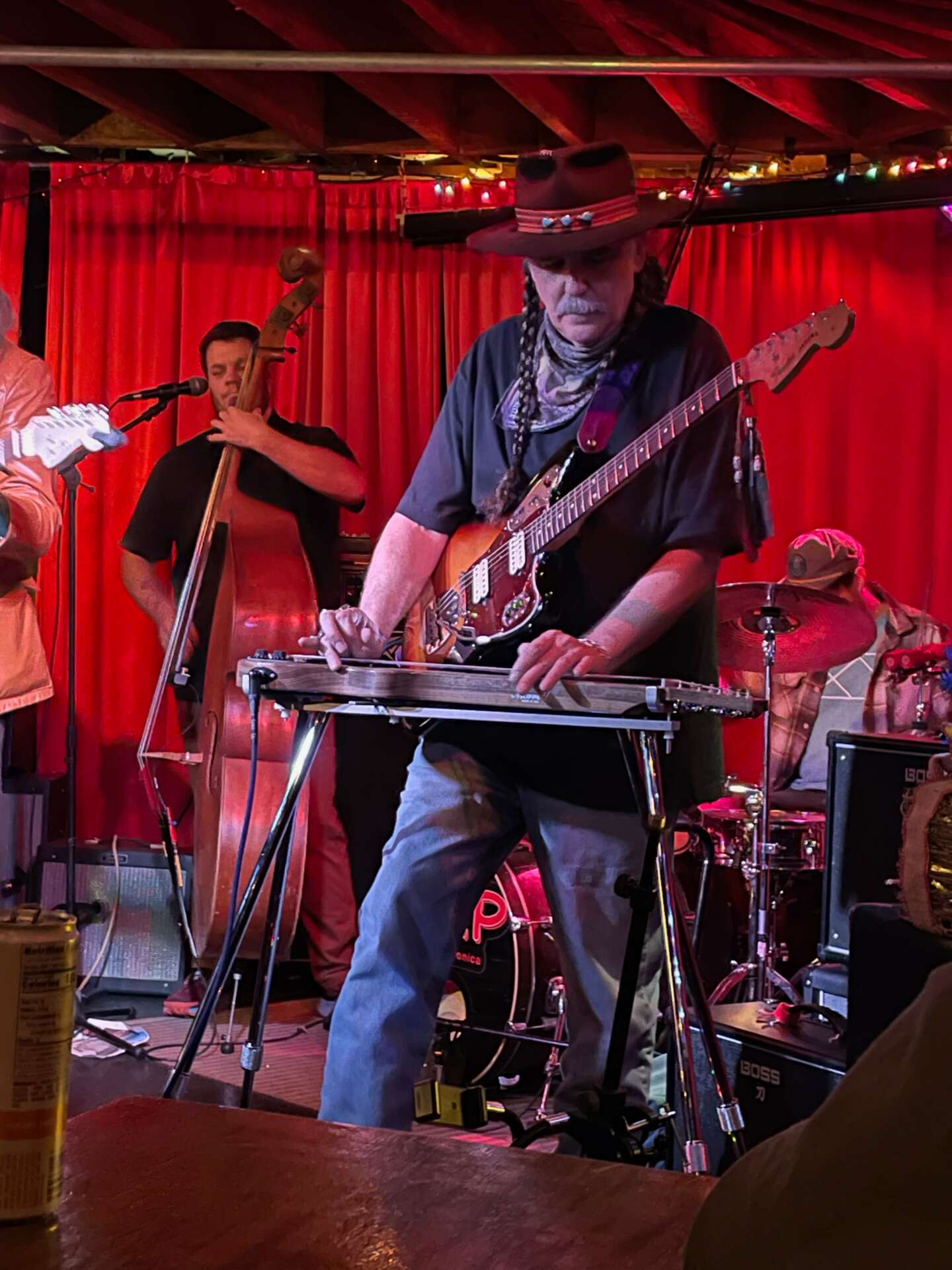

We caught up with the brilliant and insightful Robert Cook a few weeks ago and have shared our conversation below.
Robert, thanks for joining us, excited to have you contributing your stories and insights. What was the most important lesson/experience you had in a job that has helped you in your creative career?
At 63, I hoped to have a litany of bon mots to enlighten up and comers about how the world works. I’ve given up on that. However, I do have a few random thoughts that really don’t add up to anything except I’m old. Regardless—
As a creative, you will constantly be educating your clients/friends/investors/distributors about how your position is more interesting than theirs. You will win some and lose some.
For example, the narrative of my feature, HOLIDAY (2012), is a deconstruction of the abduction thriller. I failed to get the distributor to see that deconstruction reveals cultural structures that give a narrative its power. Which means an abduction thriller audiences will find, well, boring. They released it on Amazon anyway and their audience doesn’t really like it. I lost that one.
Shot with $4,000 and an iPhone4s, one of my objectives for HOLIDAY was create a marker of the moment when the ability to make a product good enough for a distribution deal moved from the few elites with big money, to the masses of people who could afford a phone, a laptop, and some editing software. I won that one.
In all your battles over creative differences, let your ethos set your direction because in the long run any set backs experienced by following that path will fade in importance, while your thoughts about who you were being in that moment will be with you for the rest of your life.


Robert, before we move on to more of these sorts of questions, can you take some time to bring our readers up to speed on you and what you do?
My music interests began by taking piano lessons, which led to garage bands, then later accompanying coffee house singer-songwriters, ultimately working with a project in Los Angeles, Wino-strut & Friends, which led to being signed with a label for the first time at 59. Crazy and funny at the same time.
My photography interests began with a loaner 35mm camera belonging to my girlfriend’s father, which led to a gig with the local newspaper, then advertising and editorial assignments in my twenties. I stopped shooting commercially by my thirties, focusing instead on my own work.
Today I shoot with a Bolex P1 8mm movie camera for both stills and video projects. I also use my iPhone, a Rollei SLX 6×6 and a Leica M3. I love film for the way an imperfect piece of glass blends light and focuses it on an imperfect plane of silver crystals. That random analog process gives me images I simply can’t get with a digital workflow.

We often hear about learning lessons – but just as important is unlearning lessons. Have you ever had to unlearn a lesson?
A bad lesson I had to unlearn: your work sells itself. When I first got started I enjoyed a good amount of success without selling too hard. As time went on, however, I found I needed to spend more and more time marketing. It became so much of the process I dropped out. I thought quitting commercial work would ease that pressure—it got worse. Selling in the art market is survival of the fittest.
A good lesson to learn: There are only two ways to make money in a capitalist economy—make things or sell things. And truthfully, there is only one: sell. This is because you CAN earn a living selling things that don’t exist—Theranos? However, you CAN’T earn a living making things you don’t sell.
Work does not sell itself.

How can we best help foster a strong, supportive environment for artists and creatives?
What artists need for support is an UBI. An universal base income would benefit most of society, but let me offer why making a living as an artist is becoming impossible.
In 1970, 4,000 albums and 5,700 singles were released in the US. In 2023 120,000 tracks are added daily to digital platforms, equalling 43.8 million per year. In the 1970’s DJs controlled who became a star and that had its own abuses, but algorithms control now and they are just as easy to abuse. An example: Dude with a skateboard drinking Cranberry juice posts to social media. The post was boosted by the cranberry company, then the record label of the track used to increase their brand’s presence, which led to further amplification by the algorithm. The dude had nothing to do with any of that, yet ended up with CAA representation.
Then with AI developments, you can now create your very own “Rothko” or “Hockney” painting to match the color scheme of your living room. Suitable for framing. Music enjoyed by the masses as background to their lives can easily be AI generated. AI engineered drama and action plots will move most audiences.
On top of that, I already have thousands of TV and movie possibilities 24/7 and 120,000 new music tracks daily. What this means economically Is a seismic shift in the profitability of the entertainment industry. From the suits to the performers to the roadies and grips, to photographers, painters, poets and novelists, the ability to earn a living dwindles to a smaller and smaller number of people.
The arts are not the only professions that will be impacted in a fairly short period of time. An UBI would benefit any profession impacted by AI and digital systems.

Contact Info:
- Website: http://www.cobaltmedia.us
- Youtube: https://www.youtube.com/channel/UCylkepIX8TakNOlfQ_6Dbqg
Image Credits
photo of me on stage: Lorie Goodman, all other images by me