

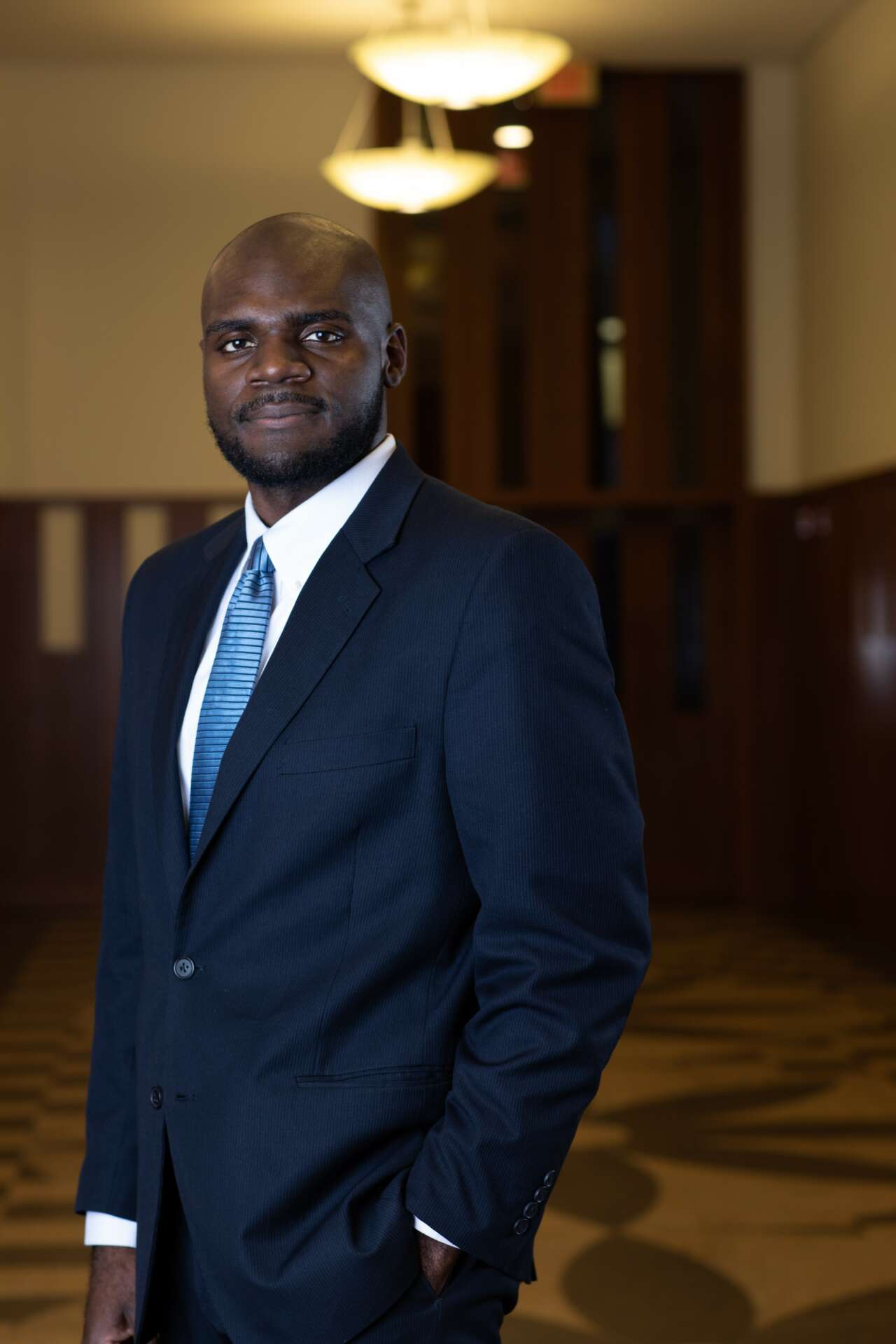

Alright – so today we’ve got the honor of introducing you to Dennis Ojogho. We think you’ll enjoy our conversation, we’ve shared it below.
Dennis, thanks for taking the time to share your stories with us today What’s been the most meaningful project you’ve worked on?
Earlier this year, I completed the most meaningful creative project of my life when I published my debut novel, The Dreams of Our Ancestors. This book is one way that I have sought to honor my amazing mother, Emeka, who immigrated to this country from Nigeria as a young woman. Nigerian culture is steeped in a rich tradition of storytelling. My mother is a natural storyteller and her stories played a central role in raising me. Growing up, she seemingly had a proverb or reflection from her life for every conceivable situation in mine. It was through these stories that my mother taught me about the importance of family, the value of education and hard work, and my duty to be kind.
I like to think of The Dreams of Our Ancestors as both many stories and one larger story wrapped into one. Each chapter is a self-contained short story named after a significant person in my mother’s life while drawing stylistic elements from traditional West African folklore. Through triumph and loss, love and heartbreak, joy and sorrow, the book tells the story of Emeka’s upbringing and her inspiring journey to the United States while exploring themes of kinship, the immigrant experience, gender norms and race relations. This is a story about her great grandfather, who survived a violent attack on his village by a group of European colonizers in the late 19th century to become a respected elder in the village by the time she was born. This is a story about her deep, emotional bond with her father, and her path to healing after he passes away from a sudden illness. This is a story about my grandmother, and the trauma and abuse that she survived both as a child and as an adult. This is a story about the culture shock that Emeka experiences when she comes to the United States with nothing but a small handbag and a dream of a better life.
Ultimately, these stories that form the larger story of Emeka’s life speak to the experiences of a young Black woman who must learn to navigate both Nigerian and American society. While each chapter features a new character, my mother’s voice and perspective is always centered. Therefore, the book in its entirety tells a larger coming-of-age story, allowing the reader to grow up with Emeka Akukwondo, the fictional protagonist inspired by my mother’s life—from her days as a young child in a small village in Nigeria, to her days as a social worker living in South Central Los Angeles.
The book is available on Amazon:
https://www.amazon.com/dp/B0BSLKY6CJ/ref=sr_1_1?keywords=dennis+ojogho&qid=1674475388&sr=8-1
Thank you for your support!

Dennis, love having you share your insights with us. Before we ask you more questions, maybe you can take a moment to introduce yourself to our readers who might have missed our earlier conversations?
I am the son of Nigerian immigrants to Los Angeles, where I was born and raised in the 90’s and 00’s. I grew up in a few neighborhoods, namely South Central, Boyle Heights and Mid-City. I graduated from Harvard College and Harvard Law School. Today, I work as a trial attorney at a law firm.
One doesn’t have to spend too much time in Los Angeles to recognize that vast disparities in wealth and resources exist across our city’s neighborhoods. When I was younger, I could never quite understand why the streets I walked, the public schools I attended or the parks where I played felt more neglected than those same kinds of spaces in more affluent parts of the city. Over time, as my understanding of American history expanded, I began to realize that these disparities were no accident. Where tax dollars were allocated, where freeways were built and where hazardous waste was dumped were man-made decisions. And far too often, the same places where Black and Brown folks tend to live are the places most neglected by those decisionmakers. It was this realization that first inspired me to want to pursue a career dedicated to public service and social justice.
After college, I returned to South Central Los Angeles and worked as a community organizer at Community Coalition for two years. I mentored and helped to cultivate the leadership skills of high school leaders as we fought for equity in education funding and an end to the school-to-prison pipeline.
While being a community organizer was an incredible experience, I have long felt myself called to the practice of law. Charles Hamilton Houston, considered by many to be the architect of the civil rights movement’s legal strategy, once said that, “A lawyer’s either a social engineer, or he’s a parasite on society.” The law shapes virtually every facet of our society. I decided to apply to law school because I wanted to gain tools that would help me be a more effective advocate for the structural changes I hoped to see in LA and beyond.
In law school, I joined the Harvard Legal Aid Bureau where I had the opportunity to defend Black and Brown folks who were being wrongfully evicted. I am particularly proud of one case I worked on that involved a building of entirely Black residents that a developer purchased for the purpose of evicting everyone as quickly as possible so that it could tear it down, convert it into a luxury apartment and flip it for a profit. Unfortunately, this developer violated several housing laws in its attempts to evict these tenants, including neglecting to address issues that made the building unsafe to live in. In what became a four-year struggle, our team, which included student attorneys like myself, clinical professors and community organizers, took the case all the way to a jury, which decided the case in our clients’ favor by allowing them to stay in their homes and mandating that the developer address all of the building’s habitability issues. Shortly afterwards, the Boston Neighborhood Community Land Trust, whose mission is to “combat displacement and racial injustice by creating permanently affordable, community-controlled housing in the Boston area,” purchased the building. Today, this building is now safe to live in and my clients no longer must live in constant fear of being displaced from their homes.
This case taught me firsthand that the law can be a powerful tool for social justice. I am grateful to the Harvard Legal Aid Bureau for this opportunity to serve, and I look forward to continuing to use the law to help more people obtain justice.
Outside of my career as a lawyer, I love to make music and write creatively. As described in more detail above, earlier this year, I published my debut novel, The Dreams of Our Ancestors, which is based on my mom’s inspiring immigrant journey to the United States.
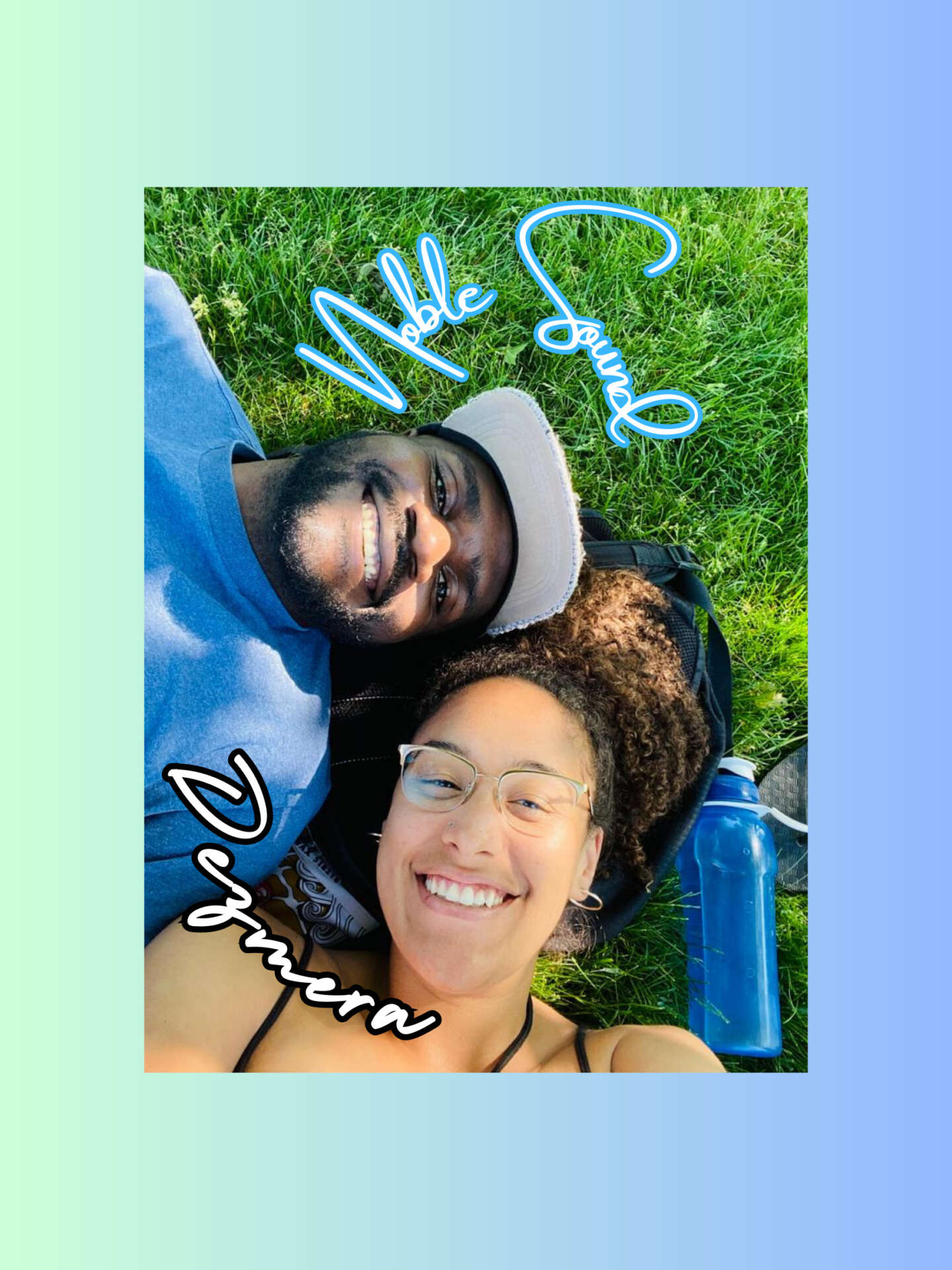
I also love music, particularly the guitar. I believe that music, like all art, has unlimited, transformative power. Jimi Hendrix, my favorite guitarist, once said “’When the power of love overcomes the love of power, the world will know peace.” I believe that part of what makes me a successful attorney is my dedication to something as creative and just plain good for my soul as the guitar. I have been teaching myself how to play guitar for the last six years and I am excited to share that this month, I released my first album, Noble Sound. What makes this album particularly special is that it is a collaborative effort with my girlfriend, Azmera Hammouri-Davis, who is an amazing rapper and singer and who has also been profiled by Canvas Rebel.
I would say the album has a mix of folk, classic rock and indie influences, but it’s certainly not limited to fans of those genres. If you like good vibes, this album is for you! Check it out on Bandcamp below, or stream it wherever you stream music. Thank you for your support!
https://dezmera.bandcamp.com/album/noble-sound


What’s the most rewarding aspect of being a creative in your experience?
When I write creatively, play my guitar or produce a song, I find myself experiencing a sort of freedom that can only be described as being outside of my normal sense of time and space. I am able to forget anything else that might be on my mind at that moment and just get lost in the beauty of bringing to life what once only existed as an idea in my mind or a feeling in my heart. And perhaps best of all, when I create, I have something–a part of me–that I can share with my loved ones and with the world. If I’m lucky, what I create can inspire someone else to feel something new, maybe even gain a new perspective that helps them get through their day with a little more ease. That’s what I ultimately strive for whenever I tap into my creativity.


What’s a lesson you had to unlearn and what’s the backstory?
I had to unlearn the idea that there is something inherently wrong about making money. For a long time, I subscribed to the notion that to be truly committed to social justice and human liberation, I could not pursue opportunities that helped me build wealth and achieve financial freedom. In my mind, making money, in and of itself, was the equivalent of “selling out.”
As I’ve gotten older, and learned a little more about how the world actually works, I no longer think this way. Money is power, and like all power, it can be used for good or bad. It is no secret that civil rights activists were often jailed for engaging in nonviolent direct action against racism. But it is easy to forget that organizers had to fundraise to make sure that these folks could be bailed out of jail. I had no idea until recently that it was A. G. Gaston, a Black millionaire businessman, who bailed Martin Luther King, Jr. out of the Birmingham jail where he wrote his famous letter in 1963.
I am still figuring out what this means for me as I progress in my career, but I am now convinced that financial freedom and a commitment to social justice are not mutually exclusive.


Contact Info:
- Website: dennisojogho.com
- Instagram: https://www.instagram.com/dennisojogho/
- Facebook: https://www.facebook.com/dennisojogho
- Twitter: https://twitter.com/dennisojogho
- Youtube: https://www.youtube.com/@Obioma1
- Other: The Dreams of Our Ancestors Novel: https://www.amazon.com/Dreams-Our-Ancestors-Dennis-Ojogho/dp/B0BSLKY6CJ Noble Sound Album: https://dezmera.bandcamp.com/album/noble-sound