

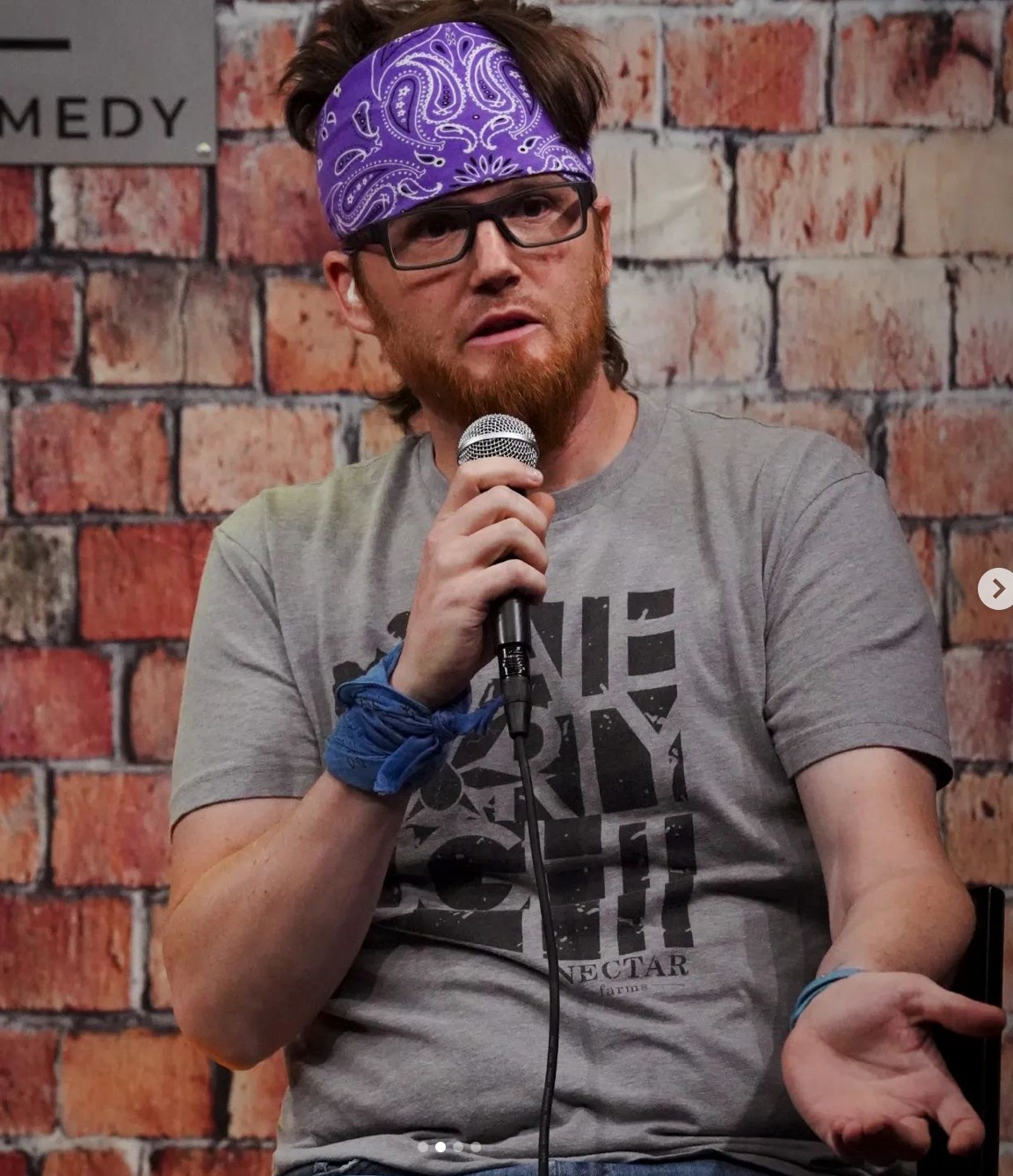

We’re excited to introduce you to the always interesting and insightful Tyler Hurst. We hope you’ll enjoy our conversation with Tyler below.
Tyler, appreciate you joining us today. Was there a moment in your career that meaningfully altered your trajectory? If so, we’d love to hear the backstory.
My first ceremonial psychedelic experience, with ayahuasca in the Tucson desert, was absolutely life-changing. Prior to that, I had been struggling with my mental health after using cannabis to wean myself off of 16 years of pharmaceuticals (17 different medications, the last being Lexapro through June of 2016), and knew that I needed more than weed and yoga to help heal my brain. Everything I thought I knew about the world changed after that experience. I was forced to see the world as it truly was, not as I expected or wanted it to be, and have since that fateful May of 2017 dedicated my life toward using ceremonial psychedelics to improve my own mental health.
As someone with Complex PTSD, this was such a radical shift in how I viewed the world. Slowly, over a period of a few years, I was able to reset so many of the triggers that I had previously thought were just me always needing to poorly react to various stressors.
Now that I am in a fairly advanced stage of my journey, I’m working with a group of more experienced healers to help others do similarly to what I did using a variety of plant medicines that I know can help them, too.
Tyler , before we move on to more of these sorts of questions, can you take some time to bring our readers up to speed on you and what you do?
I use plant medicines in ceremonial settings to help people release stored trauma—whether it’s mental, physical, emotional, or spiritual.
To start, I teach a monthly Microdose Yoga class that’s meant as an intro to plant medicines. We administer microdoses of custom blends synced with various types of yoga poses, allowing newbies the opportunity to experience a little bit of what plant medicine might be able to help them with. As a near-daily yoga practitioner who noticed that certain microdose blends allowed me to work through intrusive thoughts/emotions stirred up while in various yoga poses, my goal is to make it easier for others to follow the kind of path that worked for me.
Next, I am a ceremonial entheogenic facilitator working with a group of mostly indigenous women whose ceremonial plant medicine (mushrooms, ayahuasca, and San Pedro) practices go back many generations. I assist in what we call “ceremonies”, which are nights consisting of pre-planned music playlists, custom plant medicine blends, complementary plant medicines, and individual support for small groups of people looking to improve their mental health. I strive to provide a masculine balance to the feminine-heavy facilitation group.
Following that, we have quarterly ish ayahuasca ceremonies, where attendees are taken even deeper into their healing process. After accomplishing such, we turn to San Pedro to provide a masculine energetic balance.
It’s the most rewarding thing I’ve ever done, quite often we’re helping people get their actual lives back. I want to bring this healing opportunity to everyone who’s willing, as I believe many people are long-suffering from traumas that could be purged with the right kind of support from groups like mine.
Putting training and knowledge aside, what else do you think really matters in terms of succeeding in your field?
True empathy is absolutely essential to be a psychedelic facilitator. It’s really easy to get caught up in the power of being able to lead a group of vulnerable people on higher medicine dosages, but the true healers aren’t there for the recognition or fame, they’re there because they’ve been done in the same holes and can help show others out—holding space for others without inserting yourself into their narrative is essential.
There’s certainly a place for the people who love working crowds, but in my particular field, I much prefer working with people who are able to feel my pain without taking it on while providing the support I need—not just the support they want to give.
What’s a lesson you had to unlearn and what’s the backstory?
Oh man…the biggest thing that I had to unlearn was what worked for me has almost absolutely no bearing on what might work for someone else. When I first started facilitating, far too early in my own journey, I made the mistake of treating people how I wish I would be treated. While I was careful not to be harmful, I’ve found that each person’s healing journey is absolutely unique, even if we’re all in the same space at the same time using the same substances.
Some people might need attention, others to be left alone. Some might need touch, others not. Some might need guidance, others need to figure it out for themselves.
This lesson required that I put my intellectual “what has worked before could work again” side away and rely on my emotional side to guide each and every interaction. It’s been quite rewarding to accept and practice this, even if it means every ceremony will always be different.
And that’s okay!
Contact Info:
- Website: http://tdhurst.com
- Instagram: http://instagram.com/tdhurst/
- Facebook: https://www.facebook.com/tdhurst
- Linkedin: https://www.linkedin.com/in/tdhurst/
- Other: http://aztripsitter.com http://PersonalPlantConnection.com
Image Credits
https://www.instagram.com/bridgeimprovtheater/