

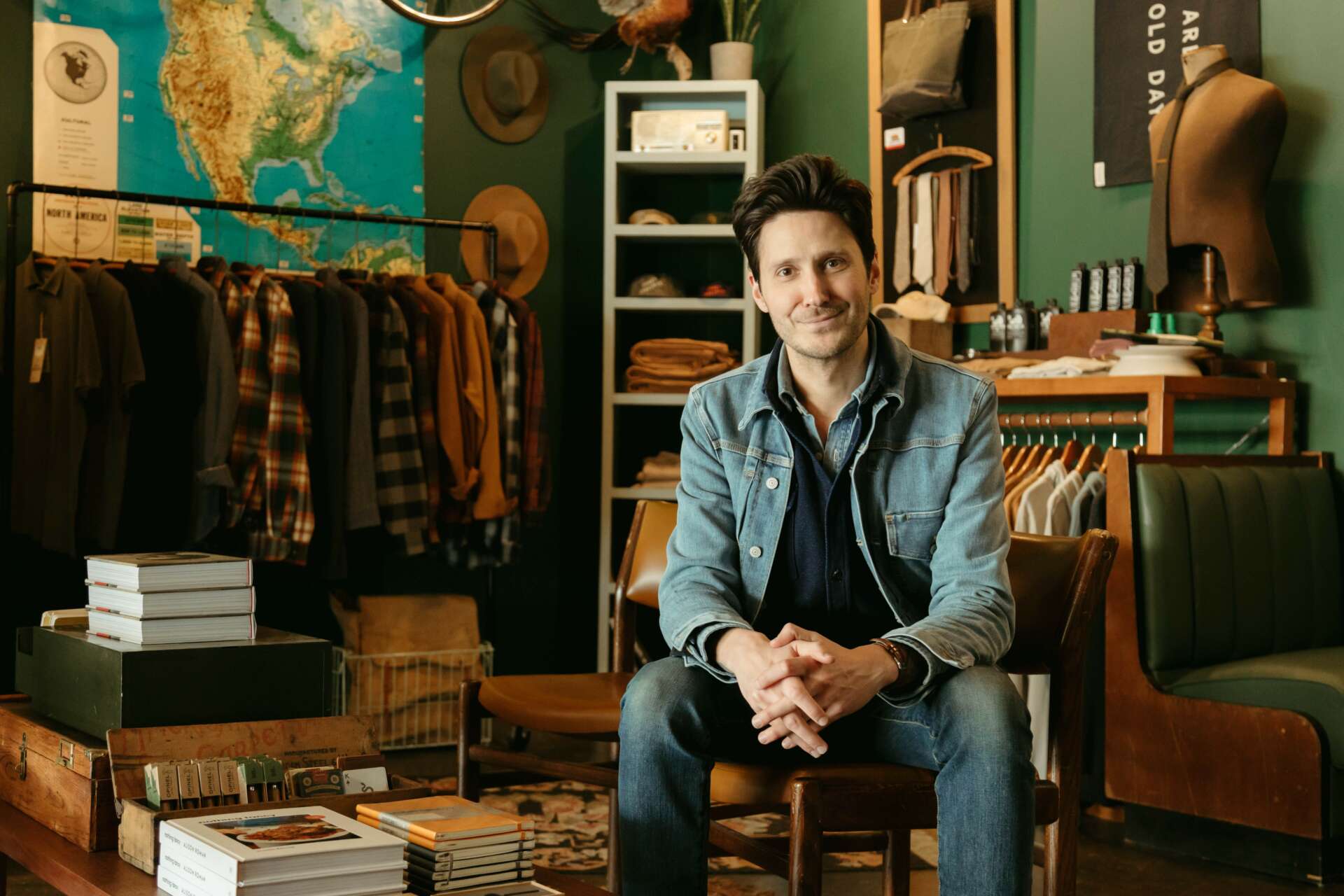

We caught up with the brilliant and insightful Max Dubinsky a few weeks ago and have shared our conversation below.
Max, thanks for taking the time to share your stories with us today Do you think folks should manage their own social media or hire a professional? What do you do?
I do manage my own social media, but I am very fortunate and lucky that my partner, Lauren, is not only an outstanding creative talent and photographer, but was also a marketing and social media directer (and eventually a VP) at an agency in Los Angeles before we moved here. She knows how to feed the algorithm.
She taught me everything I know in order to run it myself, but it is exhausting. I am a bit of a control freak, which is why I continue to do it, but if I had to do it all again without Lauren, I would 100% hire someone(s) else to manage it.
What I have done to ease the burden is that I routinely hire photographers to deliver me 10-20-30 photos that I can use over the course of a month or two. Hiring a professional photographer goes a long, long way. Just having a pot of photos to choose from and not having to create the content yourself eases so much stress.
I also hired someone to do my branding and help with my aesthetic. This is another thing you absolutely should not skimp on. If anything, pay for professional branding and photography or video work.
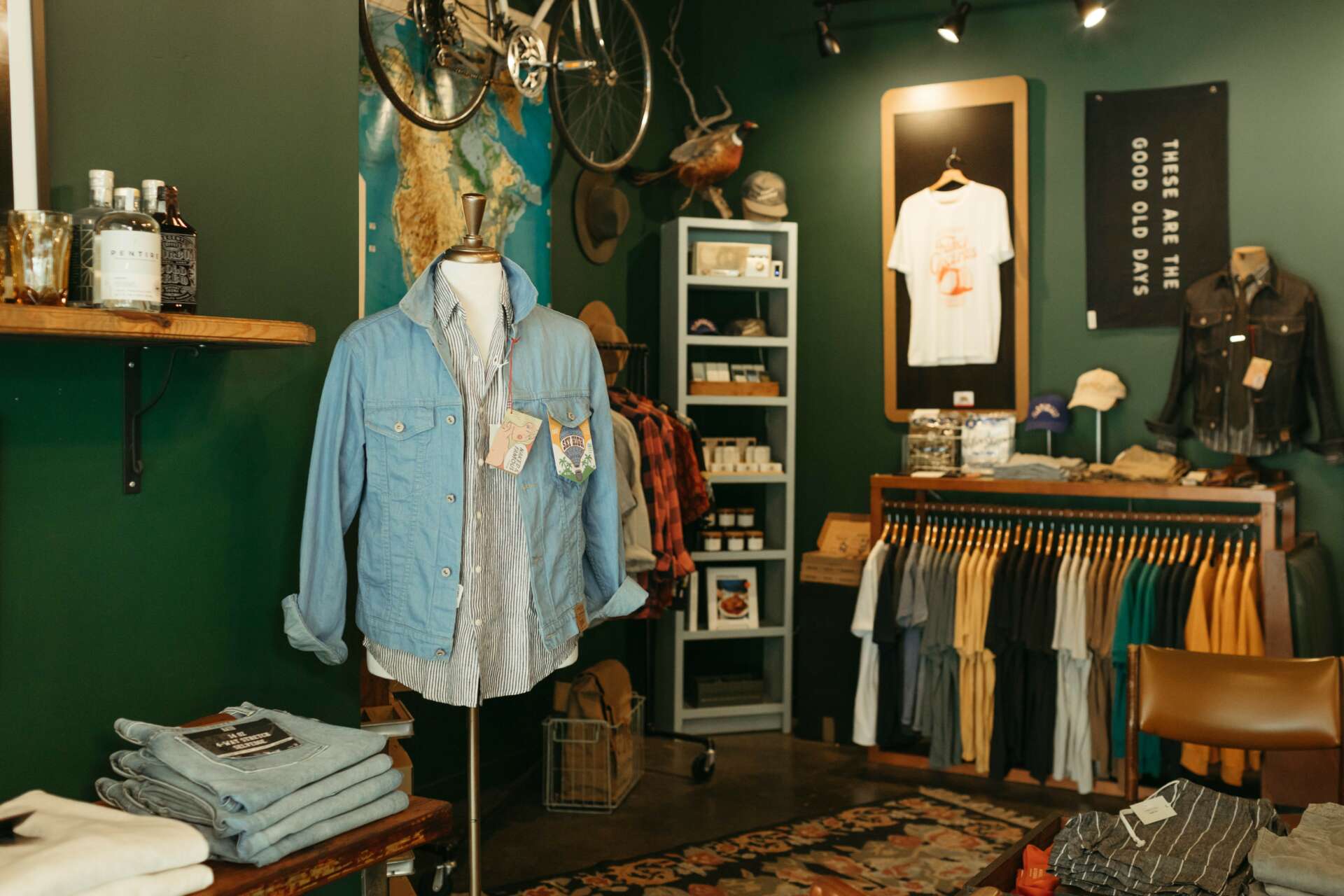
I have never paid facebook or instagram for advertising. There is a theory that if you boost a post, the algorithm will bury every post you don’t boost, requiring you to spend more and more every time. Our growth has been 100% natural from the start, and I went about doing that by asking local influencers to feature our store. And also making our store very photogenic so others want to take and post photos while they’re in there.
I also started a newsletter, which I write once a week, and on my checkout screen, I ask for your phone number in exchange for a coupon in order to send customers text messages. A text is the most powerful and immediate way to connect with customers. Their inboxes are crowded and their social media is dictated by what they’ve previously interacted with and liked. A text from you gets right in front of their eyes, every time.
Great, appreciate you sharing that with us. Before we ask you to share more of your insights, can you take a moment to introduce yourself and how you got to where you are today to our readers.
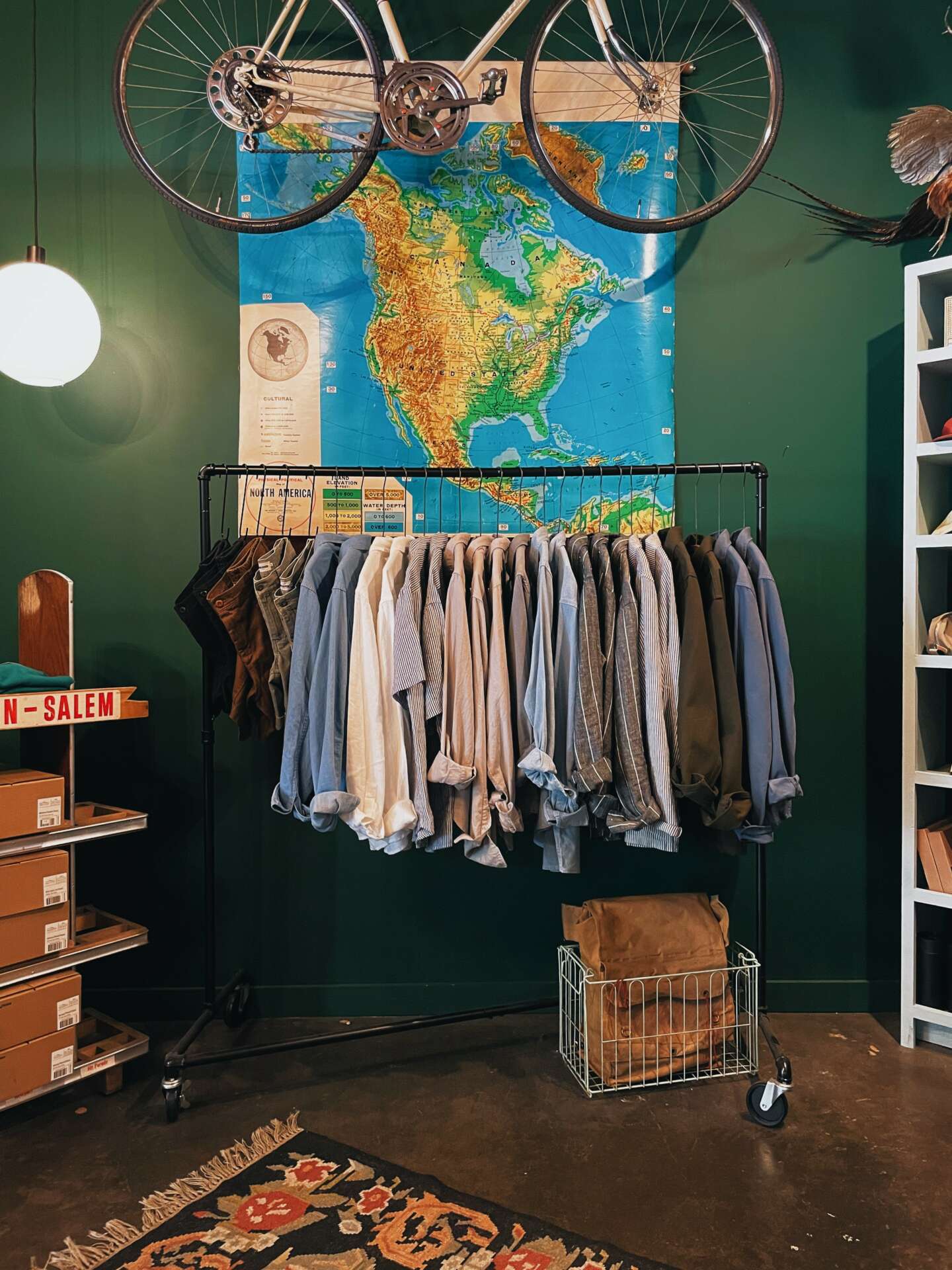
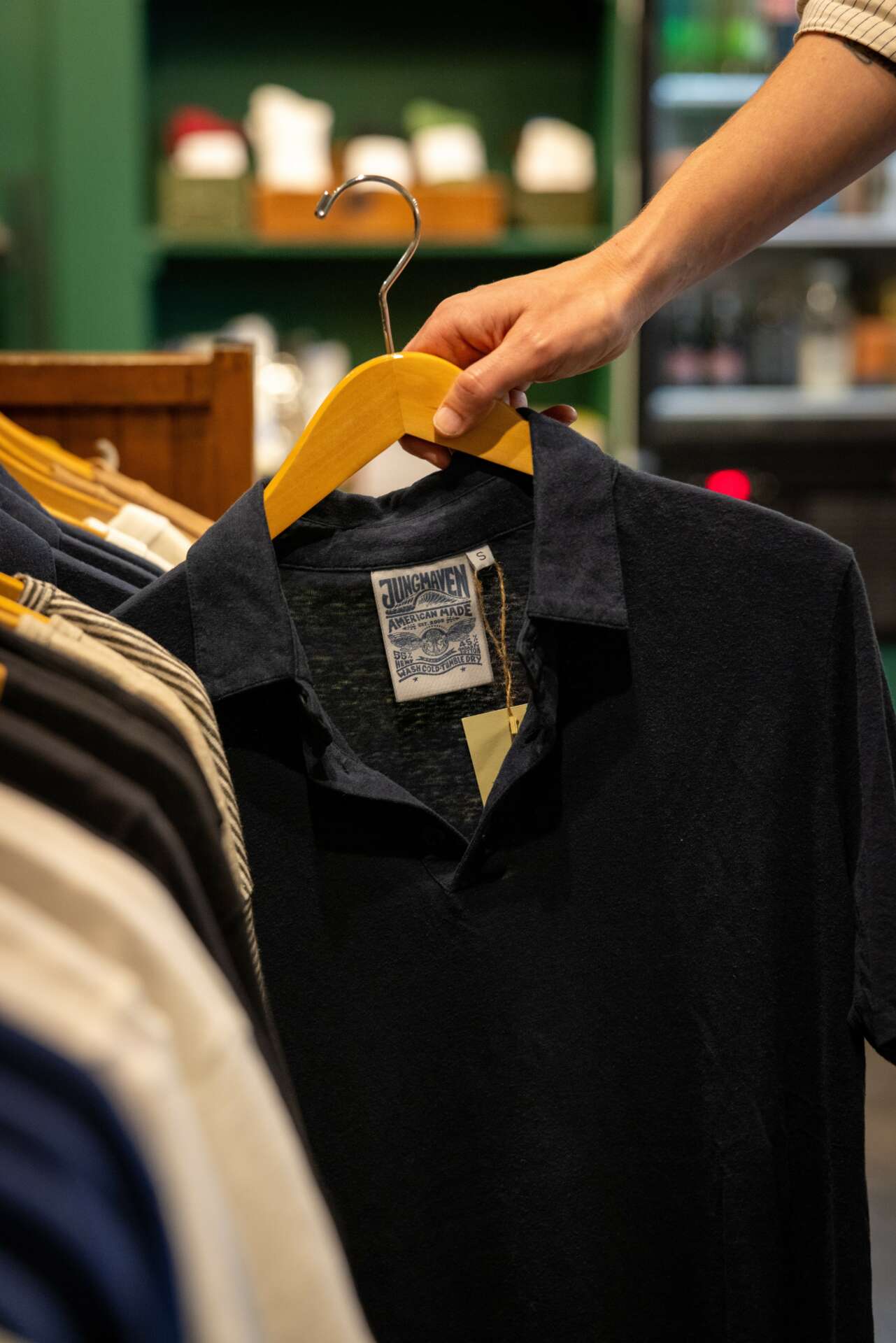
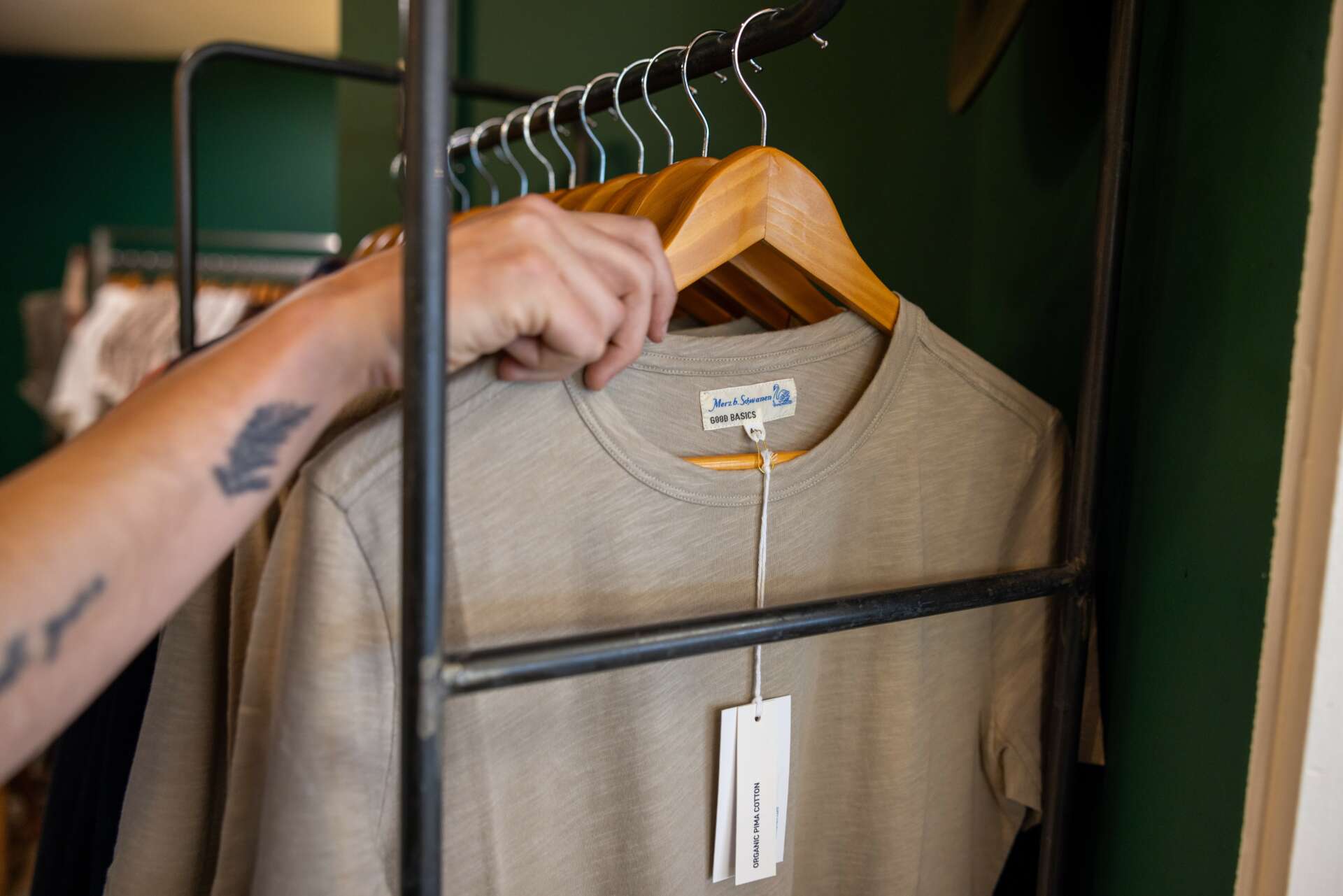
My name is Max Dubinsky and I am the owner and operator of Fancy Groceries, a men’s and women’s slow fashion clothing and goods store located in Winston Salem NC, with a dedicated focus on clothing that is USA made and/or locally manufactured in the region where the brand is based such as Japan, Canada, and Portugal. Everything I bring into Fancy Groceries is filtered through the concept of quality basics — wardrobe staples that we tend to skimp on when in actuality, your basics are the key to getting dressed and having a versatile wardrobe. Basics are meant to be invested in, not an afterthought.
And what I mean by quality basics isn’t just socks and underwear and a white t-shirt. While those are important wardrobe essentials, quality basics are wardrobe staples such as your favorite pair of denim or blue jeans, a jacket that goes with everything, an oxford button-down, a sweater, etc. Items that can be easily dressed-up, down, stand on their own, or be layered. The idea is spending a little more to own a little less. I want to encourage people to invest in wardrobe essentials that will last 5 to 10 years or even a lifetime. By doing so, you’re not only supporting local manufacturing, you’re also keeping clothing out of landfills (same reason I encourage thrifting) because so much of our clothing and fast fashion is actually made up of plastics like polyester, nylon, acrylic, etc. Textile manufacturing contributes to something like 10% of greenhouse gas emissions and 20% of our global water pollution. For this reason, the clothing I curate at Fancy Groceries is often made up entirely of natural fibers like linen, organic cotton, wool, and hemp. I try to avoid plastics and blends whenever possible.
This has resulted in a major educational component at Fancy Groceries. I am committed to helping people understand the impact of their shopping habits, where their clothing is made, who is making it, and what it is made of. Every garment in the store has a story about why I chose it and where it’s made. Sure, you can come to FG and quietly look around unbothered and leave, but the store exists for you to ask questions, get styling advice, and learn how to take care of your clothing. I have men and women who come in to show me old, worn-in clothing that they’re proud to have owned for ten years, or just stop in to talk how to care for raw denim. This is what, I believe, separates Fancy Groceries from every other clothing boutique out there — the commitment to slow fashion and education.
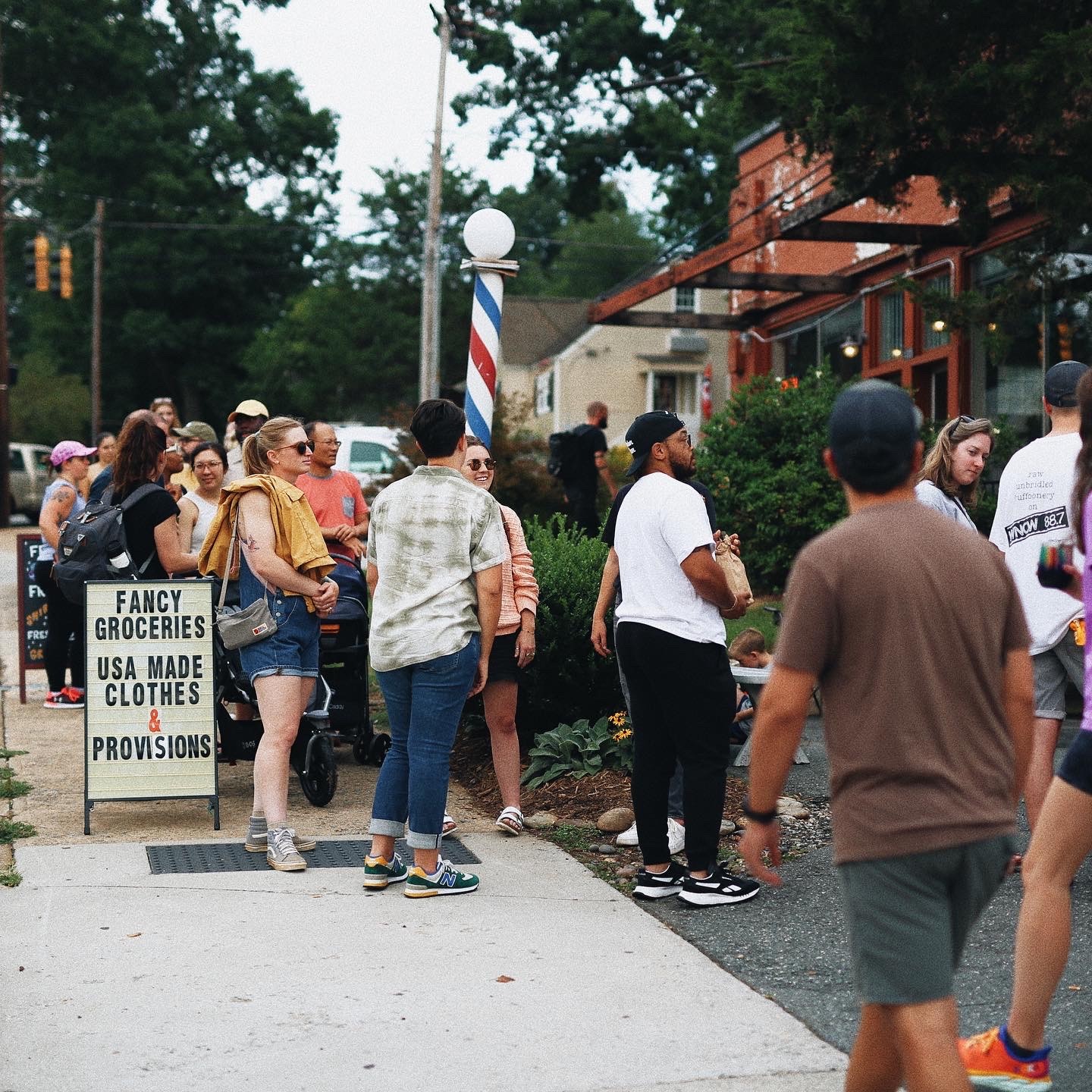
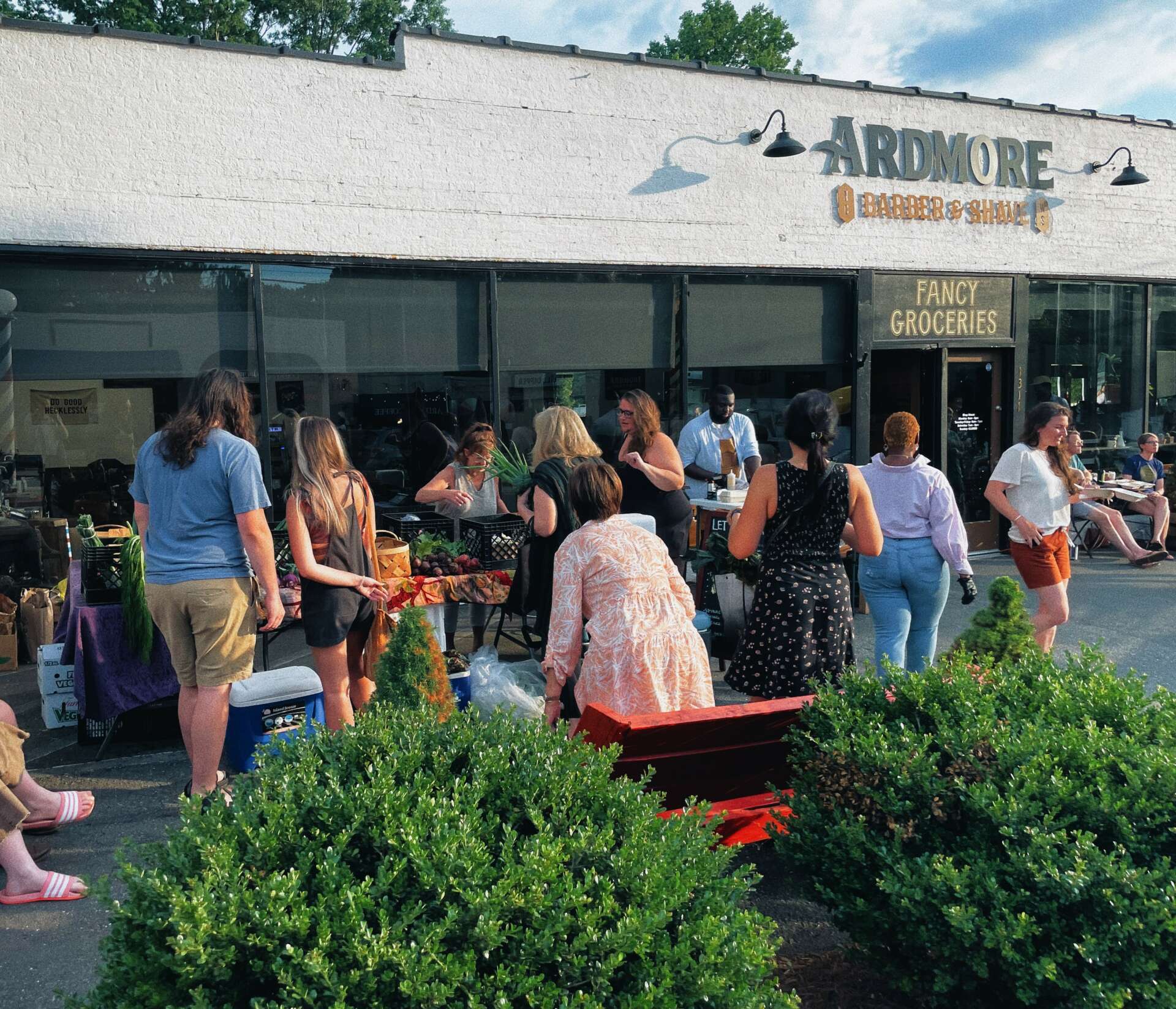
The other major component of the shop is what I like to call “Community Based Retail.” Fancy Groceries has historic value across the country. As far back as the 1800s, folks would open A Staple & Fancy Grocery, or as we better know it — a general store. It was often the central hub of the community where one could get not only their actual groceries, but chicken feed, coffee, and even a new shirt. The general store was where one went to see and be seen. And I wanted to recreate that by building a space that was first and foremost dedicated to gathering. Every Sunday I host what’s called the Sunday Social where we turn the store and parking lot into a space for local chefs, farmers, musicians, and bakers to showcase their work. It’s free for vendors to set up, free for the community, and it’s a great alternative to hanging out at a bar or restaurant. I organize and host intimate living room shows for local musicians to perform in our space, as well as offer coffee and soft seating. I think this is the aspect of Fancy Groceries that I am most proud of having created.
It may not seem like the wisest business model — a store that encourages you to buy less! — but you don’t get into the retail clothing slow fashion boutique business for the money. You get into it because you love it and you love the community.
We’d love to hear a story of resilience from your journey.
It is incredibly easy to give up on an idea or creation when it doesn’t immediately work. When it’s not a hit right out of the gate, the first thing we often do is doubt ourselves and our idea. I have seen so many businesses in my town react and try to pivot when this happens, but if you believe in your vision and your idea, the worst thing you can do is pivot away rather than dusting yourself off and trying again.
A great example of this is a restaurant that opens with a hyper-focused, unique menu/experience. They open their doors and maybe it’s a fantastic opening. But in the following weeks and months, there’s a steep drop-off in customers. Rather than sticking to their menu and seeking out their customer-base, they’ll panic and pivot, expanding their menu or changing it entirely in an attempt to bring in more people or returning customers. If you make your “thing” for everyone, you end up making it for no one.
I took note of this when I opened Fancy Groceries and began the Sunday Socials. Our first Sunday Social was a highly curated event with a line-up of other small businesses and vendors that I believed were some of the best of the best, Eight people came. And it poured rain. It was an utter failure in every sense. The next Sunday, there was no rain, but the same eight people came, all of whom happened to be my friends. It didn’t rain so it wasn’t a total failure, but still, no one was coming. I did it again, and again, and again, until one Sunday there was a line down the block and around the corner. Our space was at maximum capacity and so many locals had shown up to support the other small businesses and chefs at our market. I couldn’t believe it. I wanted to give up for months, but I knew the idea I had was something special and something our city needed so I stayed the course, I didn’t pivot, and after months of feeling like I’d absolutely blown it, the Sunday Social was a success and continues to be so nearly two years on.
How did you put together the initial capital you needed to start your business?
When it came to putting capital together for Fancy Groceries, I did not rush. The idea that to achieve the “American Dream” of going into business for yourself and opening a brick and mortar here in the states often requires us to go into debt, taking huge financial risks if our idea doesn’t work out, did not sit well with me. I started out small — a pop-up carrying only socks, ties, candles, and coffee — using the money out of my own pocket to fund it.
Nothing like Fancy Groceries existed in my town and the risk felt enormous so I wanted to gauge interest and field test my idea. Was I filling a void? Did people actually want this product? Then I waited (and waited) for the right space and opportunity. I continued to work my day job as a video editor, squirreling away money from each check. versus quitting versus quitting and diving right into this idea which would have required me to live off of a loan.
When the right space came along, it was small (only 350 sq ft) but that was much bigger than my 6 foot pop-up table. And I had saved enough money of my own to open with my own cash as long as I called in favors from my friends — everyone I knew — to help with painting, trim work, design, driving to pick up materials, etc. Throughout, I continued to work my day job and every morning and every night, I was in the space building it out.
Over two years in, we’ve never lost money as a retail shop. We haven’t made much money, to be fair, but we haven’t lost it either. And we’re growing. We’re not rushing. But we’re getting ready to move into an even bigger space next. And now I know what kind of loan and line of credit or grants to seek out that won’t bury me. I have a proven concept that makes financial planing and growth much easier.
This isn’t a magic bullet idea and it won’t work for everyone. But for those that it does…
Start small. Don’t rush. Ask for favors. And save.
Contact Info:
- Website: https://fancygroceries.substack.com/
- Instagram: instagram.com/fancygroceries
- Facebook: facebook.com/fancygroceries