

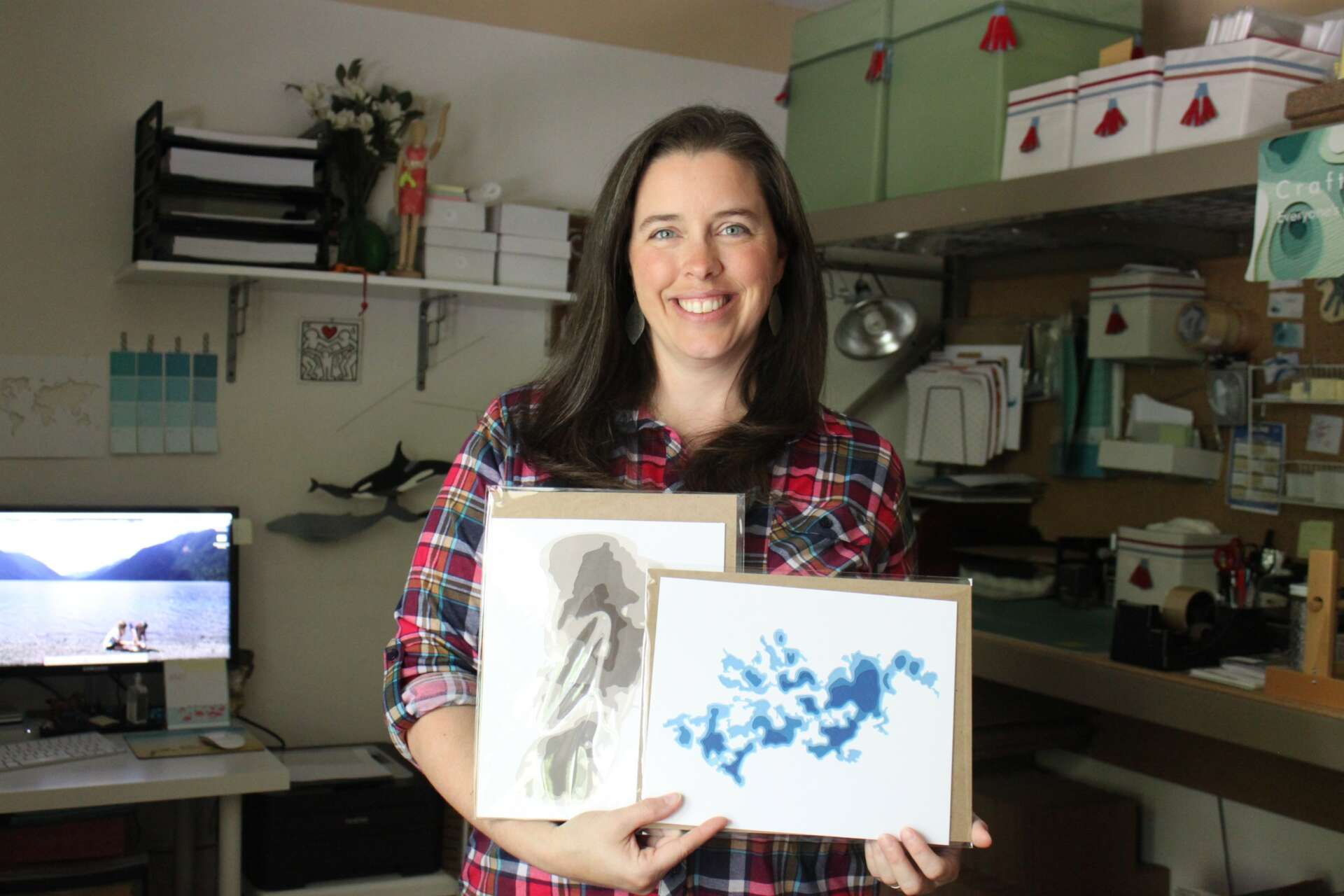

We were lucky to catch up with Marnie Karger recently and have shared our conversation below.
Marnie, thanks for joining us, excited to have you contributing your stories and insights. Are you happy as a creative professional? Do you sometimes wonder what it would be like to work for someone else?
I love Mondays. I love coming back to work after a nice weekend. I love my job! When I say these sorts of things to people, they often think I’m being sarcastic, or, if they take me seriously, they think I don’t “actually” work, or that my job isn’t a “real job.” Building and maintaining my small business Crafterall has not been what most would call a “regular job,” but it has become a source of regular and adequate income, it occupies my Monday-Friday work time, and I have earned a legitimate title as an artist and small business owner. If that’s not a job, I don’t know what is.
Generally, I am very happy with what I do, and I often pinch myself because it almost seems too good to be true. I get to set my own schedule, work from my home studio, and make artworks that connect people to fond memories, amazing adventures, and even the land and water itself. I even love the minutiae of the work such as packing orders, ordering more supplies, and running to the post office. That said, there are times, especially when sales or either low or orders are piling up, that I wonder about what it would be like to have a more “regular” job — a job that’s more similar day in and day out, with a more predictable workflow and income, and perhaps with colleagues and managers.
While there is something peaceful about clocking in, completing tasks, and clocking out again, I fear that my creative appetite would either turn into something savage and insatiable, or wither away and grow dusty with disuse. My current work satisfies that desire to be creative and to connect with people on important details, all while helping our family make ends meet. So, while I cannot control the tides of interest in my work or make life more predictable, I cannot imagine enjoying any sort of work more than this.

Marnie, love having you share your insights with us. Before we ask you more questions, maybe you can take a moment to introduce yourself to our readers who might have missed our earlier conversations?
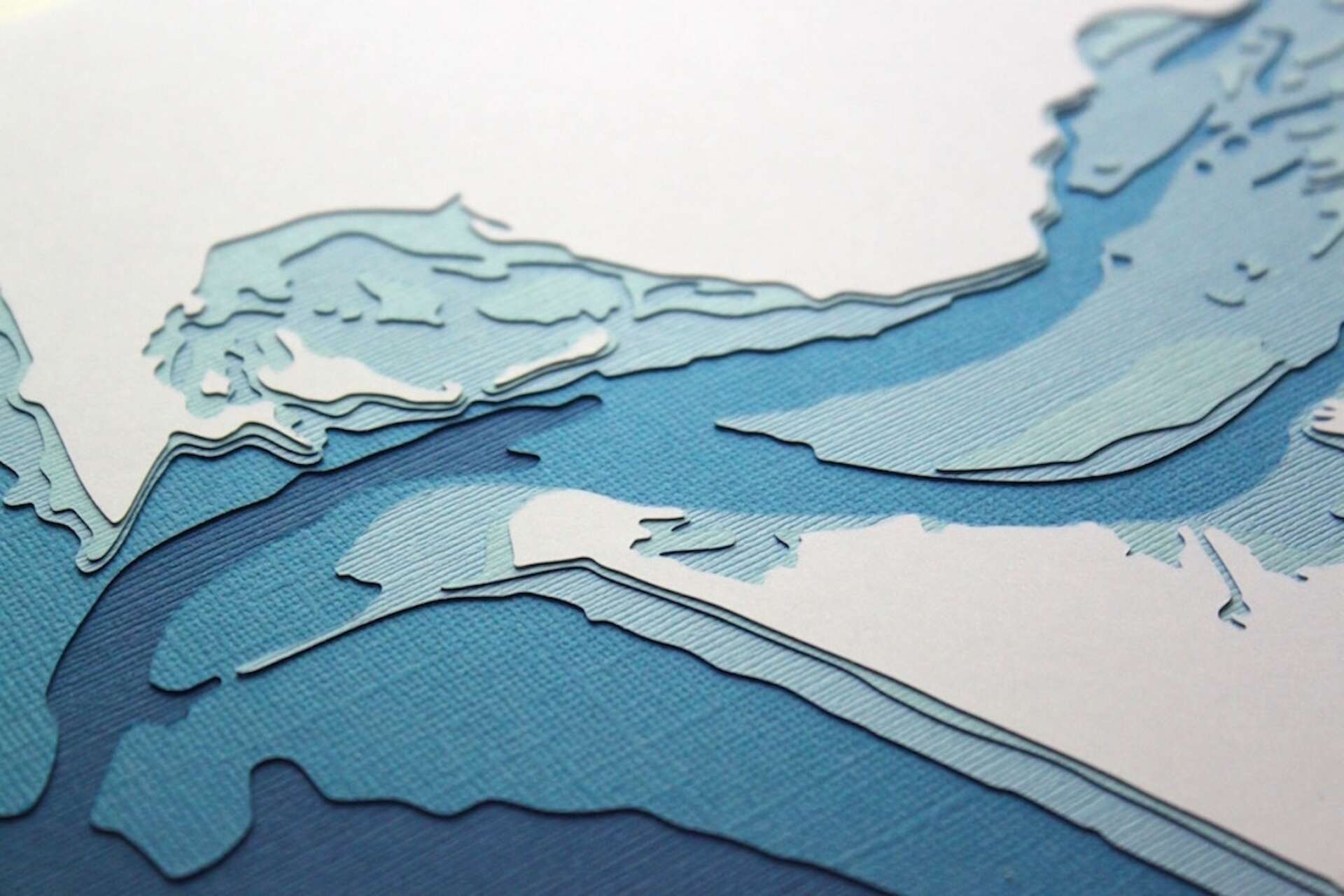
I’m a Minnesota native who has always loved being near, on, or in the water, so it’s no surprise that this child from the Land of 10,000 Lakes has grown up to be an artist specializing in lake-based pieces. Paper has always been an accessible medium for me, and continues to be my go-to source for making my art.
My first major voyage into cut paper artworks was making collage-type greeting cards for family and friends when I was still in my teens. At the time, many people told me I should sell my cards, but I never thought it would ever be something I could do to earn “real money.” Shortly after college, I got a job working at a scrapbook supplies store, just as elaborate scrapbooking was really taking off. Suddenly, I had access to a lot of amazing paper products and tools, and that’s when I first started dabbling in layered, cut paper pieces. Fast forward a few more years, I married my sweetheart, we bought a house, I was on maternity leave from teaching high school English, my kids were championship nappers, and I opened my Etsy shop, Crafterall.
During the first couple of years of Crafterall, I sold enough to save for a small vacation, to help with an unexpected expense, or to pay for a fancy dinner out. I fully expected to have to get a “real job” again at some point, perhaps when our youngest was ready for pre-school. But before that happened, I branched out from selling only cards, business started to pick up, my bank account graph started to hockey stick, and I arrived at a crossroads. Instead of shelving all of this creative work and success in favor of pursuing another teaching job or some other 9-5 gig, I chose to put everything into Crafterall. I diversified my Etsy listings, I sold at local art shows, I had pieces shown in a few art galleries, and I tried to absorb as much as I could about being a successful small business owner as I could.
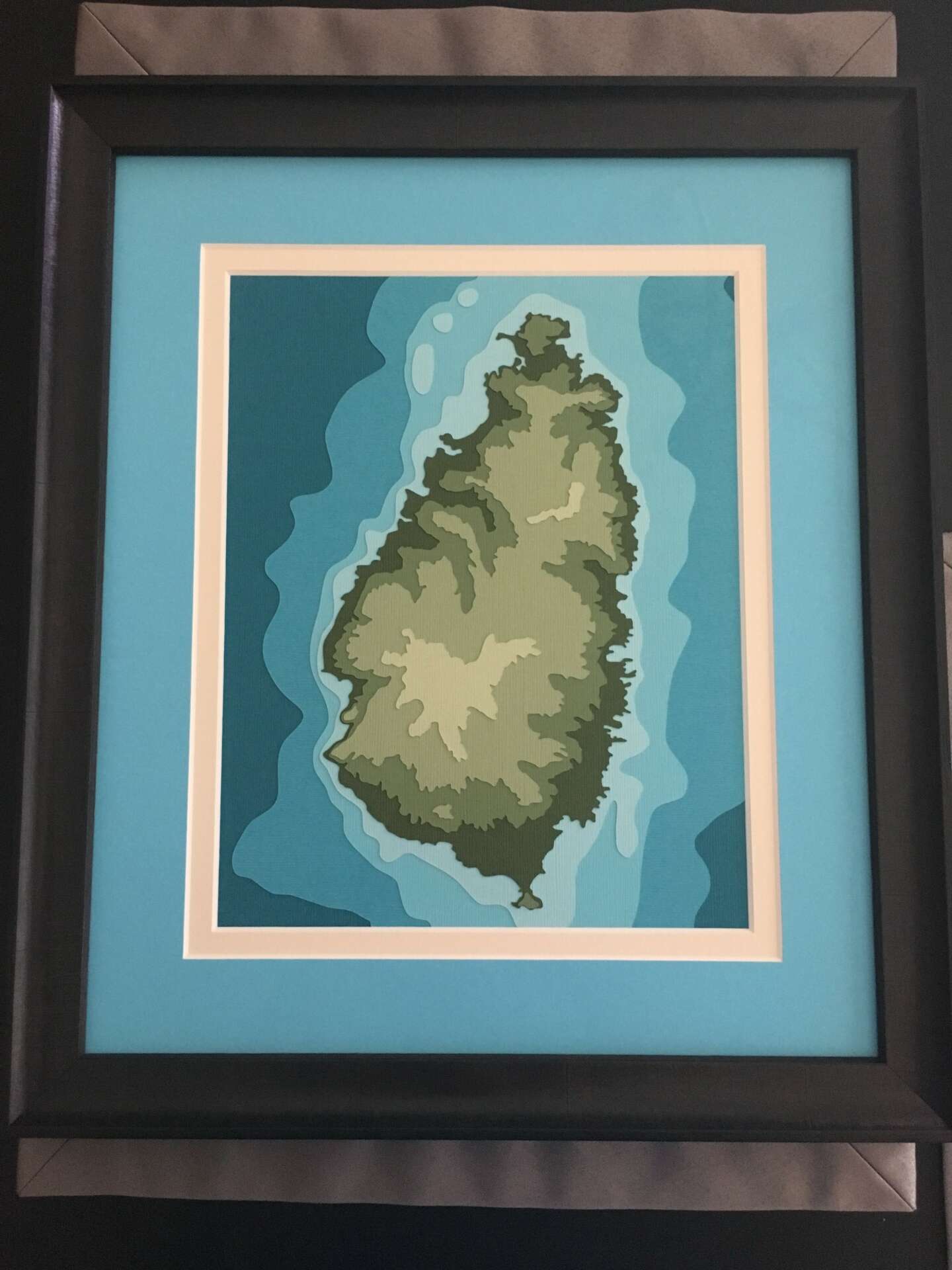
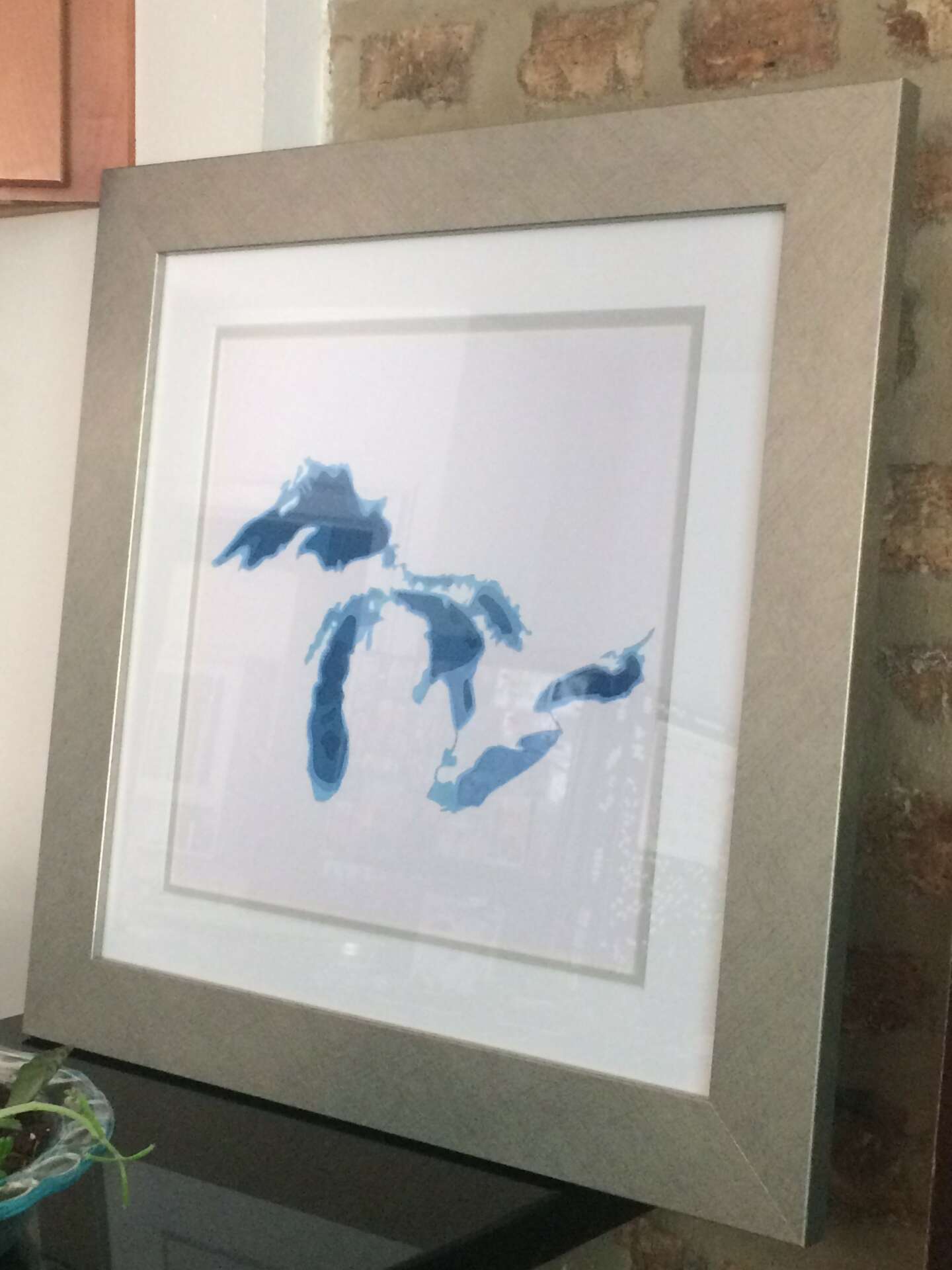
Soon, Crafterall become synonymous with paper cut lakes. As custom orders for family lakes, summer camp islands, honeymoon shorelines, and hiking elevations poured in, my repertoire and skillset grew. I continually honed my order processing protocols, taking tips from other successful shops, and entered into my first few wholesale partnerships with brick and mortar shops around the country — some of which still sell Crafterall pieces. My supplemental income became my main income, we hired a tax preparer, and, after some deep soul-searching, I finally felt comfortable telling people that I was no longer a teacher — I was an artist.
While I won’t deny that it feels good to be able to meaningfully contribute to our family’s income by doing what I do, what really brings me back to the studio Monday after Monday is the warm fuzzies I get from fulfilling orders for people who, like I always have, feel a deep connection to the water and land around them. In the little conversations we have with one another on Etsy, to the longer chats I’ve had at art shows with in-person buyers, I find magic and satisfaction in the value and meaning these places have for people. I love it when people can trace a bit of shoreline and tell me a story about something that happened there, or when buyers share with me the expression and the tears in the eyes of their loved one when they opened their gift of a special Crafterall piece. Being able to make something that special for someone is one of the least expected and most beautiful aspects about this work for me.
It’s not all sunshine and rainbows, to be sure. There was a pretty steep learning curve to getting my digital cutter plotter machine to work properly for me, at a time well before there were countless tutorials or videos. The very particular cardstock I use gets backordered or discontinued by the manufacturer. Many holiday seasons I spent virtually all my waking hours making pieces and filling orders instead of making cookies and watching movies with my family. I have had to learn the hard way how best to estimate how long an extra-large wholesale order will take to complete. I’ve endured hand, wrist, neck and back pain from repetitive overuse. And these days, now that I’m not the only one making this sort of art, I have to continually find ways to set myself apart and make my work shine a little brighter.
Still, I wouldn’t want to be doing anything else. This is the sort of work I see myself doing long past where others might consider retiring. It’s soul-nourishing, creativity-fueling, and just plain fun.


What’s the most rewarding aspect of being a creative in your experience?
The most rewarding aspect of being an artist is definitely the connection I feel with the people who buy my work. This connection is especially apparent when the buyer shares the reason why they bought a particular place (my family spent our summers on this lake, my dad loves to fish on this river, we got married on this beach, etc.), but I feel some connection even when the buyer shares nothing with me. Just knowing that the lake, island, or coastline in the piece is special to someone else warms my heart. It’s like we’re all part of the same fan club, and it’s that common interest and appreciation that makes me feel like I’m connected to all of these different people from all over the globe.

Have you ever had to pivot?
I graduated college with a teaching degree and went on to teach high school English for seven years before taking a one-year maternity leave and move closer to home. At the time, I assumed I would end up teaching again, but didn’t necessarily feel a strong pull to do so. Though I enjoyed the time in the classroom, teaching, especially teaching writing courses, was super time consuming — time I’d rather spend with my new family, and it didn’t pay well for all those long hours.
When Crafterall started to take off and I made the decision to devote my time more seriously to growing this small business, I felt a lot of guilt about leaving behind the teaching profession, discarding my teaching license, and essentially neglecting my university degree. I even sensed disappointment from people who were likely worried I wouldn’t make it unless I went back to teaching.
It took a few solid years of earning more in a year working as an artist than I ever did teaching, and a mental shift that I was indeed worthy of calling myself an artist for me to pivot from feeling guilty about not teaching to feeling proud of my accomplishments with Crafterall. After this, it didn’t matter what anyone else said, and I ended up feeling even more confident in what I was making, and why I loved it so much.
Contact Info:
- Website: https://www.crafterall.com
- Instagram: https://www.instagram.com/crafterall/
- Facebook: https://www.facebook.com/EveryonesGotALake/
- Linkedin: www.linkedin.com/in/marnie-karger-b05a874a
- Twitter: https://twitter.com/crafterall
- Other: https://www.etsy.com/shop/Crafterall