



We were lucky to catch up with Britt Spencer recently and have shared our conversation below.
Alright, Britt thanks for taking the time to share your stories and insights with us today. I’m sure there have been days where the challenges of being an artist or creative force you to think about what it would be like to just have a regular job. When’s the last time you felt that way? Did you have any insights from the experience?
Generally, yes, I’m happy to be an artist, but sometimes I wonder what life would be like if I had chosen to attend university and study business or something similar. I truly love the process of creating art, and I consider myself fortunate to have pursued art education, enabling me to sit down at a drafting table and produce something that fills me with pride and a certain sense of accomplishment. I mean, let’s be honest, it’s one of the most fulfilling careers one can have! I am grateful to make a living through art.
However, there is always an inherent uncertainty about the future, and to be frank, being an artist is hard work. It’s not simply a matter of slacking off or being lazy. Even if I put in endless hours, at the end of the day, if my work isn’t good, nobody will want it. So, it’s about constantly striving to be at the top, and just of ‘my game’ but within the entire artistic landscape. Meanwhile, I observe my friends from high school who seem to be smoothly sailing along in more conventional careers, and yes, sometimes it appears appealing. However, I must remind myself that they are likely working diligently as well, and my perspective is limited to an outsider’s viewpoint. The grass is always greener I figure.

Awesome – so before we get into the rest of our questions, can you briefly introduce yourself to our readers.
Here’s a quick overview: I have been working as an illustrator for nearly 20 years. Although my career started in children’s books, I transitioned to editorial work during the 2008 recession. Since then, I have primarily focused on the editorial market, with occasional ventures into advertising and character design for entertainment. More recently, I have been creating larger-scale paintings for galleries, museums, and private collections.
Now, let’s provide a bit more context: I attended a magnet school for the arts from 4th grade until my senior year. I wasn’t particularly athletic or academically exceptional, but I always had a knack for drawing. However, I only viewed art as a hobby because, in my limited perspective, I believed that to pursue art as a career, one had to become an animator or graphic designer, neither of which interested me at the time. It wasn’t until I came across an art school catalog that listed “Illustration” as a major that I realized I could draw for a living. Everything suddenly fell into place. I entered college with the clear goal of becoming an illustrator, and from that point on, my path was quite deliberate. I started acquiring freelance clients while still a student and continued to expand my client base over the next few years. Eventually, I found myself making a living as an illustrator without any significant business savvy or secret formula—just by consistently producing work and sharing my portfolio with the world.
As an illustrator, I am generally perceived as someone who can provide a humorous tone and meet tight deadlines (my personal record is three hours from initial contact to sending the high-resolution file). I enjoy illustrating stories of everyday, non-heroic individuals. However, the professional compromise often involves creating artwork with political or popular themes. I take pride in having my work featured on numerous national publication covers, hundreds of interior illustrations, three children’s books, and one graphic novel.
While illustrating has always been enjoyable, I yearned to work on projects that would allow me more time and create pieces with a longer shelf life compared to the hyper-specific illustrations I had been doing for publications. As I flipped through my flat files, I became somewhat dismayed by the static nature of the artwork I had created over the years. Each piece served a single purpose, delivered a single message, and, worst of all, was esoteric beyond the narrow scope of the accompanying article.
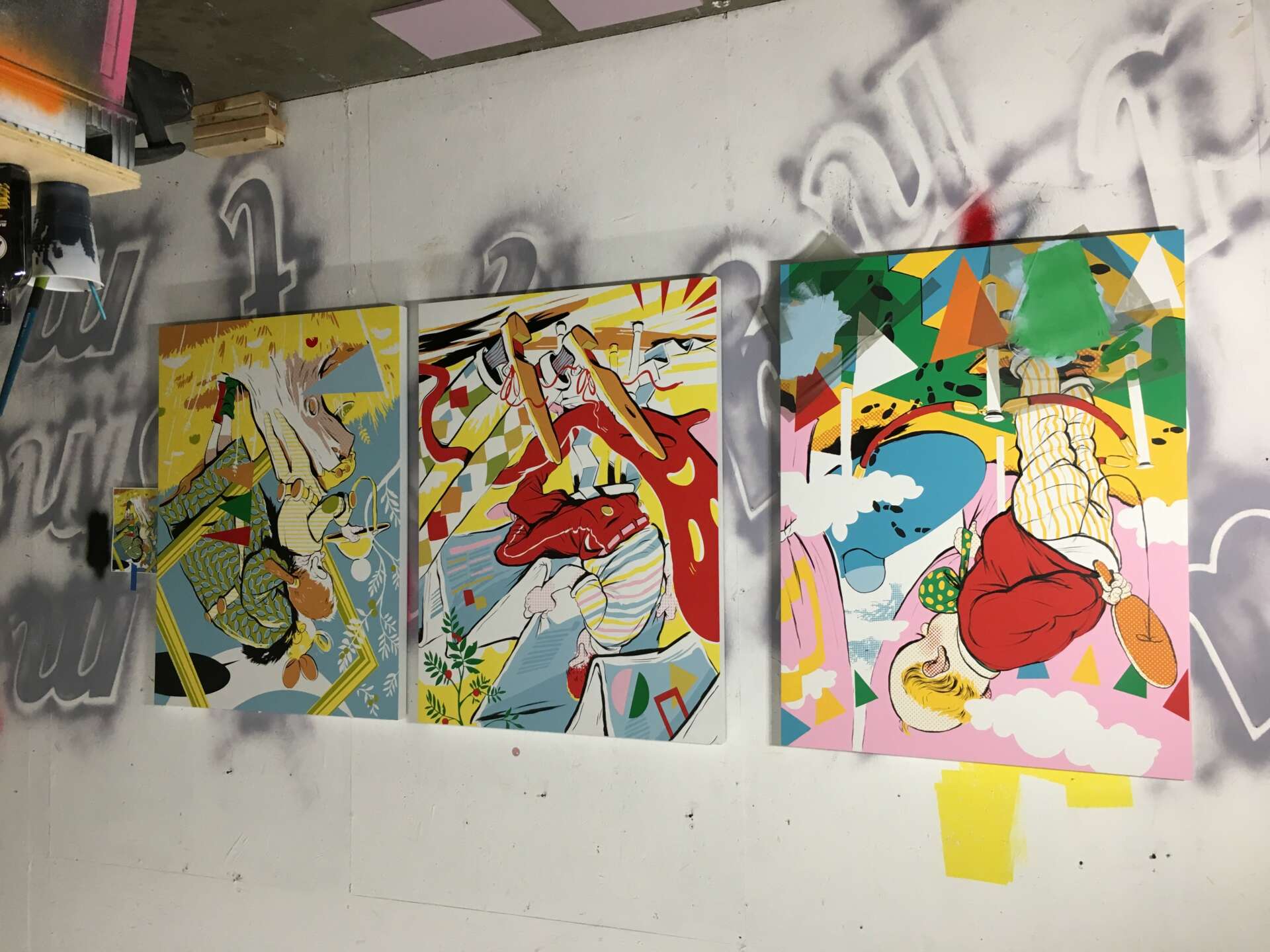
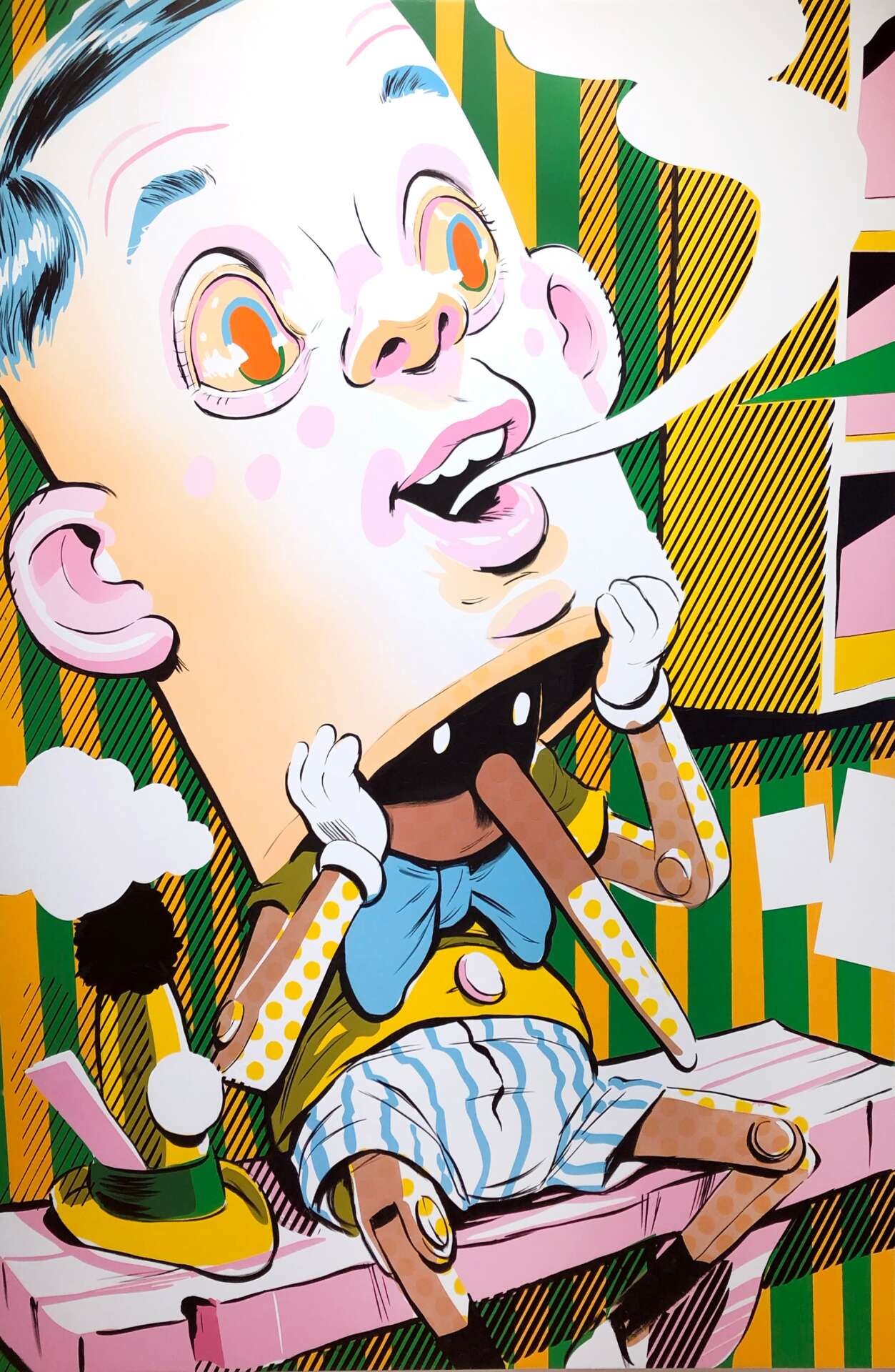
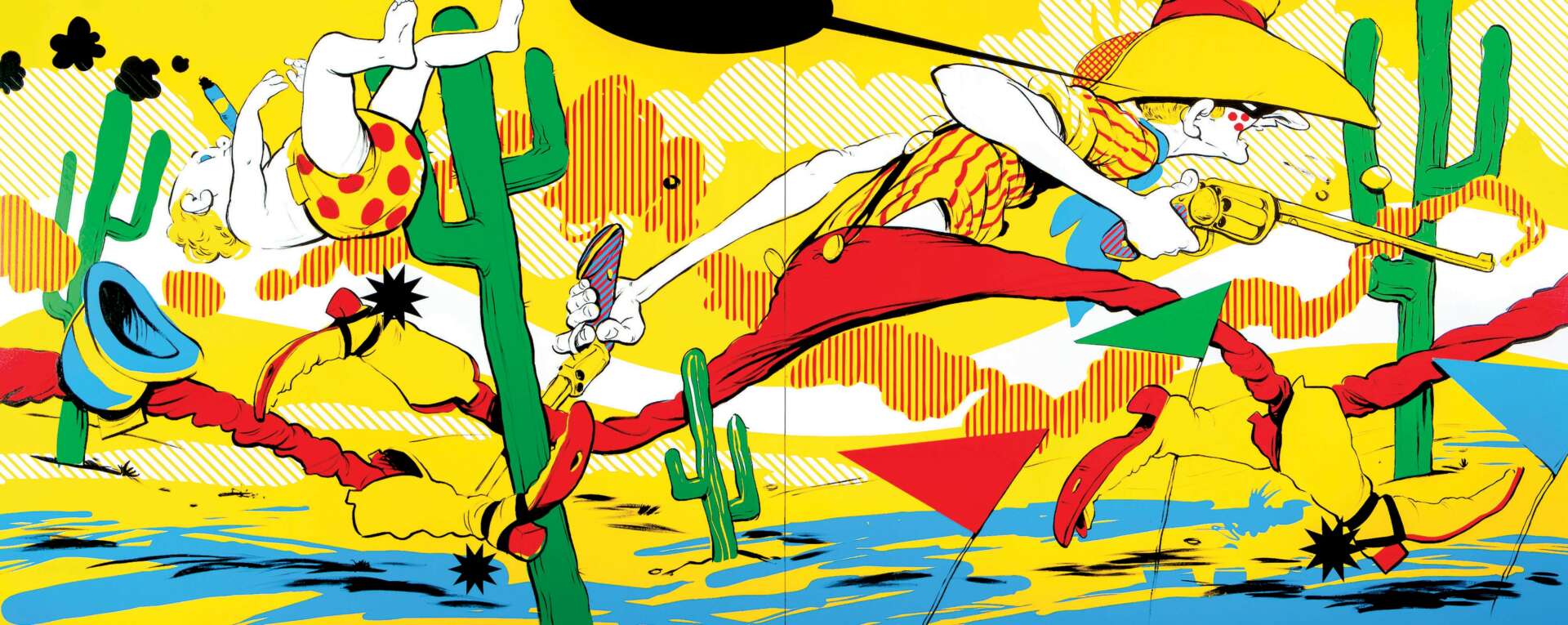
Therefore, in addition to maintaining my illustration clients, I started creating artwork without any art direction. I decided to go back to school and pursue an MFA to delve into work that possessed more depth. While illustration jobs typically demand quick turnaround times of just a day or two, the new work I embarked on allowed me the luxury of time—weeks—to contemplate, reflect, and curate my creations. These newer works, are very exciting to me, it’s where my passion truly is. At its core, these paintings are subjective commentary on life trying to land somewhere between humor and pity. Themes revolving around familial relationships and societal structures are common. I am interested in the rudimentary structure of narrative, telling a story of some form with the coherence of message being secondary. This results in scattered symbolical imagery with tacit implications towards an end but no discernible direction on how to get there or why you’d even bother if you did find the path.


In your view, what can society to do to best support artists, creatives and a thriving creative ecosystem?
I’ve contemplated this topic extensively, especially in light of the ongoing discussions surrounding AI-generated artwork. Unfortunately, both for myself and fellow artists, I firmly believe that society doesn’t owe us anything. We aren’t a special breed, and the demand for our careers is dictated solely by the market, which apparently can be substituted. The advent of AI is undeniably daunting because, in most cases, people simply want the final image. If they can obtain it quicker and at a lower cost, regardless of ethical considerations, they likely will—and, dare I say, they should. It’s rather intoxicating to suddenly possess the power, or rather achieve similar results as someone who has spent years honing their craft. AI is rapidly advancing, and artists must come to terms with the fact that society doesn’t necessarily require our services. However, there will always be those who are more affluent and seek that extra something to display on their walls, showcasing their own success.
My prediction is that commercial arts will be replaced as soon as AI technology becomes capable of doing so. Fortunately, it’s not fully capable yet, but I have no illusions that it will get there. Unfortunately, it’s going to be the fun jobs that get replaced first; the character design, environment design, all the ideation stuff. Afterwards, even the donkeywork will follow and there will be very few people, if any, needed to produce great artwork in depth. However, the market for physical art pieces, such as paintings and sculptures, will persist. Their primary purpose will be to serve as tangible evidence that one can afford artwork created by a human.

Do you think there is something that non-creatives might struggle to understand about your journey as a creative? Maybe you can shed some light?
Ha, maybe they might struggle to understand that the process of creativity can be very analytical and not in fact that elusive. I mean, just as one example, the most foundational of foundations, drawing 100, is all about clinical observation and very little about creativity. These so-called non-creatives, could be artists as well if they just decided to do it. They’re freaking human beings after all, imagining abstracts is in our DNA. Everyone is creative, some just use their creativity in more traditionally non-artistic ways. Get out and paint people! Or sculpt, or dance, or whatever.
Contact Info:
- Website: www.brittspencer.com
- Instagram: @britt.spencer