



We were lucky to catch up with Cindy Gardner recently and have shared our conversation below.
Cindy, thanks for joining us, excited to have you contributing your stories and insights. We’d love to hear the backstory behind a risk you’ve taken – whether big or small, walk us through what it was like and how it ultimately turned out.
The most significant risk of my career was choosing to make Swing Dance my full-time profession. I had always wanted to work in music and dance, but didn’t know what it would look like or how I’d get there. At first I just followed opportunities came my way, and right up until the point of making the transition into a profession I felt like Swing Dance was “just a hobby” regardless of the amount of work I had put into it.
THE BACKSTORY
I began teaching Swing Dance through community education as a fun hobby to keep me happy while I worked any variety of “real jobs” to pay the bills. Over the years, my knowledge and skills in teaching and dancing developed to the point that my beginning level classes became quite popular. My students wanted more, requesting intermediate level classes and actual opportunities to go social dancing.
I wanted to try offering classes on my own, so I rented a small studio where I held intermediate level classes and workshops while still teaching beginning level classes through community education. Interest was strong, and attendance grew.
For social dance outlets, I found places where we could all go out dancing and my students could practice what they had learned. I also persuaded my church to let me use their basement to hold “record dances” with DJ’d swing music. I published the dancing dates in a very small booklet that I titled Cindy’s Swingers. This was the start of a community of Swing Dancers that had its own identity outside of the ballroom, Latin and other partnered dance groups.
NEGATIVE MESSAGES AND SILVER LININGS
I was still working a full-time day job as I developed my Swing Dance programming on nights and weekends, filling every moment of my free time with my passion. As you might imagine, it was becoming overwhelming. But at the same time, it was cool and fun and inspirational! All that said, as much as I loved creating and developing Swing Dance opportunities, I was terrified of the thought of doing it as my profession.
Testing the waters, I talked to anyone and everyone who would listen about my idea of possibly making Swing Dance my full-time job. The messages I got in reply were predominantly negative. “Anything in the arts should just be a hobby … I shouldn’t try to make a living that way … it’s too hard … it never works … I shouldn’t quit my day job … if I did it for a living, I’d lose my love of it.”
Yet, I couldn’t let go of the idea. I figured that if I gave it a try and it worked out, I’d be enormously happy “going to work” every day. If it didn’t work out, I had plenty of other skills that I could fall back on to make a living. I also felt that if I didn’t give my dream a chance, I’d always wonder whether I could have succeeded. I made a point of staying away from negative messages and instead surrounded myself with positive people who encouraged and supported my dreams and endeavors.
During this transitional time, I had a pivotal conversation with a friend who was a professional musician. I shared my thoughts and ideas with him, but also my very real concern that I didn’t know if it was the right time for me to take the leap. His reply? It’s never the right time. You just have to do it.
HOW IT TURNED OUT
Once I quit my final full-time job in the “real world,” I never gave myself a day off as I grew my new business. After the first year my classes and social dances continued to have strong attendance, and I finally felt like this career could actually be successful!
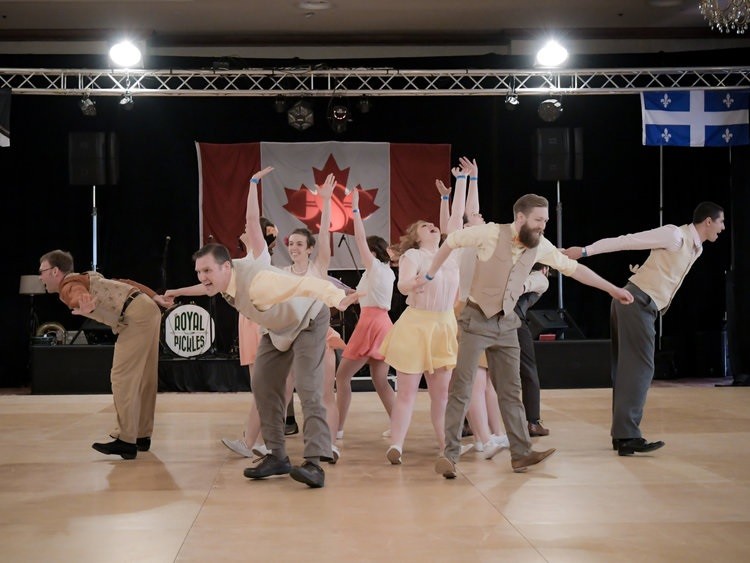
Fast forward to today, and I’m also busy with private lessons, school residencies, corporate gigs, private events, festivals and more. I’m also exceptionally proud and fulfilled with the work I do as director and lead choreographer of my performance team, Rhythm & Swing.
When I first started teaching Swing Dance as a hobby, I figured that I’d do it for a few years until I got bored. I’m not bored yet. In fact, I’m having a blast and have never looked back!
Great, appreciate you sharing that with us. Before we ask you to share more of your insights, can you take a moment to introduce yourself and how you got to where you are today to our readers.
MY BACKGROUND I’m a passionate Swing Dancer, instructor, choreographer and promoter specializing in Lindy Hop (the original form) and East Coast Swing (the easier, more common form). I started teaching as a hobby and initially only taught East Coast Swing. Lindy Hop had died out in the 1960s (I had only seen it in old movies), and there wasn’t anywhere to learn the style. In the 1980s a Lindy Hop revival began when young dancers in New York, Los Angeles, London and Stockholm re-discovered the dance and began to study with the original masters. I took my first Lindy Hop workshop in 1989 when it (finally!) came to Minnesota and I was hooked. I spent the next several years traveling to Lindy Hop events and studying from the best instructors and dancers in the world. Inspired by teams I saw at a major event, I formed my performance team Rhythm & Swing. For me, a dancer’s movements are an extension of the band, and I love creating choreography that tells a visual story of the music. Rhythm & Swing regularly performs at special events, private parties, senior’s facilities, festivals and more.
OUR SERVICES
Together with my husband Terry (former student turned life partner!) and with my performance team Rhythm & Swing, we provide a wide range of teaching, Djing, and performance services.
TEACHING & DJ-ING In addition to our regular beginning and intermediate level group dance classes and workshops, we frequently teach lessons and Dj at hangar dances, wedding receptions, festivals, corporate parties, school residencies and more. I also teach private lessons for dancers of all levels, often helping couples prepare for their wedding dances with instruction, choreography and music editing.
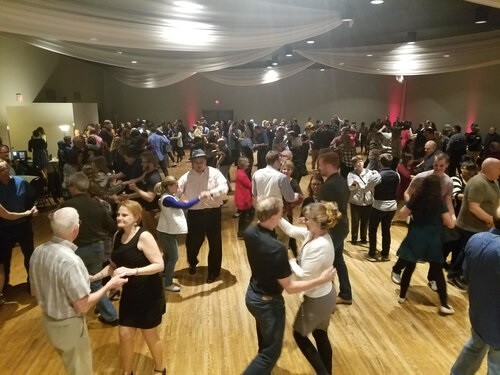
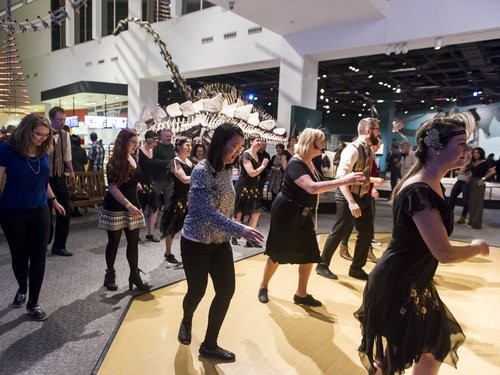
SOCIAL DANCES We provide an opportunity for our students to practice and implrove their dancing while having a great social experience. Terry is the house DJ for Late Night Swing, our weekly social dance that follows our intermediate classes. Our monthly 1st Saturday Swing Dance has a basic lesson for newer dancers followed by exceptional live swing bands.
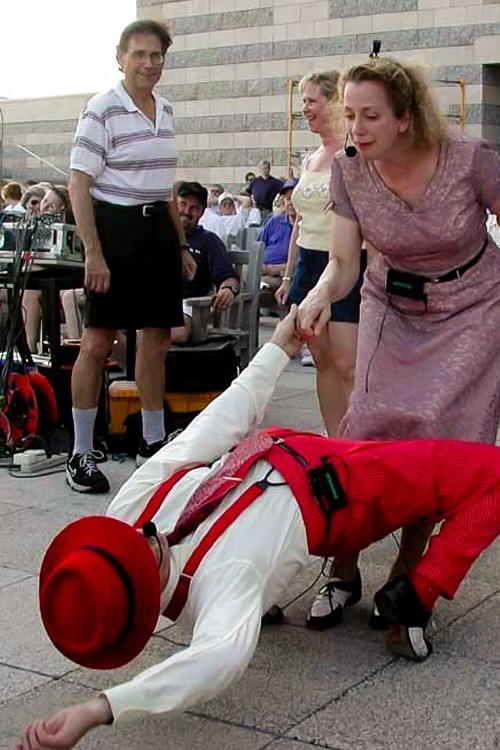
PERFORMANCE / RHYTHM & SWING My Lindy Hop team provides showcases of any length to meet our client’s needs. Fast-paced footwork and breathtaking aerials highlight our performances showcasing over a century of traditional and current Swing Dance styles.
– Spotlight Performances & Themed Parties
– History of Swing Dance Programs
– Group and Personal Swing Dance Lessons
– Social Dance Ringers To Liven Up the Dance Floor!
WHAT PROBLEMS I SOLVE FOR MY CLIENTS
We bring fun to every situation, whether it’s a class, a social dance or a performance. I can’t tell you how many times people have come to our events with the weight of the world on their shoulders, and within a matter of minutes they are happy and energized by the music and dancing!
WHAT SETS ME APART FROM OTHERS
Lindy Hop uses connection, momentum, and partnered dance movement in a deeper and more dynamic manner than other partnered dance styles. My in-depth knowledge and ability to help students understand these complex concepts with clarity sets me apart from other instructors. Offering regular social dances as well as classes gives our students an immediate chance to practice what they have learned.
WHAT I’M MOST PROUD OF
I love the sense of community that we’ve created through our classes and social dances. I also love showcasing Lindy Hop and bringing it to new audiences through my performance team, Rhythm & Swing.
THE MAIN THINGS I WANT POTENTIAL CLIENTS / FOLLOWERS / FANS TO KNOW ABOUT MY BRAND / WORK
I’m passionate about Lindy Hop as an art form, and as a social dance. Lindy Hop is one of the few truly American art forms, evolving out of the Charleston in the 1920s ballrooms of Harlem. With rhythms and styling based in African tribal dancing, this partnered jazz dance bears the same characteristics as jazz music, having an underlying structure that supports the fun, playful creativity and self-expression of the dancers.
Ultimately, it’s all about relationships. Some are one-on-one, as in the great dance floor conversations between partners as they relate to the music in a dance floor conversation. Swing is the perfect dance for great partnering combined with creative self-expression for both the lead and the follow.
Some relationships are more far-reaching, as in the friendships that form among those who social dance regularly. Going to a dance is like having a little vacation in the middle of your busy life, where you can put your problems and troubles aside and release yourself into tons of fun. Our social dances are like Donut Sunday at church. You can come and go on your own schedule, you’ll meet people of all ages, and everyone chats (dances) with everyone.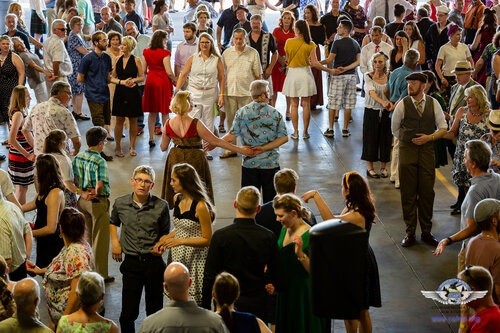
Learning and unlearning are both critical parts of growth – can you share a story of a time when you had to unlearn a lesson?
Leading and following in partnered dance is vastly different than solo movement. I began dancing ballet in high school, and studied ballet and jazz in college. I took a ballroom class as an elective and was drawn to Swing Dance because of the music and the fun. Because of my solo dance background, I was used to putting motion in my body. I easily picked up movement and knew the basics of both the lead and the follow roles when I began teaching. That said, I will readily admit that I spent the first ten years of teaching learning how to teach and learning how to dance. At first I knew what I needed to know – a little more than my students – and my enthusiasm took me a long way. As my knowledge deepened, I learned that partnered dance is really all about communicating and conversing through the sense of touch through connection between the leader and the follower.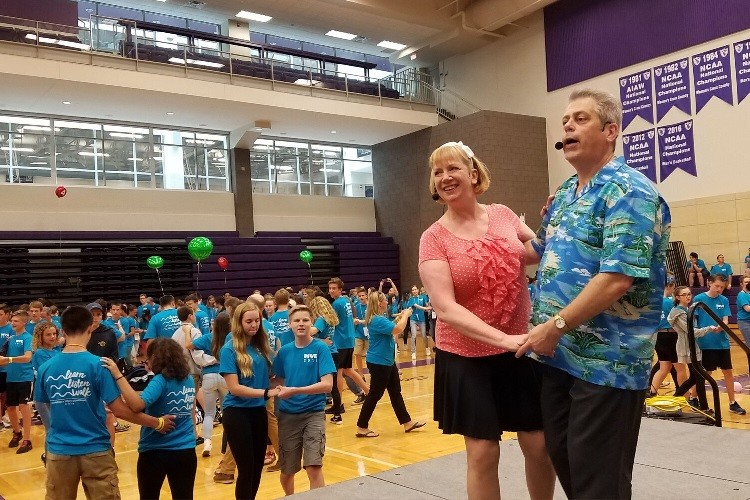
What do you think is the goal or mission that drives your creative journey?
Lindy Hop is the most amazing partnered dance I’ve ever encountered, both in its fabulous music and in the in-depth manner that it uses partnered connection. Except for in a few ballrooms in Harlem, it had died out in the 1960s, then was re-discovered and began to be revived in the 1980s. I’m delighted and driven to do my part in keeping the dance alive and current.
Contact Info:
- Website: www.tcswing.com, www.rhythmandswing.com
- Instagram: https://www.instagram.com/tcswing/
- Facebook: https://www.facebook.com/TCSwing, https://www.facebook.com/rhythmandswing
- Twitter: https://twitter.com/TCSwing4Real