



We were lucky to catch up with Nathan Timmel recently and have shared our conversation below.
Nathan, appreciate you joining us today. How did you learn to do what you do? Knowing what you know now, what could you have done to speed up your learning process? What skills do you think were most essential? What obstacles stood in the way of learning more?
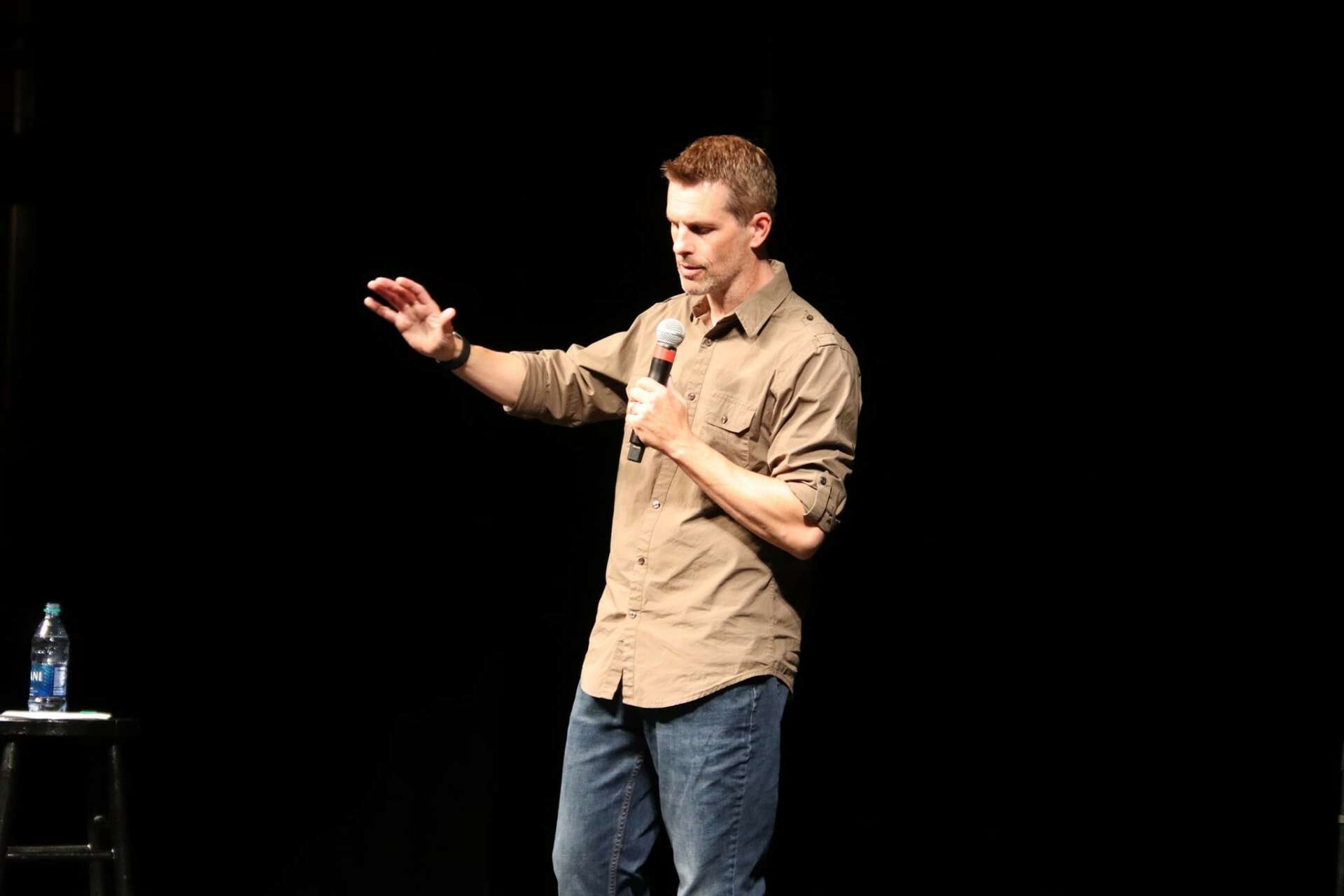
The best way to learn any trade, is by doing. When it comes to stand-up comedy, you’ve got to get on stage as often as possible.
The best comedians—Dave Chappelle, Bill Burr—make what they’re doing look effortless. And, by the time you get to where they are, it probably should be.
When I was just starting out, I went to as many open microphones as possible, and then spent every weekend I could at my local comedy club. I would “annoy” the working comics, like a gnat buzzing around the Gods (which is how I saw them). I wanted to know how they wrote their material, how they went about getting noticed, how they crafted a set that ebbed and flowed.
I got to know the owner of the club, I worked to earn her trust, so that she would hire me.
Like with any craft, there is a learning curve, and that can’t be rushed. Some people will move at a quicker pace, others will need time to find their legs. So, I’m not sure I could have done anything to speed up my learning process, because I hit every stage I could, as often as I was allowed.
Nathan, love having you share your insights with us. Before we ask you more questions, maybe you can take a moment to introduce yourself to our readers who might have missed our earlier conversations?
I got into stand-up comedy slightly by accident.
When I was a child, I learned of Richard Pryor and George Carlin, the two comedians every comic should study. I didn’t exactly know what stand-up comedy was, I just knew their stories captivated me, and made me laugh.
But, as happens with most kids, my attention drifted, and I got into other things, mainly music.
I was in a heavy metal band in high school, and then a rock band in college.
When I graduated from college, the band fell apart, and I was left with a degree in English, and a lack of focus regarding my future.
I can’t remember exactly what the spark was, but something brought back my childhood love of comedy and the early desire to try my hand at the craft.
I looked up local comedy clubs, called them, and took my butt down to their open microphone. It took all of one trip to the stage to become addicted.
The idea I could get my thoughts into the world, and that those thoughts would generate laughter? Amazing.
We’d love to hear a story of resilience from your journey.
Oh boy… asking a comic to discuss the industry is like lighting a fuse.
We all have more stories than we’d like to regarding rejection. I’ve been hung up on, told that I wasn’t going to get hired because the owner didn’t like my headshot—and keep in mind, this isn’t acting. I wasn’t up for a part that I didn’t fit, he literally said, “I don’t like your picture, you can’t work my club.”—and had customers lavish praise on me in front of the manager, who then never hired me again.
This industry requires a thick skin.
Some people equate public speaking to standing in front of a firing line; it’s still one of the biggest phobias people have. Yet the truth is: facing down an audience is nothing like the fortitude required for what happens behind the stage.
Sometimes, hearing “No” is amazing, because it means you weren’t ignored.

In your view, what can society to do to best support artists, creatives and a thriving creative ecosystem?
Another loaded question…
We live in an age of free.
Our music is streamed, there are memes and videos aplenty online… People use their iPhone to take a picture of a painting, so they can look at it whenever they want, but don’t have to buy it.
Supporting art means consuming art; purchasing art.
Buying a ticket to see a band perform live, walking out of an art gallery with a framed piece that you. enjoy, watching comedy inside a comedy club, and not just from the comfort of your couch.
Technology has made staying inside and doing “nothing” attractive.
It’s a mindset that needs to be broken.
Contact Info:
- Website: https://nathantimmel.com/
- Instagram: https://www.instagram.com/nathantimmel/
- Youtube: https://www.youtube.com/nathantimmel