



We were lucky to catch up with Lori Mihalich-Levin recently and have shared our conversation below.
Lori, appreciate you joining us today. Do you have any thoughts about how to create a more inclusive workplace?
I’ve spent most of my adult career in law firms, which aren’t always known for inclusive workplace practices. As a working mom with two small children, I wasn’t exactly the “ideal” candidate for traditional law firm success. The traditional law firm norms, partnership track with promotions that happen during peak childbearing years, and billable hour requirements were built around a model that fit white, married men, whose partners cared for their children, were ever-present at the office, and who didn’t take on many caregiving responsibilities.
In my own career, I’ve had the good fortune of carving out new roles that fit my own life and career better than this traditional model. For 6 years, for example, I was a Partner at a large global firm on a 60% schedule. To the firm’s credit, they were open to experimenting with alternative models – particularly within the practice group I was in. On the other hand, though, I still faced less-than-welcoming attitudes toward the idea that one could be both ambitious at work and committed to family. I was told by one colleague that I appeared to be on a “French” schedule. Someone in leadership declared publicly that we all had more time to work when Covid lockdown happened (despite many of us trying to juggle both work and home schooling and caregiving for children).
To create more inclusive workplaces, we need to avoid making assumptions and ask more questions. Find out how people are actually doing, both at home and at work. Don’t assume someone is any less committed to their work simply because they have children. And don’t assume that men won’t be caregivers. Stop saying that parental leave is a “vacation.” Ask men and women the same questions about their families. The only way we will get to true workplace equality will be when we degender things like flexibility, parental leave, and caregiving responsibilities and allow for ways of working that don’t look like the “norm.”
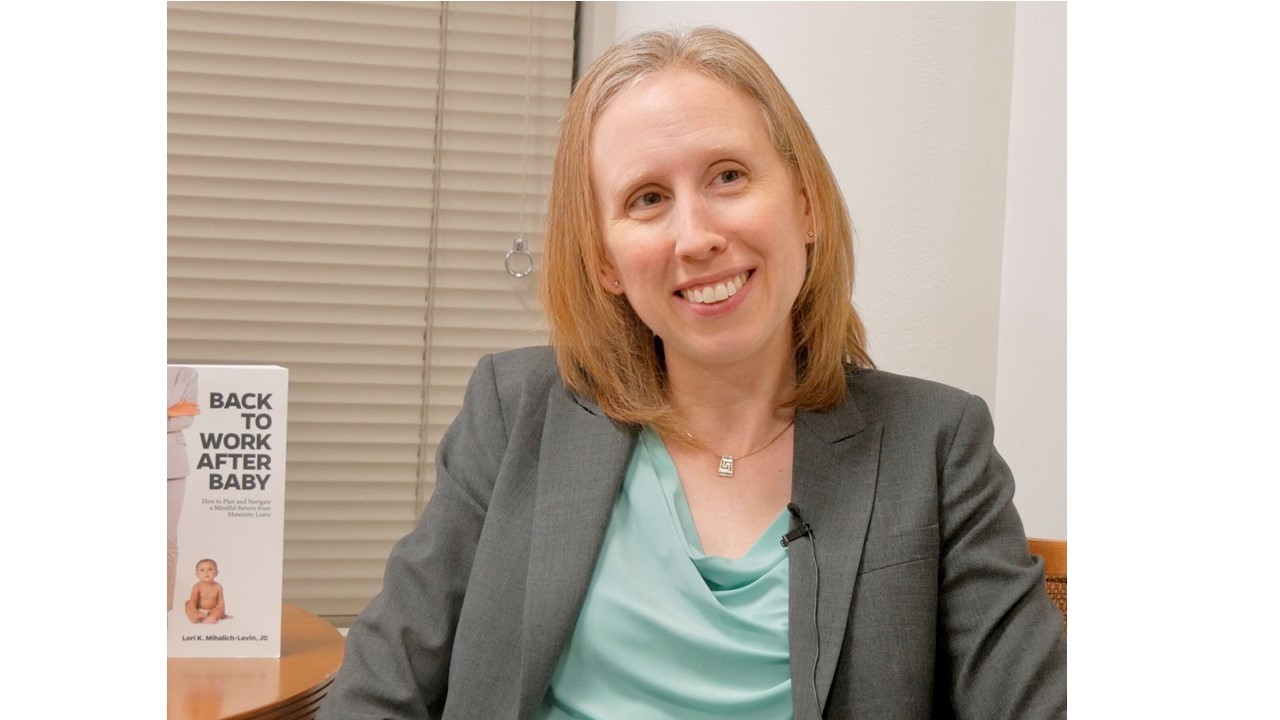

As always, we appreciate you sharing your insights and we’ve got a few more questions for you, but before we get to all of that can you take a minute to introduce yourself and give our readers some of your back background and context?
I’m a working mom of two boys, who struggled mightily when I went back to work after parental leave. At the time I had my wonderful redheads, I found that I could take a class on pretty much any subject related to my baby. I could learn to puree baby food. Create a birth plan. Even learn baby massage. But there was no course I could take on how to transition back to work after parental leave. Or navigate my own personal and professional identity transition.
Nine years ago, I set to out to fill this gap. I developed a 4-week online, group-based program called Mindful Return that is now offered to both new moms and new dads all over the globe. We teach our courses every other month, and 102 employers now offer them as parental leave benefits to their new parent employees.
I am most proud of both our retention and leadership data. On average, 64% of new mothers in the United States return to work after parental leave. At Mindful Return, however, we beat those odds, saving companies large sums in turnover costs. We looked at the first 1,000 new parents who went through our programs and found that over a 5 year period, 85% of those parents were still at their same employer, and 93% were still in the workforce.
We also care deeply about the individuals we serve and want them to succeed in leadership in their organizations. I was thrilled, therefore, to see that for one firm we’ve partnered with for about 7 years, a full 25% of their 40-person Partner promotion class this year were alumni of our programs.
At Mindful Return, we give new parents the skills to return to work after baby with confidence. We give employers the tools to retain great employees. And we give everyone involved a community in which we have thoughtful conversations and connection.
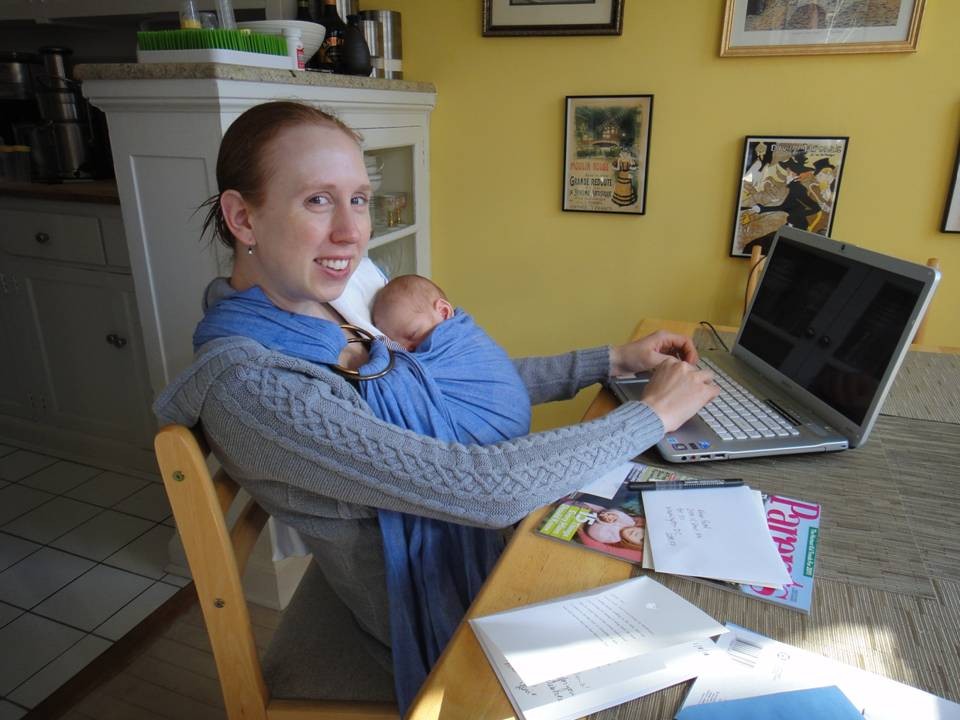

What else should we know about how you took your side hustle and scaled it up into what it is today?
Nine years ago, I was working full-time as an in-house policy lawyer at a trade association, and my business, Mindful Return, was my “side hustle” or “passion project.” Today, I practice law as my “side gig” (in about 10% of my work week), and Mindful Return is my main career.
The path for me was absolutely through baby steps and micro-goals! In the beginning, after seeing a huge need for more supports for new parents who were transitioning back to work after parental leave, I started working on this project for about 15-20 minutes a day. I had three children under two at home plus a full-time job, so that didn’t leave much margin. But every night, I’d sit down and do one more tiny thing toward my goal of building a course and community. Occasionally, I’d have a few solid hours to work on it while I was on a plane on a work trip. But mostly it was in bite-sized pieces on my couch at night, after my kids had gone to sleep.
I built everything slowly, one client at a time. Once I realized that a business-to-business-to-consumer (B2B2C) model made more sense than a business-to-consumer (B2C) model, I started focusing more of my limited time and energy recruiting employers as clients. About 1 1/2 years into running Mindful Return, I left my full-time role and joined a law firm as a Partner on a 60% schedule. This allowed me to have some daylight hours to work on Mindful Return, while also maintaining my legal practice.
The pandemic provided an unlikely business milestone, in that more and more companies were recognizing the need to support struggling parents. In mid-2021, I left the law firm I was working for, set up my own solo-practice, and shifted most of my attention to Mindful Return. Recent milestones have included opening international chapters in places like the UK and South Africa, and crossing the 100 employer mark!
If you have multiple revenue streams in your business, would you mind opening up about what those streams are and how they fit together?
My business sells courses to employers that help support working parents. I also have revenue streams outside of the courses, though. Our company also provides talks and webinars (I do a fair number of speaking engagements), I wrote a book called “Back to Work After Baby” that provides monthly royalties, and I also share talks on Insight Timer.
Contact Info:
- Website: https://www.mindfulreturn.com
- Instagram: https://www.instagram.com/mindfulreturn/
- Facebook: https://www.facebook.com/mindfulreturn
- Linkedin: https://www.linkedin.com/company/mindful-return/
- Other: Mindful Return on Pinterest: https://www.pinterest.com/mindfulreturn/ Parents at Work Podcast: https://podcasts.apple.com/us/podcast/parents-at-work/id1239258343