



We recently connected with Souren Mousavi and have shared our conversation below.
Souren, looking forward to hearing all of your stories today. Do you feel you or your work has ever been misunderstood or mischaracterized? If so, tell us the story and how/why it happened and if there are any interesting learnings or insights you took from the experience?
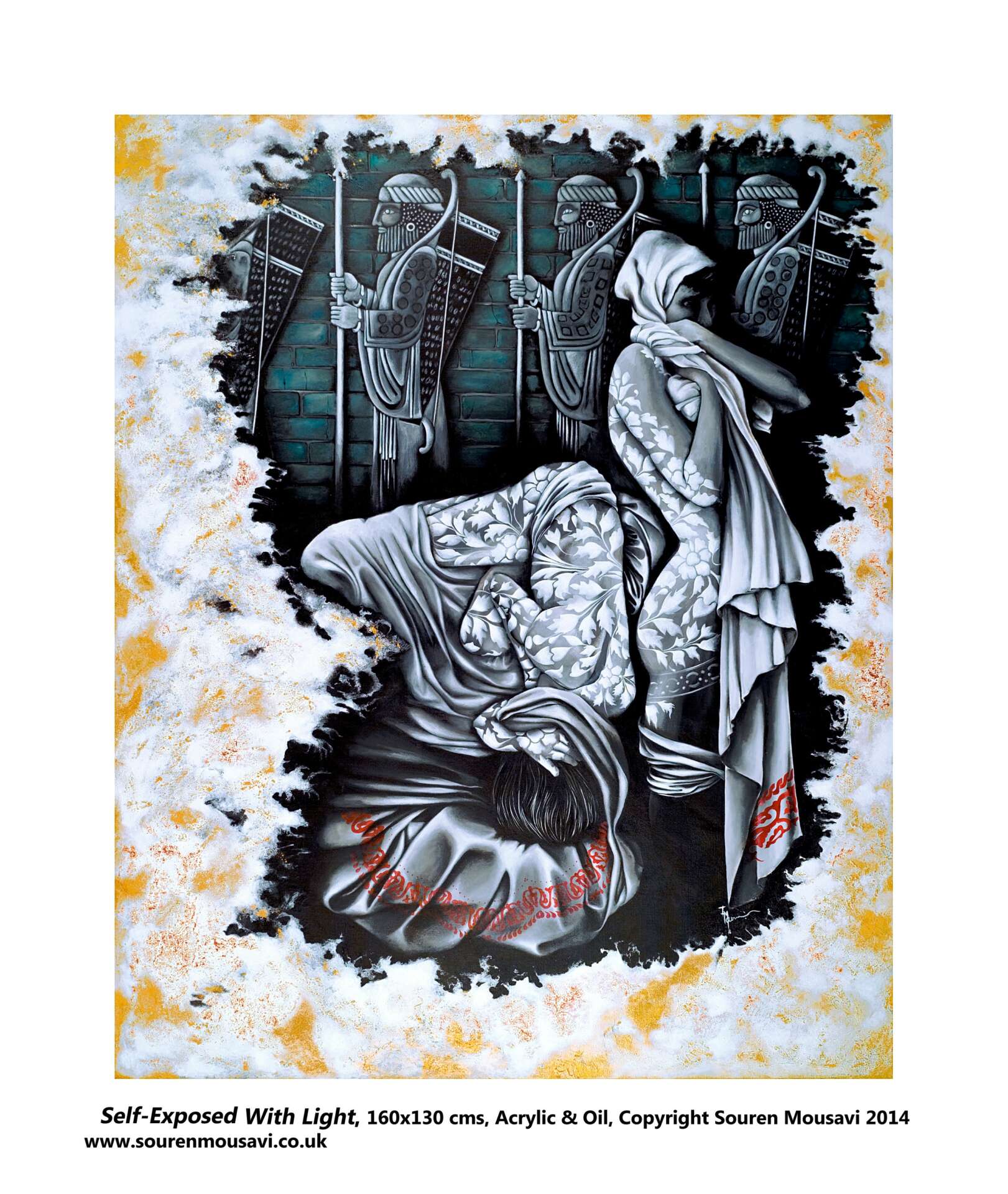
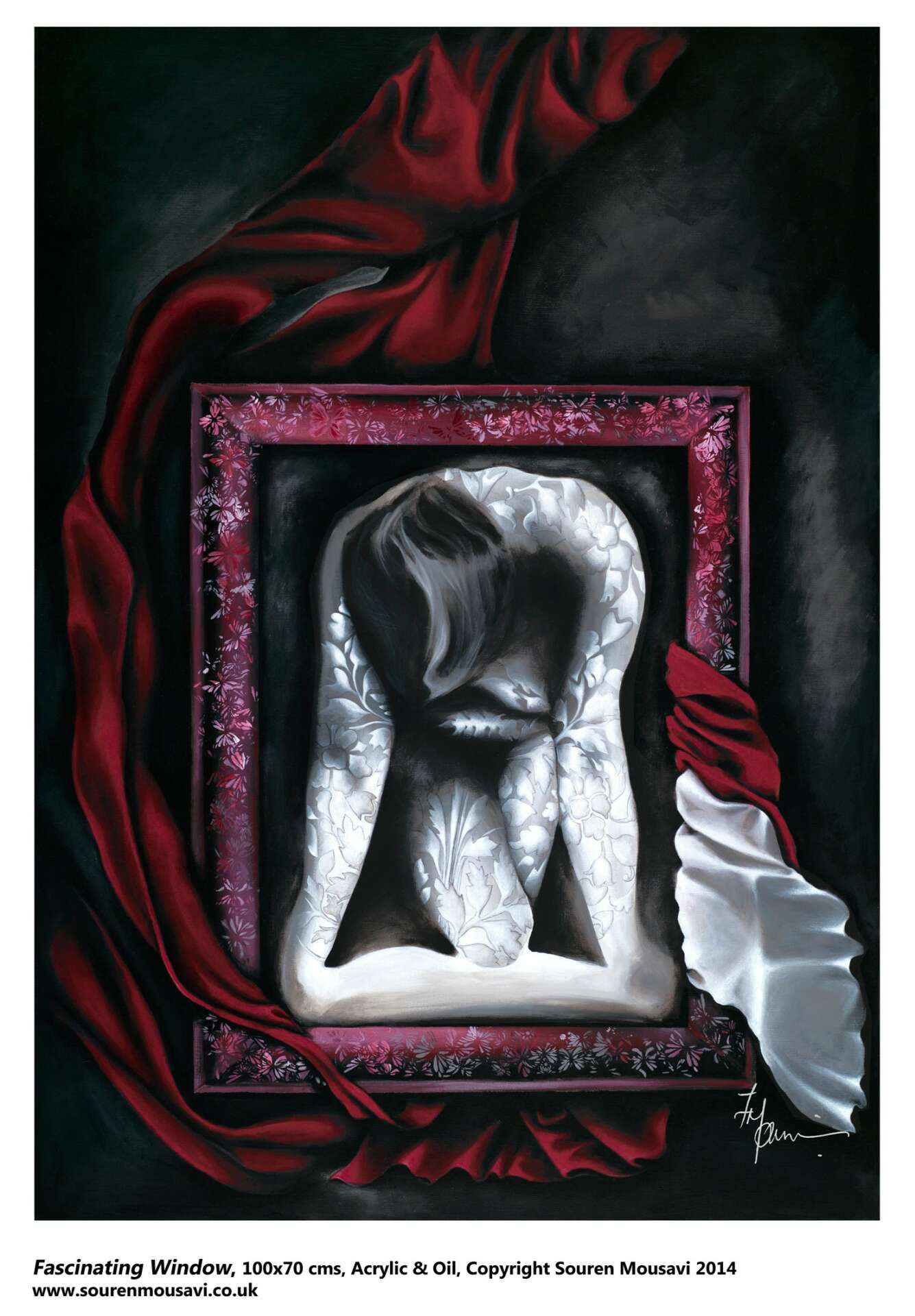
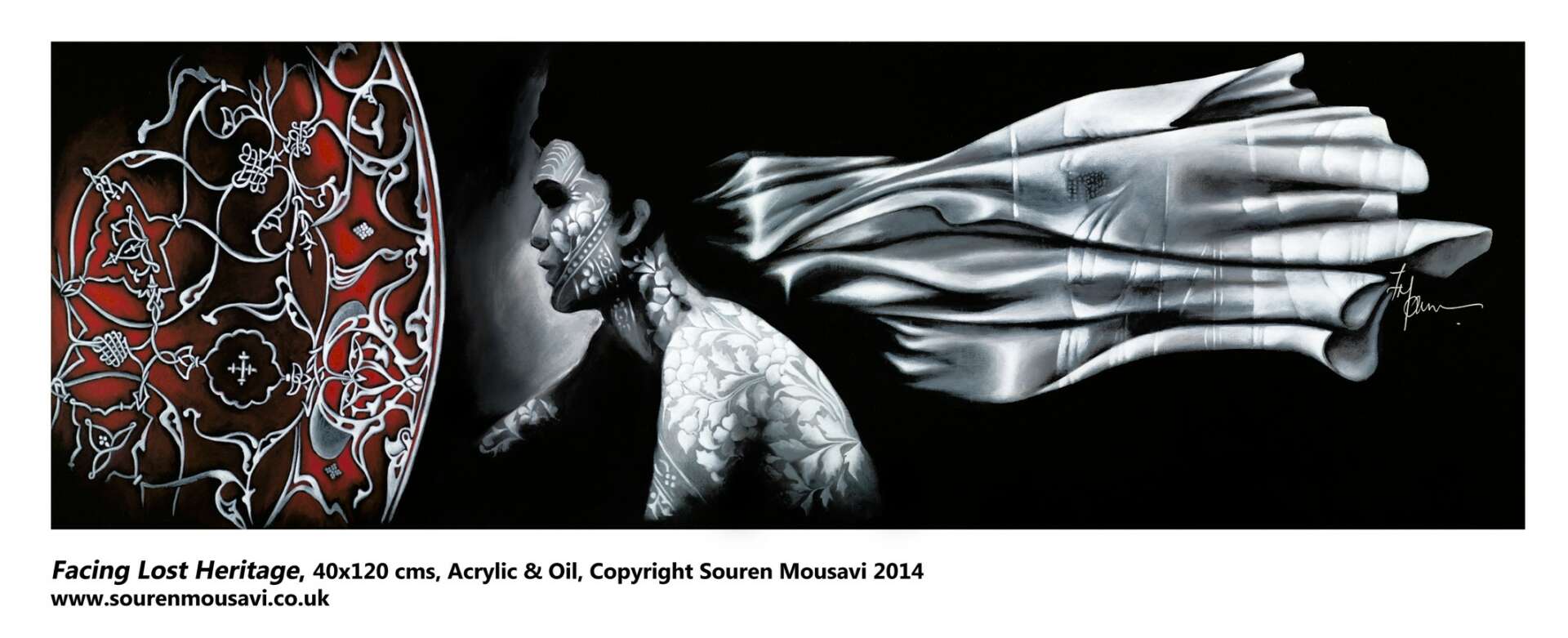
In 2010, whilst living in the UK, I sadly broke my spine in a fall which stopped me from painting for over two years. Before the accident I had begun to create a series called Modern Heritage – A Feminist Expression of Persian Culture. When I returned to complete the series, I did so in immense pain, but it was a labor of love in every sense.
To understand the impact of being misunderstood and mischaracterized let me first tell you a little about the series
My primary sources of inspiration were the poetic works of two Persian writers. One was Hafez – a poet widely respected by Moslems, Hindus, Christians and many others religious denominations. His poetry transcends the confines of traditional religion. The second is popularly known in the English-speaking world as Rumi. His poems have been widely translated into many of the world’s languages and transposed into various formats. He has been described as the “most popular poet in America” and the “best selling poet in the US”.
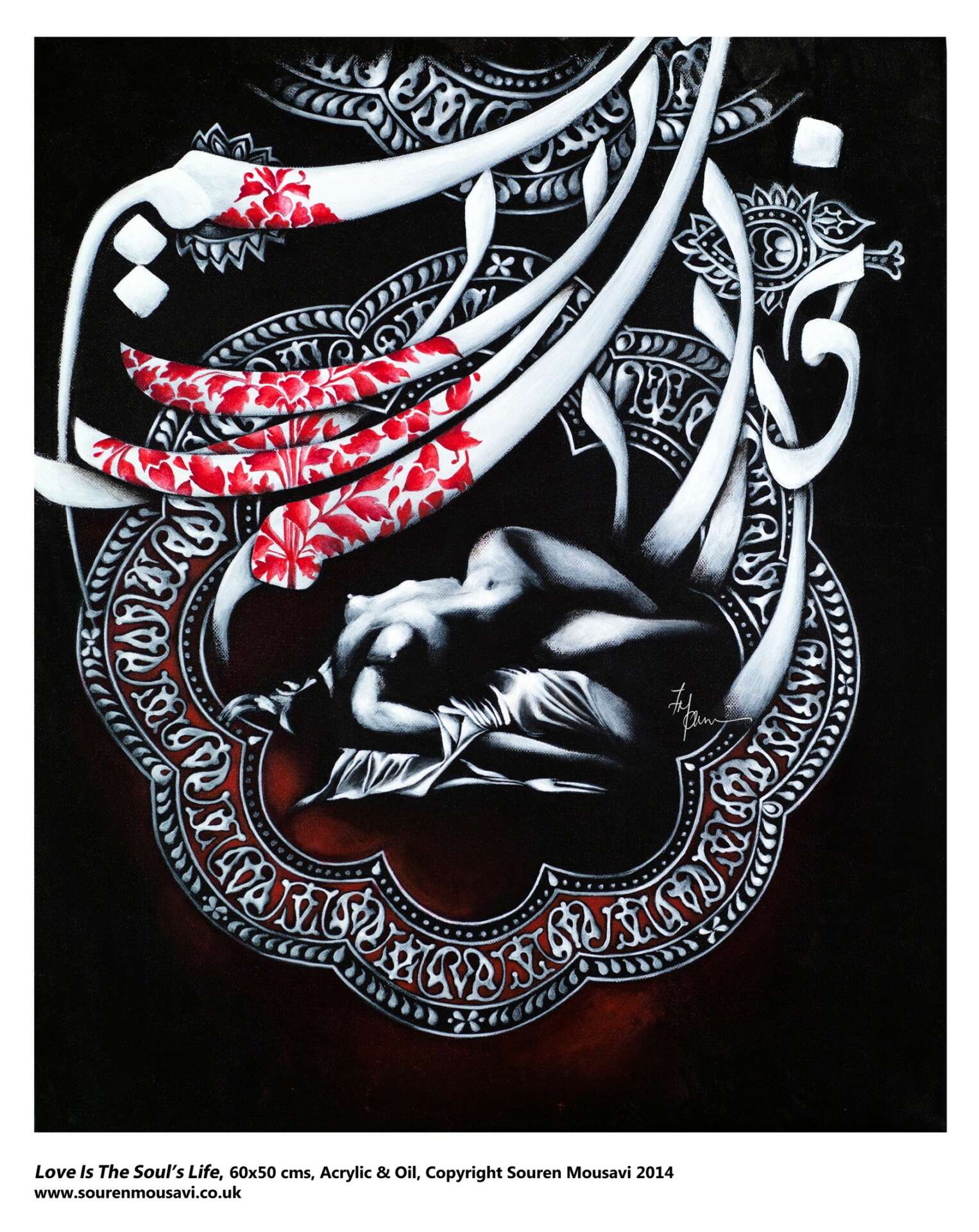
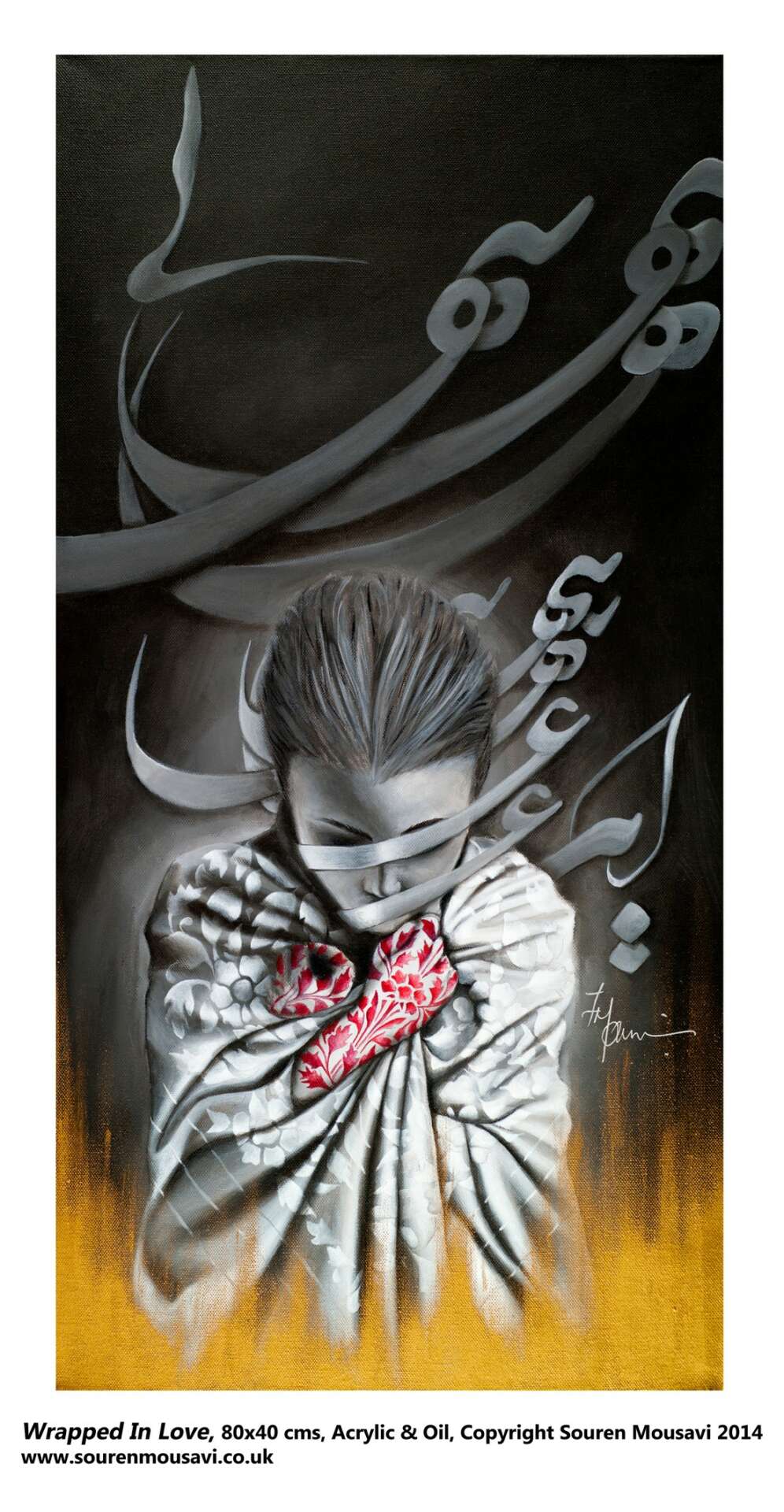
In many of the paintings I made use of Nas’taliq – Persian calligraphy – to add both artistic strength and deliberate storylines to the works. Many of the titles reflect not the words themselves but the meaning they deliver to the images they support. Persian calligraphy is an art form in itself and adds a different dimension to the works.
It was and still is a series I was immensely proud of. I created pieces that reconnected with elements of cultural history at several levels: artistic, creative, scientific and historic. I used base colors of black and white to reflect balance and contrast, touches of gold and red to reflect the on-going fight between good and bad, angels and demons and elements of gold to represent of the sun. Many of the titles underline the theme – In Consideration of Love, Wrapped in Love and Love is the Souls Life – and much of the calligraphy was based on this essential human emotion.
Because of my injury the series was never shown in the UK and first saw an audience here in the US. I sold some of the works and received many accolades but sadly for me one thing I distinctly remember from the exhibition was an unexpected verbal attack upon my work and on myself. I can still feel the anger and animosity of this one US citizen whose eyes were open but whose mind was closed. This person took note of my name, which he decided correctly was of Arabic extraction, and this apparently made me an enemy of democracy. He concluded that my Persian calligraphy must be saying something negative about his homeland. He asked no questions, took no time to read about the meanings of the individual pieces and expressly (which is a polite description) invited me to leave the US and never come back adding some specific expletives about my work and my character. I was taken aback by both his words and his vehemence. It was as if he had hit me.
I had been a freedom fighter in the Middle East. I had protested injustice and prejudice. I had even been imprisoned for my feminist views. Yet I had been judged and found guilty of being un-American based on my name and my art. For me it was a gross mischaracterization but my efforts to defend my integrity and my work were pointless
Being an artist is always challenging. Being an expressionist and a feminist will often lead you into conflict. But I learned a hard lesson through that one event. Sometimes people will judge you as guilty and deny you any chance of proving innocence and when that happens there is nothing you can do about it except move on. My long-time business partner has an expression which I try to keep in mind. Criticism should only ever be as important to you as is the person from whom you receive it. I learned never to waste my time trying to explain who I am to people who are committed to misunderstanding me and wherever possible I let my art speak on my behalf and accept that sometimes people just don’t want to listen.
As always, we appreciate you sharing your insights and we’ve got a few more questions for you, but before we get to all of that can you take a minute to introduce yourself and give our readers some of your back background and context?
I am a professionally qualified artist specialising in Expressionism. I became interested in art at a very young age and as I got older I found myself able to use it as a means of expressing freedom and equality for all – an ability which led me into direct conflict with the regime in my homeland and, ultimately I decided I would live elsewhere in world.
I do work as an art teacher, having been classically trained in the Middle East and the UK. I am a fully qualified graphic designer providing freelance services. I also practice and teach yoga and art therapy. I am particularly proud of the work I do with recovering addicts and young offenders.
I have developed interactive therapeutic programmes that combine live drawing, art demonstrations and art yoga workshops. My techniques empower emotions and develop cultural awareness to allow individuals to achieve true vision, develop their skills, improve self-awareness and boost physical and psychological confidence.
Because of my own personal experience of trauma, I am able to both understand and relate to others who have yet to master their inner demons. I encourage individuals to express their anger or distress through what they create whilst at the same time magnify the beauty and joy of self-expression. Sometimes their time with me is their only escape from their pain but each time they take away with them something positive about themselves, something re-assuring and something that helps rebuild their spirit and helps free their soul. For myself I have learned that nothing is more rewarding than helping others to find peace and solace in their life, to see them become stronger and more self-confident.
I hold a Master’s Degree in Fine Art and I have been featured by Reuters in the Middle East and The Sunday Times, The Guardian as well as the BBC in England. My life story has even been broadcast on the BBC World Service. Prizes and awards have included a GAA Vienna Showcase Best Artist Award and a Female Artist Lifetime Achievement Award in US.
I am also the US representative of a major European art fair organisation and I work as an International Art Ambassador.
I recently learned that my Art Therapy Programme is soon to be offered to international attendees.
What do you find most rewarding about being a creative?
I always tell people that art saved my life and that is literally true in my case. When you read about me, you will find that I was involved in protesting and fighting for women’s rights in Iran. I was repeatedly arrested and after a period of imprisonment had to escape never to return. When I first arrived in the UK I was suffering from physical trauma and I turned to painting as a means of therapy and, perhaps, more importantly as a way of telling my story. Art became for me not just a means of healing but a basis for communication with people across the world. I became a British Citizen and started my professional life in the West.
When I write about my work, I like to give an interpretation to each piece but what I love is to open the minds of others- to invite them to use their insights and life experiences to translate my image into their language. My most often used personal quote is “I hope that each painting will seize the imagination of my audience and bring them closer to my own life experiences”. The reward is not just the creation of a unique image, it is the lasting opportunity to convey thoughts and feelings to all those who will view it for years to come.
How can we best help foster a strong, supportive environment for artists and creatives?
I am always surprised by people’s reluctance to invest in art. For those of us who are creatives our ability to thrive is entirely dependent on the generosity of others. We will always find a way to create but for art to thrive others need to provide support. I don’t just mean buying originals but also buying Giclee or limited-edition prints or even commissioning new works. At major exhibitions I meet 1000’s of people who love to see and discuss the work but always shy away from buying. I would love it if society started to quantify the social, spiritual and psychological benefits of owning artistic works.
Many of us see and feel the immediate impact of a bottle of wine, a sumptuous meal or even a single hot yoga session. But few of us realise the potential for artworks to lift our spirits, support our ideals and promote our beliefs. The wine, the meal the yoga or similar are all single event investments and are fleeting in their effect. Art can live with you for the entirety of your life and repeatedly impact your persona. I have buyers who invested quite large sums in acquiring some of my original pieces more than 15 years ago. They still enjoy the opportunity to sit and look at their acquisition. It cost them less than a dollar a day and as each day passes that cost gets lower and lower. The artwork still gives them pleasure and solace whenever they need it. There is little else in the world that can deliver that kind of return for such a small and ever diminishing investment.
Artists don’t just need an audience they need a participating audience, a supportive audience, an understanding audience. Without audience contribution a creative ecosystem can survive but it will never thrive.
Contact Info:
- Website: https://www.sourenmousavi.co.uk
- Instagram: @sourenmousavi
- Facebook: @smousaviart
- Linkedin: https://www.linkedin.com/in/z-souren-mousavi
- Twitter: https://twitter.com/sourenmousavi