



We were lucky to catch up with Praboo Arivananthan recently and have shared our conversation below.
Praboo, looking forward to hearing all of your stories today. How did you learn to do what you do? Knowing what you know now, what could you have done to speed up your learning process? What skills do you think were most essential? What obstacles stood in the way of learning more?
Sharing a personal story can be intimidating, but it can also be gratifying. By opening up and sharing our experiences, we can connect with others on a deeper level and inspire them to do the same. It takes courage to be vulnerable, but it’s worth it when we see its positive impact on those around us. So don’t be afraid to share your story – you never know who you might be helping. Editing was one of the very first few things I learned about filmmaking. There’s so much to editing – more than just pushing buttons. It wasn’t until 2012 when I realized there could be more ways of editing a film to tell the story. VFX, practical effects, J cuts, and L cuts were some of the secrets I self-discovered. It is a workout for the mind. I wish I had known of Walter Murch’s book then. How do you best take emotions from the visual frame and hold on to them before losing the power to affect your audience? These were some of the things I wish I had known before.
In 2015, I met an editor, Miao (Mojo) Wen, who was looking to sharpen her other areas of expertise in filmmaking. We were classmates during our undergrad, and whenever there was a project or visual assignment, we would pair up together to complete the task. I was a cameraman then (before my back injury) and would shoot things that she would edit. Even on other projects where I was not the cameraman but in the team, Miao would edit it, and I would sit beside her to learn. I often saw her manipulating the shots to enhance further the story’s telling within the frame. That inspired me to re-edit one of my past projects during the pandemic, which led me to be nominated for best editing.
Miao and Walter Murch said that you want to focus on the emotions in editing a story. Miao would take it further by sometimes focusing on a particular close-up of the character on screen to emphasize the power and emotion of the shot. The audience can forgive what they see, but sometimes they can’t discount the emotion you make them feel. This is an essential skill – understanding people’s feelings on and off-screen. And despite my back injury coming in the way of me being a great camera person, it has helped me become a better visual storyteller behind the computer.

Praboo, love having you share your insights with us. Before we ask you more questions, maybe you can take a moment to introduce yourself to our readers who might have missed our earlier conversations?
My name is Praboo Ariva, and I am a filmmaker born and raised in Melaka, Malaysia. I am currently on track to becoming a film editor in Los Angeles, California. Besides editing, I spend my free time helping other fellows on sets in the art department, building, or set dressing. Due to my back injury, I am physically unable to lift heavy but can mentally lift the heavy mind problems Production Designers may have with set construction. Outside the film world, I like to open up old electronics and fix them because everything deserves a second chance. Even a messed-up old boyfriend deserves a second chance at redemption.
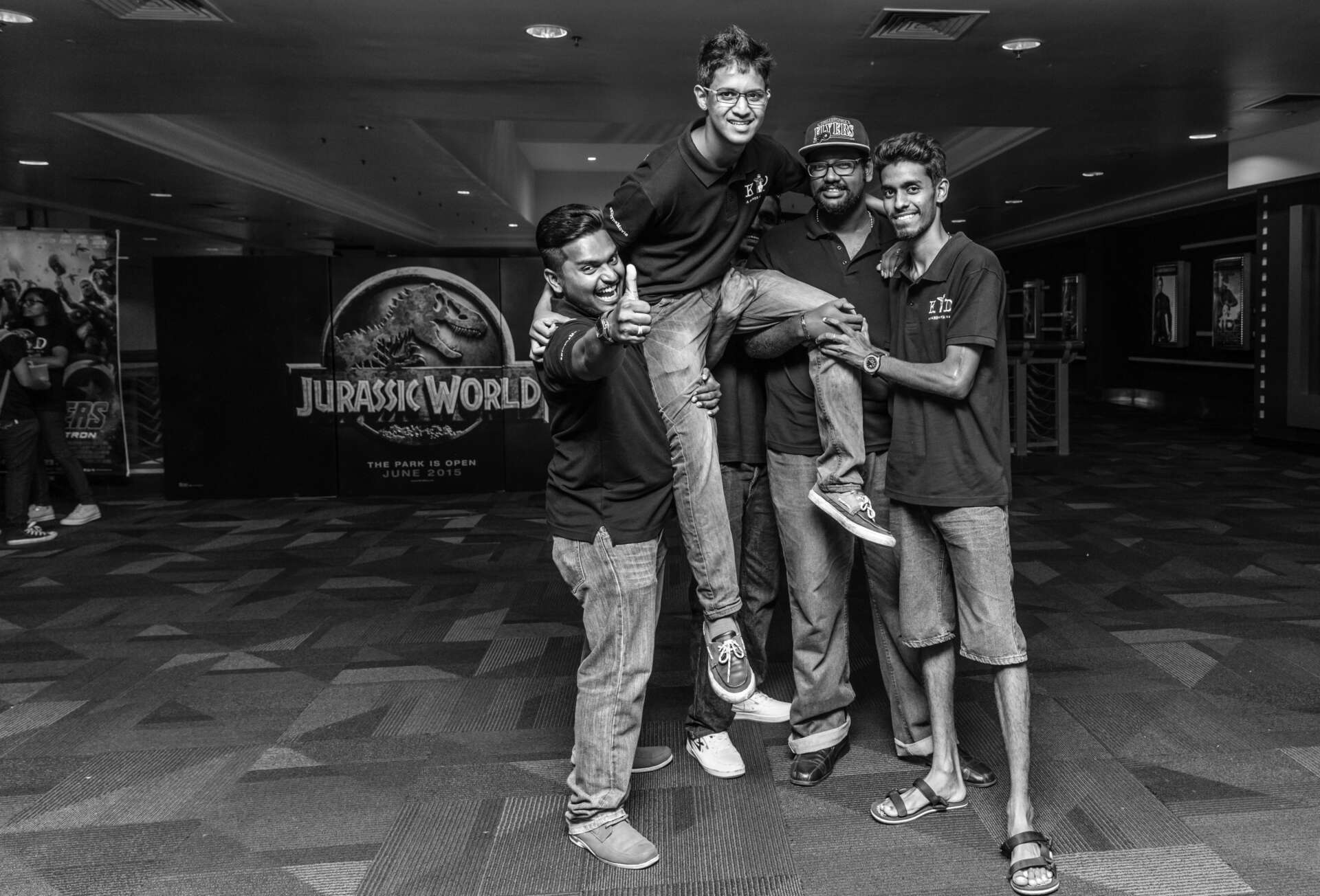
When I was 18 years old, a few friends I found online, and I released our first feature film. The movie was called KID. I directed, edited, and co shot the movie. A few friends and I sat together to write the screenplay. KID is a story about the rampant kidnapping and human trafficking cases that happen daily worldwide. Unlike any other movies of this genre, our film does not have a happy ending. Instead, it is left with many open ends as to what may happen with the victims and what goes on in the lives of the criminals after that. KID went on to win several awards around the world for Best Screenplay, Best Original Story, etc… It was one of the projects that landed me a spot here at the prestigious American Film Institute.
One thing I would like people to know about me is that I am a self-motivated, self-driven person to accomplish a goal set.
What do you find most rewarding about being a creative?
The most rewarding aspect of being an artist is that I get to create the story I want. The world is already full of negative impacts from the negligence of people. Instead of fueling the pain, I choose to be the ointment that helps overcome obstacles. Of course, I cannot go fixing everything, but I can be a part of a good movie that can help or inspire the person next to me to live their lives or pursuit what they love. The fact that I know I can do this in the movies elates me.
Learning and unlearning are both critical parts of growth – can you share a story of a time when you had to unlearn a lesson?
Letting go of things. A lesson I had to unlearn is that as much as you may love something, you have to let it go. Why? Because you want what is best for the stuff you love. Be it a lover, a pet, family member; you must let go of them. In my case, I had to learn to let go of my sound design for my first film project made in school. I had to sound design the world of the character. I did a pretty lousy job and felt disappointed that I could not match the audio to the visual world of the character due to the lack of time and creative thoughts in the time constraint of 48 hours. There is a lot that goes into the design of a soundscape. Who’s perspective is the scene from, can sound enhance the idea? What is being said? Can sound improve the picture? Many of my sound cues were missing when we previewed in the screening room. We are in school to learn. Eventually, I learned to start my sound editing and designs when I started assembling the cuts. Make your best mistakes now and learn from them so you get better at the next. By the time I reached the end of my first year in school, the latest project I was on received endless praise for its sound design and editing. I always credit that work to my first project experience. Although I didn’t do well, I learned a lot. The director of that project and I became very good friends, and I will never forget what I learned.
Contact Info:
- Website: https://iamprabooariva.jimdofree.com
- Instagram: @its_pbu
- Linkedin: https://www.linkedin.com/in/praboo-ariva-152421203
Image Credits
Tu Do, Joe Failia, Ronny Thean, Wen Miao, Ivanka Lawrence