



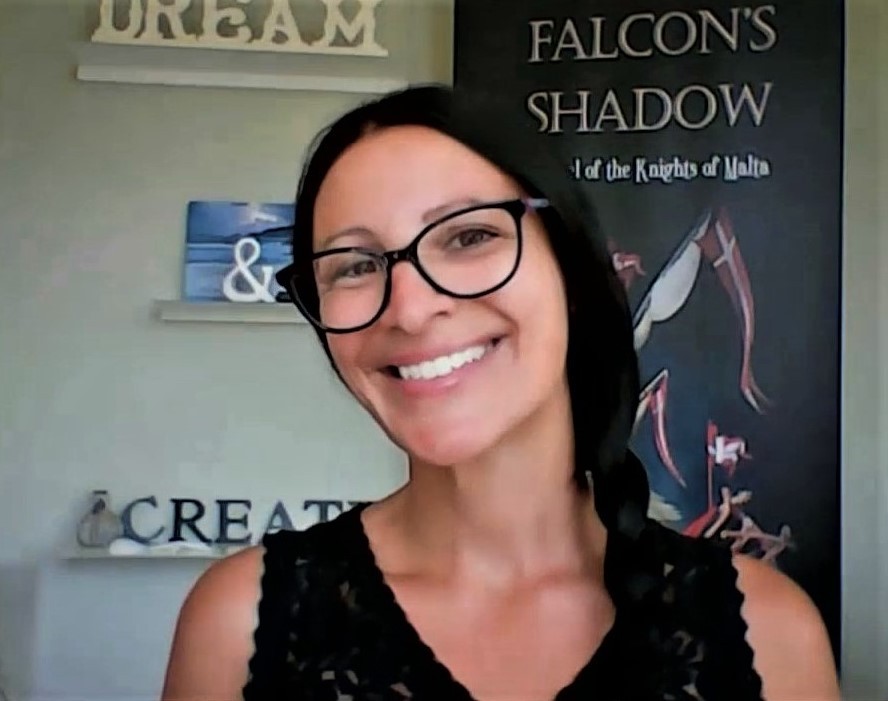
We were lucky to catch up with Marthese Fenech recently and have shared our conversation below.
Marthese, thanks for joining us, excited to have you contributing your stories and insights. We’d love to hear about the things you feel your parents did right and how those things have impacted your career and life.
I won the family lottery.
My Maltese parents celebrated the arts and cultivated a love for them within our home.
My dad is very creative and highly adept at all forms of media. For almost five decades, he hosted a television program that provided the Maltese diaspora with news from home, and in the many years he anchored the show, he sat across many highly-esteemed guests, including former Maltese Prime Minister Dom Mintoff. My dad is also an accomplished organist, serving the Maltese community parish since his arrival in Canada in 1958.
My mom is a thoroughly animated storyteller, always ready to share tales about growing up in Malta, piquing my interest in the island’s opulent history from a very young age. Her details helped color the world in which my historical trilogy is set—and many of the characters that dwell within.
Mom has an adventurous, rebellious, resilient spirit, evidenced by the fact that at 16 years old, she left home and journeyed on her own to Canada in search of new opportunities. My mom’s decision to uproot herself gave me the courage to take risks, to just say f*ck it and go for it – whatever it happens to be.
Dad has a very strong work ethic—a full-time nightshift mechanic for the Toronto Transit Commission (TTC) while balancing his Maltese news program and being the organist at the Maltese community church in Toronto’s Junction district. Dad’s diligence taught me to balance my many projects and never miss a deadline, whether I’m working on a novel, the script for my TV pilot, or serving my editing clients.
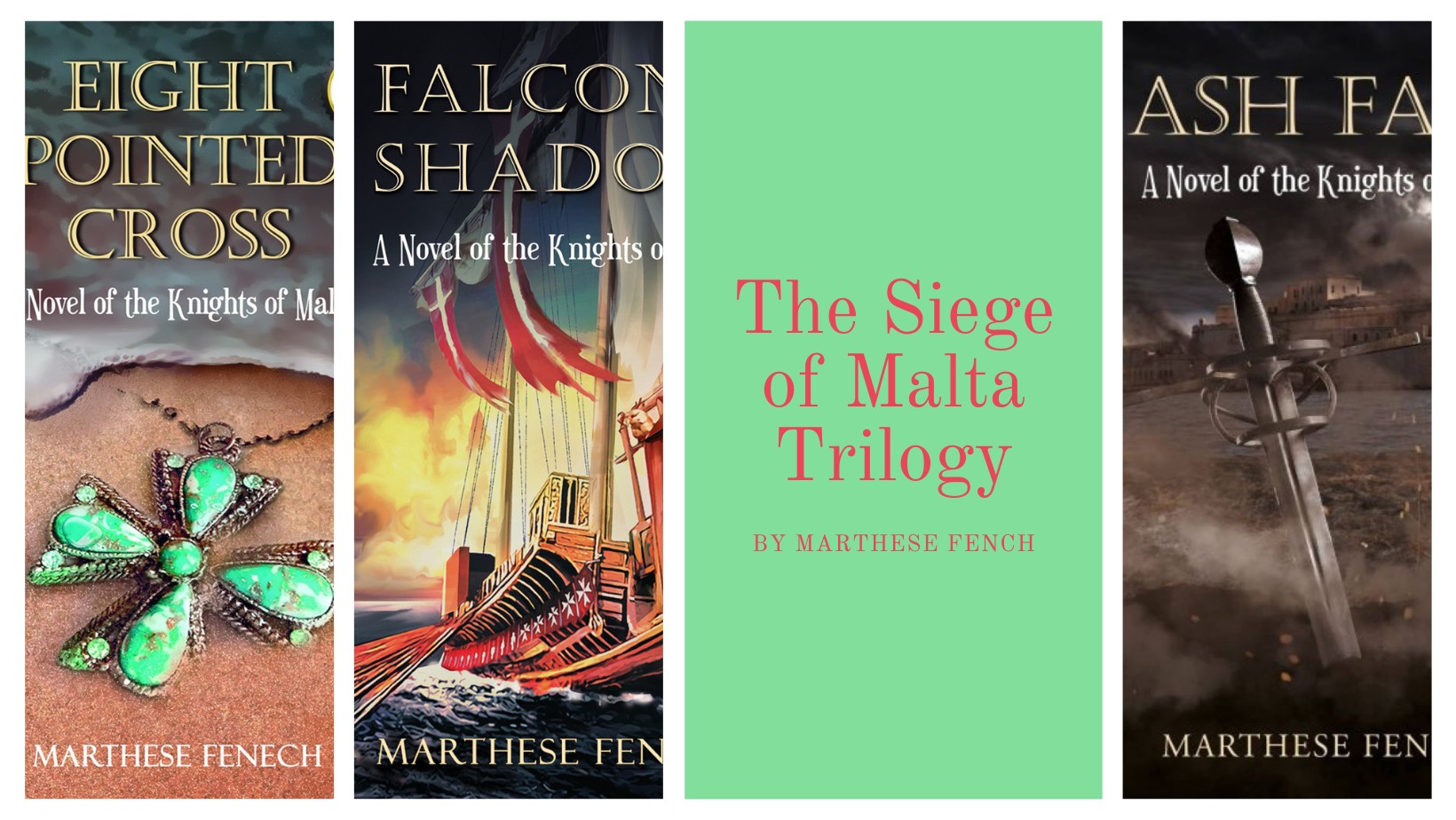
My parents are both very giving, altruistic individuals. Every year, Dad would host a twelve-hour telethon with every cent going to id-Dar tal Providenza, a residential organization in Malta for people with disabilities. Mom often volunteered her time visiting local long-term care homes and spending time with elderly occupants. I do my best to honor their generous nature. In 2020, my second novel, Falcon’s Shadow hit number one on Amazon’s bestseller list. In gratitude, I bought boxes of nitrile gloves and delivered them to a nearby hospital during the height of the Covid pandemic. Last year, I donated proceeds from the pre-sale of my third novel, Ash Fall, to organizations helping civilians in Ukraine. And I am currently in the midst of a campaign where, until May 6, 100% of all proceeds from the sale of my audiobooks will go to earthquake relief in Türkiye and Syria.
Beyond tireless dedication, my parents also noticed my love of literature and very much nurtured it. My dad never relied on books at bedtime. He’d invent stories, usually involving his own take on Hansel and Gretel. My mom surprised me with a book from the Babysitters Club series when I was around eight, and it hooked me instantly. She bought me a new one every few weeks until I finished the entire series. I have no doubt all this exposure to stories fostered my love of the craft.
My mom and dad raised five of us—Fenech does mean rabbit, after all. Something that strikes me now that I am an adult is their uncanny ability to balance the finances, pay off their house, make sure all their kids’ needs were met, and still manage to travel and enjoy some leisure taught me so much about the importance of budgeting, prioritizing tasks, and setting goals, but also, and perhaps most importantly, not denying myself meaningful experiences. Material bullshit didn’t matter. Memories did—and do. I apply these lessons not only to my editing business but my life in general.
My parents embody the very best of what it is to be Maltese. Any part of me that is tenacious, loyal, or compassionate owes entirely to them both. Any part of me that is scrappy, stubborn, and obsessed with cleaning—well, that’s all Mom.

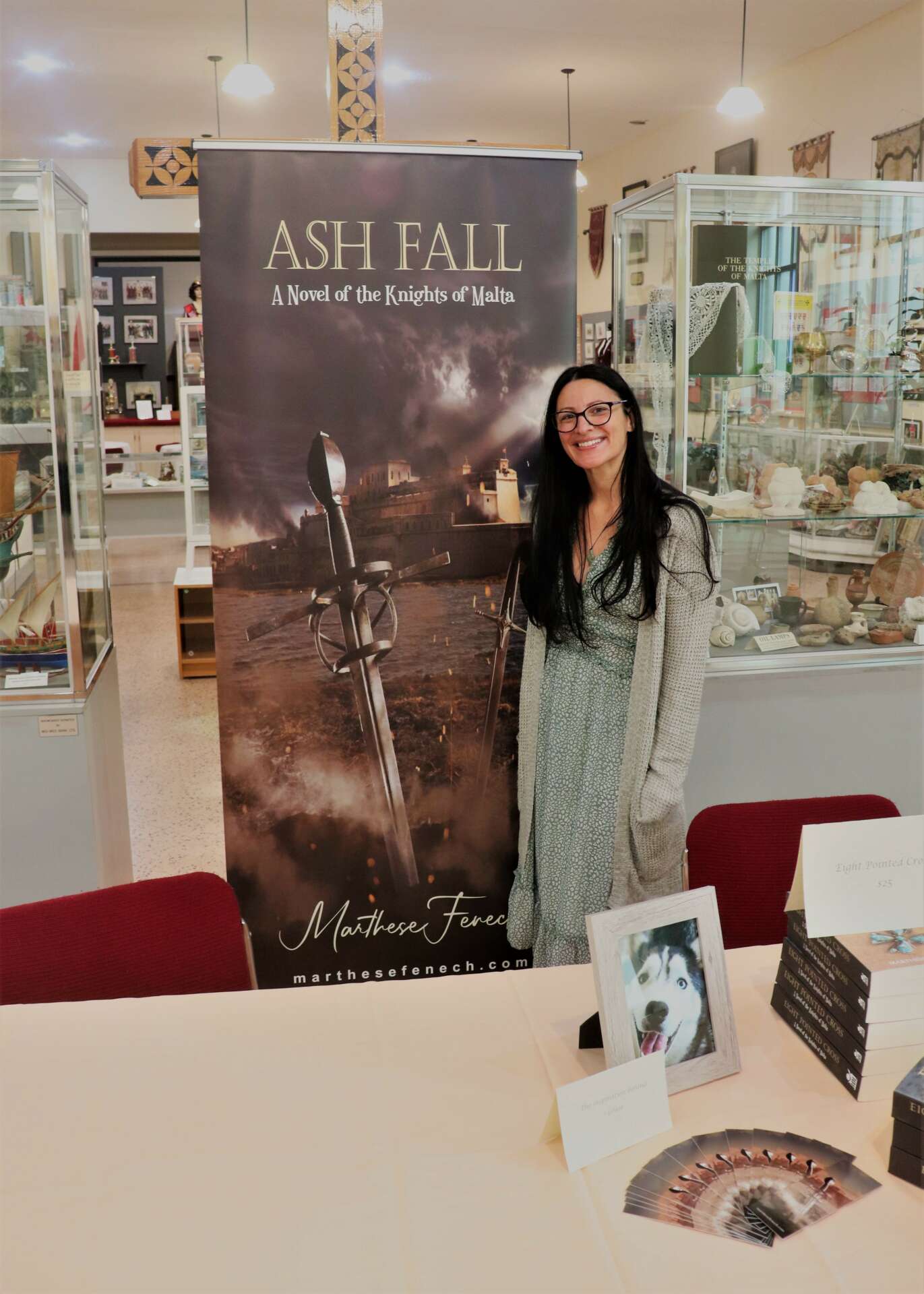
Awesome – so before we get into the rest of our questions, can you briefly introduce yourself to our readers.
Creating images with words always seemed to be a kind of magic. From the time I could speak, I found joy in storytelling, something as reflexive as breathing. I remember rattling off tales I invented to my teddy bears, which I would arrange around my room like an audience in an amphitheater.
My second-grade teacher often gave me “lines” to copy as punishment for being too talkative in class. I’d grow bored and write a story instead—usually about a little girl who upset her teacher and was so very sorry. It often won me back into the teacher’s good graces—though not always.
In addition to having wonderful parents, I was incredibly lucky to have older siblings that read to me, introducing me to authors like Tolkien, Dahl, and Adams. I loved the wonder and poetry within their prose.
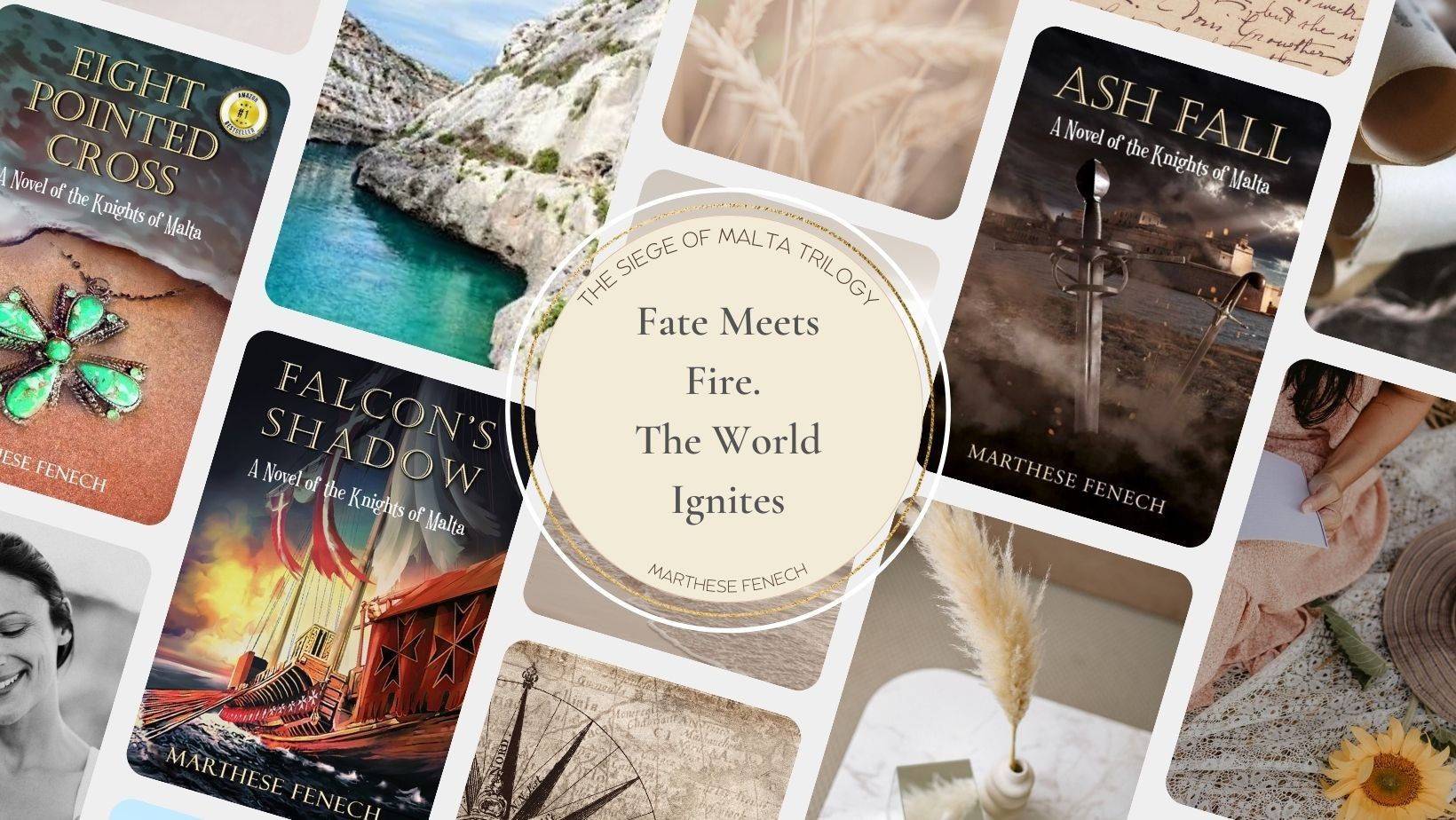
In July 2000, I traveled to Malta for a pre-college vacation. On a friend’s recommendation, I ventured to the capital city Valletta to check out the Malta Experience, an audio-visual masterpiece that showcases the island’s incredible seven-thousand-year history. The moment the Great Siege of 1565 played out on the screen, everything changed. Suddenly, the battle I’d heard so much about came to life for me as never before. The Siege tested the resilience and fortitude of this little island and its people in ways I could hardly comprehend. It’s an underdog story for the ages. And just like that, the idea to write a novel based on this epic battle took root. Only it turned into a trilogy because there was far too much to pack into a single book.
As I worked through the first manuscript, I learned how critical it was to have an editor–someone other than a person who loves me and cares about my feelings. I had the good fortune of receiving guidance and critiques from my favorite authors. Some were tough on me, but the harsher they were, the more grateful I felt (after a few moments of wallowing in self-pity).
Their candor meant they knew I could take it. Most of all, it meant they believed in the story I wanted to tell. And in 2011, it all paid off when I signed a contract for the publication of my first novel, Eight Pointed Cross.
The role a mentor plays in helping a writer develop their story is invaluable, from the preliminary stages to the final line edits. Feedback from an editor or fellow writer is most valuable. Most are happy to mentor and nurture, to offer wisdom gleaned from experience, to smooth out rough edges and wrinkles—sometimes gently, sometimes not so gently, but always in an effort to help the writer grow.
I wanted to be that person for new writers. So, for the past few years, I have worked with private clients and publishing houses as an editor. I love the work. Several of the manuscripts I’ve worked on now occupy shelves in bookstores across Canada and the US. Among those are Anitha Robinson’s science fiction trilogy, Broken Worlds, Christine Grabowski’s young adult fantasy, Dickensen Academy, and Tina S. Beier’s space opera, The Burnt Ship Trilogy.
As a high school English teacher, I can identify areas that require development and demonstrate how to avoid common mistakes. While I work mainly in the genre I write, historical fiction, I accept thrillers, dystopia, adventure, contemporary, mystery, sci-fi, fantasy, and young adult. I also offer critiques on shorter nonfiction pieces, such as essays, articles, speeches, and formal letters, and provide copy-editing for websites, blogs, corporate training manuals, consulting services, financial firms, and legal practices. My list of clients has grown so long over the past year I’ve been able to leave teaching high school almost entirely.
I know how hard it is to submit a novel to an editor — a manuscript is something deeply personal, and I am beyond grateful to every writer who trusts me with their work. I lack the vocabulary to adequately convey how proud it makes me to see so many of the novels I’ve taken on published and highly acclaimed.
Any stories or insights that might help us understand how you’ve built such a strong reputation?
Clients have said both privately and in public reviews that they are most appreciative of my honesty, thoroughness, attention to detail, and commitment to their projects. I have completed every job I have taken on no fewer than three weeks ahead of the deadline.
I provide regular updates and feedback as I work through the manuscript – little progress reports every few days. Open communication with clients is a critical aspect of the job – it is the best way to foster loyalty and trust.
Moreover, when I edit, I give the author reasons for my suggestions and changes. I don’t simply make the change and hope they understand why – I want to teach as well as critique. I provide my clients with resources to help improve their craft, whether it is the proper way to structure dialogue, when to use a comma, or how to maintain a consistent point of view. I will also give recommendations of books to read within the genre they are writing and/or books on craft.
Following the completion of an editing job, I also provide a bullet-point style essay going over the main areas of concern and how I believe the author can address them should they so choose.
And, they are also kind enough to say they find me funny and friendly. Clients seem to enjoy that in addition to editing, I also share my visceral reactions (in the form of comment bubbles) as I read through – if I laugh out loud, am moved, feel a lump form in my throat, feel anger towards a character. It’s important to me to communicate these reactions to the author so they know whether they hit the intended mark. Sometimes I’ll relay a few brief personal anecdotes as well, if I find I’m relating to a particular situation or character. This provides the author with holistic feedback that moves beyond just comma splices and run-on sentences.

Any insights you can share with us about how you built up your social media presence?
Marketing is my least favourite aspect of being an author. I don’t enjoy self-promotion, and I’m a terrible salesperson. In my late teens, I had a commissions-based retail job, and my manager would harangue me for not engaging with customers. As someone who cringed whenever salespeople approached me, I never wanted to inflict that same discomfort on others. But because my job was on the line, I came up with a strategy. I would approach customers and quietly say, “Listen, I know you don’t want me to bother you with information you can easily read on the signs, but my manager—the dude standing over there—keeps giving me shit for not pestering customers, so just humour me and make it seem like I’m telling you the most interesting information you ever heard.” And they would laugh and sympathise, and I’d get a sale. …Perhaps I’m not as bad a salesperson as I style myself. But still.
Signing with an international publisher in 2011 was thrilling because not only had I realized my lifelong dream of becoming a traditionally-published author but I now had a team to do the heavy lifting as far as promotion.
….Or so I thought.
For years, my first novel, Eight Pointed Cross, seemed to languish on shelves and sold only as a result of word-of-mouth or my own meagre attempts at marketing. My publisher did not take an active role in promoting my work, something that now seems to be the trend with most publishers unless the author is already a household name.
I committed to learning how to market my work myself. Ahead of the launch of Falcon’s Shadow, my second novel, I released Eight Pointed Cross as a second edition with an updated, more vibrant cover to build anticipation for the sequel. I took online courses and participated in too many webinars to count. I listened to marketing podcasts, reached out to social media and marketing experts, and followed authors who had a knack for self-promotion. I joined author-centric Facebook groups, curated my posts on social media, and even joined TikTok against all impulses.
I cultivated a mailing list to send out information directly to subscribers. Had my website torn down and rebuilt from scratch by a professional—though I maintain it. I write blog posts (though not as often as I should). I stepped way outside of my comfort zone and did live presentations, talks, and readings online. I networked at every opportunity and made contacts in the media. I joined organizations like the Maltese-Canadian Business Network Association (MCBNA) and attended their events, where I interacted with incredible people who share my heritage. Becoming active in the Maltese-Canadian community gave rise to interviews with Maltese media (usually via Skype or Zoom), print articles, and appearances at international book club events. I reached out to my alma mater to share news about my endeavours. They responded favourably and kindly and often ran features about my work in their newsletters and on their websites, always with accompanying links to my socials. Best of all, I developed deep, lasting friendships with fellow authors who are so generous with their ideas and support.
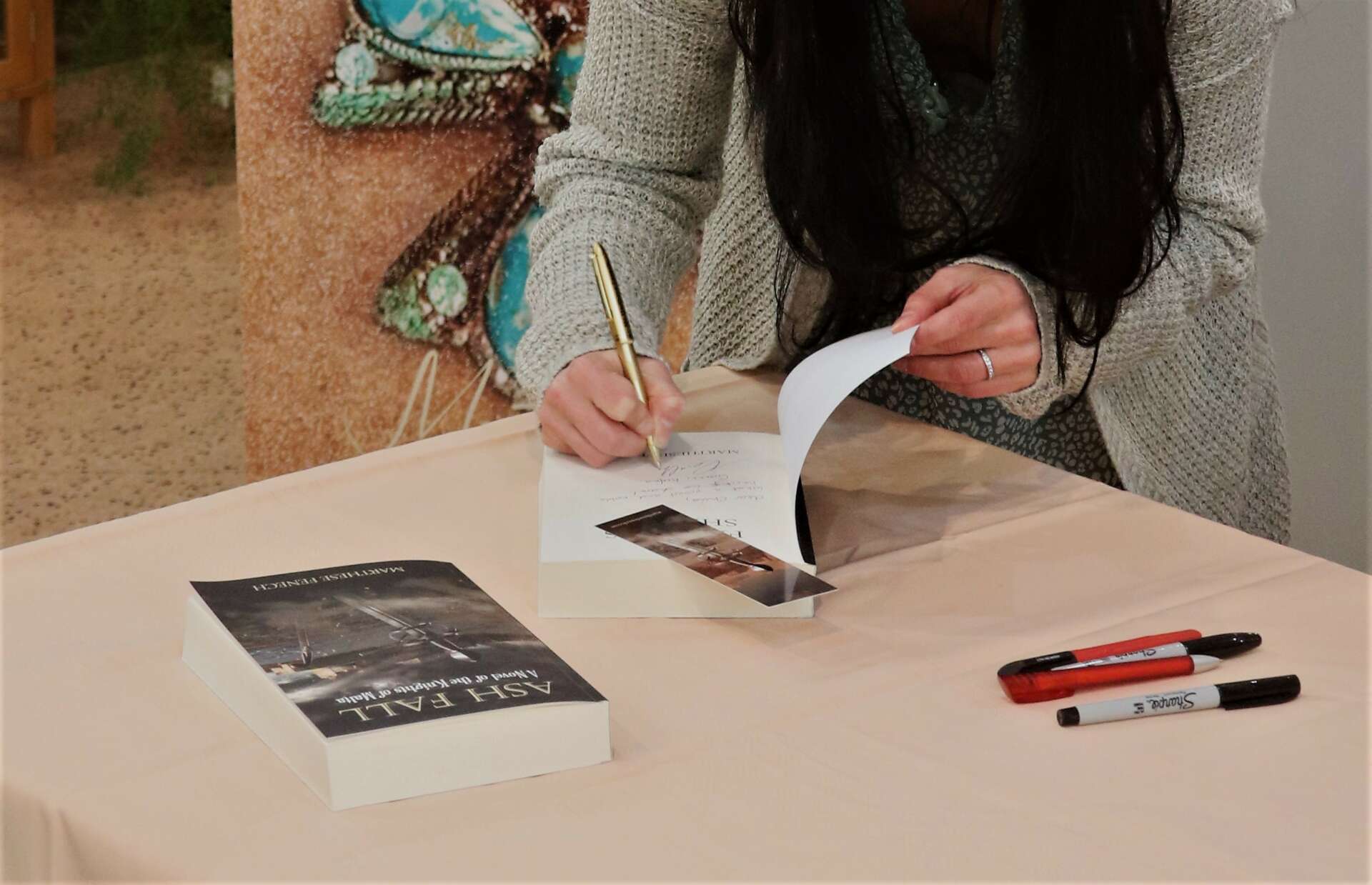
All this learning-put-in-action set the stage for the release of my third novel, Ash Fall, which came out in September 2022.
The result? Three number-one bestsellers on Amazon. And an entirely new and unexpected skillset for which I am so grateful and can apply to current and future projects, including my editing business, which has grown so well, I am at the point where I have to turn down jobs.
Contact Info:
- Website: https://marthesefenech.com
- Instagram: https://www.instagram.com/fenka33/
- Facebook: https://www.facebook.com/EightPointedCross
- Linkedin: https://www.linkedin.com/in/marthese-fenech-6763a841/
- Twitter: https://twitter.com/Fenka33
- Reedsy: https://reedsy.com/mar-fenech
- TikTok: https://www.tiktok.com/@fenka33
- IMDb: https://www.imdb.com/name/nm12669286/
- Amazon Author Central: https://www.amazon.com/~/e/B081FF9Z32
- GoodReads: https://www.goodreads.com/author/show/6469162.Marthese_Fenech