

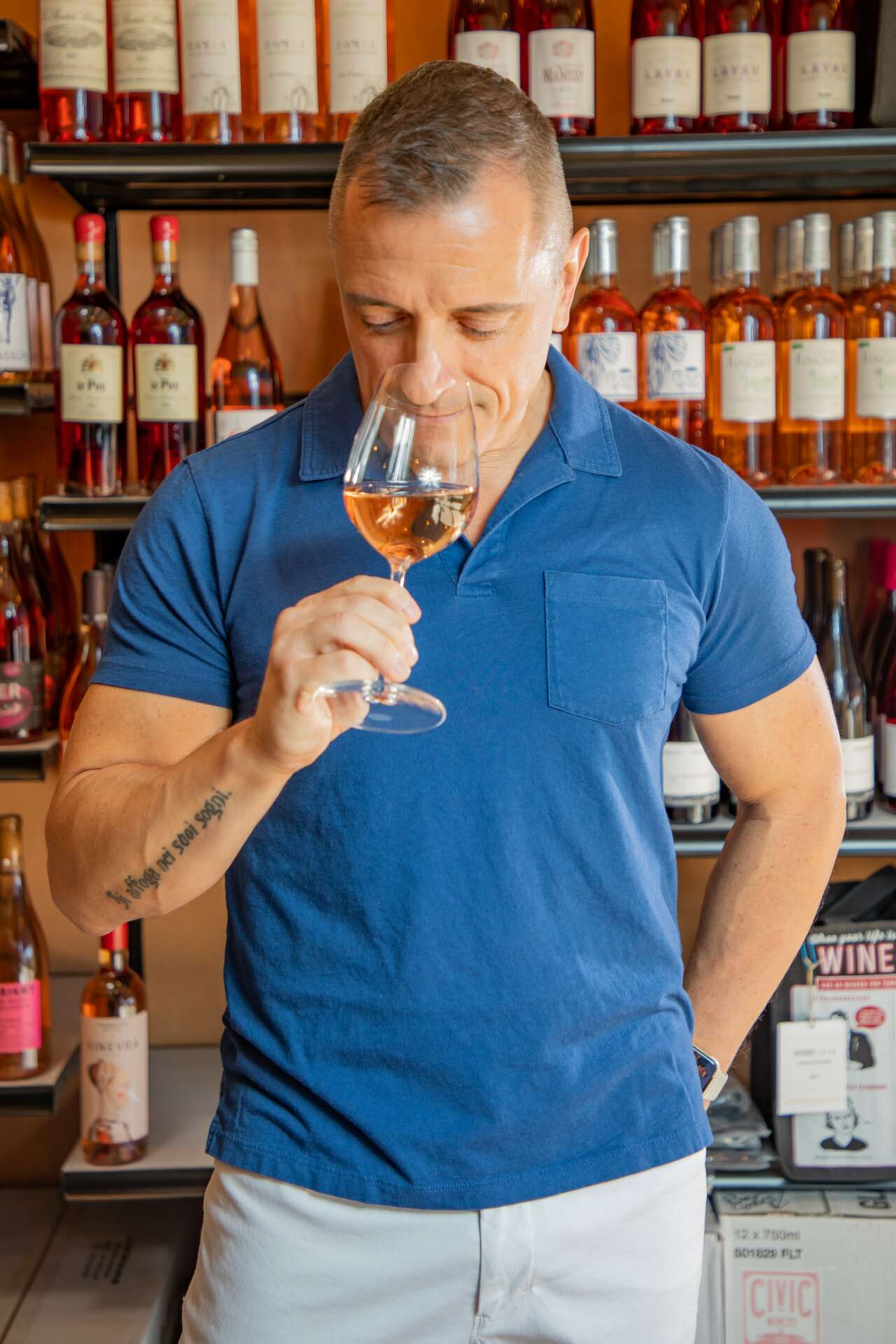

We’re excited to introduce you to the always interesting and insightful John Libonati. We hope you’ll enjoy our conversation with John below.
John, thanks for joining us, excited to have you contributing your stories and insights. What do you think Corporate America gets wrong in your industry? Any stories or anecdotes that illustrate why this matters?
Excess! There are billions of gallons of bulk wine produced every year that are just sitting in vats waiting for a commercial producer to buy and blend into some gimmicky label or waiting for some marketing person to come along and slap a fancy label on it and give it a fake story. The consumer has no idea what’s in these wines or exactly where they’ve been harvested. And to think about all the wine that doesn’t sell and how much water, time, pesticides and labor was used to farm all this excess wine is heartbreaking. We can and should do better.
https://www.winebusiness.com/classifieds/grapesbulkwine/

As always, we appreciate you sharing your insights and we’ve got a few more questions for you, but before we get to all of that can you take a minute to introduce yourself and give our readers some of your back background and context?
Coming from a New York Italian family, food and wine has always been a big part of my life. As a graduation present my parents sent me to San Francisco to visit my Uncle Dom, and during this visit he asked if I wanted a drink. I asked for a wine cooler and he said “Get outta here. I’ll put ya back on the plane to the city before I give you one a them things.” He gave me a glass of St. Supéry Cabernet Sauvignon and that pretty much started my love of wine.
On a trip to London before opening my shop, Social Wines in Boston, I met Isabelle Legeron. Isabelle became a friend and she turned me on to natural wines. When I got back home I rewrote my business plan and changed over to organic/natural wines. Opening hyphen- I knew I wanted to do the same thing. Every wine at hyphen- at a minimum must be farmed organically if not biodynamically. Sustainability is a good start but you can still spray in your vineyards. I’d rather focus on producers that are taking care of the land that we’re borrowing from future generations. I can be pretty stubborn about this. Especially when I think of all the bulk wine that’s just sitting around waiting to be “branded”.
I’m fortunate to have a local (and visiting) clientele that are very interested in eating organically and natural wines fit into their lifestyle. My favorite customer is the skeptical one that comes back and says “I wasn’t expecting much from that wine but I loved it. What else do you have?”
Can you talk to us about your experience with selling businesses?
I’ve sold two businesses. My bar/nightclub in New York City and my wine shop in Boston. The best advice I can give someone selling a business is to make sure you have a really good and smart lawyer that’s done a lot of business sales.
When I was selling the bar the buyer showed up to the closing with no money. After asking for document after document and I was able to supply everything he asked for my lawyer finally got the hint and asked if they came to the closing with the check. They didn’t. And one of the buyers was a lawyer. My lawyer informed me that I could keep their security deposit and walk away. Instead I gave them another week but the buyer couldn’t come to the closing only his lawyer.
When I was selling the wine shop the broker we hired to list the shop asked us “So, what did you get?” I didn’t understand the question. He then said “Who paid for your cooler?” I replied “I did”. He then asked “Who paid for your shelving?” I replied “I did.” At this point I realized he wanted to know what kick backs or “gifts” did I get from the distributors. I told him that we paid for every single item in the shop with our own money. He was shocked and said in his 30 years as a broker he’d never heard that before. I would never do a thing like that because the shop was my vision and I wasn’t going to be locked down owing favors to distributors and carrying wines I didn’t like or love.
If you stick to your guns and do the work you’ll find that you can be successful as a small business working with other small businesses. You can be honest, follow the rules and success will follow. Patience.
What’s been the most effective strategy for growing your clientele?
Be honest and energetic about selling your product. Don’t be a “salesperson” and never “upsell”. The customer will more than likely regret their purchase later when they realize they’ve been upsold. And they will tell others and probably not return. Standing out for your honesty and enthusiasm about your product is better than standing out for your upsell.
If someone comes in for a $20 chardonnay I’m not going to try and sell them a $40 bottle of Burgundy. I don’t like being “sold to” and I would never do that to my clientele. Give your customer what they want and not what you want to sell. They will be happier with their purchase. And they will come back and better yet they will tell their friends. Word of mouth is still the best advertising.
Contact Info:
- Website: www.hyphenpsp.com
- Instagram: @hyphenpsp
- Facebook: @hyphenpsp
Image Credits
George Duchannes