


Alright – so today we’ve got the honor of introducing you to Lisa Ernst. We think you’ll enjoy our conversation, we’ve shared it below.
Lisa , looking forward to hearing all of your stories today. We love heartwarming stories – do you have a heartwarming story from your career to share?
A few years ago a friend and I visited a small lotus pond a short distance from my house. The plants in early February are dead but still quite visible. The leaves, stems and pods endure and are surprisingly hardy. My friend had never seen lotus plants in winter and observed how they visibly “go back down into the mud.” The stems break and turn down, along with the leaves and pods that rest where the water and mud meet. These dead plants nourish and feed the mud that supports the lotus when it comes back to life in spring.
Few photographers document dead lotus plants; we normally see only images of the gorgeous and prolific flowers of summer. Since discovering this nearby pond, I’ve made it a point to visit and photograph the lotus plant in all seasons. Especially in winter, the well known phrase, “no mud, no lotus,” is on full display as the lotus plants so visibly turn down to the mud. We humans too, if we wish to awaken, need to turn our awareness down into our hearts, our bodies, right into the messiness and muddiness of our humanity.
Thich Nhat Nahh said, “When we learn how to suffer, we suffer much, much less.” In this way, we don’t escape to an idealized version of waking up and overlook what is right here. My own years of practice have led me down into my body and heart again and again, finding lovingkindness and dharma wisdom through resting in the midst of everything that is present, rather than seeking a special place where everything is pristine and perfect.
Often during meditation retreats I read Pema Chodron’s lovely, short piece called “Waking Down to Bodhichitta.” Here’s the reading:
“In the process of discovering bodhichitta, the journey goes down, not up. It’s as if the mountain pointed toward the center of the earth instead of reaching into the sky. Instead of transcending the suffering of all creatures, we move toward the turbulence and doubt. We jump into it. We slide into it. We tiptoe into it. We move toward it however we can. We explore the reality and unpredictability of insecurity and pain, and we try not to push it away. If it takes years, if it takes lifetimes, we let it be as it is. At our own pace, without speed or aggression, we move down and down and down. With us move millions of others, our companions in awakening from fear. At the bottom we discover water, the healing water of bodhichitta. Right down there in the thick of things, we discover the love that will not die.”
I observe in many meditation students a tendency to try to wake up through subtly pushing away what feels incongruent with their narrative of spiritual awakening. They primarily try to avoid the very muddiness that is inviting them into their lived experience. Even long-term meditators often do this. When this happens, their center of awareness mostly rests above the body. My work is to gently guide them into settling their awareness enough to include their bodies, hearts, emotions, nothing left out. This practice often leads them to the wisdom they’re seeking elsewhere.
“Waking down” practice imbues our physical and mental tension and vulnerability with a quality of compassionate space. This process initiates a deep unwinding, no matter how closed off it may have seemed when we were attempting to wake up.
On reflection, we may realize this practice of waking down is the most obvious thing in the world, yet not so easy to do. Why? Because settling awareness down inevitably leads us to whatever level of armoring and vulnerability we live with as human beings.
Embodiment starts with the capacity to rest in an unarmored, open state. This unbound presence is essential to “waking down” to our wisdom, our compassion and ultimately, our unbound awareness. There is also power here, a capacity to see and respond to life skillfully.
This remains a lesson I re-learn again and again.


As always, we appreciate you sharing your insights and we’ve got a few more questions for you, but before we get to all of that can you take a minute to introduce yourself and give our readers some of your back background and context?
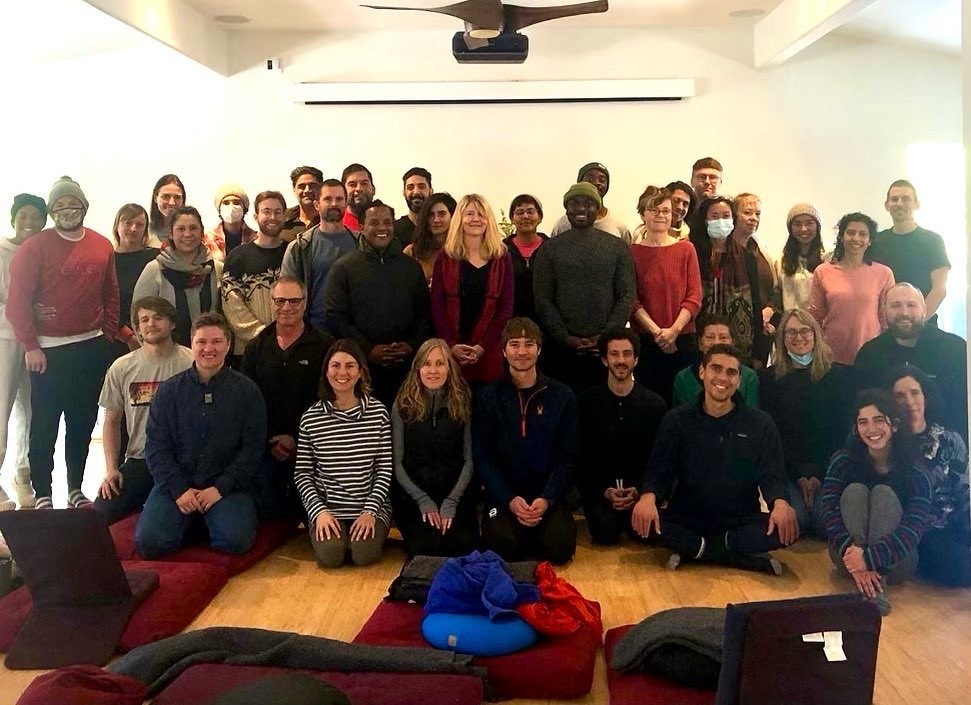
I was drawn to meditation and yoga at a very early age. But it took a while to actually get going and join a group since I felt shy and hesitant. But once I began I never looked back. I meditated with Zen groups to begin with but after about ten years wanted to start my own meditation group that was focused on integrating teachings from the three Buddhist branches of Zen, Vipassana and Tibetan. Our community is primarily based on the Insight (Vipassana) tradition but other teachings and practices are weaved in. We began with a small room at the Unitarian Church here in Nashville but before long we built a committed core group and moved to a bigger space. Now we offer a number of weekly groups along with classes and retreats. Monday is our main meditation night and its a hybrid offering so people can attend in person or online. This is when I teach, but our Mindful Recovery Class with Scott Glazier on Thursdays and our Back to Basics on Saturdays, also with Scott and Jennifer Wang offer more options.
I offer one on one mentoring for students who wish to deepen and grow their practice and a number of annual retreats both locally and throughout the US and beyond. Meditation and mindfulness are so beneficial that it has spread the world over and I’m happy to have our center right here in Nashville. You can learn more and join us at www.onedharmanashville.com.


Have you ever had to pivot?
Before teaching meditation I was a full time visual artist. But when the economy began taking in around 2008 and art sales really slowed down, I realized it was time to transition full time into teaching meditation. Since I already had a community through my non-profit, One Dharma Nashville, it was a fairly smooth transition. I certainly felt sad to be leaving my art practice behind, but joyful in being able to grow my teaching and reach many more people. I do still make art when I can and happily, Vanderbilt University Medical Center bought four of my paintings last year and they are in prominent places such as the 100 Oaks branch as well as the main medical center.
We’d appreciate any insights you can share with us about selling a business.
I was for several years in the tech business here in Nashville and helped grow the organization to a point where we were able to sell it to a competitor. What I learned in business is that honesty is always the best policy not matter if it seems inconvenient. For instance, when we were growing our products and business, we ran out of money and were encouraged to file for bankruptcy. But instead we decided to be honest with our vendors and tell them we didn’t have the funds to pay them at the moment but if they stuck with us, we felt very confident that we would not only pay them back but they would be able to grow with us. They all agreed! And it worked out beautifully – we paid them all off, avoided bankruptcy and grew into a very successful business and our vendors reaped the rewards. Had we not been completely honest, we would have gone out of business.
Contact Info:
- Website: www.lisaernstmeditation.com
- Instagram: https://www.instagram.com/lisaernstmeditation/
- Facebook: https://www.facebook.com/ernst.lisa
- Yelp: https://www.yelp.com/biz/one-dharma-nashville-nashville
- Other: https://soundcloud.com/lisaernst
Image Credits
Credits are not applicable.