

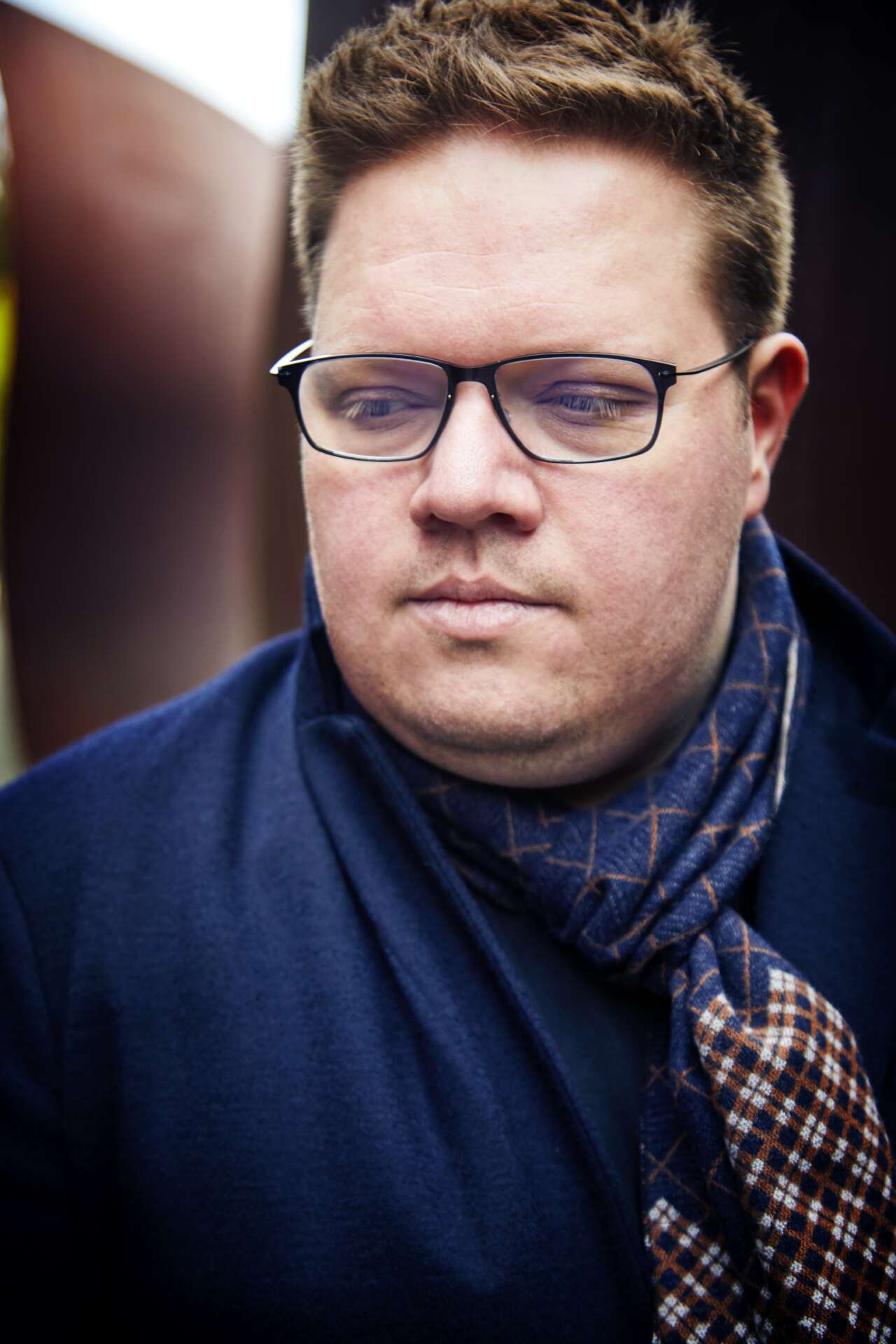

We’re excited to introduce you to the always interesting and insightful Jeff Baker. We hope you’ll enjoy our conversation with Jeff below.
Hi Jeff, thanks for joining us today. We’d love to hear about when you first realized that you wanted to pursue a creative path professionally.
Standing on stage at the Lionel Hampton Jazz Festival, I was only 16 years old and I had just won their solo competition. The youngest winner of the competition at the time, I looked around on stage and saw childhood heroes ready to play music with me. Mulgrew Miller, Elvin Jones, and others smiling back at me as I made my debut. In front of me, 10,000+ audience members sitting inside the football arena at the University of Idaho.
I remember every little detail about that night. I remember the make and model of the microphone I was holding, and the brand of stage monitors pointing back at me. I remember what I was wearing, and what I had for dessert backstage as I went from musician to musician to get autographs. I remember how gracious most of them were, and even the one who was not at all interested in some kid.
I loved jazz and singing before that night, but after that experience, music went from being something I was good at it, to a biological imperative. It was something I absolutely had to do.


Great, appreciate you sharing that with us. Before we ask you to share more of your insights, can you take a moment to introduce yourself and how you got to where you are today to our readers
After attending Willamette University on a music scholarship, I signed with Origin Records out of Seattle, WA at just 22 years of age. I began a full time music career, releasing 5 albums, and touring all over the world, performing in Europe, South Africa, and throughout the United States.
I spent the first decade of my career touring, recording, and establishing myself in the music industry. In 2003, I became a Grammy Voter, joining NARAS, and saw my first several albums chart on the Top 100 Jazz Charts, and played on hundreds of radio stations worldwide. Reaching #1 on stations in Boston, Atlanta, Chicago, Capetown and many other markets.
In 2005, I agreed to help start and teach at a private performing and visual arts School in my hometown. The opportunity to work with talented young artists was something I’d always been interested in. Along with the school Co-Founder, Pianist Justin Nielsen, we built one of the most successful jazz programs in the country, winning multiple Downbeat Magazine Awards and being invited to the Monterey Jazz Festival Next Generation Competition, Carnegie Hall, the National Cathedral and others. Our success at ArtsWest lead to an opportunity to create a program from the ground up at Portland State University in Portland, OR.
Moving to Portland in 2012, we began to design a curriculum for Jazz+Contemporary Voice that would become a model for schools throughout the West. Growing the program was extremely fulfilling, but working with Artists and Musicians closer to the start of their careers was especially appealing. My first voice student in Portland was a young woman named Sam Tru. After my time at PSU came to an end, Sam was the first individual I thought of for my newest venture…and Indie Record Label for emerging artists and singer/songwriters.
I produced Sam’s debut album ‘Cycle’ in Los Angeles in 2019, and with its release, in partnership with my label home for 20 years, Origin Records, we launched the Next Music Company and Next Records in January 2020.
What makes Next so cool, is that our focus is on creating a launch pad for the careers of these young artists. They’re allowed to lean on my two decades of contacts, experience and goodwill, and in doing so, hopefully can avoid some of the negative pitfalls that can occur. Next is fortunate to have international physical and digital distribution that rivals any major label, and each project produces a micro-economy that employs Producers, Engineers, Graphic Designers, Musicians, photographers and videographers. That may be one of the things I’m most proud.
In your view, what can society to do to best support artists, creatives and a thriving creative ecosystem?
As I mentioned earlier, I think the future of creative endeavors is in creating micro-economies. Taking funding, and spreading it out into the ecosystem, providing meaningful work for people in a variety of practices.
When creatives apply for grants, or receive funding, I’d encourage them to consider this as a part of their mission. While DYI certainly has its merits, we are not growing or supporting our community at large by keeping things to ourselves. I would advocate instead, for making connections and allowing other professional creatives to contribute to your project by doing the thing they’re most skilled at doing.


Can you tell us about a time you’ve had to pivot?
As a jazz musician at my core, I believe the ability to improvise is a life skill. It has less to do with music, and more to do with emotional intelligence. How to respond to adversity? How do you adjust when conditions on the ground change? So the ability to see something coming, and pivot in order to avoid potentially unnecessary negative experiences is vital. To be honest, I’ve had to pivot more than care to admit. But in each of those instances, whether it was losing a job, or ending up with far fewer resources for a project I was working on, in almost every case, what came about from that situation and choice to change course, ended up being the thing I needed or was needed all along. So I’m grateful for those moments, and thankful that I had mentors and teachers who helped me cultivate that emotional intelligence.
Contact Info:
- Website: https://www.thejeffbaker.com/
- Instagram: @thejeffbaker
- Facebook: https://www.facebook.com/PhrasesProject?mibextid=LQQJ4d
- Linkedin: https://www.linkedin.com/in/jeff-baker-43939a9a
- Twitter: @thejeffbaker
- Other: https://www.nextmusiccompany.com https://www.ampbournemouth.com/
Image Credits
Photos by Steve Korn Design by John Bishop Design by Jeff Baker