



We were lucky to catch up with Chelsea Darling recently and have shared our conversation below.
Hi Chelsea, thanks for joining us today. Earning a full time living from one’s creative career can be incredibly difficult. Have you been able to do so and if so, can you share some of the key parts of your journey and any important advice or lessons that might help creatives who haven’t been able to yet?
Here’s my formula for what it took to build a profitable creative business:
+ 16 years of professional experience in advertising and marketing
+ Which is also 16 years of professional experience in design
+ Plus 10 years of professional experience in the craft I am selling (custom metalwork)
+ At least two other failed businesses and couple decades of entrepreneurial experience
+ A decently thought out business and financial plan
+ A functional system of self motivation and self management (which took longer than all the other things to earn, but is quite essential)
+ An A+ support team (friends, family, collaborators and colleagues)
It’s a lot, and I am still building on these foundations every day, because this work is hard and I need all the knowledge and resources I can get!
I think I would have had a much easier time if I also had a decent amount of money to get me started, but as I am a big fan of saying: “Make what you can with what you have.” Lamenting what I didn’t have has only ever gotten in the way of discovering all that was possible.
Chelsea, love having you share your insights with us. Before we ask you more questions, maybe you can take a moment to introduce yourself to our readers who might have missed our earlier conversations?
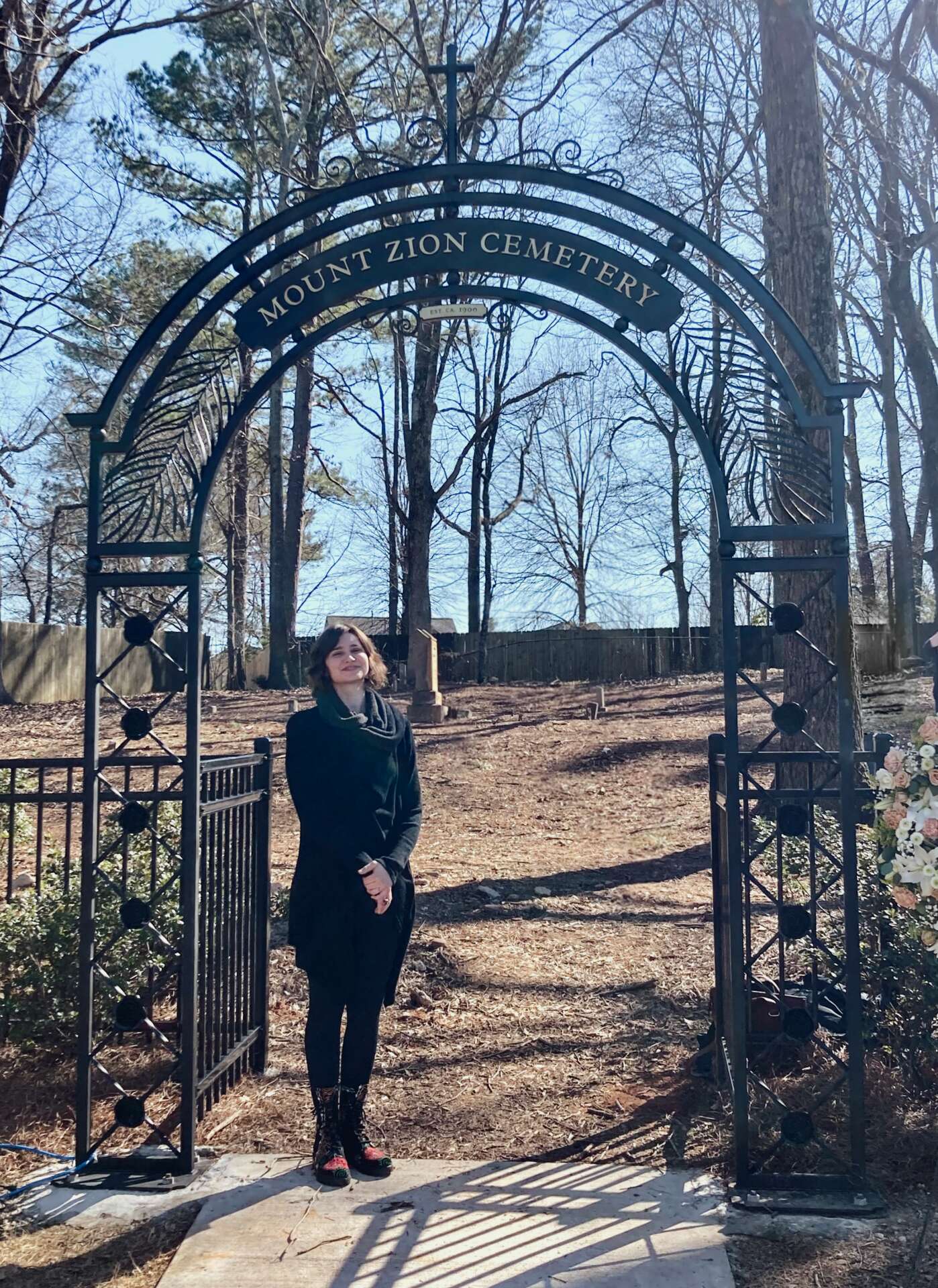
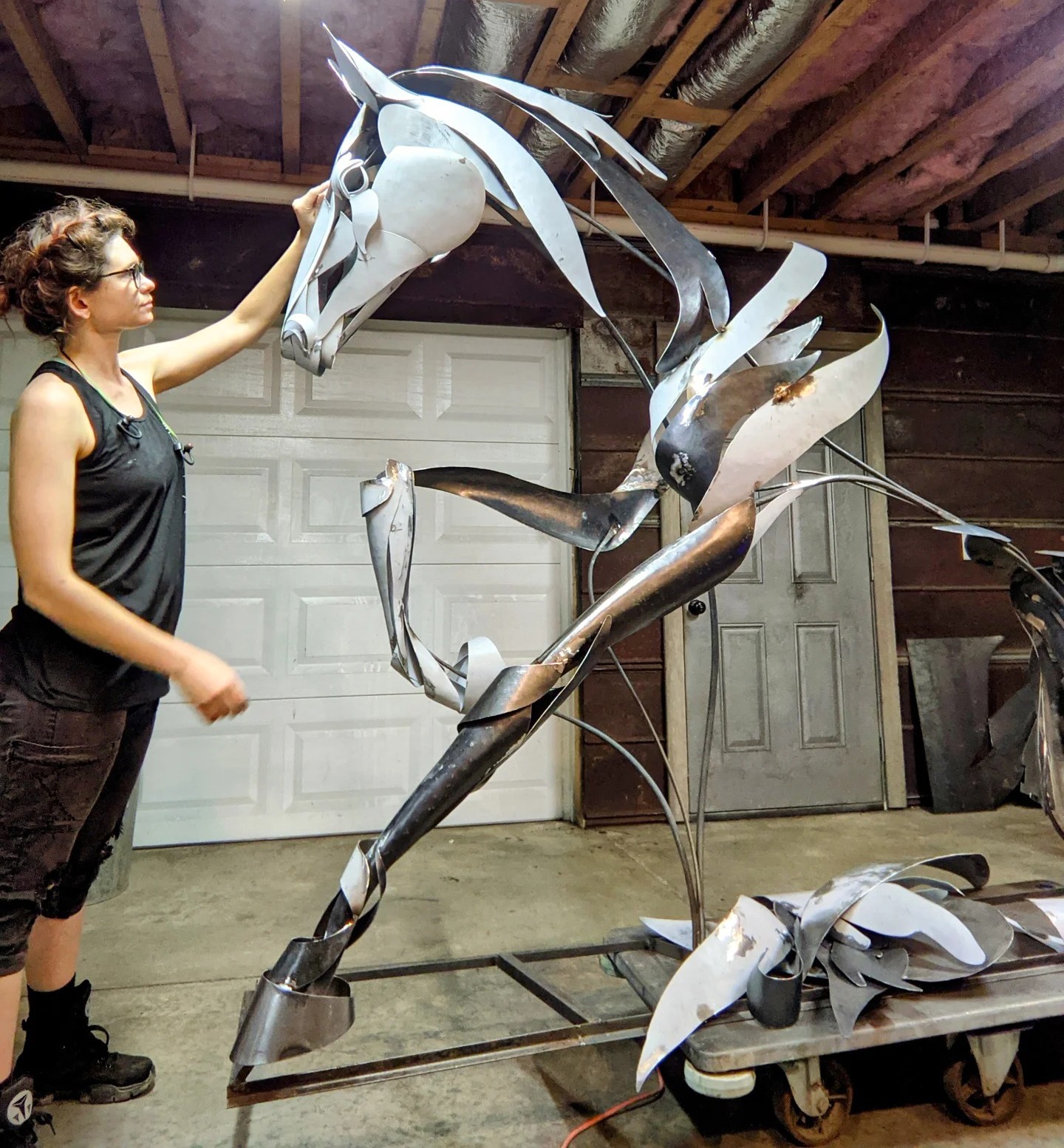
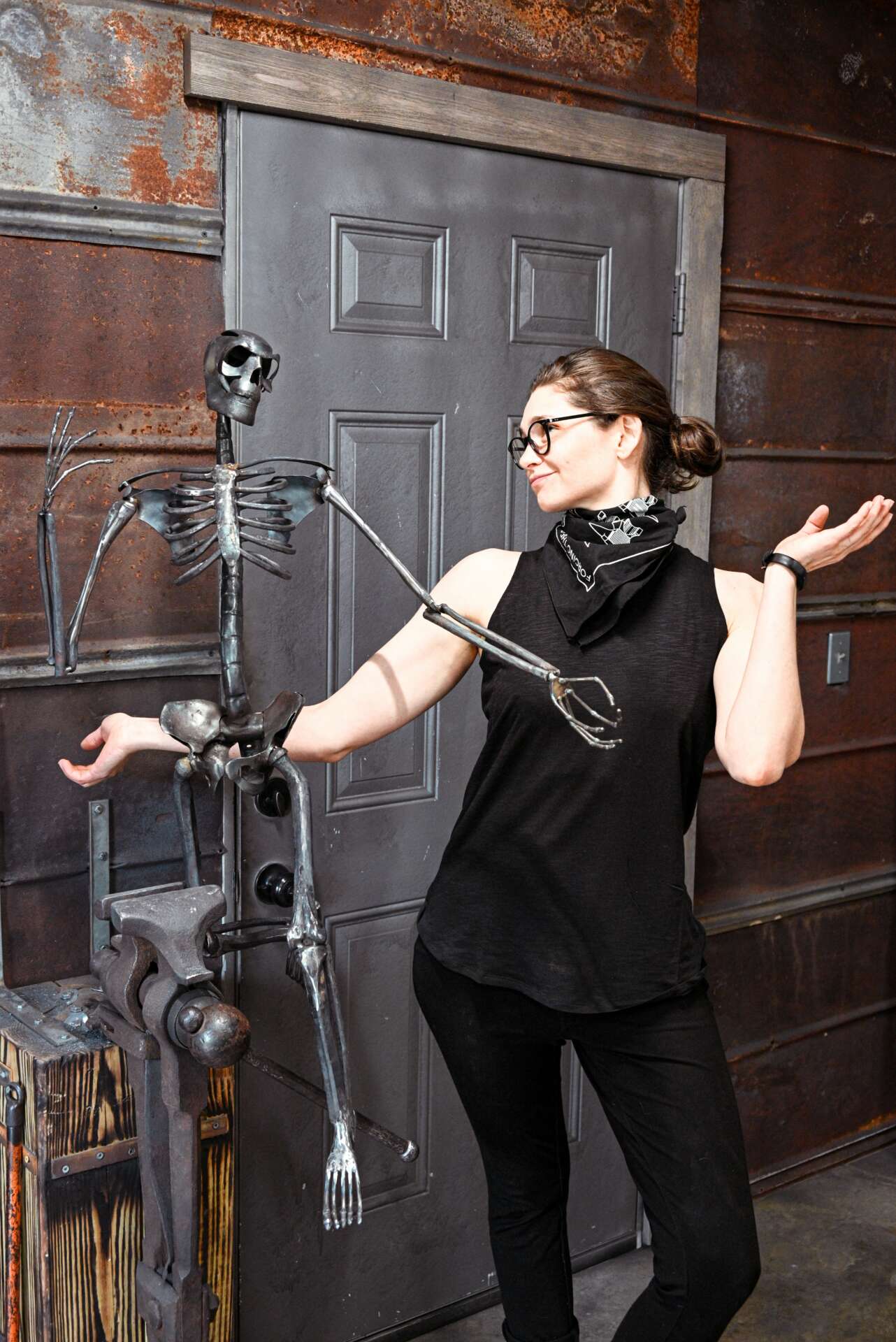
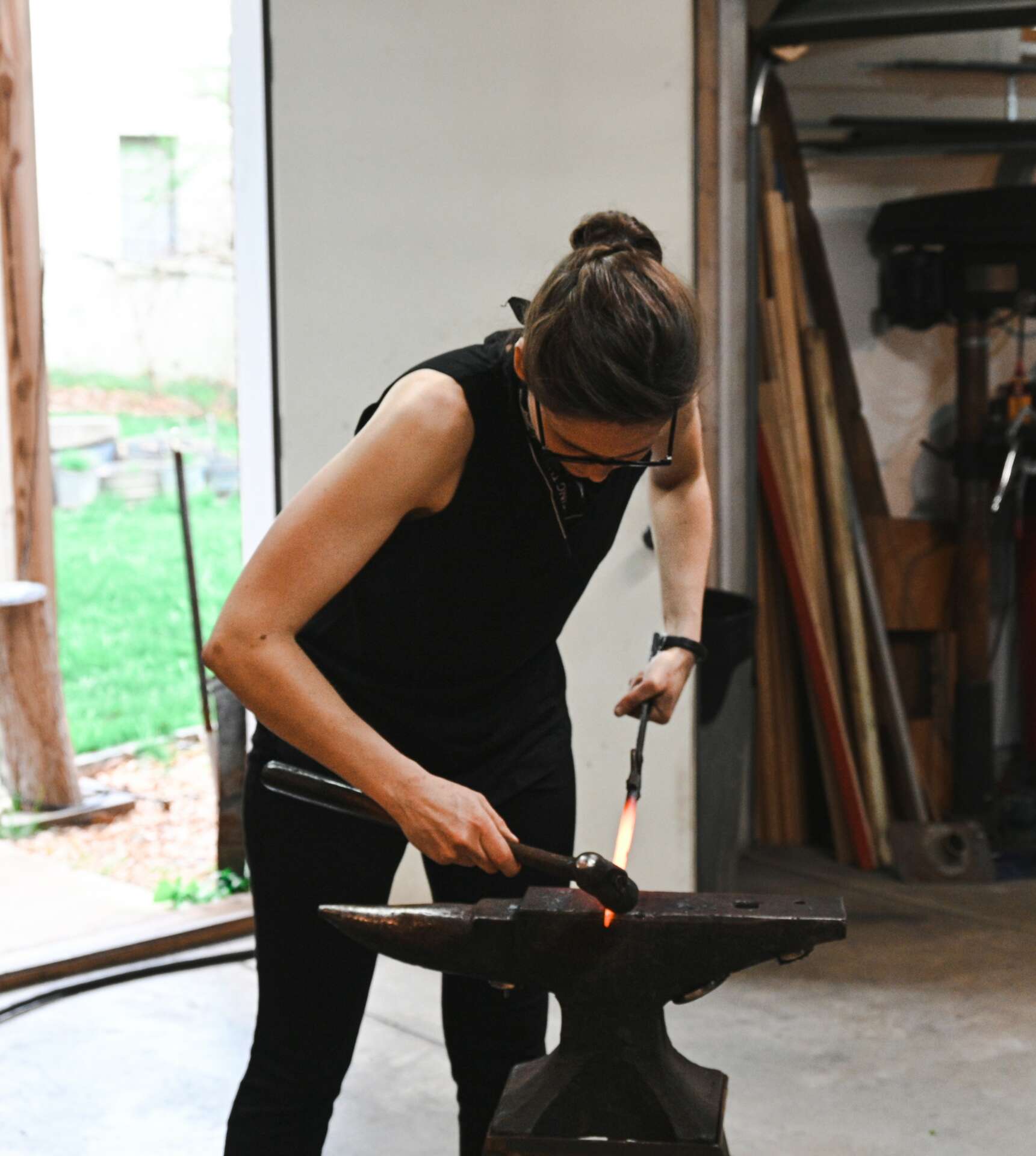
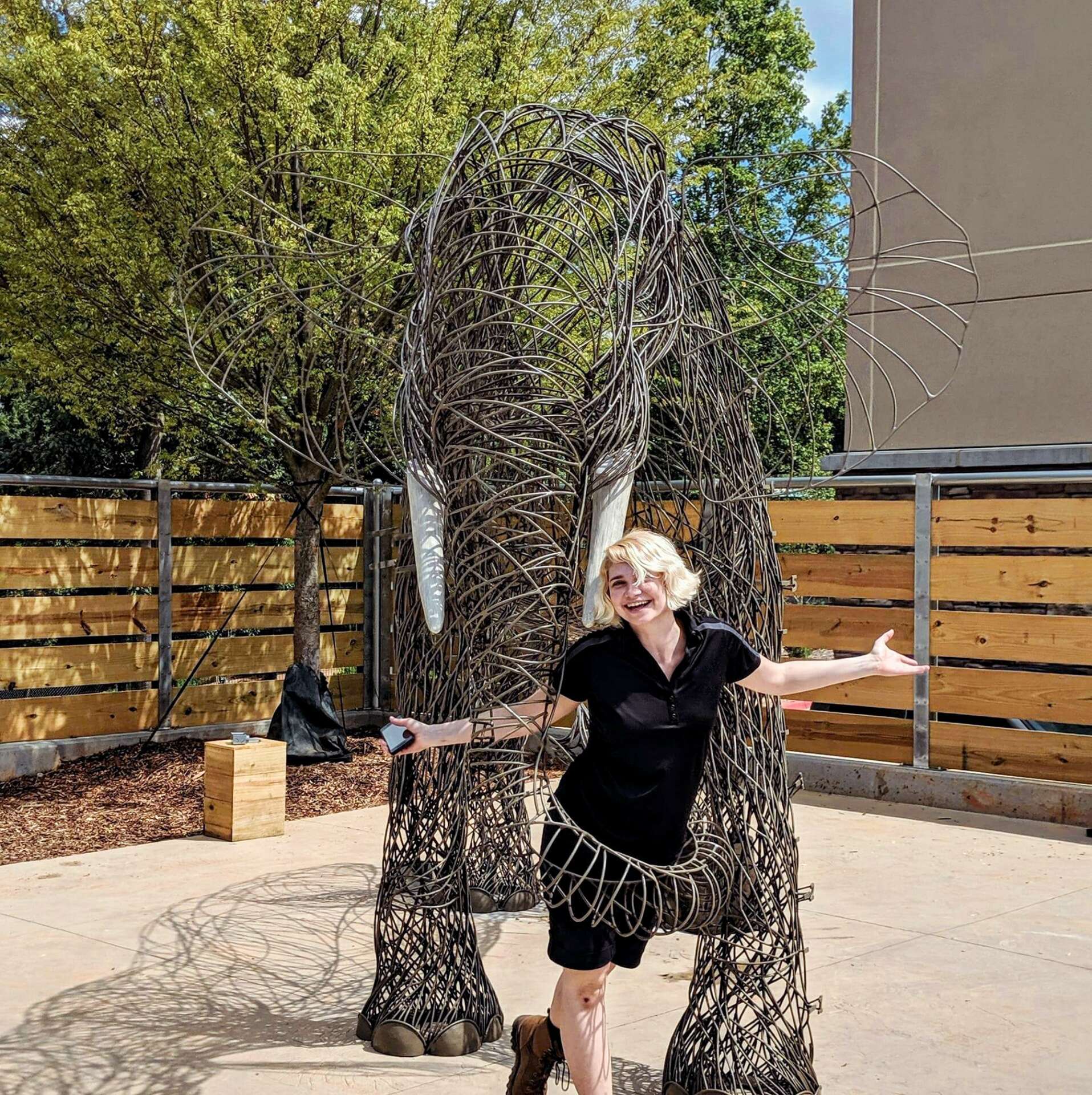
I make sculptures and ornamental metalwork that combines traditional forging with modern fabrication techniques. My large scale sculptures can be found all over the country (have you seen my elephant at Zoo Atlanta?) but I also make custom ironwork for homes and businesses.
What I love about metal is that it has the unique ability to capture the imagination. It’s more than just the WOW factor of something so tough being formed through fire and force. That’s just how you get people to look closer: when you capture the attention of your audience, you also get the unique opportunity to convey deeper stories through thoughtful symbolism and details. Metal becomes a communication tool, immortalizing each message with awe-inspiring strength and visual weight.
As a designer and a craftsman, I go the extra mile to design pieces that really fit the place and people my works are made for before building them. It takes a lot more work on my part to handle both roles, but I find that the pieces that come about from this collaboration between myself and my clients creates the most meaningful works possible. For me, it’s really an honor to create things for people that will hold their deeper stories and spirit. It’s transformative; people see themselves reflected in a powerful medium like this and it moves them. It can heal communities. It can change the world, truly. I’ve seen it.
What do you find most rewarding about being a creative?
To be honest, it’s just rewarding to do what I am best at. I’ve been training my whole life to make things well, and to make them look in a way that is meaningful to either a client or an audience. I am incredibly happy that it comes through in a craft that suits me well that I am happy to do on a daily basis, but really it’s all about making the best of my accumulated skills. I suppose that’s what they call achieving “self-actualization.” It’s a pretty great feeling.
Is there something you think non-creatives will struggle to understand about your journey as a creative?
I am continually surprised at how far our society has departed from the knowledge of making things. Real things, not just working in the realm of ideas and digital projections in our shared virtual realities. Not to knock it: the internet has transformed our world in incredible ways, and I owe a lot of my success to it.
But when folks can’t fathom the cost or effort that goes into making material goods, it does have the effect of making a whole lot more work for me to explain why custom ironwork does not cost the same as mass manufactured goods from Home Depot. Fun fact: It is mathematically impossible for custom work to cost the same as something mass produced.
Mass production relies on economies of scale to offer lower prices. This means that the cost of:
– design, research & consultation
– engineering & prototyping
– setting up production
– custom tooling
– material
– shipping & transportation
– and other business overhead
gets all added together and divided by the thousands or millions of units made by a company, often with lower skill or poorly compensated overseas laborers. (Let’s not even get into the topic of exploitative manufacturing!)
Custom work costs all of this. For the one thing you ordered. No dividing costs. Plus a lifetime of intense (and usually expensive!) training, if you are buying from an artist.
I didn’t think this was uncommon knowledge, but I keep finding that it is.
“We can hire someone to make this for cheaper than in the store”
“It’s just a little bit of time and material, right?”
Nope. If for some reason an artist wanted to make something for you that is near the mass production price, know that in effect they would be paying *you* for the privilege of owning their work.
Just wanted to help set expectations, in a world that seems increasingly detached from what it actually takes to make things.
Oh and please… Learn to make things! It will very quickly teach you so much about the real world, and bring so much more appreciation to physical reality and the artists who endeavor to make things with it.
Thanks for coming to my TED Talk.
Contact Info:
- Website: darlingmetals.com
- Instagram: https://www.instagram.com/darling_metals/
- Facebook: https://www.facebook.com/chelsea.darling/
Image Credits
Becca McCoy