


We caught up with the brilliant and insightful Jennifer Zee a few weeks ago and have shared our conversation below.
Hi Jennifer, thanks for joining us today. It’s always helpful to hear about times when someone’s had to take a risk – how did they think through the decision, why did they take the risk, and what ended up happening. We’d love to hear about a risk you’ve taken.
As a kid in the 80s, I announced that I wanted to be an artist when I grew up. Back then, an art career was not particularly respected, especially in a Chinese family. The adults around me laughed and said “you’ll be a starving painter!” So I shelved the artist idea and decided that as I loved nature, I’d become a biologist.
I did everything right to enter a biology career. I had a Bachelor’s degree in Biology, and did two years of work experience in genetics. I’d made it into a PhD program in Biology, yet… I tried out several graduate research labs, and was told by each professor that it wasn’t the right lab for me. Finally one professor asked me to do some soul searching. He told me that in academic research, one works for the love of that research topic, because there is no other reward. And if I didn’t love it, I should leave and find what I did love.
In the meantime, I’d been working on scientific illustration. Researchers in the biology department and local natural history museum learned of my skills, and I was thrilled to be asked to illustrate for publications. I felt very valued for my art, whereas my biology research could have been conducted by anyone else.
I applied to science and medical illustration master’s programs, and was accepted. The decision was an obvious one, but it was not easy to make. In part because one of my parents had high hopes for me to become an academic researcher, and I’d invested so many years of my then 20-something year old life in biology. I had no art world contacts, and knew nothing of careers outside of science.
I quit my PhD program and dove into art school. It was a risk, but it felt right because I was following my heart. That was over 20 years ago, and with hindsight, it was the completely right thing to have done. My creative side had been stifled in favor of science, and art school was the perfect place to rekindle and catch up on those lost years of creativity. It was the first step towards the artist that I am now.
Jennifer, before we move on to more of these sorts of questions, can you take some time to bring our readers up to speed on you and what you do?
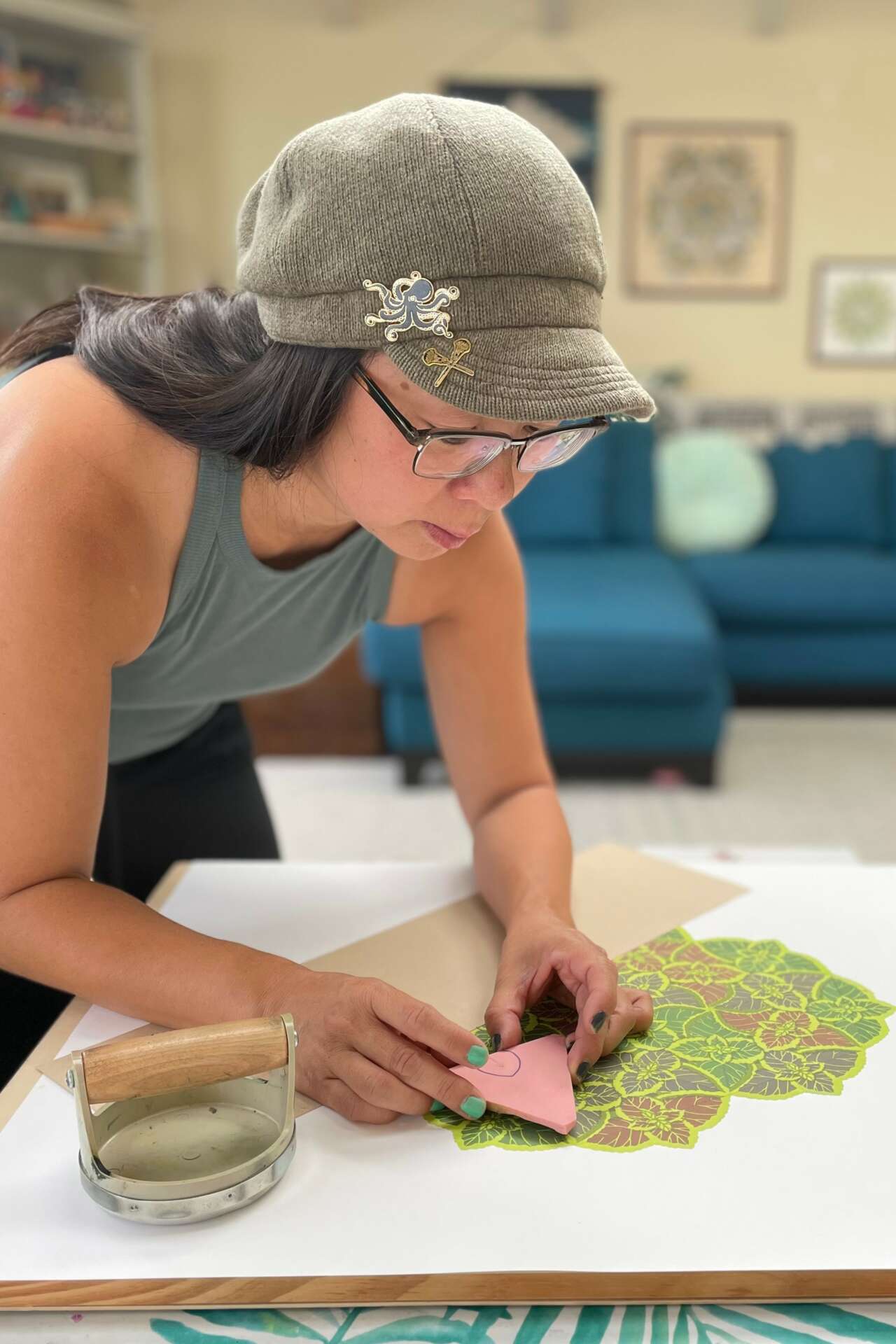
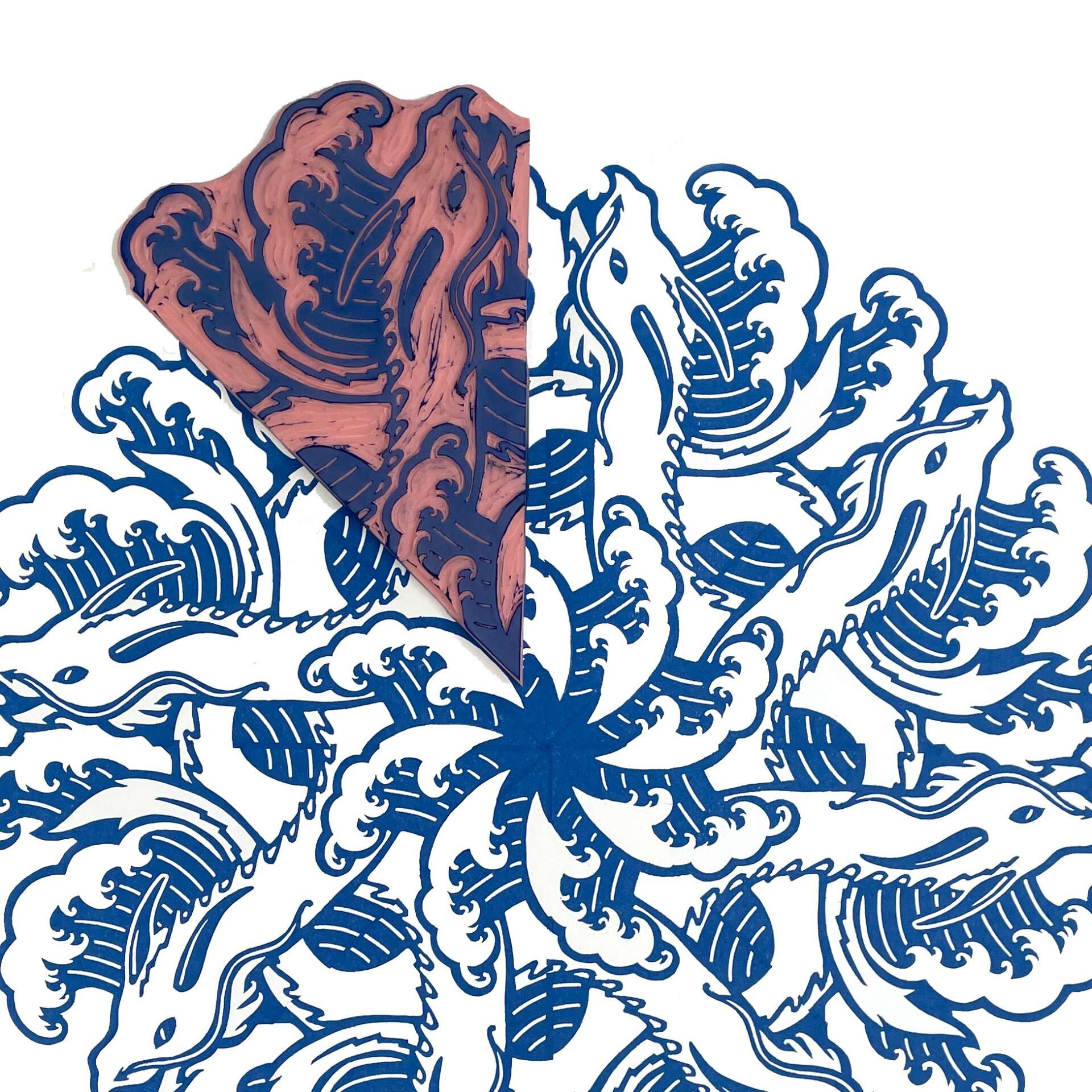
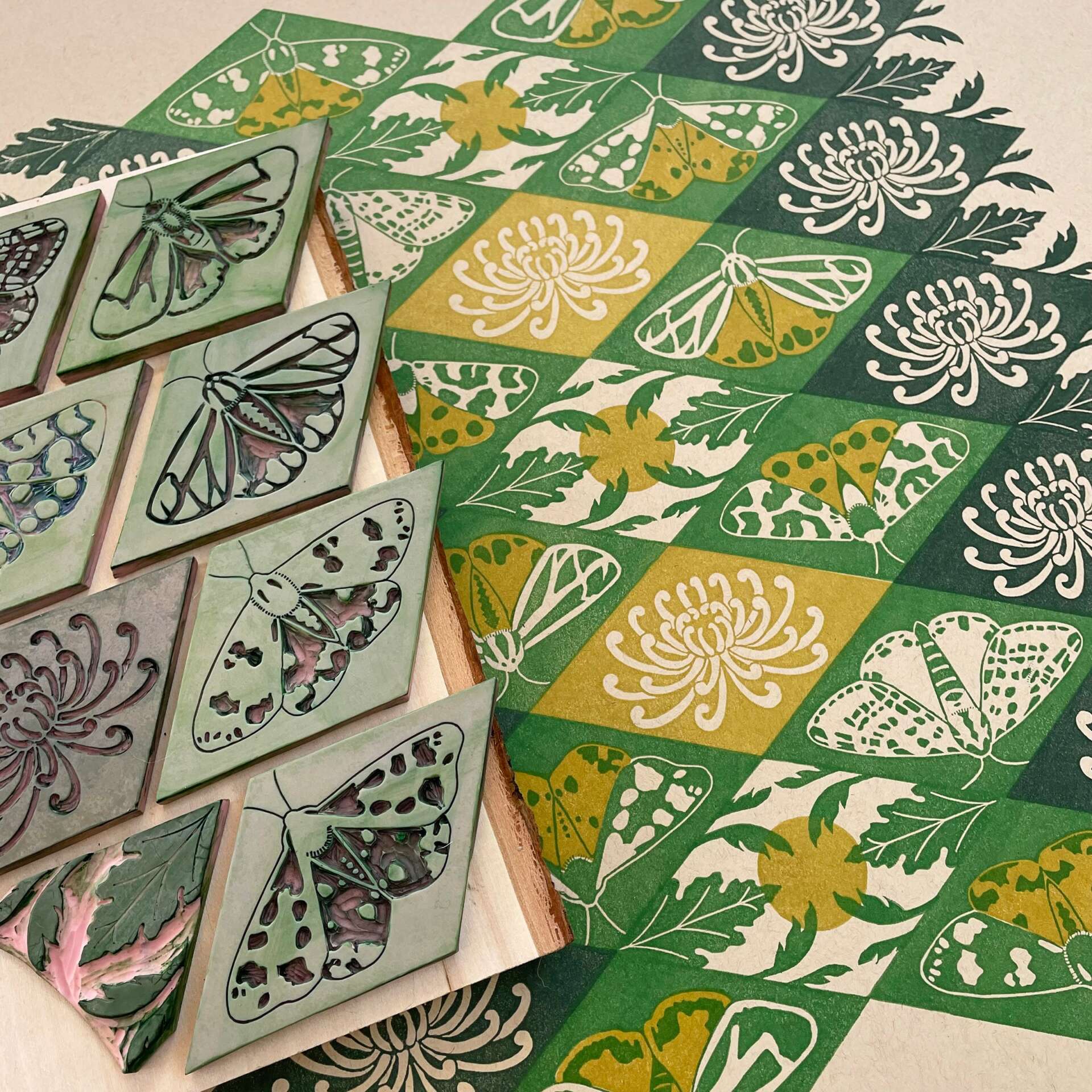
I am a Chinese American block printmaker in San Francisco. I design and carve blocks, ink them up and press them to paper by hand. The act of printmaking is one of generosity. There is not one authentic art, but many to be shared – each unique and each the result of a printmaker’s heart and heft – my upper body weight is pressed into each print.
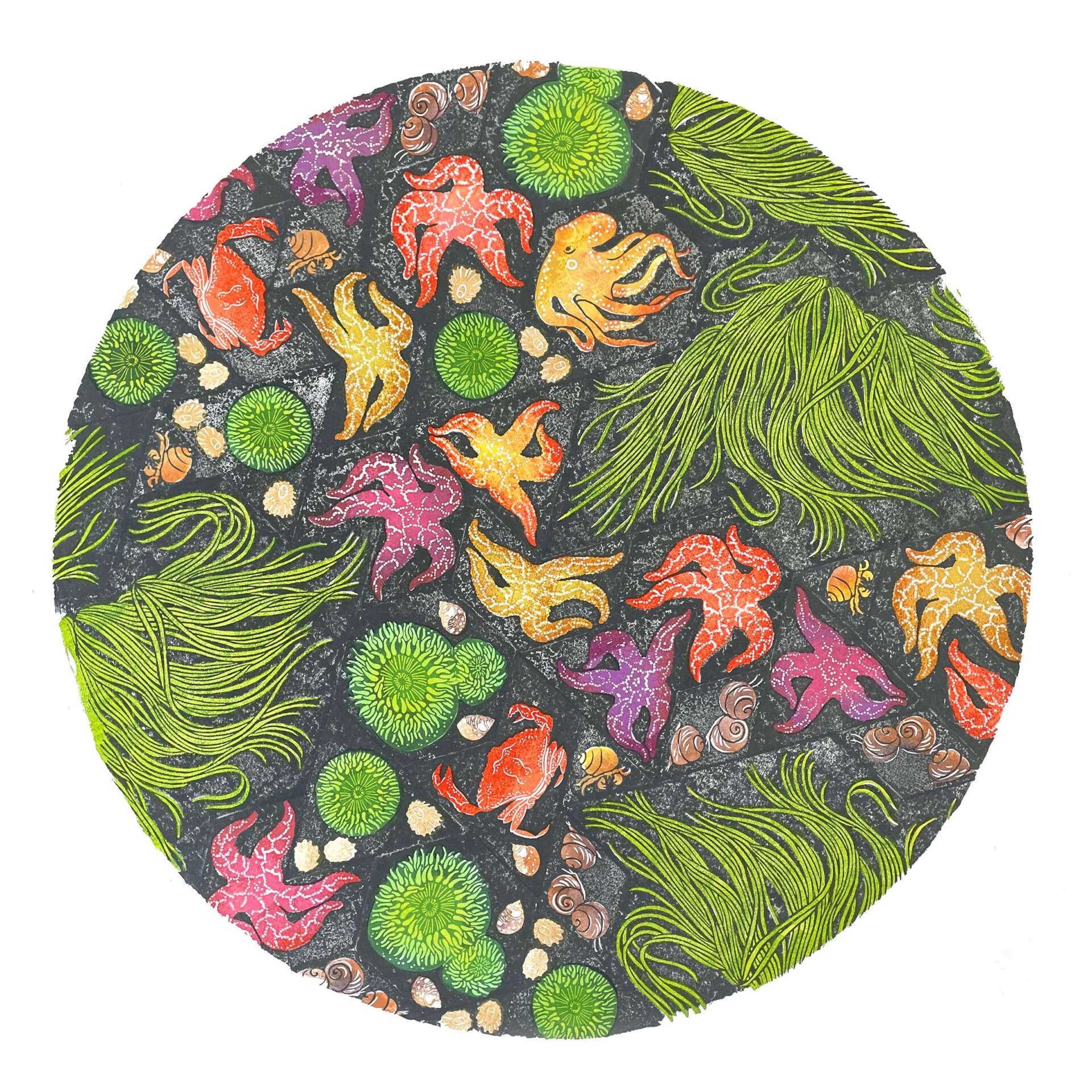
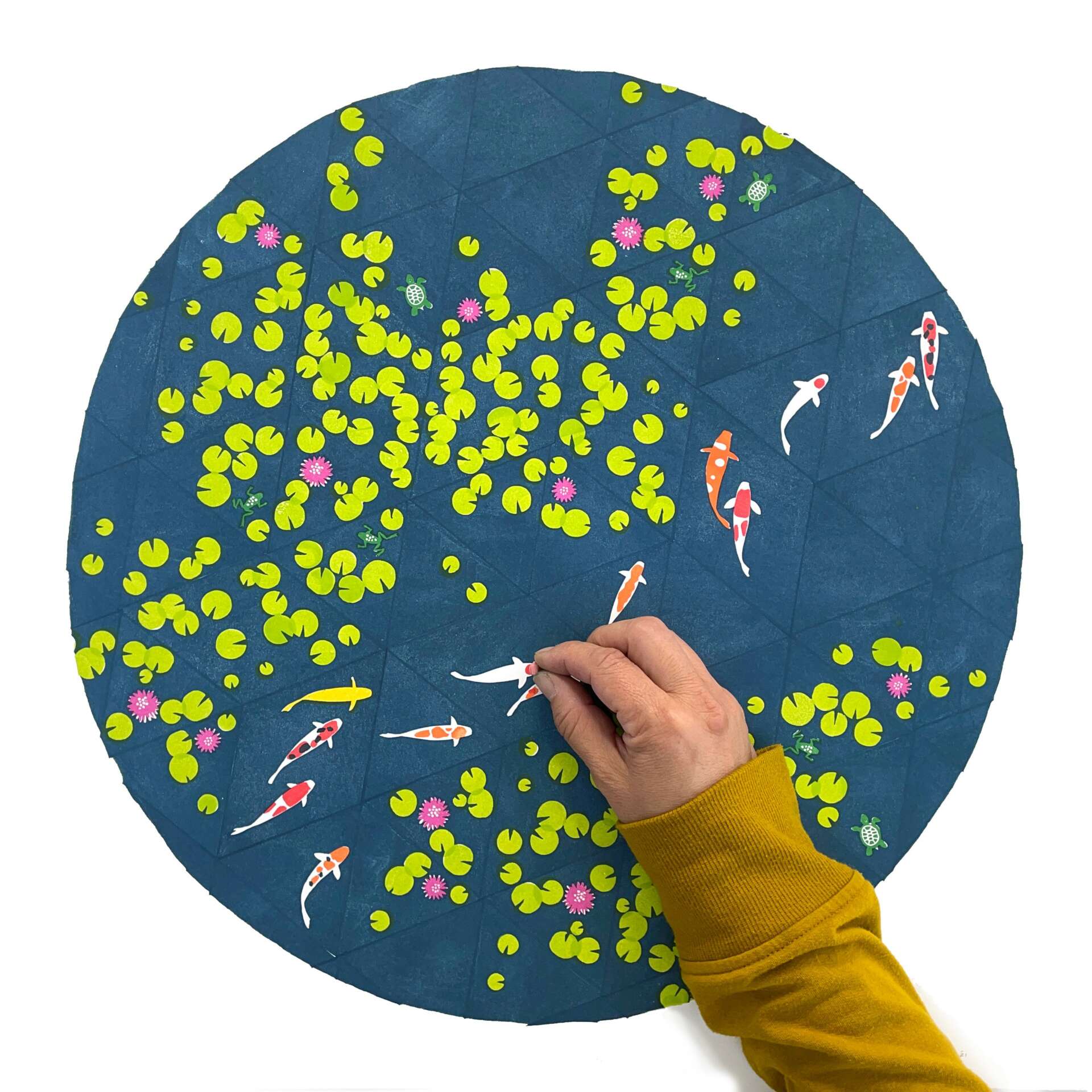
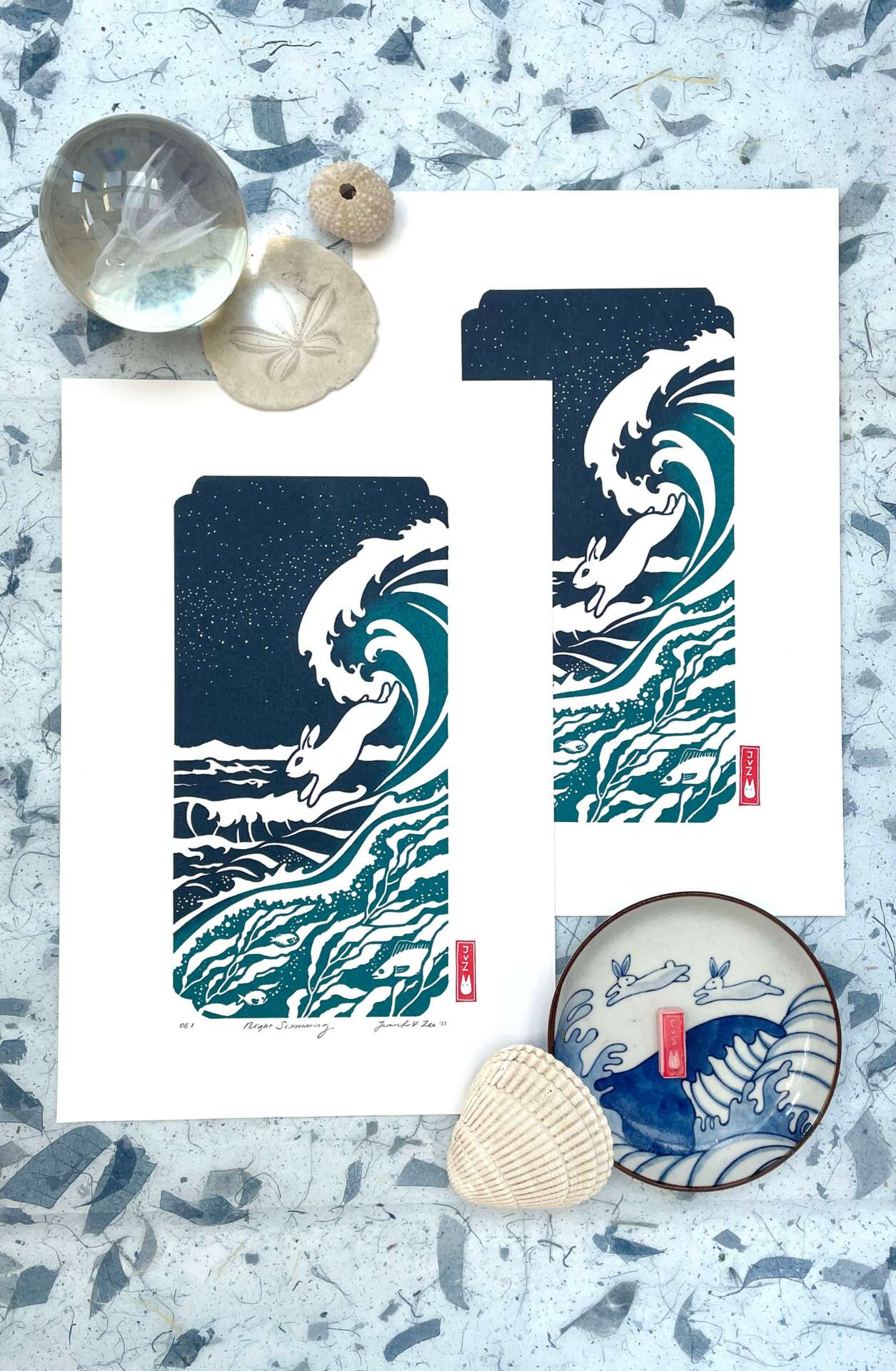
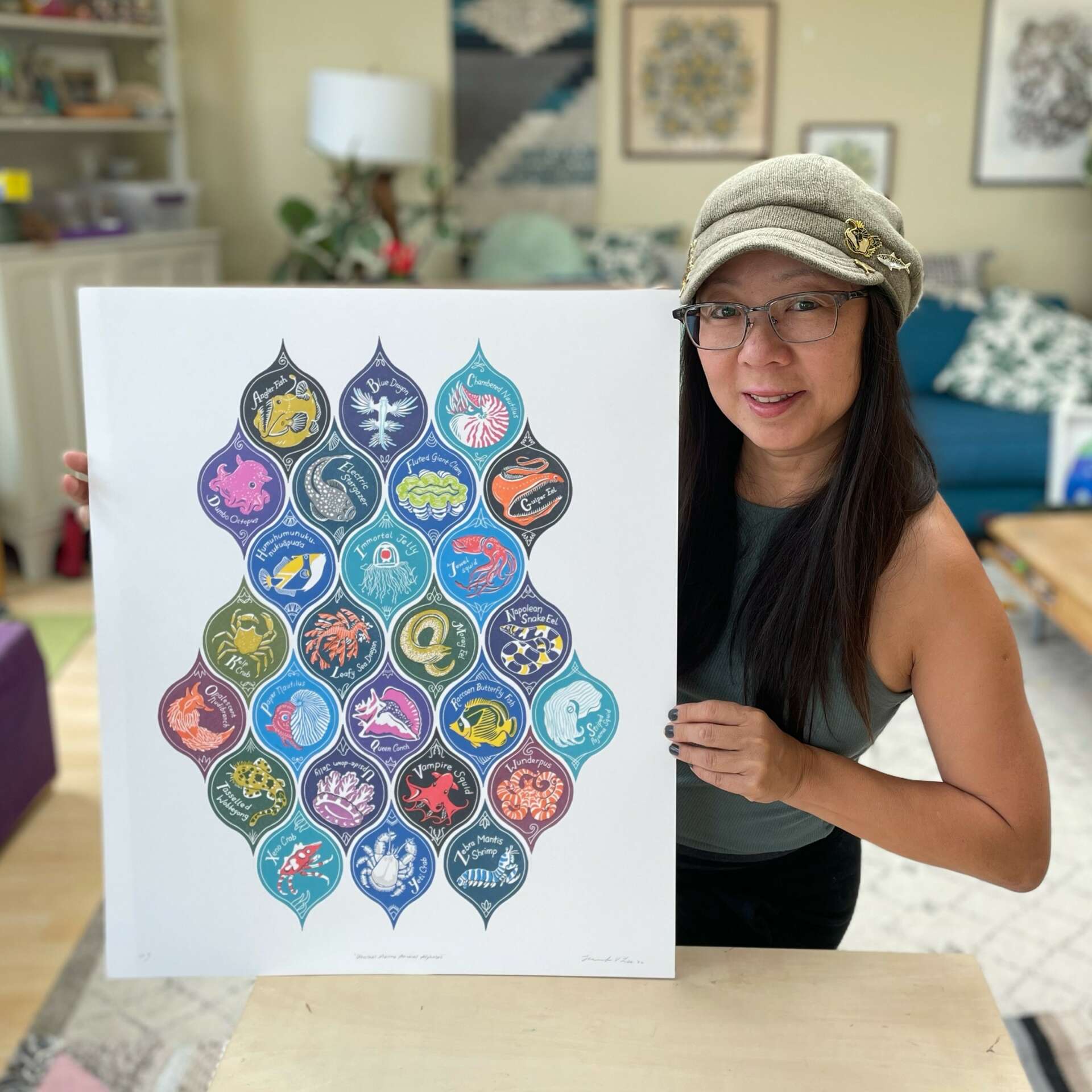
My art is nature inspired, which sounds so terribly generic. However it is true. Almost all my art is rooted in my fascination of nature. My unique perspective and style is shaped from my background as a research scientist in animal behavior and ecology, as well as my experience as a science illustrator. Thus my art has an underlying vein of biological accuracy; I honor ecological relationships such as plant-animal interactions and life cycles.
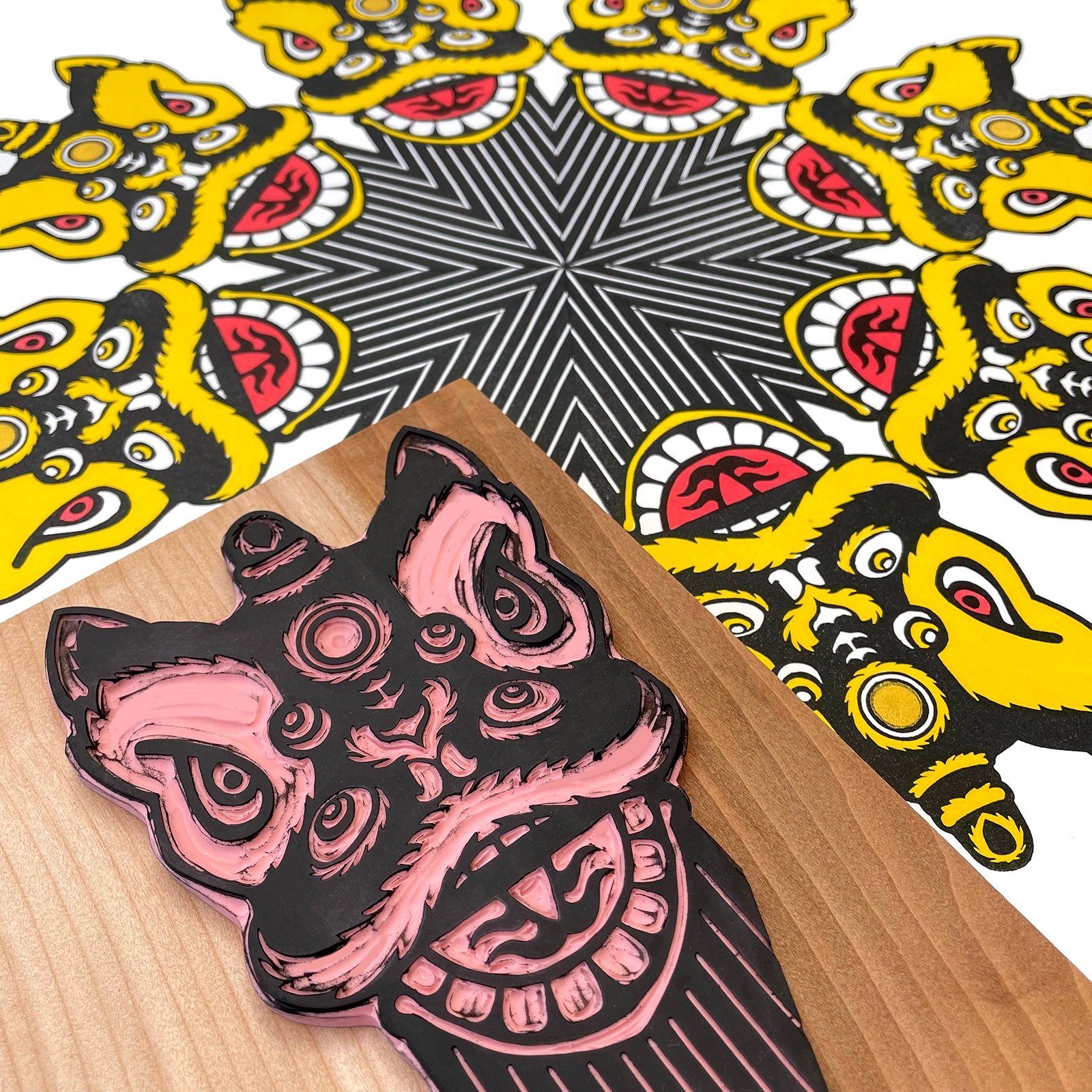
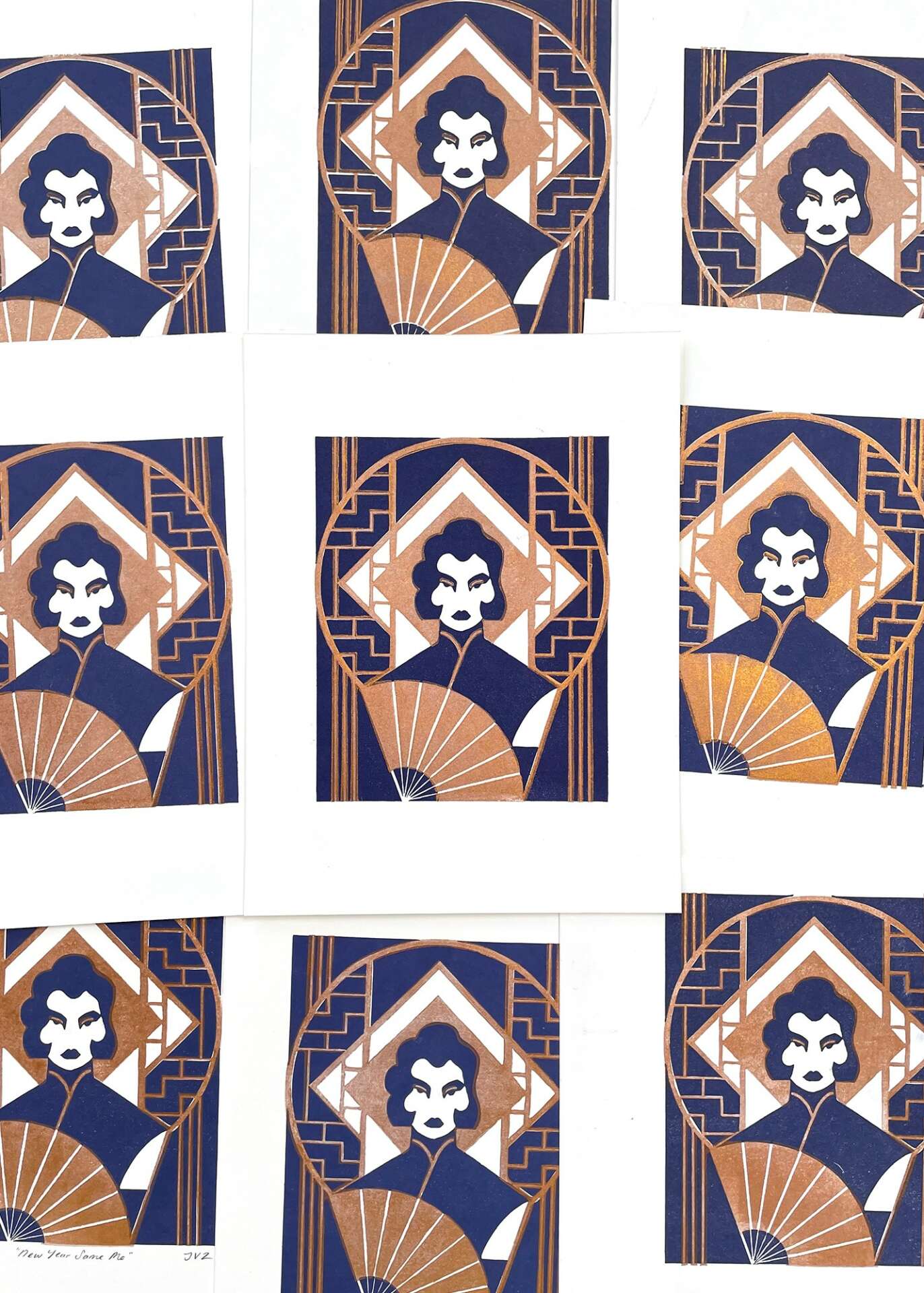
My designs influences are vintage scientific illustration, Japanese wood cut in the Ukiyo-e style, graphic novels, and the art of Escher. My style is precise with clean lines, often incorporating geometry and tessellation, while maintaining an organic feel through out. Compositional balance and flow is of great importance, as well as effective use of positive and negative space.
I grew up in British Hong Kong. The city was a confluence of east and west, traditional and modern, the ultra urban and rural. The contrasts and sensory overload of this vibrant city has influenced my art in several ways. I have an east asian aesthetic when it comes to composition. Balance, flow and positive and negative space are extremely important to me as it is in Chinese painting. A city full of advertising graphics and architecture informs my clean cut style. Cultural traditions I learned in Hong Kong such as the Chinese Zodiac, Lunar New Year festivities and Chinese mythology are also featured in my art.
The Pacific Ocean provides much inspiration. Having worked in an aquarium and lived on the California Coast for two decades, I often choose subjects from the tide pool and kelp forest habitats to feature in my art. I focus on highlighting the non-charismatic mini-fauna which are often overlooked in favor of larger animals. I hope that my art draws viewer’s attention to our earth’s astounding biodiversity, and that awareness leads to taking steps in conserving natural habitat, no matter how small.
My main body of work is in printmaking, but I am adding ceramics to my repertoire. I have been experimenting with hand building dishes with surface designs inspired by my prints, using techniques such as sgraffito. It is exciting to create art that is beautiful and functional.
I am also a teacher. I host printmaking workshops for adults through local organizations such as the Botanical Gardens in San Francisco. I also teach a unique art and biology after school class to public elementary school kids. I love to empower both kids and adults with the skills to create their own art.
What can society do to ensure an environment that’s helpful to artists and creatives?
Give us a platform to share our voices, and celebrate our diversity. I would love for more non-traditional venues to invite artists into spaces. Traditional venues like art galleries may be considered prestigious, but I find that they are unattainable for those of us without the proper connections, and their audience is not necessarily my intended audience.
The people who appreciate my work are nature geeks: those who memorize tide schedules and set all else aside to make a field trip to investigate tidepools at negative tide; those whose bookshelves include a collection of wildlife guidebooks; those who nurture specific host plants in their gardens so that butterflies may visit to lay their eggs; those who give the time to their kids to pick up every bug encountered. These are rarely gallery clientele. Instead, these are the people who intentionally support local brick and mortars, and have memberships to natural history museums.
Therefore, I call upon neighborhood bookstores, gift shops, grocery stores and eateries to seek out local artists! From a small box containing handmade cards on the counter to sharing walls for an exhibit, brick and mortar stores can open new doors for creatives, and we in turn bring unexpected delight to your customers, as our art gives the final touches to making your business unique.
Fortunately for me, such small businesses in my local San Francisco neighborhood, and I am thrilled for the opportunity to partner with them!
What do you find most rewarding about being a creative?
I feel reward in giving voice to under-represented groups. Generally speaking, there are not many Asian Americans in the Arts. As a Chinese American printmaker, one of my duties is to stand and be seen as an artist. If my art resonates with a viewer, perhaps I have also subconsciously fostered a broadening of world view. In a country where I may still be viewed as a foreigner, every connection that my art can make is a step towards closing perceived gaps.
I also give voice to underappreciated wildlife. Often invertebrates of land and water; there are so many animals that are easily overlooked or even viewed with disrespect. I feature them with dignity and beauty in my work. It is a great reward to receive a comment such as “I used to hate insects but after seeing your art, I am OK with them”. Not only is biodiversity awareness important to inspire conservation actions from people, newfound fascination with nature enriches people’s life experience.
There is much reward in teaching. With both adults and kids, I love to empower people with new skills. I love to watch newbie printmakers create their first print. Eyes will light up in delight and discovery. My current class for kids combines biology and art. It is a place where we can all geek out about snake skin sheds, animal skulls and insect life stages – and none of us are judged for having unusual interests. To provide a validating place for kids to express their love for art and animals has been immensely rewarding.
Contact Info:
- Website: www.ginkgozee.com
- Instagram: @ginkgozee
- Facebook: Ginkgozee
- Linkedin: Jennifer Zee
Image Credits
All photographs taken by myself, Jennifer Zee.