



We caught up with the brilliant and insightful David Stern a few weeks ago and have shared our conversation below.
David, thanks for joining us, excited to have you contributing your stories and insights. To kick things off, we’d love to hear about things you or your brand do that diverge from the industry standard
Dating back to when I opened my solo practice, I’ve believed in working remotely. In late 2015, I lacked the capital to lease office space – but it also didn’t make a lot of sense to me to have to do that. New Yorkers lead busy lives and it’s a time and energy drain to travel to meetings. I figured, why not conduct all meetings remotely and work from home? Id’ save myself and clients the effort of travel, and I’d save myself the cost and commitment of leasing office space. When I partnered with Sean Mathey, he already had a Greendesk in Brooklyn, but we continued to do things over conference call until the pandemic, when we switched to Zoom. The pandemic has changed a lot about the way we live our lives, but one positive for us has been the increased normalization of the remote work environment. It’s been so successful, that it allowed my wife and me to move from New York to be closer to my parents in Ohio, while still growing out practice by 50% year over year from 2021 to 2022. We just brought on our first hire a few weeks ago, and she also works remotely. I think most lawyers believe that clients have a certain expectation of the way a law firm is supposed to look, but I’ve always believed that the belief in those expectations was misplaced and that good work and great relationships can overcome expectations.

As always, we appreciate you sharing your insights and we’ve got a few more questions for you, but before we get to all of that can you take a minute to introduce yourself and give our readers some of your back background and context?
Primarily, I practice trusts and estates law. This means I draft wills, trusts, and other estate planning documents in the course of helping people ensure that the assets, and their family, are passed in accord with their wishes. It also means I help administer estates of loved ones when they I’ve passed away.
My path to this area of law was pretty indirect. I graduated law school in 2007 while working for Forest City Ratner Companies, a large commercial real estate company in downtown Brooklyn. When the recession hit, as one of the last hires I was among the first to be let go. After about a year of so working on some temporary legal projects, and unable to get a good paying full-time job as an attorney, I pivoted to financial advising. It had a lot of the same traits as legal practice – focusing on solving client needs – except these were financial rather than legal problems. Doing this work taught me a lot about financial products – how they work, who they’re appropriate for – as well as how to develop a business, because financial advisors, for the most part, are each running their own book of business. We had a fact finder we’d use with clients to gather information on their families, and I observed that almost none of my clients had estate planning documents in place. This struck me as an opportunity, so I formed a side business, initially doing simple wills and trusts for clients and others. I’d learn from practice guides and continuing legal education classes, and would partner with more experienced attorneys on matters above my skill level so that I could learn under their guidance while still making money.
Now, I do some fairly complex work in estate planning and we work with some fairly affluent people, but for the most part peoples’ problems remain relatively similar. Most people are primarily concerned with making sure that their kids will be taken care of when they die, that they don’t get too much money at too young an age, and they don’t pay more in taxes than they have to, and that then people they want will raise their kids of they pass way while their kids are still young. Beyond that, the more money and property people own, the more difficult the planning becomes. We help minimize and often eliminate estate tax exposure. When we can, we help people avoid probate – a terribly annoying administrative proceeding which estates go through when someone has a will. Essentially, I meet with couples and dig deep into what’s important to them, and then custom tailor documents to get them what they want. Most people have never thought about this stuff before, so being able to explain what others have done before and get creative with solutions is something that makes us special. I love problem solving, so enjoy unique situations.
I think people enjoy working with us, and continue to refer us to people they know, because we make the process (almost) enjoyable. I’m relatively young (43) so come at this with a youthful mindset. I know people don’t want some morbid conversation dealing with their death, so I try to de-emphisize the ‘death’ part of estate planning, and instead look at it as a natural thing that we all have to deal with. It shouldn’t be any more morbid than putting on a seatbelt. I also think people like working with us because we’re easy to reach, laidback people, use technology with ease, and make them feel comfortable navigating a complicated and morose subject matter.
How’d you meet your business partner?
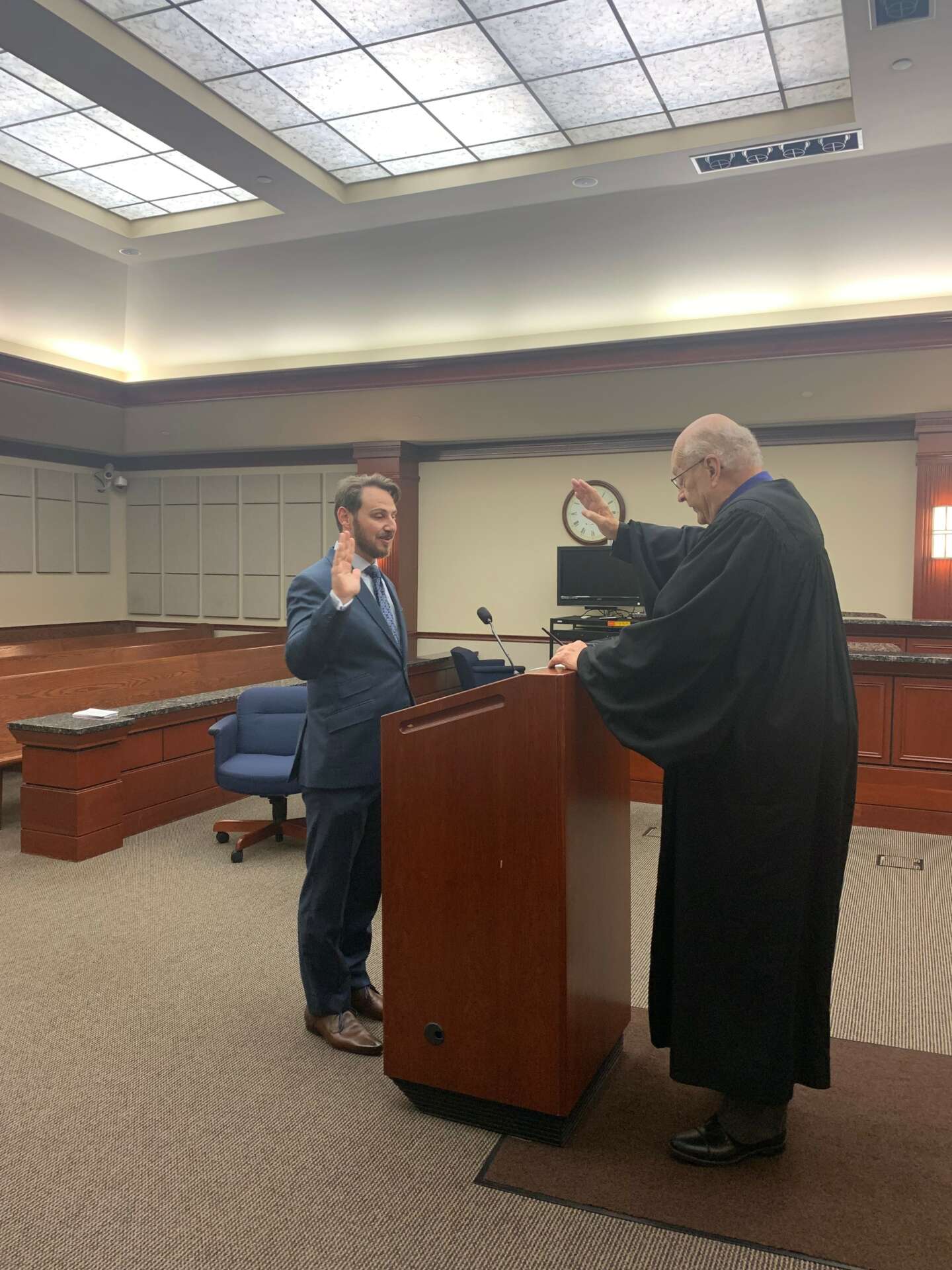
Years ago, I was invited by the spouse of a networking partner to visit her networking group, a chapter of BNI (Business Networking International). I’d been a member of another chapter when I was working as a financial advisor and knew it to have the potential to be a very good method of developing business. I visited and found the group to have a great balance of professionalism and personality, so I applied and joined as the T&E attorney. The group’s business attorney, Sean Mathey, and I became fast friends and began referring certain matters back and forth. Eventually, there came opportunities to work on clients together, and we quickly saw the mutual benefit of joining forces and forming a partnership. That was the summer of 2019, and we’ve worked together ever since.
Can you tell us about what’s worked well for you in terms of growing your clientele?
Without a doubt, network marketing has been the most effective method of growth for us, All of out clients come from referrals from either past clients or professional connections. I actually was talking about this the other day with both my wife and our new hire as a lesson on never taking opportunities for granted. I was invited years ago to a relatively casual networking meeting at a bar on NYC’s lower east side. At that meeting I met a guy who worked doing international financial transactions – not somebody I thought I’d ever be able to refer to. This guy’s wife was in another networking group, BNI, which I later visited and joined, which is where I met my business partner and an accountant who refers us a lot of our business. At that initial informal networking meeting, I also met another attorney, who introduced me to his boss. Between the two of them, they referred us to a few of our largest clients, who in turn have referred us to an ever expanding group of their friends and colleagues, which serves as the foundation of our client base. One good accountant or financial advisor, who understands the importance of the work we do and the quality with which we do it, essentially creates an ongoing stream on income for us worth tens of thousands of dollars. These are high quality prospective clients who come highly recommended to us, giving us a very high probability of converting them to clients, and that conversion rate is at least 4 times higher compared to leads generated by advertising or digital marketing, which costing us far less in both time and money.
Contact Info:
- Website: Www.matheyandstern.com
- Facebook: https://www.facebook.com/matheyandstern
- Linkedin: https://www.linkedin.com/in/davidatmatheyandstern/
- Yelp: https://www.yelp.com/biz/mathey-and-stern-attorneys-at-law-brooklyn
Image Credits
The first and fifth photo were taken by Amanda Crommitt.