

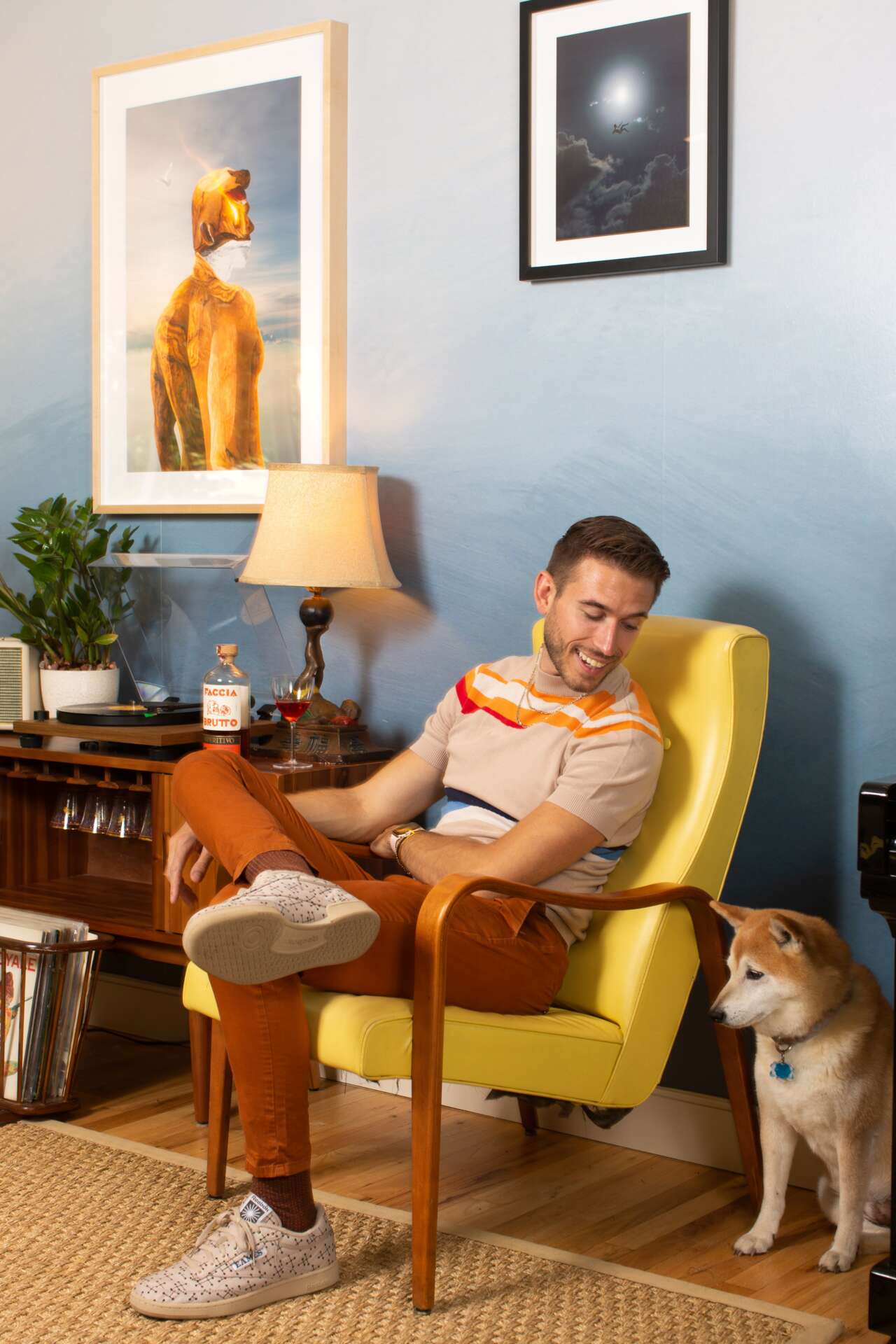

Alright – so today we’ve got the honor of introducing you to James Miille. We think you’ll enjoy our conversation, we’ve shared it below.
James, thanks for taking the time to share your stories with us today Can you take us back in time to the first dollar you earned as a creative – how did it happen? What’s the story?
My first dollar with my art was also the first moment that I realized I could use my experience with photography in the form I wanted to: making inspiring, mystical, vibrant fine art portraits, rather than pivoting to a career in advertising or wedding photography.
Back in spring 2014, I started a photo-a-day project to catalyze my know-how with photography from a technical and conceptual standpoint, and it very quickly consumed my life (in a good way… mostly haha!). The best part about this project was the work I was making was fun, liberating, and––most importantly––personal, all traits that I assumed I’d be letting go of once I was focused on a photo career. About 100 days into the project, the attention I received started to swell exponentially, but I still thought the connections I’d be making would only be valuable for headshot / session photography clients, and that the photos I actually enjoyed making would just remain an Instagram-worthy hobby.
That same year in the winter, I helped take event photos for a holiday pop-up where I also had the opportunity to show some of my surreal portraits. I had some experience printing my photos on online websites for personal decorations in my college dorm, so I followed the same process, Command-stripped these unframed prints to the wall, and slapped a $50 price tag on a poster-sized print. I shifted my focus back to taking the photos for the event, but lo and behold, two people bought my art! Were the prints severely underpriced? Absolutely. Could the presentation have used some refinement? Obviously. But, it was the proof of concept I needed for the life-changing epiphany that maybe, just maybe, I could actually make a living off of making the art I loved to make.


As always, we appreciate you sharing your insights and we’ve got a few more questions for you, but before we get to all of that can you take a minute to introduce yourself and give our readers some of your back background and context?
Jumping off from this newfound, festering drive to turn my art into an actual career, alongside supporting my now-business-partner Alex’s pop-up events around NYC, Alex and I created a recurring art fair exhibition for independent artists to take control of their own art careers and easily bring their artwork to new markets without the typical barriers of the art world. Enter: Superfine Art Fair, the next unexpected chapter of my professional path in life. Art had always been close to me from a young age, but I never expected to have the privilege of immersing myself in it as both an artist and a support system for other artists.
That was in 2015. Fast-forward to the 20’s, and Superfine now offers annual exhibitions for artists in seven cities and counting around the United States, connects hundreds of artists with thousands of art lovers and industry professionals every year, and releases free weekly podcast episodes for artists to hear advice from industry thought leaders all over the world.


Have any books or other resources had a big impact on you?
It’s not quite a book about being an artist, *but* the stories and lessons in it completely changed my perspective on my art career. I read “Greenlights” by Matthew McConaughey back in 2021, which unknowingly became the splash of cold water to the face that my art practice needed.
As an art fair director, I am fortunate to always be surrounded by inspiring, driven artists, but constantly being surrounded by art doesn’t always mean you always have the time to *make* art. One off-and-on side effect of Superfine has been that I’ve had to back-burner my own art more than a handful of times in the last 8 years, and those gaps gradually lengthened as Superfine grew. I went from making 365 photos in a year, to about 30 the following year, to 12, to 6, to 3… You get the picture. Maybe artists reading can relate, but when I step away from my art for a while, the pressure to have an absolutely incredible, revolutionary comeback with my art doubles in my mind. Eventually, that pressure for my next project to outstrip anything I’ve done before did more harm than good, and I became too paralyzed to jump back into the swing of my art career. Weeks, months, and even a couple of years would pass at a time where I wouldn’t make any art, or at least not anything I felt excited about.
“Greenlights” dives into dozens of zany, unbelievable, and very likely exaggerated backstories in McConaughey’s life, but the overall message is about a metaphor that the title alludes to. There are stretches of time where you’re “hitting all the green lights” in this vehicle that is your life, but that cruise-controlled journey will inevitably be halted by a blaring red light. Using those red lights as pauses, though, and acknowledging that the light will turn green again sooner than you think is a very reassuring mantra to hold close.
After reading this book, I felt inspired to fall in love with art again (instead of allowing it to turn into an added obligation to my plate). I also decided to fight my multi-year creative block with a simple creative exercise that has now ultimately become the entire mission statement behind my art: I connected my photography with my other biggest passion in life––music––to spark my inspiration again. I intended for these song-inspired photos to be a fun, light-lifting nudge back into a prolific artist life, but by allowing myself to relax and make art that speaks to me, I have ended up with the most developed, authentic, and successful body of work I have ever produced.


Is there something you think non-creatives will struggle to understand about your journey as a creative?
This question ties in nicely with the previous one about my creative block, and is also something that I’ve spoken to countless other professional artists about on our podcast, The Artist Business Plan. So many people (including yours truly) have a habit of just jumping straight into work, even if you’re still groggy or split-focused. In order to make the best-quality art, though, you *need* to give yourself the time and space to actually feel creative. This might mean playing the right music, adjusting lights, meditating for a bit, or all of the above, before actually diving into creating work. Holding this process as sacred and necessary can be the difference between making art that resonates with your audience or falls flat. However, while the importance of “setting the mood” might be most apparent for creatives, pausing for a moment to get into the right headspace is so valuable for productivity. Even when sitting down to answer emails, taking just a few moments to check your environment before diving headfirst into your inbox makes all the difference (read: those emails I’ll avoid for weeks or months suddenly feel easier, and only end up taking a few minutes to address!)
Contact Info:
- Website: www.jamesmiille.com
- Instagram: @jamesmiille
- Facebook: https://www.facebook.com/jamesmiillephotography/
- Linkedin: linkedin.com/in/james-miille-2b38118b
- Other: Superfine’s website: www.superfine.world The Artist Business Plan Podcast: www.superfine.world/the-artist-business-plan-podcast
Image Credits
All my photos! :)