

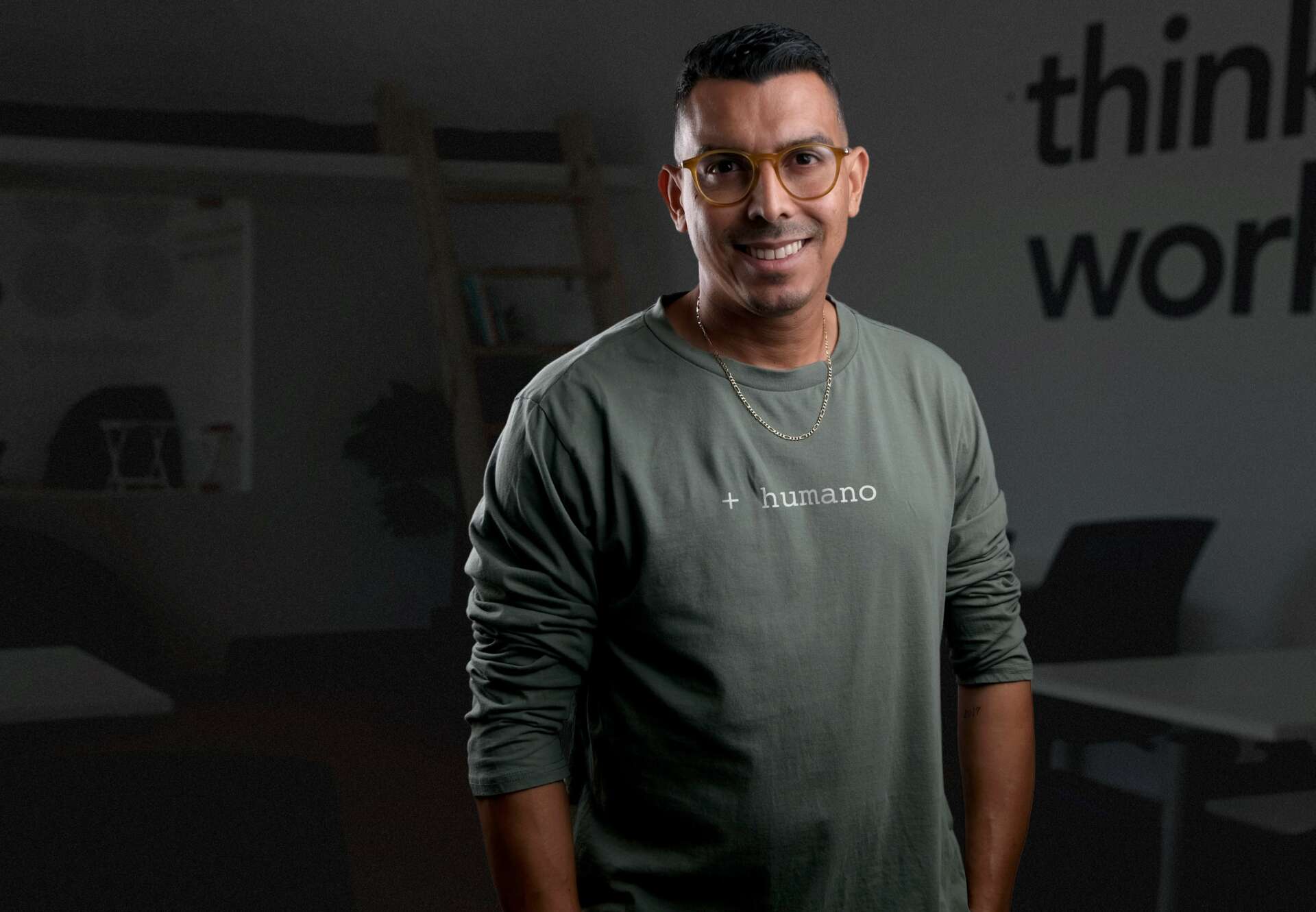

We caught up with the brilliant and insightful Gio Camacho a few weeks ago and have shared our conversation below.
Gio, appreciate you joining us today. So, let’s start with trends – what are some of the largest or more impactful trends you are seeing in the industry?
The brand as we know it is changing, and not everyone is paying enough attention to it.
Today, brands need to project themselves as more human and less objectified. Our consumers are human, and they always have been and for a long time, serious and effective marketers have studied human behavior to create and modify their marketing strategies. At the end of the day, the majority of our purchases are emotional rather than rational (specially for non commodities). Therefore, appealing to the human behind the transaction is fundamental. But never in our history has humanizing the brand been so important.
Let me explain, when we talk about humanizing the brand, we are talking less about the elements of a brand (logo, color scheme, design) and more about the strategy and perspective from which we see a brand. Today’s brand needs to feel human-like in the way it interacts with its customers. This is not a coincidence but the result of a change in behavior we have all experienced, provoked by the integration of social media into our everyday lives.
Let’s get this straight, social media was not created for brands; it has adapted to them. This truth is easy to perceive when you consider the basic interactions on social media. You become a friend, a follower; you show emotions and have conversations. All of these interactions are part of our human experience, therefore, we treat brands on social media as human and not as objects or products. This behavior have consequence in the way we perceive the brand, we’ve been conditioned by interactions to see the brand as a human.
I’ll give you and example, do you remember the movie Cast Away with Tom Hanks? For those of you who haven’t seen it (Spoiler Alert), in the movie, this person gets castaway on a remote island, alone to survive with no one else to interact with. Among the debris, he finds a ball, and in his loneliness, he starts talking to the ball (because humans are social beings in need of others). The relationship evolves as he starts sharing his thoughts with the ball, arguing with the ball, and so on. It was not long before he had a human connection with the ball, which he called Wilson, for us it was still a ball, for him it was a person. You see, as part of his human nature, he started humanizing an object until, in his perspective, it became someone instead of something. The same transformation is happening with brands. We have been wanting to become friends, followers, have conversations, and show emotions towards brands for so long that we have been conditioned to perceive brands more like people we can connect with.
Back to the point, in marketing, we need to constantly observe changes in our market in order to adapt our strategies to it. If people are trying to connect on a human level with brands, a smart strategy could be to promote that human connection, not only during the process but also through advertising. Here is where Humanized Branding Strategies flourishes, by studying human behavior in a psychological level we can invoke feelings toward a brand, but more importantly we can ad human values to the brand.

As always, we appreciate you sharing your insights and we’ve got a few more questions for you, but before we get to all of that can you take a minute to introduce yourself and give our readers some of your back background and context?
Gio Camacho is a humanized branding strategist based in Puerto Rico. He has a marketing degree and created a Boutique Advertising Firm specialized in humanized branding strategies for small business and international names, called Gio Camacho Inc. Passionate about educating entrepreneurs on marketing and has worked as a consultant for non-profits, corporations, and small business owners in brand, advertising, and humanization topics. As a marketeer at a professional level, I’m also an educator in my approach, meaning my work is not done within the development of any campaign or project but my life-long mission is to help entrepreneurs understand marketing so they can not only survive, but grow.
As a result of this passion to educate, I have worked with many non-profits, corporations, and thousands of small business owners as a consultant in brand, advertising, and humanization topics. This has given me a unique perspective because the more you sit and talk to entrepreneurs, the more you realize the importance of taking care not only of the business but also of the mind behind it, the human behind the businesses. All business is conducted by people, people with emotions, feelings, frustrations, and needs. When we see the brand as an opportunity not only to make money but to bring value to the people, our whole perception of business evolves. With my message, I wish to promote a new view of marketing, one that considers the human behind the business and the human that buys the product, a relationship that transcends the economic value and becomes a human connection.
What’s been the most effective strategy for growing your clientele?
Humanizing the brand has been a fundamental strategy to grow not only my reputation among my peers in the advertising and entrepreneur ecosystem, but also to connect with my audience. Brand positioning is a normal human process, but sales are not. Let me explain. As humans, our brains have evolved to remember relevant information and forget irrelevant ones, thereby maximizing our limited mental resources. Considering this, it is almost logical to think that we buy only what we remember; if it is not in my head, I’ll buy whatever is. Secondly, we talk about what we remember, which is another important channel of advertising, we call it word of mouth.
But this process doesn’t always work in our favor, especially when we are an unknown brand. This is where brand positioning strategies gain importance in marketing. As we try to gain a space in the limited memory of our clients, the more effective we become in communicating the ideas, the better. But what if I told you that the most effective way to gain access to a space in that mind is through emotions? Here is what a humanized brand strategy is looking for, to connect in an empathic and emotional level with the client in order to gain a slot in their minds. While sales feel like an intrusive attack and activate my defenses, positioning your brand through a humanized message feels like gaining a friend.
As a brand, it is impossible to be friends with all of our clients, but that is not our goal. Our goal is to make them feel like friends, making the sales easier for them and for us and creating a relationship.
What do you think is the goal or mission that drives your creative journey?
My goal in this journey is simple: to bring back a human perspective to business. In our modern world, businesses have become all about numbers and not enough about humans. We consider money, likes, followers, clicks, sales, and forget that all of these are nothing but interactions of a human with the brand. As we change our perspective on business, we can strive for more human and more important elements of our lives. Ideas such as “you don’t have to be a slave to your business,” “strive for more quality of life, not more money,” “your clients need to be heard,” and “your clients need to be recognized for something more than a like” come to me as a revolutionary perspective in a world where everything is becoming more and more automated.
AI is now behaving like humans and taking up spots that used to belong to humans, but as all this happens, human nature stays the same. We need human connections, we need to feel loved, heard, and taken care of. As technology progresses and de-humanizes the processes, our advertising needs to express humanization. My goal is to make marketers and entrepreneurs understand one simple thing: let’s take care of the human behind the brand, let’s speak their language, and the brand and the human will flourish.
Contact Info:
- Website: www.giocamacho.com
- Instagram: @giocamacho
- Facebook: @giocamacho
- Linkedin: https://www.linkedin.com/in/giocamacho/
- Twitter: @giocamacho
- Youtube: @giocamachoinc
Image Credits
Gio Camacho Inc.