


Alright – so today we’ve got the honor of introducing you to Fanni Somogyi. We think you’ll enjoy our conversation, we’ve shared it below.
Hi Fanni, thanks for joining us today. We’d love to hear about when you first realized that you wanted to pursue a creative path professionally.
I enjoyed doing creative activities from a young age. I loved doing water colors, bead work, flour-salt dough sculptures and figurine sculpture constructed from acorns and chestnuts. I took art classes through middle school and high school, but I didn’t really consider “being an artist” as a full-time profession and possibility until I got to college.
I was pursuing a BA in Sociology and Studio Art at Vassar College and part of their curriculum was a mandatory Sculpture class. At the time I wasn’t passionate about or intreated in sculpture, but this class changed everything for me. Something just clicked and I knew that sculpture was what I wanted to pursue and explore. I ended up transferring to the Maryland Institute College of Art to satiate my hunger to learn as many skills as possible. I took a lot of metal, wood and fiber classes, and today I’m still working with metal. I build hybrid sculptures that are collaged from steel elements and either cast polyurethane vegetables or living plants. These sculptures, if unsold become objects that I continue to care for and live with.
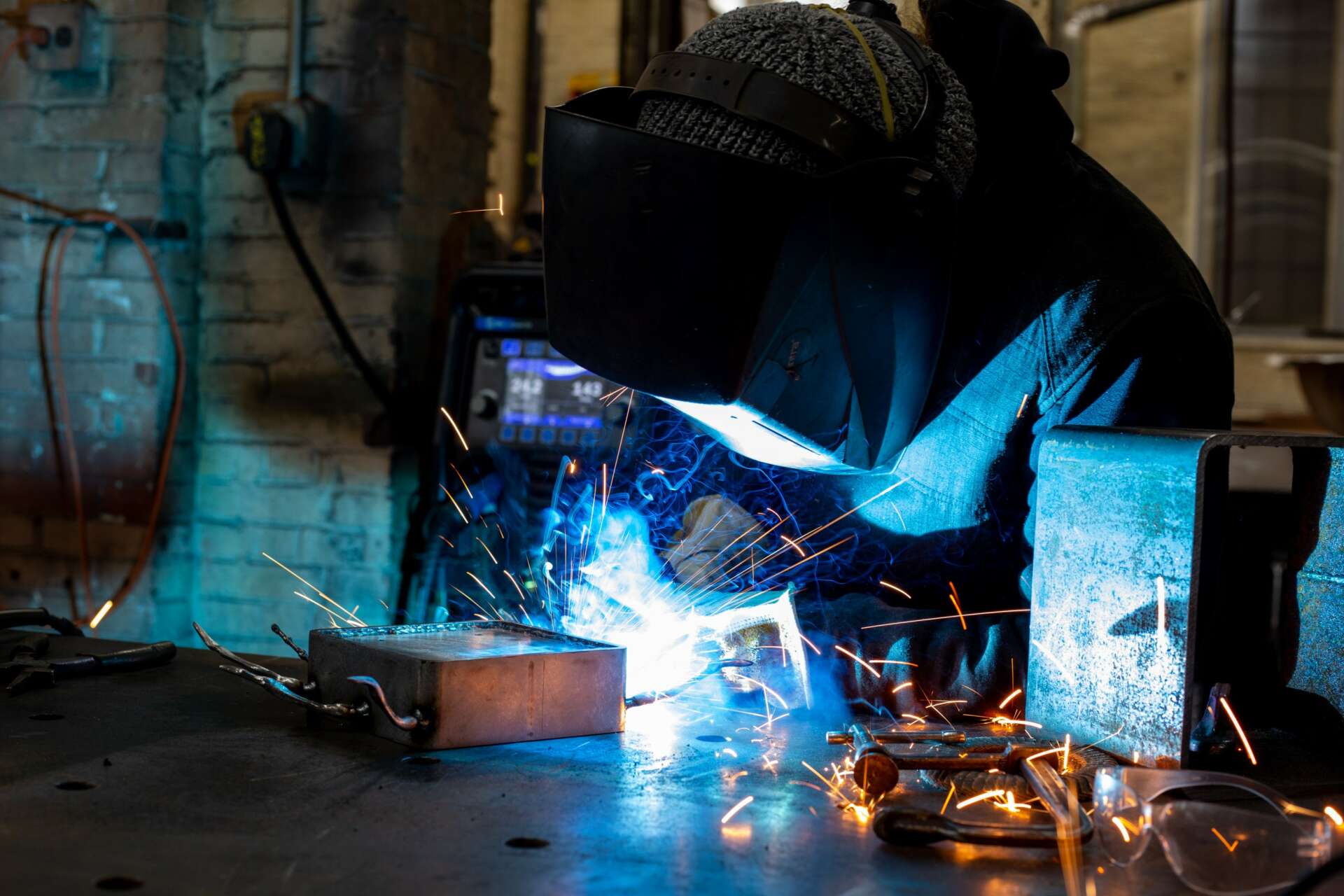
Today I’m a practicing artist as well as a public art fabricator. I both pursue my own creative projects and help artists vision of metal sculptures come true.


As always, we appreciate you sharing your insights and we’ve got a few more questions for you, but before we get to all of that can you take a minute to introduce yourself and give our readers some of your back background and context?
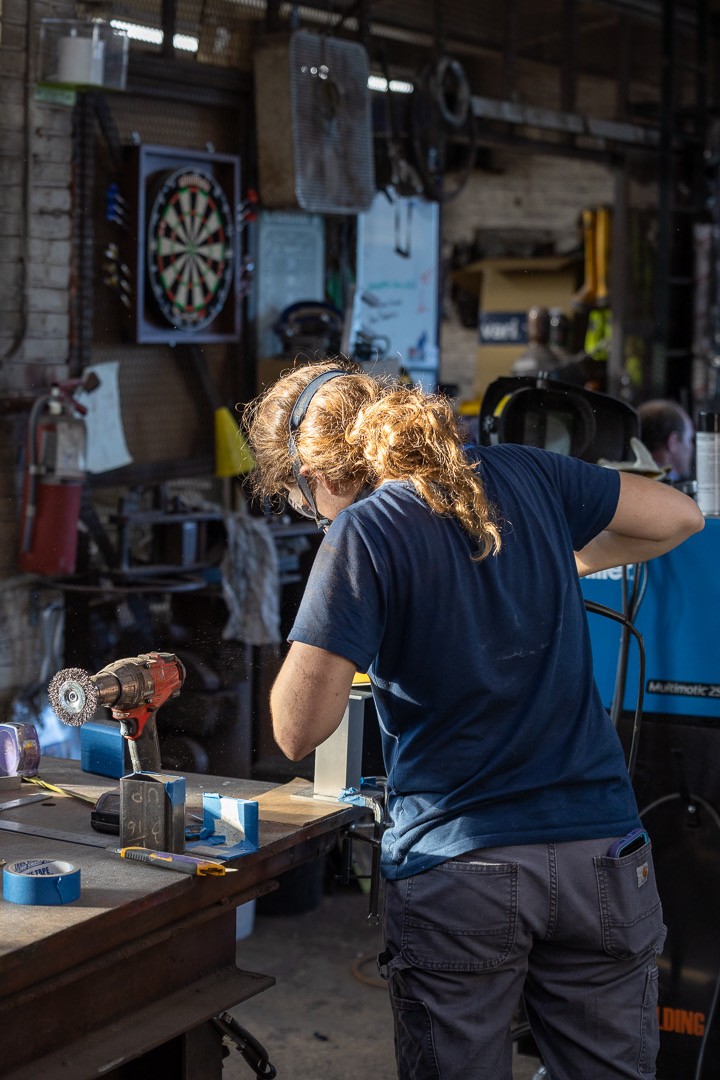
My education and passion for making has led me to where I am today in the sculpture field. I divide my time between working at Elemental Metalworks as a fabricator building pubic sculpture and architectural elements, and working on my own creative practice through which I explore cross pollination, hybrid creatures and speculation. I have a BFA from the Maryland Institute College of Art in Sculpture and Creative Writing and I gained a lot of the skills there that I now know and utilize in my work.
Through biomorphic metal and plant assemblages, primarily I investigate interspecies connections to understand how I affect non-human beings and the ecosystem, and my embedded connection within the lived environment. I’m fascinated by entities such as slime mold or cyborgs and how these collaged bodies act as speculative thought exercises. Sculpture has been the format of my choice because I love playing with different materials and textures, building three dimensionally and interacting with art viewers more directly in space.
I lot of my work is made with mild and stainless steel, and aluminum, and if I have access to a foundry cast aluminum and bronze. I enjoy contrasting this hard, cold, and durable surface with the more organic elements in my work including the casts, and cacti, mosses, and micro greens. The natural elements I include posses similar qualities of resiliency as the steel. I have recently become increasingly obsessed with a high level of finish that is possible through patience, technique and care and I continue to incorporate these ethos into my practice everyday.
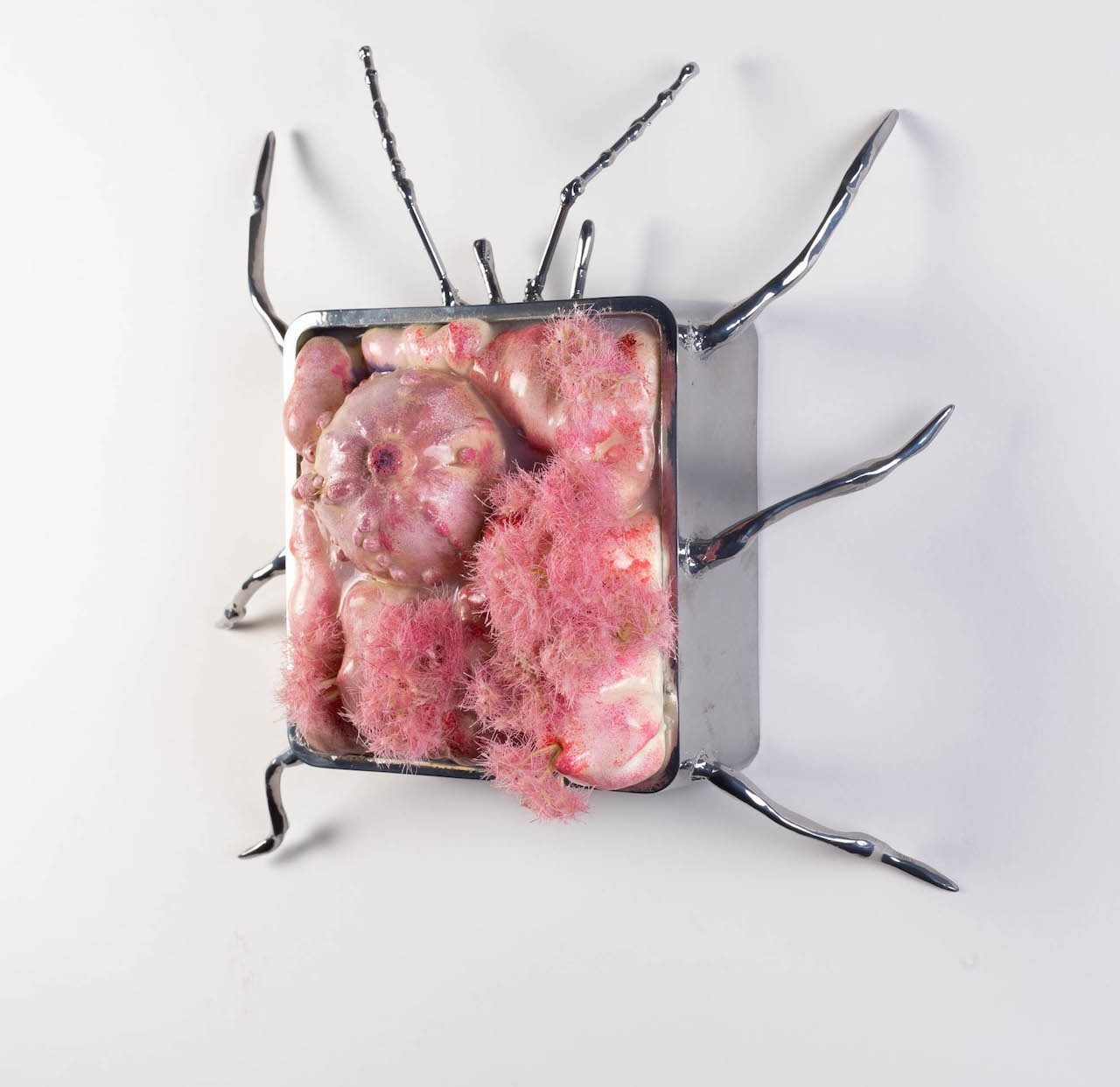
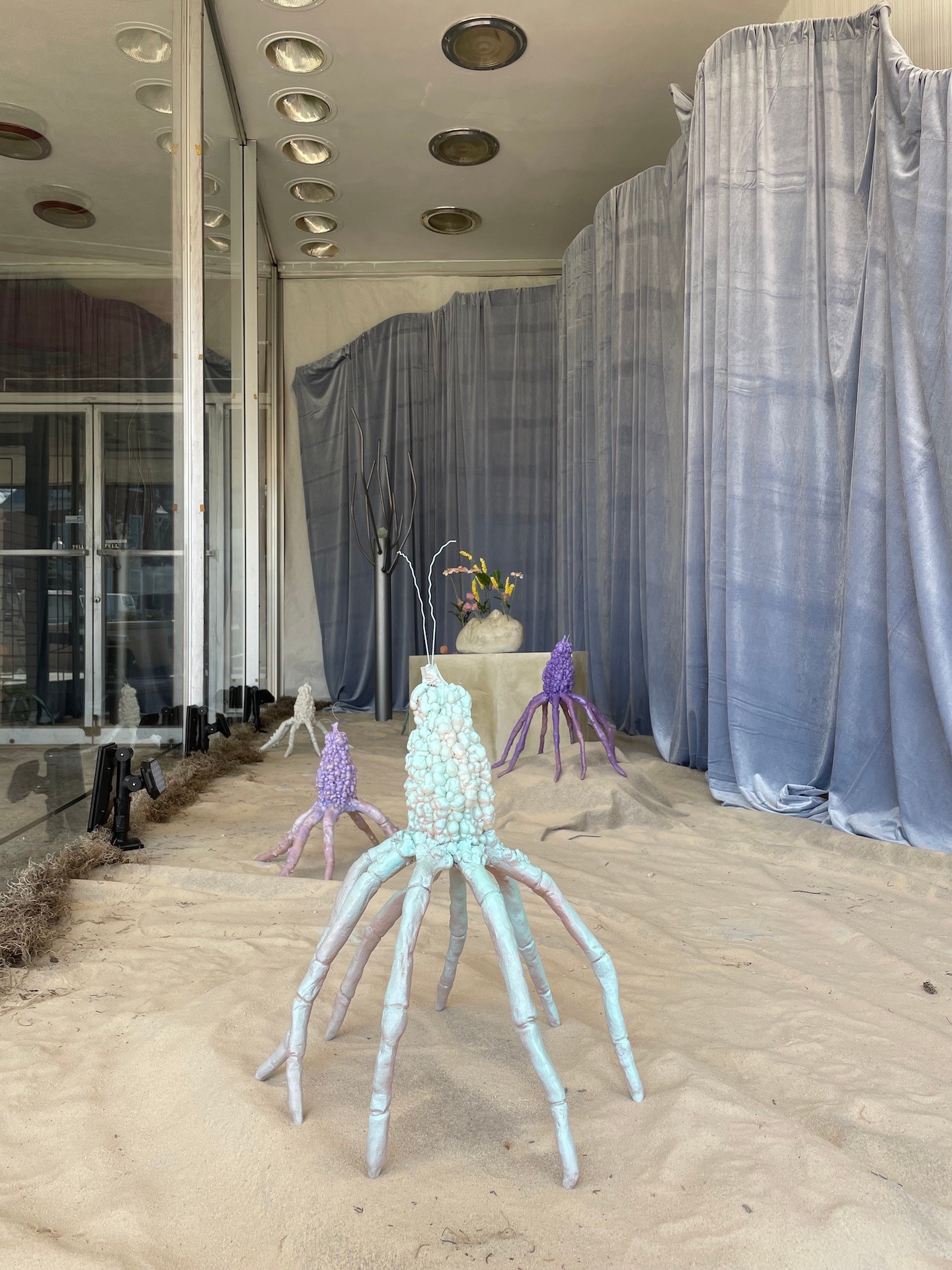
I create both singular objects like “euphoric glitch,” which is a wall hanging sculpture that roughly measures 12″ x 14″ x 4″. It is made from a rounded metal tube that I welded round bar to and shaped to look like insect legs an antennas. This structure is powder coated and the interior has a polyurethane casting of a gourd, insulating form and faux flowers that are covered with different acrylic paint in hues of pink and silicone. I also build installations like “Day-dreaming for Another World” that I designed and built for a store front revitalization project in Morganton, NC, which has six hybrid critters made from gourd casts, and shaped steel and clay legs within a speculative landscape. My eerie and unearthly sculptures provide paths for the viewer to travel beyond the work into hypothetical and imagined landscapes.
I’m also a writer and I write reviews for BmoreArt and speculative short stories. I enjoy this aspect of my life because it gives me another creative outlet to engage with other artists’ work and to think about other individual’s artistic journeys.
What do you find most rewarding about being a creative?
The most rewarding aspect for me is building the work and being in the studio. When I’m hyper focused and enjoying the craft I can achieve this “flow” state of mind where everything just seems to flow slowly through time. It is very enjoyable and I feel the happiest then.
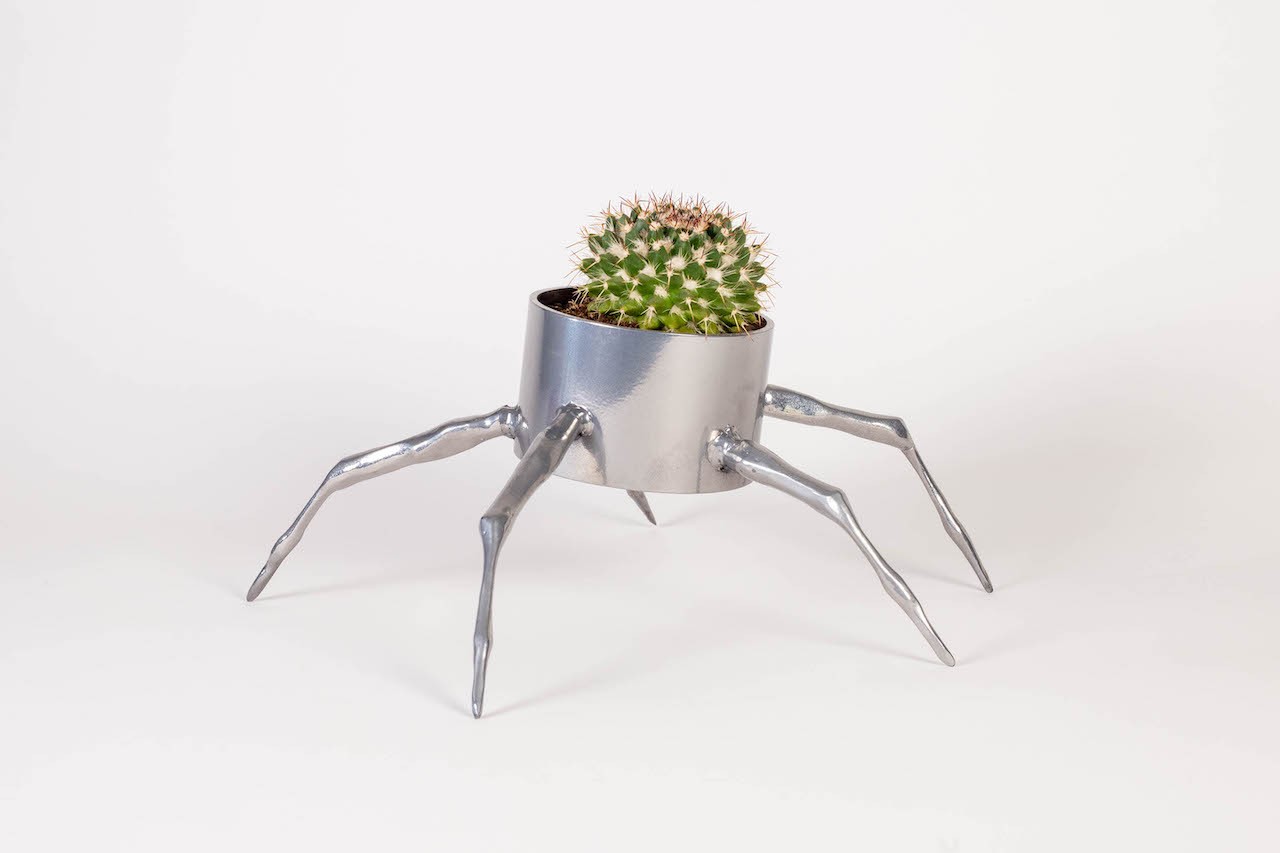
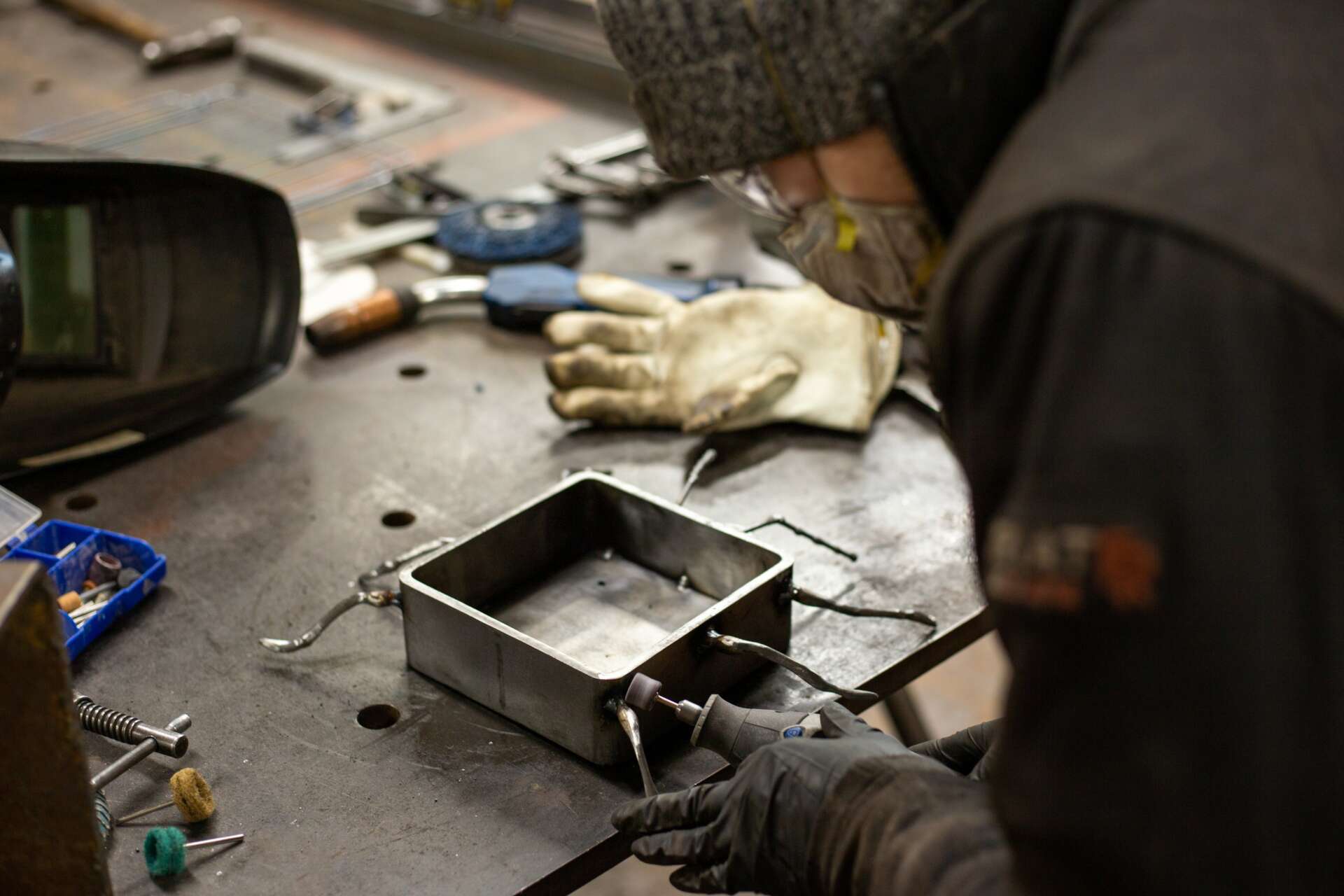
For example, as I shape elements of my sculptures like the “legs” it is very satisfying to see those become the shape that I want them to be. This was especially true in my “Circe” sculpture, which roughly measures 10″ x 11″ x 9″, and is made from steel, soil and a cactus. The body of the hybrid critter is made from a steel tube that has steel round bar welded to it that then I shaped into individual legs that resemble beetle appendages. I decided to powder coat this vessel in chrome.
A lot of the practices I engage in are transformative. In my castings the original is almost always a vegetable or fruit where its replica outlasts the original and through my steel work the object becomes more organic as I shape it with a grinder, Dremel and sand paper. Lastly, the finishes I put on either patina, paint or powder coat is the last transformative element where the work can go from a bare metal into a shiny surface.
The textures, forms and colors all come together and the work is getting close to being finished. When I decide that the work is done is also very rewarding because I start with bare pieces of steel flat bar or tube or round bar and through time and the movements of my hand the object comes alive.

In your view, what can society to do to best support artists, creatives and a thriving creative ecosystem?
We need to reevaluate how we compensate artists for their work.
I’m thinking of mostly artists who are in the early stages of their career and create ideologically driven work that is less likely to sell and live on someone’s wall either because of size, installation or aesthetics. As an emerging artist a lot of opportunities that I was and am encountering and trying to show my work through are open calls. Most often these come with fee to apply. And while I understand that smaller galleries might need this to offset administrative costs I think larger organizations should be able to subsidize the open call.
As an artist I’m not only researching and building my work I also need to a lot of administrative tasks such as apply to grants, open calls, residencies and fellowships, photograph my work, regularly update my website and social media, while also pursing a full time job. I believe that artists should be compensated for showing their works in exhibitions even if it is a smaller honorarium since they don’t make money until they sell their work, but viewer and audience engages with the work regardless. Artists are sparking valuable political, environmental and ideological conversations, and I think this value should be recognized with or without a sale.
Contact Info:
- Website: www.fannisomogyi.com
- Instagram: https://www.instagram.com/fanni_somogyi/
- Other: https://www.behance.net/fannisomogyi
Image Credits
All images taken by Fanni Somogyi.