

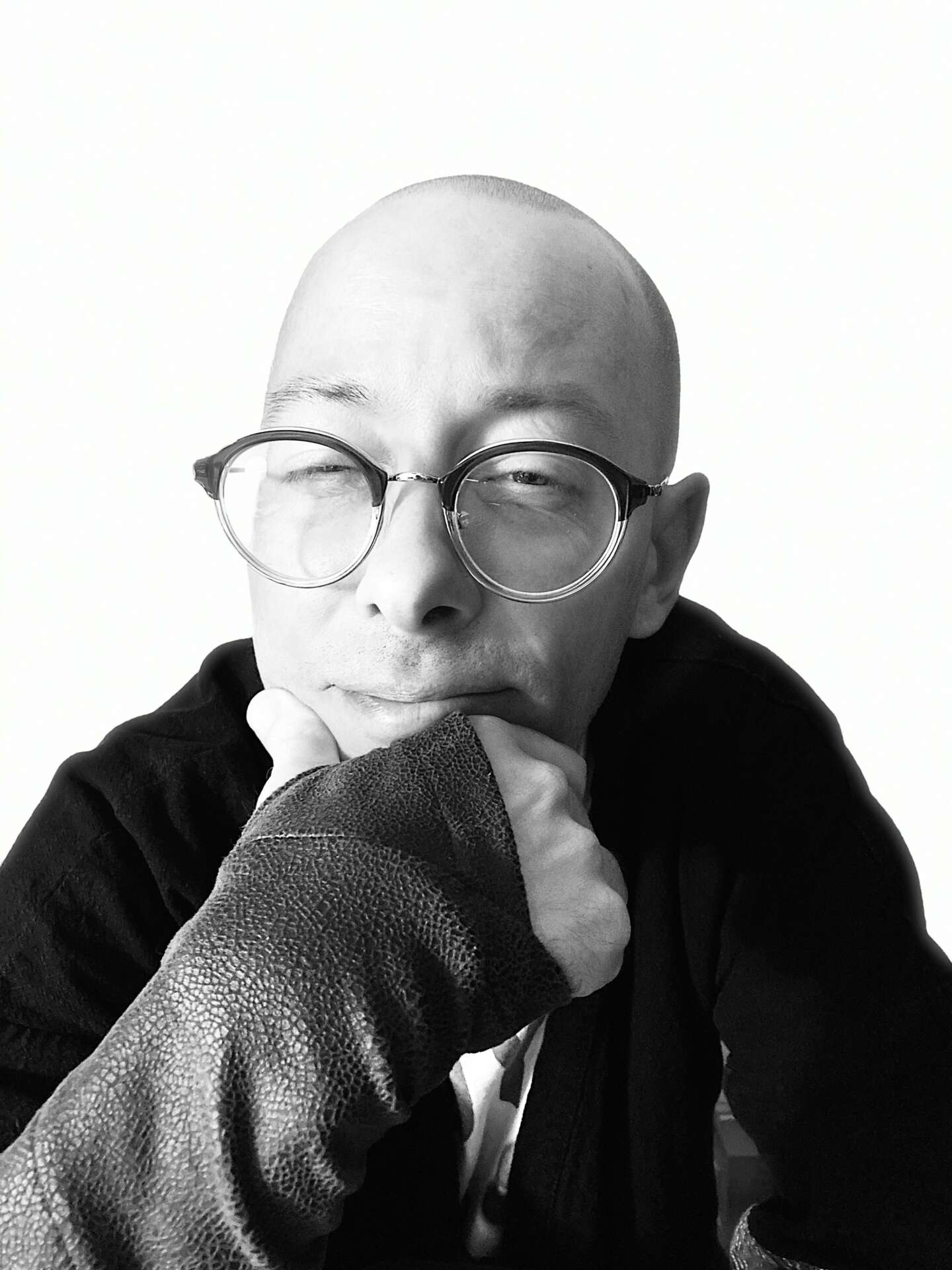

We recently connected with Michael Holt and have shared our conversation below.
Hi Michael, thanks for joining us today. We’d love to hear about when you first realized that you wanted to pursue a creative path professionally.
Shortly before 2009, when the market crashed, I had returned to the city I grew up in, Sandusky, Ohio., In the 80’s it was an automotive manufacturing hub, along with various other factories. By the time I had graduated high school, those jobs had mostly gone the way of the Dodo. What was left was primarily service industry jobs supporting tourism for the local amusement park Cedar Point. After the market crash, even those jobs were scarce. I found myself questioning if this was all I would ever achieve in life. The prospects of living like that were absolutely soul crushing. So I decided I would go back to school as a non-traditional student.
There’s only one thing that had ever been a constant in my life, and that was my passion for art. I’m practically a walking cliche. All I ever wanted to be from the time I was a child, was an artist. At five years old, I was staying awake at night when my parents thought I was asleep. I was looking down into the dining room through an air vent, trying desperately to figure out perspective of a table, on paper. Failing, mind you. But making the attempt. Those passions never left me, and I was always in the pursuit of my craft. So with the ever growing prospect of no real future in my 30’s, I decided it was time to take things to the next level. I had met a British business man in a bar one night who told me, “You don’t want to find yourself at 60 years old, asking, why didn’t I give it a go?” Those words were burning through my brain like a fire. I signed up at a satellite campus for Bowling Green State University, Firelands College. And that began this crazy journey I’ve been on.
After my first semester, I found myself without a car. And the school was a three hour walk from Sandusky. I knew I had a decision to make. Give up now, go back to the reality I was trying to escape, or just do whatever it takes. For me, failure was not an option. So for the next semester, I walked three hours both ways after spending 9-12 hours on campus. I rode a bike when I could get one. And even tried a completely unreliable public transportation system. Whatever I had to do to be present, that’s what I did.
The next semester I moved to Huron, Ohio. It was closer, but it still meant an hour walk, to and from school every day. In all weather, no matter the conditions. And if you’ve ever witnessed a winter on the shores of Lake Erie, you’ll know this was no easy task. My walk was surrounded by empty corn fields with no protection from the elements. Most times in the winter, I had ice in my beard from the walk, and would have to thaw out at school. And in the Spring, it was torrential rains I had to battle. My gear was all wrapped in plastic in my backpack but I was soaked to the bone taking tests and leaving puddles in the floor. There were times I wanted to give up. And I remember writing to my father telling him so. He told me about how he had worked factories long hours, and stayed up at nights studying to be a police officer, It had been his life long dream. And it took struggle, but he had achieved his goal. He asked me to never give up on my dreams, and told me how proud he was of what I had went through to find my dream. He said, if it had been him, he didn’t think he would have been able to do what I had done. it gave me the strength to keep going..
Word got out about my determination throughout the faculty, and I had some who would stop and give me a ride if they saw me on occasion. There was even a farmer who would see me daily walking in those conditions, and after awhile, he even would stop and give me a ride if he was out and about.
The most critical help I received was from my art professor David Sapp. He was a one man show in the art department at Firelands. He taught all of the art courses, and it must have been exhausting. He knew I couldn’t afford main campus at BGSU, which also meant I couldn’t afford a BFA. Instead, I worked towards a Bachelors in Liberal Studies with a focus in Fine Art, Theater, and English. It was a long shot from Hell, but if I could develop a strong portfolio, there was the possibility of getting into a Master’s program. It was going to take serious dedication, and the guidance of my professor to pull it off. I graduated with a 3.965 GPA and immediately applied to MFA programs. I was accepted to American University in DC and that program not only changed my art forever, but I also met my future wife, who was attending the same program.
My father passed away in the middle of my graduate studies. He never got to see me finish what I had started. Or where the path has led me. But I know how proud he was of the path I had found, and held to with all my strength. My mother has never been prouder of me.
Now I exhibit nationally, and my work is always evolving. I’ve created works I could have never dreamed of before this journey. I’ve met incredible artists, critics, curators, new friends, and had experiences that are sometimes beyond even my own imagination. And the journey has just begun. For the first time in my life, I feel that, no matter what happens. No matter where I find myself. I have become the thing that I always dreamed of. I am a Master of Fine Arts. And nothing can ever take that from me.


Awesome – so before we get into the rest of our questions, can you briefly introduce yourself to our readers.
My work developed from a mixture of iconographies and aesthetics derived from 1990’s Punk DIY underground zines, advertising and magazine editorial agendas, sprinkled with a healthy windowpane dose of counterculture influences from my youth. During the early development stage of my processes, I was also heavily intrigued by the work of Edward Bernays’. The nephew of Sigmeund Freud, he used his uncle’s theories of the “irrational mind” to develop what we now know as Public Relations and modern advertising. This theory, proposed that people do not make decisions based in logic or fact, but rather their emotions.
This was used to attach emotion to products, public issues, and people in a way that had not been attempted before. His theories proved effective in manipulating public consumption patterns and opinion. As an example, think of how society places personal identity in consumer items such as Iphones. It was no longer about how the consumer felt about products or the actions of individuals, but rather how the individual felt a connection towards a brand image. Those practices and theories are still used by advertising and government agencies to this day, and were instrumental in ushering the “Mad Men” era of advertisement.
The most common mode of information transmission when I grew up was through magazines. I’ve kept many of those old magazines with me through the years as a sort of window to my past. It was natural for me to explore these concepts using those issues to begin my research during graduate school.
The first breakthrough in my work was in the literal dissection of magazines with an X-Acto knife. In order to better understand the mechanisms by which it functions and to be a better collage artist, it had to be surgically explored. Pieces and parts of a magazine are experienced as we move through the carefully curated images and text, with the whole never really coming into focus, except by a subconscious level. By studying the means and reasons by which the information and graphics are delivered, I was able to slice away the noise and negative spaces to bring the whole of the object into greater focus. The greatest achievement of these exercises was discovering the ways in which the reader is guided or manipulated, and to develop the ability to either subvert those processes or reinforce them.
As an object, the result of the dissection develops a topographical relief as the layers are revealed. The layers of pages create a dimensional sculpture effect as they are cut. New dimensions and hierarchy are achieved between images and text, as associations between ad dollar interests and content are revealed. For example, in the work “Daddy’s Money”, the magazine Seventeen held an overwhelming amount of content focused on the hyper sexualization of teen girls, as well as the encouragement of relieving males of their money, including dear old Dad. Left alone, and viewed page by page, these messages may not come into sharp focus. When dissected, the messages and intent of the object are revealed in full.
My practice has recently expanded to include new works in cut and layered vinyl. Early versions of these experiments focused mainly on the “consumer ready” feel and visuals that vinyl conjures, and its potential use as a Pop Art medium in context to celebrities. This quickly shifted however to focus more on explorations of my early Punk and street roots. The result is a reflection of those early Punk underground and counterculture zine influences, while bringing it into the contemporary with a plastic medium. The commodification of “cool” and subversive thought since 1992 is something that continues to motivate me to make work, as it has always felt disingenuous to witness in advertising. I use consumer products, popular culture symbolism, and a counterculture aesthetic to provide veiled narratives of my life, much like a visual diary.
Do you think there is something that non-creatives might struggle to understand about your journey as a creative? Maybe you can shed some light?
Sometimes, it seems that non-creatives have a hard time understanding the very real “need” to do what I do. It’s sort of like you have this presence in your head, that can’t be ignored. A sort of compulsion you can’t physically or mentally ignore to create. If I am not creating, I don’t feel well, or normal. Perhaps it’s some chemical reaction I’ve become accustomed to in the brain when I create. Perhaps it’s something beyond my own understanding. But even beyond this consuming need to create, there’s an even more important need to defend it, nurture the path, and be true to oneself instead of outside interests and forces.
I’ve even had work places refuse to give me time off to do artist talks, until I threatened to quit on the spot. And to be fair, a local newspaper had written about the show, and I had been featured. So I felt obligated to be there and talk about the work. When I confronted my managers about the situation, they wanted me to miss out on the opportunity so I could stay and do inventory. I had already worked 8 hours that day assisting with the process, and all I was asking was to leave early to give the talk. They wanted me to be there from 7am-midnight. They refused, saying that “my hobby” shouldn’t interfere with my work responsibilities. No matter what I said, I couldn’t make them understand that this wasn’t a hobby, They could never understand what I had been through to do this, or the amount of time and money it took to achieve this level, or relationships I had sacrificed to get where I am with my career. None of that would ever matter to them. But in the big scheme of my path, I could not let them stand in the way or allow them to be unaccommodating because of their lack of concern. This was my path. Not theirs. So I told them I would quit. They in anger let me go. When I returned for my next shift, I was taken to a windowless room in the bottom of a Smithsonian museum, and questioned on my “loyalty” to the job. The tactic did not end well for them,


Are there any resources you wish you knew about earlier in your creative journey?
When I was in graduate school, I was unaware of some of the internship opportunities at the DC museums for art. Granted, a lot of my time was focused in the studio. But it would have been good for someone to tell me how valuable those positions could be when considering future museum or gallery opportunities. Don’t pass these internships up. It an not only give you valuable experience, but the people you meet can open doors for you.
Another piece of advice, make sure to check for open calls on sites like Cafe Call. Look through the open calls, decide on ones that fit your work the best and apply. Do your research on the curator. It will help to tell you if your work is something they might be interested in. And above all don’t be discouraged if you are not juried in. You never really know what the curator is looking for, how close you came, or if they might have you in mind for something else down the road. The goal here is to be seen. Wear rejections like a badge of honor. You’re going to have a two foot stack of them if you’re successful. It’s part of the process, so don’t take it personal.
And beyond any advice I could possibly give, make work. Never stop making. Ever. Only 10 percent of artists who enter an MFA program are making work even just five years out. You did this for a reason. Always remember your why. And just make work.
Contact Info:
- Website: https://www.michaelholtart.com
- Instagram: @michael_holt_art
- Other: Etsy Print Shop HoltPrints.Etsy.com