



We were lucky to catch up with Toni Lorraine Johnson recently and have shared our conversation below.
Hi Toni Lorraine, thanks for joining us today. Risk taking is something we’re really interested in and we’d love to hear the story of a risk you’ve taken.
Like most people, regardless of color, being born into poverty can be a death sentence. I am no different, but I didn’t know I was poor until I got into middle school when my mom would buy my sneakers at the supermarket all the way in the last aisle of the store. I have a picture with my volleyball teammates, where everyone is in athletic footwear but me because my mom said I went through too many shoes. We used my Aunt’s address so I could learn with children from a middle-class neighborhood, and most afternoons, I went back to the hood. Let’s be clear: my mother, like many other mothers, wanted her children to have the best education possible and to position us so that we would not have to succumb to the reality of what was happening around us. I remember never being allowed to go to other kids’ homes out of fear that they would ask to come to mine. I also remember getting free lunches but still being hungry and stealing from my teacher’s purse to buy food and candy. It’s something about the sugar rush that makes a child’s hunger go away. As you can see, the risks in life started out early for me, sometimes through no fault of my own, while others were self-induced by what I thought to be my best path to escape. Poverty can kill a child’s spirit.
Around the age of fourteen, I became pregnant, and I can say this was when life got real. My mother and I never saw eye to eye while growing up, and I didn’t fear anything in this world but her. When she found out I was pregnant, she tried to give me an abortion by walking on my back while I was six months pregnant. Well, that didn’t work, and my oldest was born in November of 1987. When the baby was born, to save her embarrassment, my mother instructed me not to tell people this baby was mine and that she would raise it. She made me breastfeed to “punish” me so I could feel pain. However, the most painful part was leaving this child in my mother’s care one month after birth because I couldn’t take her abuse. I had to run away.
At the ripe old age of fourteen, I found myself homeless and nowhere to turn but to the streets. I was never one to be easily influenced, and I quickly learned how to work the system as a minor. After a stint at a juvenile home, I was released as an emancipated minor at sixteen. During this time, I started to run drugs by car, train, and plane across the US and internationally. By high school graduation, I had become known as a person with many faces who worked quickly and quietly. As the famous Bob Marley quote warns, “….one day the bottom a-go drop out,” and it did in February of 1992 when I got held in Savannah, Georgia Airport with drugs. Although I did my time and got an early release for good behavior, that didn’t deter me from selling drugs during my parole, it just showed me how to look at distribution from another angle. From an early age, I lived on my terms, like a game of Russian Roulette, with a no-risk, no-reward strategy.
The turning point in my life came from a phone call from the Feds in the summer of 2008. It was either have all your kids taken away and go to federal prison or stop; I chose the latter. When I returned to Philly with four kids in tow, I decided to continue my education. I had been an A student and was accepted to Le Cordon Blue, which I turned down. As I moved forward, the risk of losing my kids was more significant. Fear of loss was the norm in our lifestyle, with me working multiple jobs because although I sold drugs, I always had a 9 to 5.
Starting college again as an adult was different in many aspects; however, the relationships forged have sustained me over these twelve years and helped me grow my business.
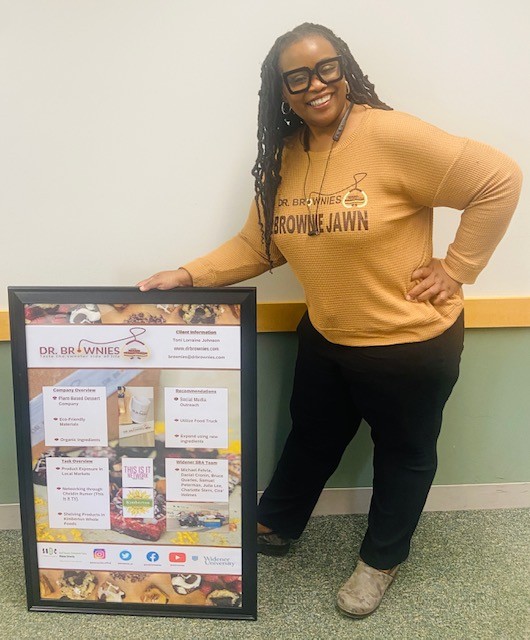
Fast forward to 2019, when I was fed up with not getting paid the same as my white counterparts with less education and experience. I left my last corporate position as the Chief Human Resource Officer to work full-time in my consulting business, and then the pandemic happened. I was already in my Ph.D. program, and now, without a job and very little savings, I turned to the one thing that has always been a part of my life, baking. One of my sons, who is vegan, challenged me to make a vegan version of his favorite childhood sweets; hence Dr. Brownies was born.
We all take risks every day, some more than others; however, the prospect of losing my kids helped me put my life into perspective and ultimately make the right choice for them and myself. Walking away from a job that was one of the most toxic workplaces I’ve ever been in led me to an abyss. I questioned myself, but it ultimately led me to choose my own path to create the life I desired for my family and myself. The obstacles of being born into poverty, being born black, and being a woman have each played an integral part in my decision-making process. One could argue that others have the same conditions and choose differently, and I would agree. However, until you have walked into another person’s variables, it is unknown how much risk you will take.
Today, I am juggling a full-time career as an entrepreneur while finishing my doctoral dissertation, The Lived Experiences of Black Women Business Owners Trying to Scale; IT AIN’T EASY.
Toni Lorraine, before we move on to more of these sorts of questions, can you take some time to bring our readers up to speed on you and what you do?
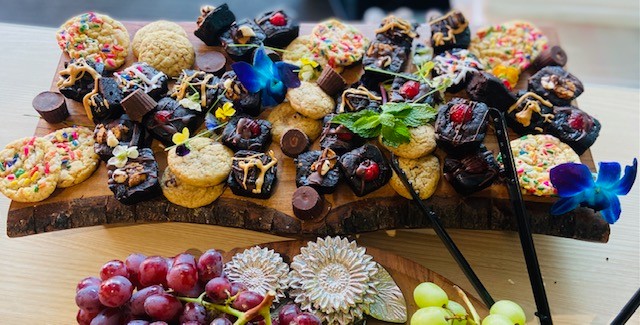
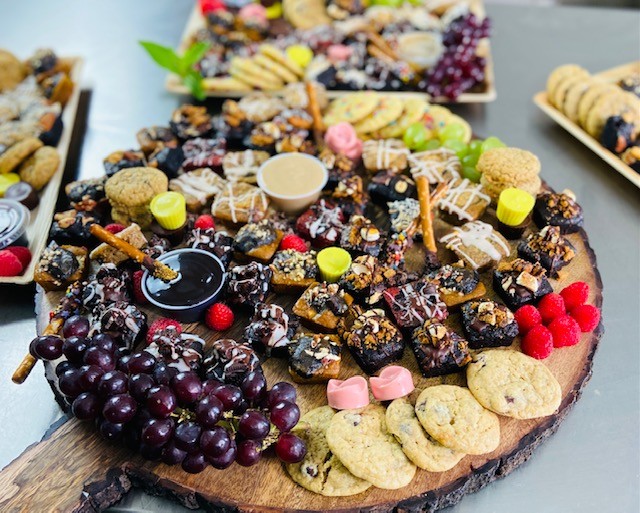
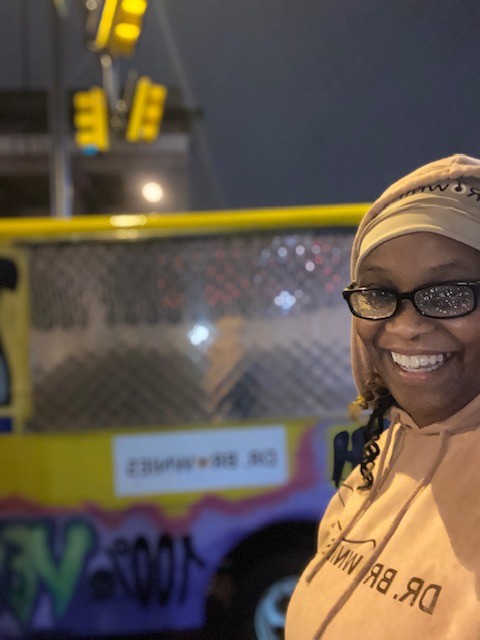
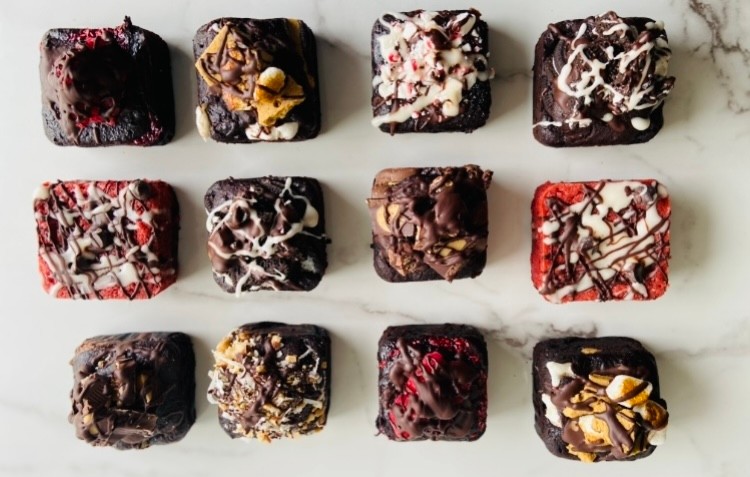
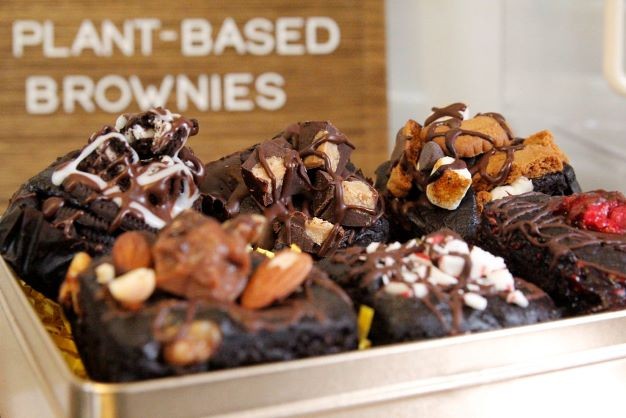
Baking was a way to deal with my childhood trauma; I considered it therapy. And Dr. Brownies was my salvation. Among numerous freshly baked products, Dr. Brownies offers the first refrigerated ready-to-bake brownie mix on the market that is wholly plant-based. Our sustainable approach attracts people from many dietary preferences, including those who still eat meat (flexitarians) and are willing to try plant-based foods. Our pour-and-bake brownie mix takes the guesswork out of baking by removing the need to measure and add ingredients. It gives customers the time and autonomy to bake as much or as little as they like. We sell different flavors of our refrigerated brownie and cookie mixes (gluten-free, keto) and ready-made products. Some of our proudest moments on this journey are seeing our customers’ faces light up, which can be on the food truck, at an event, or in a video review sent to us from customers. The icing on the cake is Dr. Brownies’ commitment to being a second-chance employer. I believe in being the change I want to see in the world, and I’m proud to help returning citizens get a leg up in creating a better life for themselves.
I am savoring the moment and intend to be around for a long time so Dr. Brownies can continue to help people taste the sweeter side of life~
Can you tell us about what’s worked well for you in terms of growing your clientele?
My relationship currency model is the most effective way of growing clientele. When we go to the bank to make a deposit, we say hi to the teller, give them our money, and then leave the building. Imagine you leave the building, start your car, shut it off, and go back to the bank to the same teller from a few minutes ago and ask for your money back with interest. They would look at you as if you were insane; well, that’s what a lot of small business owners expect when they open a business. Thinking, “Hey world, I’m here, and my product is great. You need to get this now because I have sunk every penny and effort it” The relationship currency model is making small deposits in EVERY relationship in your personal and professional life. Over time those deposits start to add up, and people will say your name in rooms you still need to enter. Those deposits for me have been giving away my products to organizations and people as a thank you, no strings attached, and it always comes back tenfold.

Have you ever had to pivot?
When I started Dr. Brownies, I thought, like most bakers, “I need a storefront NOW.” However, the pandemic has changed how we do business in all sectors. After vending for a year in my food truck and at various outdoor festivals, I knew I need to make Dr. Brownie’s something more sustainable. With the hospitality industry still struggling to keep its doors open, especially Mom and Pop shops like mine, I turned toward distribution to make a broader impact and longevity. The shift came from my customers asking if I was in any major supermarket chains. The ability to look through the lens of your customers will keep you always pivoting. The trick is to ensure these pivots align with your long-term goals.
Contact Info:
- Website: www.DrBrownies.com
- Instagram: drbrownies.official
- Facebook: @orderbrownies
- Linkedin: Toni Lorraine Johnson
- Twitter: brownie_dr
- Youtube: DrBrownies