

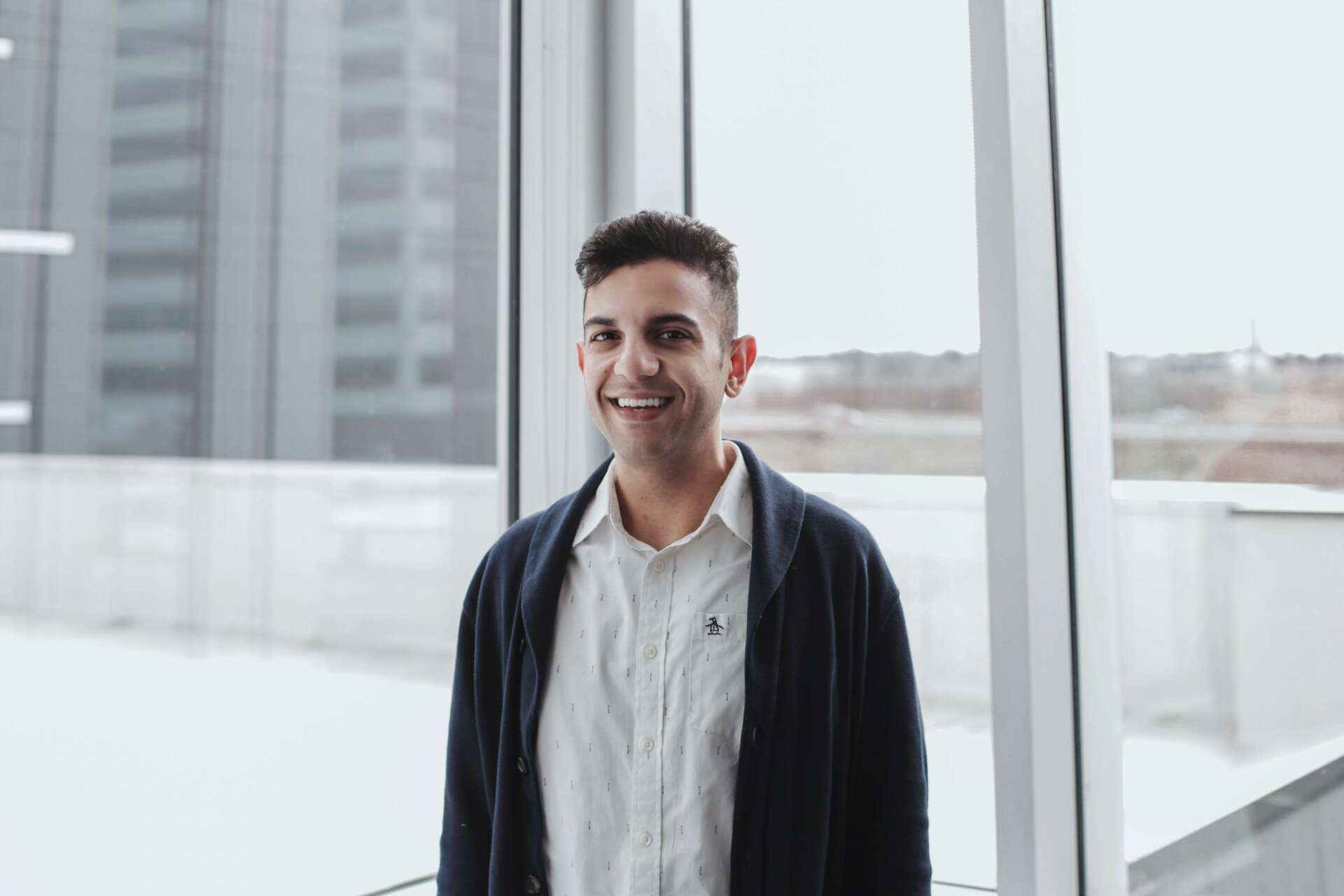

We were lucky to catch up with Armin Faraji recently and have shared our conversation below.
Armin, looking forward to hearing all of your stories today. Parents can play a significant role in affecting how our lives and careers turn out – and so we think it’s important to look back and have conversations about what our parents did that affected us positive (or negatively) so that we can learn from the billions of experiences in each generation. What’s something you feel your parents did right that impacted you positively.
My parents didn’t have the best jobs but they provided me with extracurricular activities, travel opportunities, and summer camp — which gave me the chance to explore my interests. I was always encouraged to follow my passions and try new things, so that’s what I did.
They also allowed me to listen to any kind of music I wanted and allowed me to be influenced by the outside world, rather than keep me locked up inside the house filled with only our family photographs. Of course, there were rules: all clean clothes had to be dirty before you’re allowed to wear something else; food had to be eaten before it was trashed, but time for creativity and exploration was never an issue.
At a young age, I explored different art forms (painting, guitar, piano) and sports. I felt creative, uplifted, and free, which has manifested in my adult life as an entrepreneur.
The big picture is that my parents have been supportive of every idea I’ve ever had. Even the ones that didn’t work out so well.


Armin, before we move on to more of these sorts of questions, can you take some time to bring our readers up to speed on you and what you do?
My first entrepreneurial project was in grade 6. I would buy chocolate bars and chips at Costco and then sell them at my school to students. I got in a lot of trouble with teachers and administration, but I was ecstatic to be making money doing something I thought was pretty cool.
Following this passion, when I was in university I launched multiple e-commerce businesses and scaled a women’s jewelry brand called Vivah to a 7-figure online business. I exited this business in 2016 (this was my first exit!), Shortly after, I spent the next 4 years building a social media agency called Growth Group, where I became fascinated by the influencer economy.
After working on hundreds of influencer campaigns at my agency, I saw an opportunity to make influencer marketing more accessible to small businesses and bloggers.
When only large corporations had authentic influencers promoting their products, I realized it was the perfect time to strike with a solution that would enable anyone to work with an influencer.
Node was founded in 2020 by my co-founder and me because we grew tired of the competition and bloat of the current influencer marketing landscape. We saw a missed opportunity for something fresh, transparent and ethical. We knew there was a need for an open marketplace that would give businesses and creators of all sizes the power to trade value for value.
Can you open up about how you funded your business?
I received a 45,000 loan to get my startup, Node, off the ground. For the first 8 months, I worked part-time on Node while running my existing agency business. Once we gained some initial traction, I went full-time on Node and started fundraising. We’ve raised 1 Million dollars and most of it has come through intros and connections from customers and executives we met through accelerators. (we did Techstars and Alchemist).
Interestingly, the first 250K we raised were from investors that I researched and cold-emailed.
I got over my fear of cold emailing and cold calling. I obsessively researched high-net-worth people and companies in my network. It was challenging in the beginning: there were no warm intros or open doors. However, over time with persistence and hard work, my network grew exponentially and more investors started approaching us.


We often hear about learning lessons – but just as important is unlearning lessons. Have you ever had to unlearn a lesson?
Something we learn in school is that everything needs to be perfect. An essay or report needs to follow every rule of English grammar and have well-researched points and facts. We are graded for this. A good grade on a paper is 10 out of 10. A failed paper is a zero. Startups and entrepreneurship is not like this. Businesses fail before they even start because the founders did not know how to get feedback on their business idea and instead worked on making it perfect beforehand.
Product market fit is a struggle for many startup founders. Your product or service doesn’t need to be perfect. You will never get everything right the first time and you don’t need to as long as your product is functional and works for most customers. You need to face the fact that you will never get everything right in the beginning. Sometimes you will even get some things wrong and it’s OK
Contact Info:
- Website: node-app.com
- Instagram: https://www.instagram.com/node.app/
- Facebook: https://www.facebook.com/node.influencers
- Linkedin: https://www.linkedin.com/company/node-app/
Image Credits
Some of the images were created by influencers on Instagram. I have referenced the creator’s handles in the file image names and listed them below as well: soni_phoenix.jpg – soni_phoenix pinchofbongs.jpg – pinchofbongs forkyyc.jpg – forkyyc annasunxo.jpg – annasunxo