

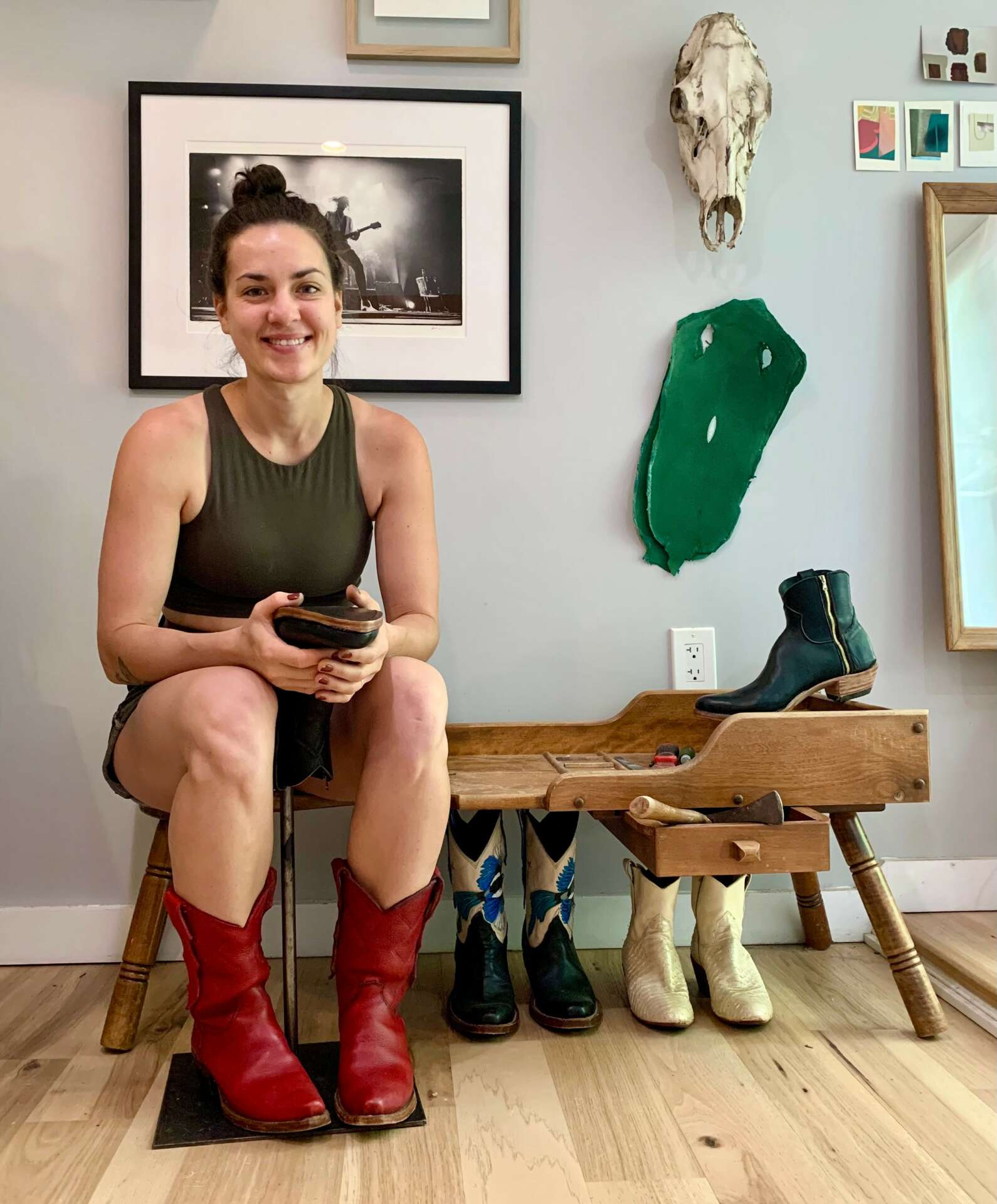

We’re excited to introduce you to the always interesting and insightful Emily Boksenbaum . We hope you’ll enjoy our conversation with Emily below.
Emily, looking forward to hearing all of your stories today. What’s the best or worst investment you’ve made?
The tools and machines needed for bootmaking really add up! When I started in leatherwork I was hand-sewing small wallets and tooling leather with cheap metal stamps I got from a leather craft store. As I started to become more serious about making footwear, I realized I would need so much more in my studio to really create a quality product that would not only look professional, but last over time. I started to acquire hundreds of open tabs on my computer, bookmarking all sorts of expensive items and equipment …an industrial post bed sewing machine, a finishing machine, a curved needle sole stitcher, burnishing tools, and various knives, awls, and skiving tools. Not only were these things expensive, they were hard to find. There is no “shoemaking materials store” next to the local Trader Joes. Even after working as a footwear designer at a major US brand, I still have trouble finding the tools and materials I need for my projects. I scoured ebay, compared shipping costs, and debated the merits of buying a new machine vs. an old machine that would need more regular repair. My first real investment was an industrial post bed sewing machine made by Artisan. This machine was not only instrumental in allowing me to create work, it was sexy! It stood there in my house calling my name. I wanted to use it all the time. The fact that I had spent so much money on it encouraged me to use it for everything and anything I could think of. After months of worrying about spending so much on something that was only a hobby at the time, I realized, having professional tools was exactly what I needed to develop my artisanship to the next level.
Awesome – so before we get into the rest of our questions, can you briefly introduce yourself to our readers.
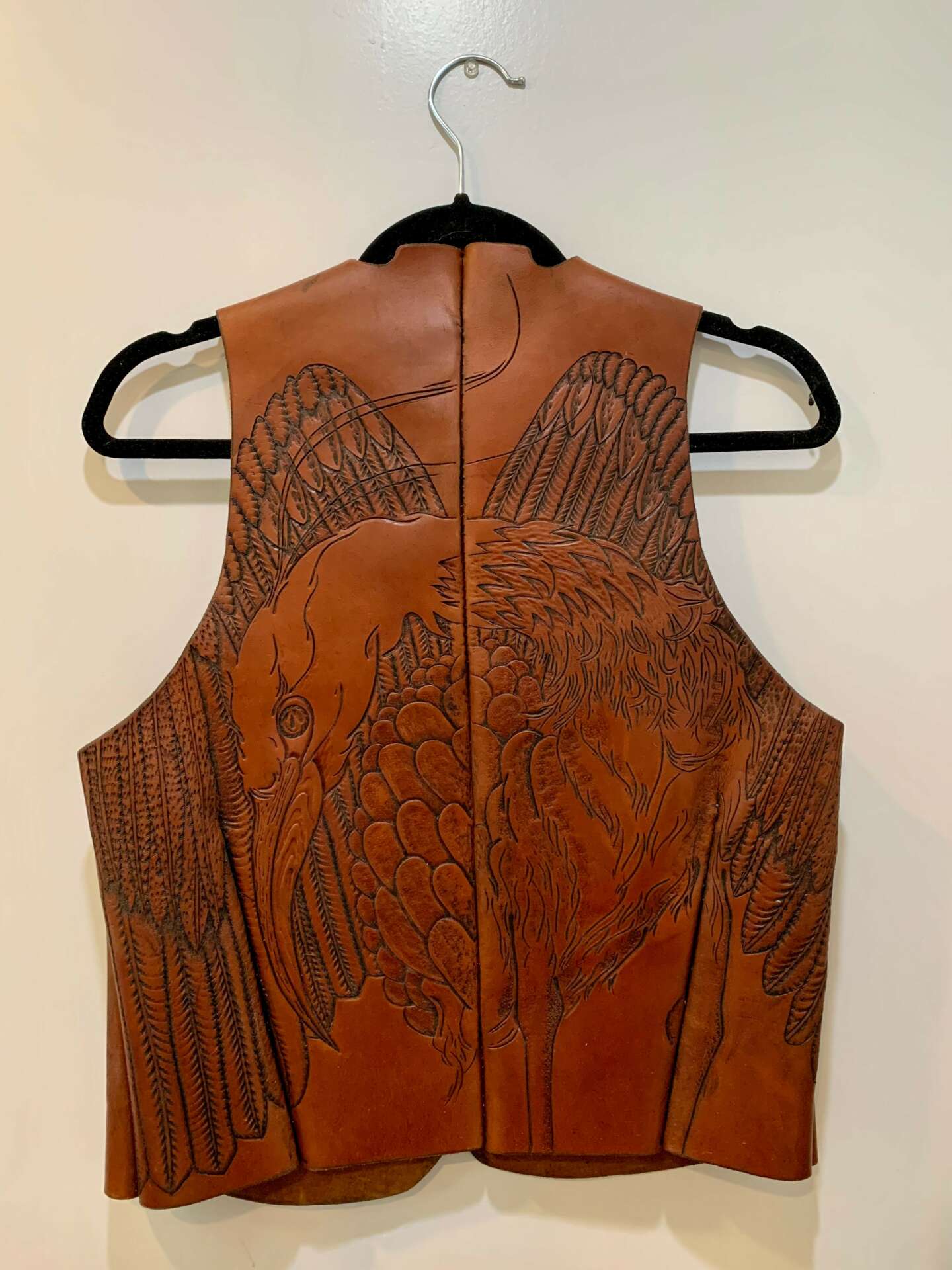
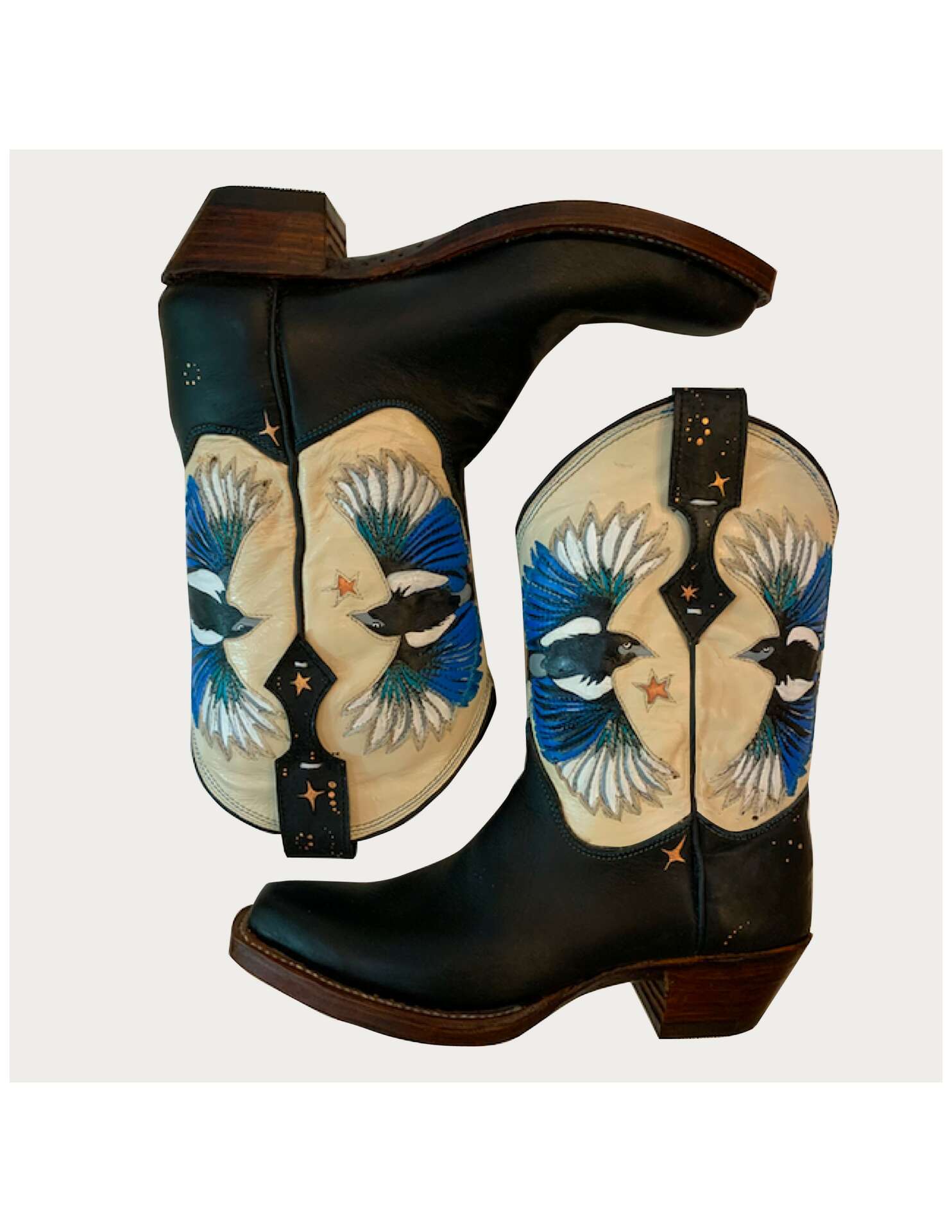
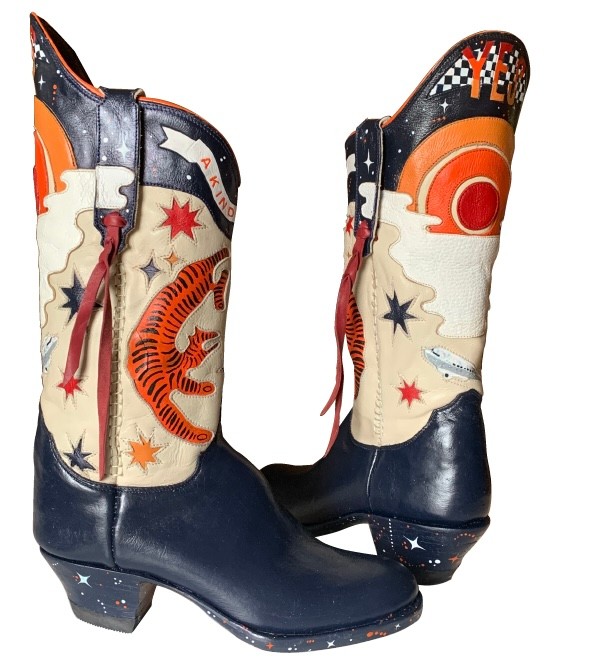
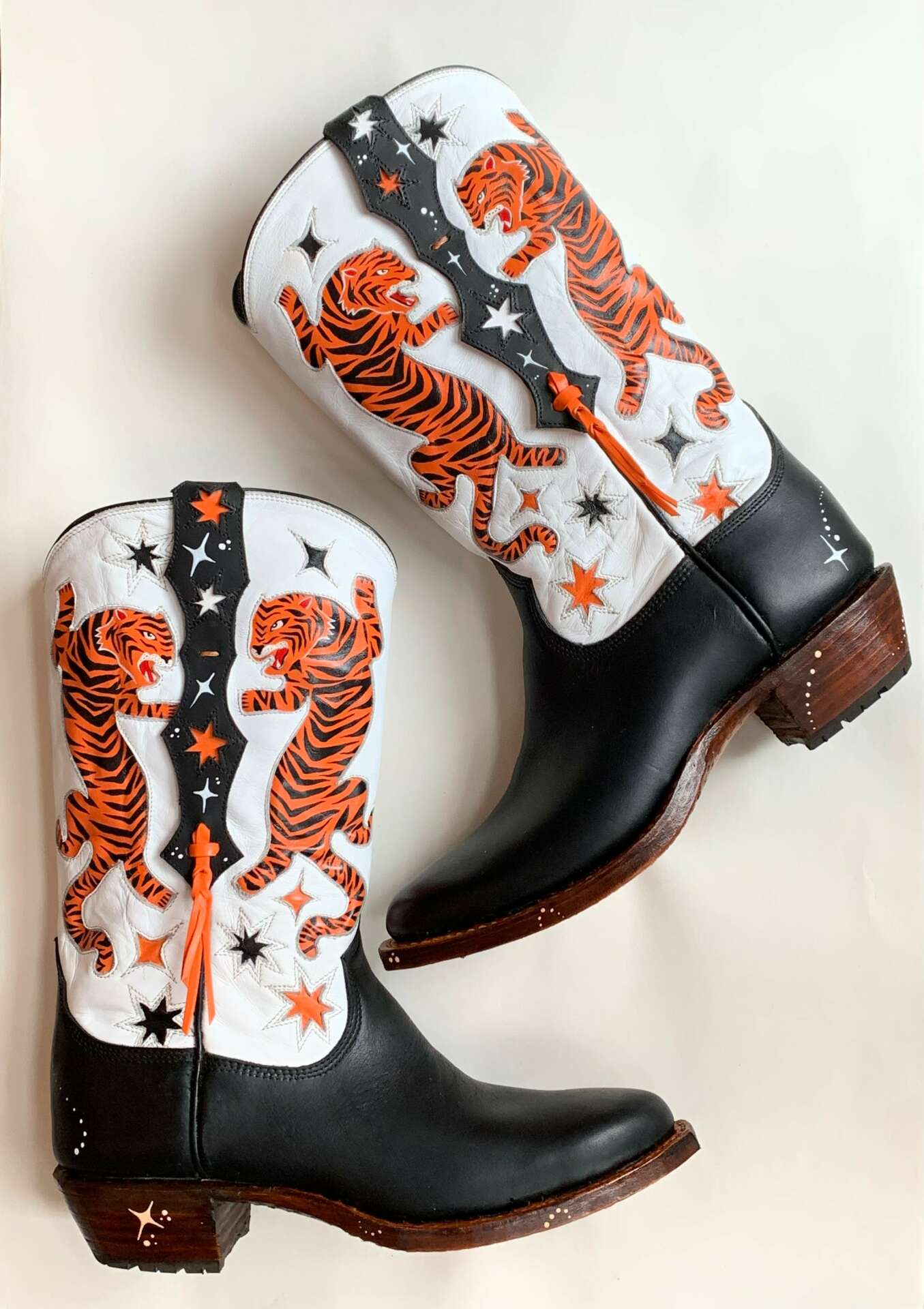
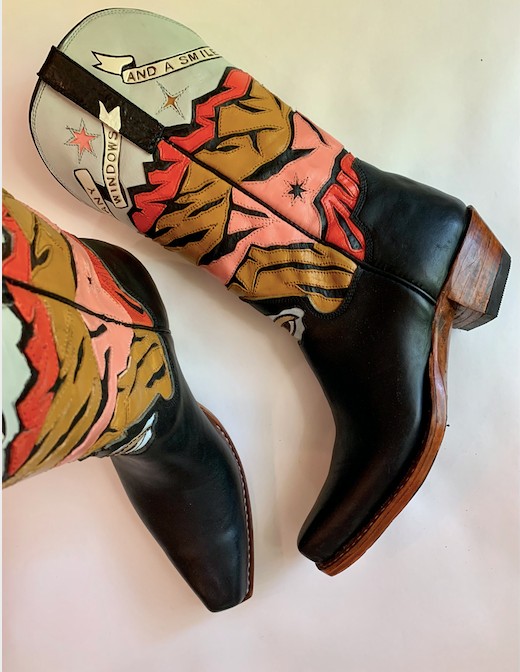
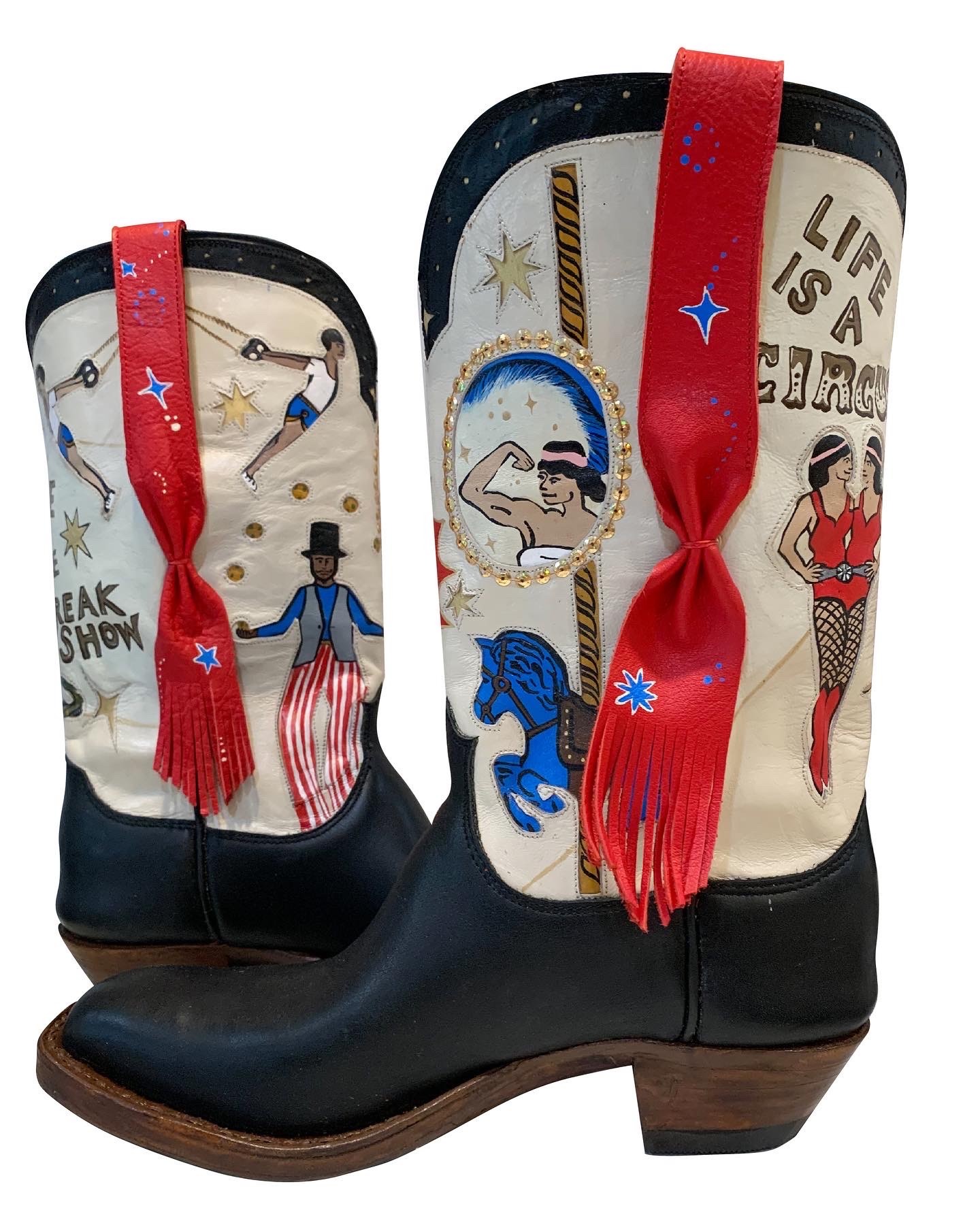
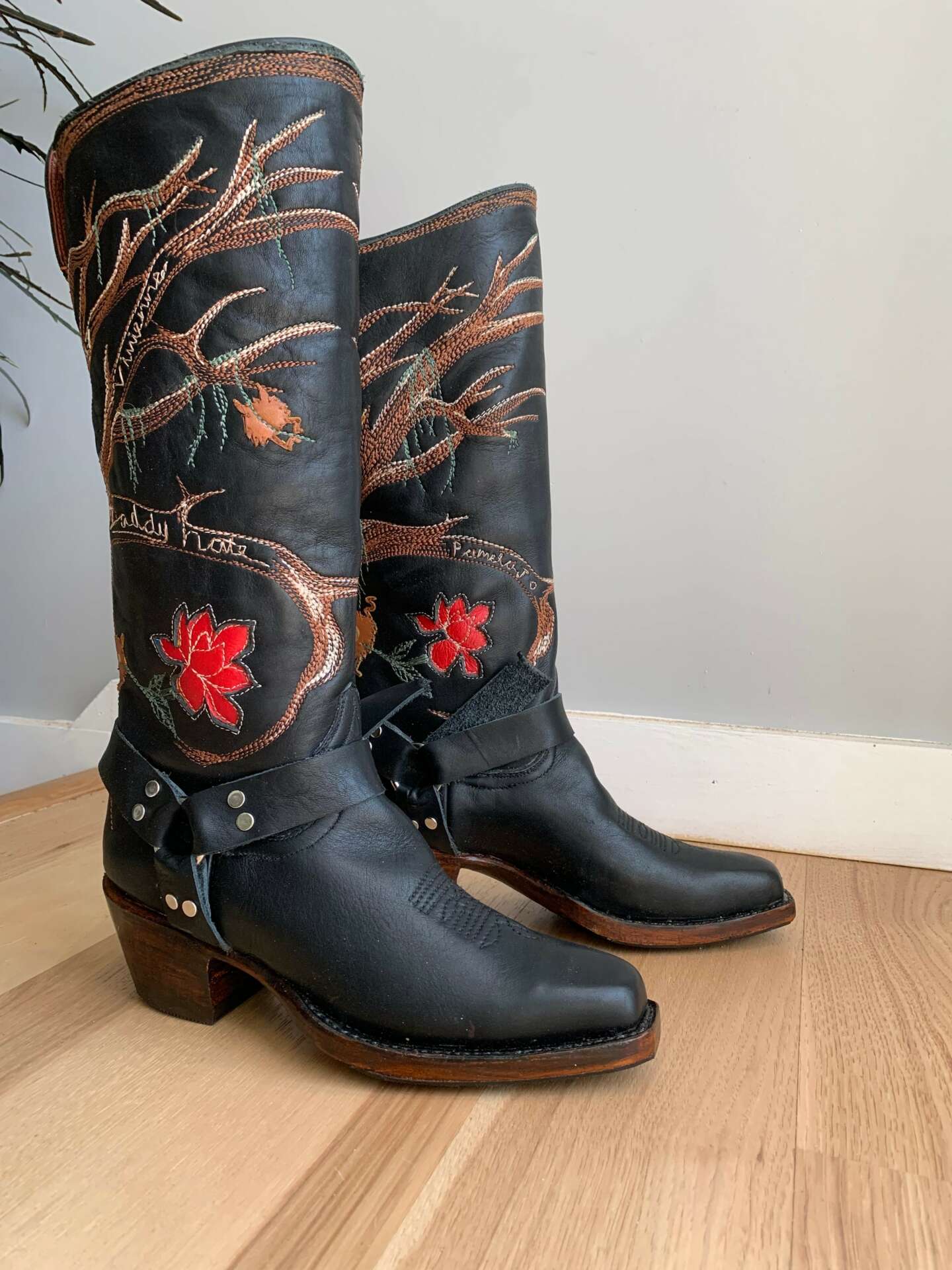
I am an artist who got really really really obsessed with craft of shoemaking. My brand is called UnderHill Leather Studio, and I offer custom, handmade, leather boots, crafted using traditional cowboy boot construction methods. The bootmaking process can total between 60 and 200 hours of work depending on the intricacy of the design and difficulty of the patternwork. I like to say that I collaborate one on one with my clients to design their absolute dream boots. This process usually results in decked out boots featuring hand painted and sewn imagery that is sentimental to their personality and character. UnderHill Leather celebrates the physical object. The product is wearable but unlike a lot of clothing objects and accessories these days, they are not disposable. They are durable, long lasting sculptures that tell a story. As a creative I am inspired by the natural, often incorporating mountains, trees and animal imagery into my designs. The boots are made to be passed on through generations.
As I develop my brand and my business, I have begun to offer products at different levels of customization and different price points. In 2023 I am starting to offer shoemaking classes and instruction from my studio in Boulder, Colorado. I learned bootmaking and leatherwork from artisans who respect the tradition and strive to keep the craft alive. This was part of my education and stays active in my practice. I worked in the footwear industry for a short time and learned what mass production looks like. I want UHL to celebrate craft and remind us that there is value in people making things.
Can you talk to us about manufacturing? How’d you figure it all out? We’d love to hear the story.
I first learned how to make shoes from an excellent shoemaking school in Brooklyn, NY called The Brooklyn Shoespace. They taught me cement construction, which means various parts of the shoe is held together with an industrial strength glue rather than being sewn together. I was already working with leather and shoemaking seemed like the ultimate leather working project. I was attracted to the process of making something so functional by hand. As I learned more about the craft I started researching traditional shoemaking methods and decided I wanted to learn cowboy boot construction. I sought out a brilliant third generation, New Mexican bootmaker named Deana McGuffin. She is not only an incredible talent, but an important educator who has been a huge part of keeping this craft alive. The long process of traditional bootmaking and I clicked right away. The process of making a shoe is generally the same everytime. You need stiffening materials to enforce the structure of toe and heel areas, and you need a softer material to hug the foot, enabling natural motion while walking. You need to attach the upper part of the shoe to the sole, whether using glue, or sewing it to a welt, which then gets sewn to the sole. You need to find the right last, or form, to wrap the leather around, creating the correct fit for the wearer. All of these facts make up the process, yet different shoemakers have different ways of doing things. Different sewing methods, different ways of trimming and slicing the leather, different orders to sewing their pattern pieces together. While there are facts to the process, there is also room for creativity. I was hooked. The major lesson I have learned in this process is that choosing the most difficult, and longest way of manufacturing a product is not the best business model. The feeling of accomplishment in producing such a complicated yet refined final product however, is exhilarating, and for me, this has been worth it and I continue to grow my business.
We’d love to hear the story of how you built up your social media audience?
I have always shared my artwork on instagram. When I was lucky enough to get a well known patron to post about my work, I started to gain a small but enthusiastic audience. Wanting to reward my followers for their interest, I began to post process videos and demonstrations. Especially in light of the value that comes from my products being handmade, this worked wonders in engaging on online audience. I get a lot of positive feedback for sharing parts of the shoemaking process that both entertains and teaches my followers.
Contact Info:
- Website: www.underhillleather.com
- Instagram: underhillleather