


We’re excited to introduce you to the always interesting and insightful Teresa Smith. We hope you’ll enjoy our conversation with Teresa below.
Teresa, appreciate you joining us today. It’s always helpful to hear about times when someone’s had to take a risk – how did they think through the decision, why did they take the risk, and what ended up happening. We’d love to hear about a risk you’ve taken.
I had been working in the nonprofit community for about 10 years. At the time, I was overseeing multiple programs that focused on ending poverty. I was growing increasing frustrated with the systems and policies that impacted the communities we were serving that had little impact and resulted in generational poverty. In essences, the programs were designed to teach people on how to deal with poverty while neglecting the notion of actually ending poverty. I experience strong resistance from community partners and supervisors when suggesting ways to bring more innovation and client centered work. We were in the heart of the Great Recession. I could not in good conscious direct a new generation experiencing poverty to navigate the systems and services that does just as much harm than provide relief. I reach a point I either had to do something different, or get out of the social service field. I had been working on a new program concept to assist individuals and families who were generally experiencing homelessness for the first time and rather stay in their vehicle than the troubled shelters who typically did not have space regardless. The concept, Safe Parking was met resistance with a long list of excuses to why not to step out of the box. I knew based on my team’s research this concept could have significant impact on meeting individuals where they are at and changing their course towards a positive outcome.
With the support of my spouse’s confidence in the possibilities, I quit my job to be the person who was going to do something different and not keep perpetuating the cycle of poverty. I started Dreams for Change in 2009 to be the platform for innovation in social services with Safe Parking for vehicular homeless launching in April 2010.
Thought the past twelve years have not been smooth sailing, Dreams for Change has grown in service offerings and reach across San Diego and Imperial Counties. Dreams for Change’s Safe Parking model is the recognized best practice model for assisting vehicular homeless and has been replicated in multiple cities and municipalities across the United States.
As always, we appreciate you sharing your insights and we’ve got a few more questions for you, but before we get to all of that can you take a minute to introduce yourself and give our readers some of your back background and context?
Originally from Michigan, I began working in the San Diego community in 1999, working as a clinician to individuals with developmental disabilities transition to independent housing. I naturally fell into this work after growing up and caring for family members inflicted with muscular dystrophy and a younger brother with cerebral palsy. After a couple years, I switched to working with families and individuals facing the struggles of systematic poverty. I oversaw programs that provided emergency assistance, workforce support, homeless services, and asset building strategies such as financial education and utilization of tax credits.
I founded Dreams for Change in 2009 to provide comprehensive social services through innovative programming and research. I saw the need to promote a new generation of ideas, institutions, and business practices to meet the new set of social challenges. My desire was to create an organization that could be responsive to the continually changing landscape with a unique and innovative approach based in research with the goal of moving the needle forward on poverty related issues. Dreams for Changes services are uniquely designed to best meet the needs of those we serve while being cost-effective to maximize the limited financial resources available. We look beyond traditional models to allow for the flexibility in service delivery. I believe majority of the time, our clients know what is best for themselves and families and just needs the opportunities to access the right resources and supports. Other times, it is just a matter of providing the information to clients for them to learn what is best for themselves and families. I see Dreams for Change as a bridge that helps supports individuals and families on their own defined path towards stabilization.
One of the largest issues facing San Diego is homelessness. I have seen over the years, the expansiveness of the problem and the impacts not only to those experiencing homelessness, but on the various communities across the county. Homelessness has many layers and looks different for each individual experiencing homelessness. Through Dreams for Change, we try to target specific layers that are key leverages to stabilization. These layers include immediate supports to increase safety and access to resources, and immediate paid employment opportunity in our workforce training program. Our programs serve over 5000 individuals and families annually.
I am a past fellow of the REDF Social Enterprise National Accelerator program and was awarded the James Irvine Foundation State Leadership Award for the development of Safe Parking. My educational background includes a BS in psychology from Western Michigan University, MA in Nonprofit Leadership and Management from the University of San Diego, and a MA and Ph.D. in Human Sciences Life Physics from the California Institute in Human Sciences. I also served eight years in the US Army Reserves coordinating mental health services.
Any advice for managing a team?
The following list outlines what I believe is important in managing a team and maintaining high morale.
1. Capitalize on individual’s strengths-build work responsibilities that leverage strengthens while providing the opportunity for growth.
2. Continual learning on all levels
3. Understand power structures to reduce their limitations on productivity and morale
4. Provide flexibility for team both in the workplace and managing life work balance.
5. Continual feedback and open communication across team
6. Provide opportunities for growth and cross training
7. Not only encourage self-care, but provide opportunities for self-care
8. Sharing the impacts of their work
9. Maintaining flexible and responsive to staff needs
10. Involve team on decision making at all levels which includes allowing team to learn from success and failures
11. Shared goals, aspirations and responsibilities for team and individual work
12. Celebrate the big and small victories
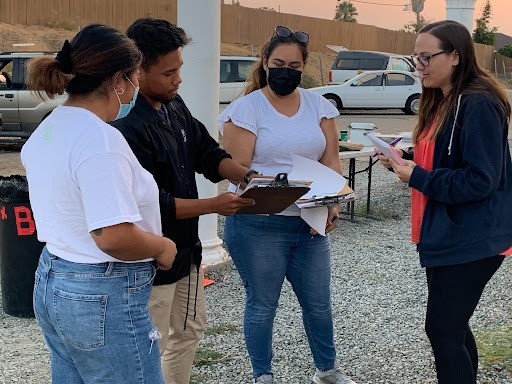
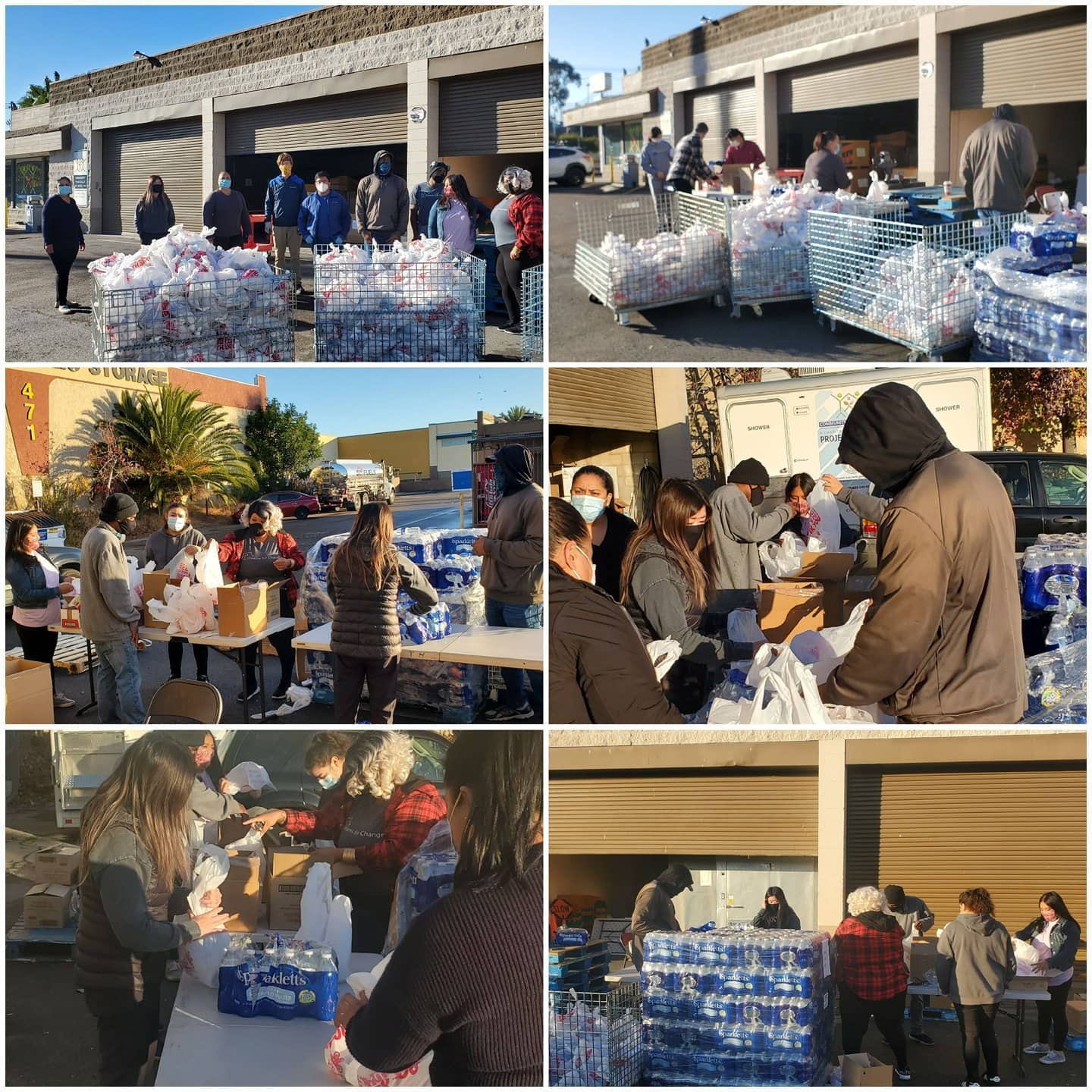
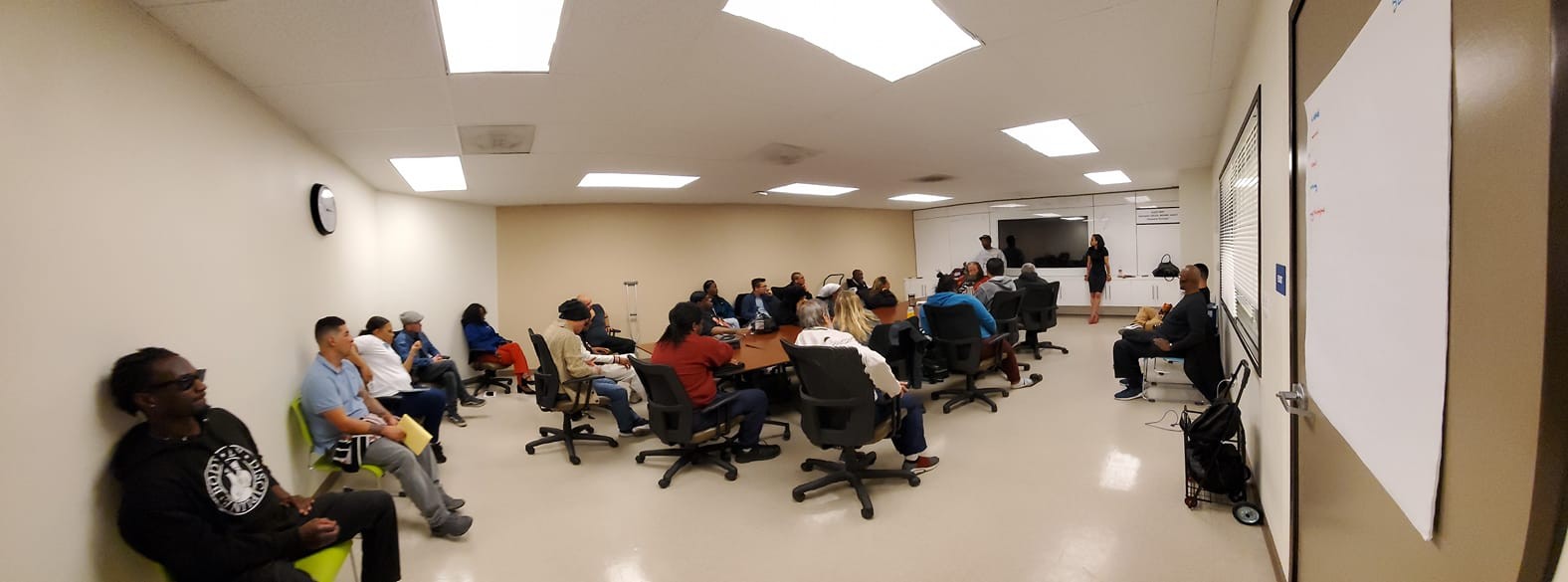
Can you share a story from your journey that illustrates your resilience?
Starting a new project is always difficult, but starting something that has never been done that involves a population most people distain or at least do not understand has presented itself its own unique set of challenges. The most challenging aspect of the Safe Parking Program has been finding communities that would allow the program to operate. The prevalence of NIMBY (Not In My Back Yard) has prevented the program growing to match the needs across the county. Our first experience of being force to closed a site occurred in 2012 in the City of Vista. The community couldn’t see beyond the stereo types of what homelessness appears. It was heartbreaking to tell the households we were serving they had to go back to the streets. This is the point I realized innovation and change can be difficult to understand let alone come to a point of acceptance. I set out with a new goal to help educate the community and elected officials on the program operations, impacts being measured and value to community.
I have spoken with multiple organizations, community groups and elected officials across the state to raise awareness on the values of alternative programming such as Safe Parking. There have been many tough conversations with sometimes a feeling of little progress. I have advocated in Sacramento to have programs be inclusive of funding opportunities. I also was privileged in watching the program grow across the West Coast and beginning stages in other states. In 2018, the City of San Diego recognized Safe Parking as an alternative service model that has value and a positive impact for those the program services and the communities impacted by the issues. The City incorporated and funded Safe Parking into their homeless services programs.
In the past 6 months, Safe Parking is being explored in multiple communities across San Diego County. The conversations and education continue to be difficult and met with great resistance, but the conversations are happening, communities are being engaged in potential solutions and change will be inevitable. This past month, The City of Vista who adamantly forced out of the city through issuing of fines has shifted stance with the City Council voting in favor of Safe Parking Program. In addition, we just purchased our first property to have a permanent place for Safe Parking to call home.
If someone told me back when I was thinking of starting Safe Parking that it would take 12 or more years for the program to gain widespread acceptance, I probably would have never started. I also would have lost the opportunity to learn, share and grow on this journey of improving our community.
Contact Info:
- Website: www.dreamsforchange.org
- Instagram: https://www.instagram.com/dreams4change/
- Facebook: https://www.facebook.com/DreamsforChange
- Linkedin: https://www.linkedin.com/company/2336100/admin/
- Youtube: https://www.youtube.com/user/DreamsforChange