

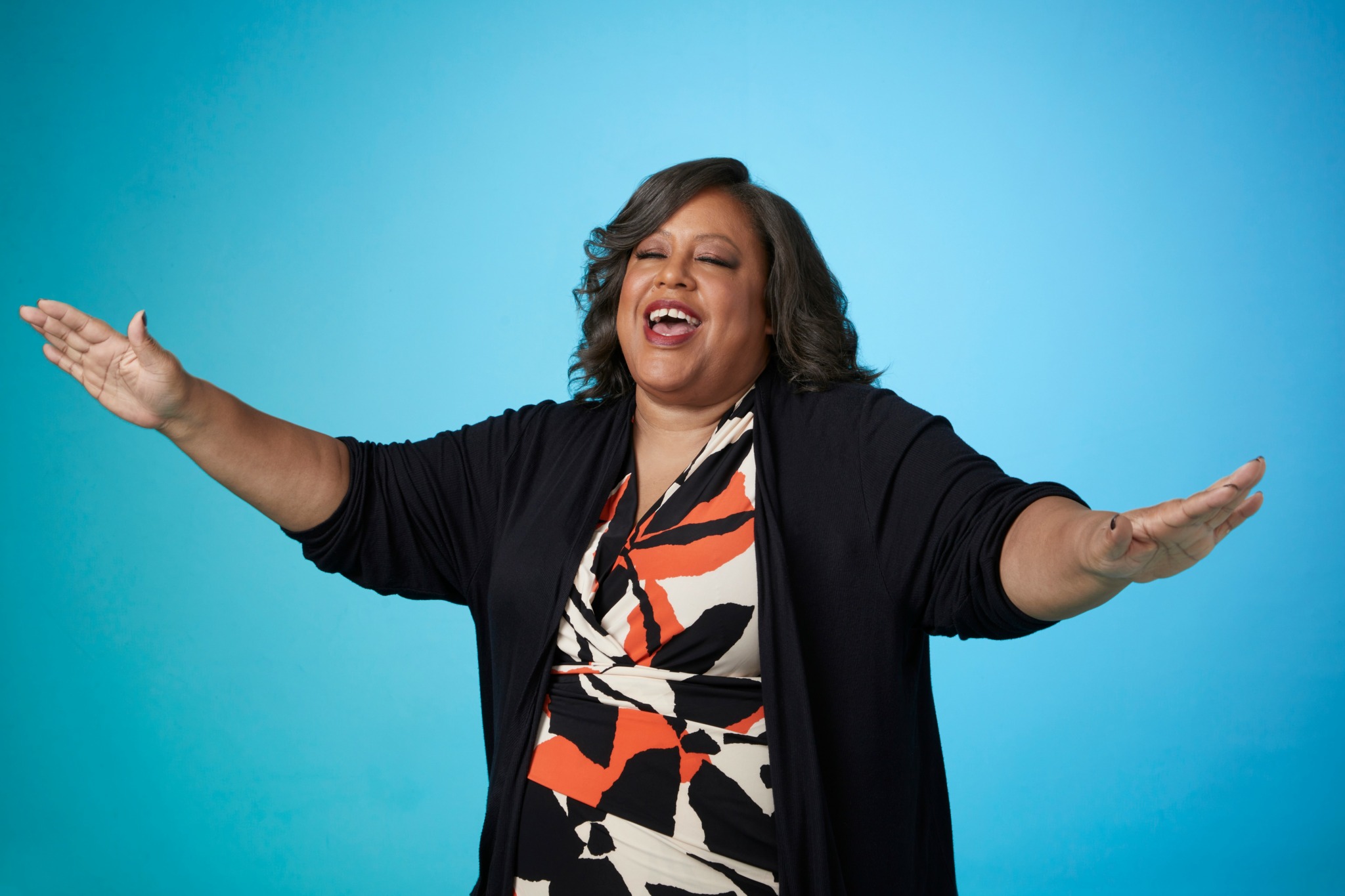

We recently connected with Catherine McKenzie and have shared our conversation below.
Alright, Catherine thanks for taking the time to share your stories and insights with us today. Can you share an important lesson you learned in a prior job that’s helped you in your career afterwards?
The Holiday Concert That Taught Me Everything About Delegation
Early in my career as an executive producer, I was responsible for an annual holiday concert that featured Broadway talent. It was a big, high-stakes production — the kind of thing that had to be perfect, because it aired during the most competitive time of year and the audience expected magic.
The first year, I was in it. I sat with my booking team and walked them through every decision. Which shows were hot. Which performers had the kind of charisma that translated to television. Which voices could carry a live production. I didn’t just answer their questions — I was essentially directing their choices, because I understood the landscape and they were still learning it. If I had handed them a mandate and walked away, we would have ended up with a solid concert, but not the concert.
The second year, I started asking questions instead of giving answers. “Who’s on your shortlist and why? Come to me with three options and be ready to defend your top pick.” They were learning the vocabulary of Broadway the way I had — studying the shows, the critics, the audience response. My job shifted from director to challenger. I pushed their thinking. I made them defend their instincts. And I was still in the room, but differently.
By year three, something had shifted. My booking team was studying Broadway the way I studied it. They were reading the trades, seeing shows on their own time, building relationships with talent reps. I could walk into a production meeting and trust that they had already done everything I would have done. So I let go — and redirected my energy to other elements of the program that needed me more. The concert was better for it.
That progression taught me one of the most important leadership lessons I’ve ever learned: delegation is not one-size-fits-all. It’s a spectrum, and your job is to know where each person sits on it.
There are three modes I’ve come to rely on:
The first is full autonomy — you hand someone a mandate, you back their decisions publicly, and you resist the urge to second-guess them. This is only for people who have demonstrated the depth of judgment to handle it.
The second is structured accountability — you ask someone to come to you with options, to defend a recommendation, to do the thinking before bringing you the problem. They’re building muscle. You’re still in it, but you’re developing them, not doing it for them.
The third is collaborative execution — you require them to check in before making moves. You build the plan together. This isn’t micromanagement; it’s scaffolding. It’s what you do when someone is new to the work, or when the stakes are high enough that you can’t afford a wrong turn.
Now, as the owner of CatMac Global Media, I apply this same framework every time I bring on an independent contractor. The budget and the project scope tell me a lot — sometimes I’m working with seasoned producers and directors who need a clear creative brief and then space to run. Sometimes I’m working with talented emerging professionals who need more of my time and guidance to deliver at the level the project requires. Neither is a problem. Both are just data points that help me calibrate how I’m going to work with someone — not whether I trust them.
The mistake I see business owners make is treating delegation like a binary: you either give it away or you hold it tight. The real skill is knowing which mode to use, when to shift, and how to read the signals that tell you someone is ready for more runway.
My booking team gave me that lesson. I just had to pay attention.
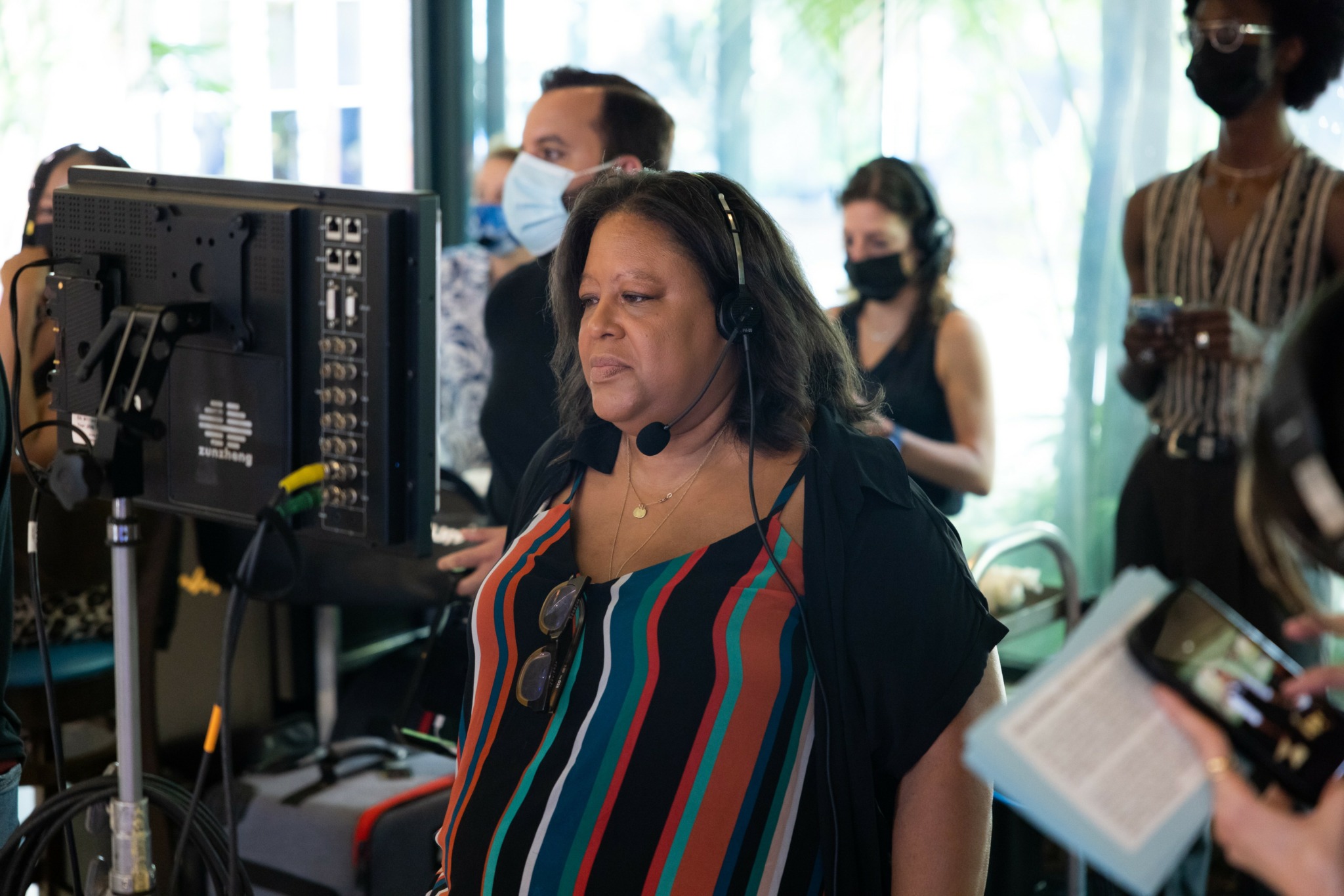
Awesome – so before we get into the rest of our questions, can you briefly introduce yourself to our readers.
I believe that every meaningful thing I’ve ever done, every stage I’ve stood near, every stadium I’ve sat in, every story I’ve chased, every production I’ve willed into existence — was quietly building toward CatMac Global Media. I just didn’t know it yet.
I grew up in Minnesota, and I was fortunate to have parents who believed deeply in the arts and in sports — and who made sure I experienced both, as much as they could afford. That meant the Nutcracker and Twins games. The Guthrie Theater and the Minnesota Orchestra. The Metropolitan Opera when they still toured and Alvin Ailey. I took figure skating lessons and got pretty good. I became an accomplished clarinet player and a decent singer. My parents had one non-negotiable rule: nothing was off limits as long as I was learning. That orientation toward curiosity and culture became the foundation of everything I do.
It also gave me a deep, early understanding that storytelling lives in many forms simultaneously — music, movement, image, word, live performance. I never had to choose one. I just had to learn how to hold them all.
That love of storytelling led me to journalism. For more than twenty years, I worked inside traditional media organizations covering the full spectrum — hard news, culture, sports — often live, often under pressure, always with an audience watching in real time. I rose through the ranks and eventually reached a level where I was building things, not just covering them. I helped launch CBSN and ABC News Live, two 24/7 streaming networks that are now central to how Americans consume news. I executive produced a daily show, primetime specials, mini-documentaries, and landmark projects including Soul of a Nation. Along the way, I earned multiple Emmy Awards and two Peabody Awards — honors I’m proud of, but that I also think of as receipts for the work, not the point of it.
But here’s what my résumé doesn’t fully capture: the whole time I was building a broadcast career in New York City, I was also producing outside of work. I ran a spoken word series called Urban Erotika. I helped friends develop and mount one-man shows and cabaret acts. I joined non-profit boards in the performing arts — Gotham Theater Company, the Bloomingdale School of Music — because I believed in the work and wanted to be close to it. I wasn’t doing any of that for career advancement. I was doing it because I couldn’t not. The producing impulse was always there, looking for an outlet.
So, when I launched CatMac Global Media in 2025, it wasn’t a pivot. It was a convergence.
CatMac Global Media is an independent production and media strategy consultancy. We work across documentary, commercial content, live events, and original IP development. My clients come to me when they have a story worth telling and need a partner who knows how to tell it at the highest level — from concept through execution, from creative vision through distribution strategy. I bring decades of live broadcast expertise, editorial instincts homed in real-time, and a genuine understanding of how to make content that moves people, not just content that gets made.
CatMac Global Media is an independent production and media strategy consultancy. We work across documentary, commercial content, live events, and original IP development. My clients come to me when they have a story worth telling and need a partner who knows how to tell it at the highest level — from concept through execution, from creative vision through distribution strategy. I bring decades of live broadcast expertise, editorial instincts homed in real-time, and a genuine understanding of how to make content that moves people, not just content that gets made.
What sets me apart, I think, is that I’ve never just been one thing. I’m a journalist who understands storytelling as civic responsibility. I’m a producer who grew up at the opera and in the bleachers. I’m a creative executive who has run rooms and built teams and also stayed up late helping a friend find the right monologue or 12-bar phrase. That range isn’t incidental — it’s the product. It shows up in the questions I ask, the collaborators I choose, the standards I hold, and the stories I’m drawn to.
What am I most proud of? Not the awards — though I’m grateful for them. I’m proud of the shows that changed how people saw something, or saw each other. I’m proud of the teams I helped develop, the junior producers who are now running their own rooms. I’m proud that when I finally started my own company, I had something real to build it on.
What I want people to know about CatMac Global Media is this: when you work with us, you’re not hiring a production house that executes a brief. You’re getting a creative partner who is invested in your story as if it were our own — because that’s the only way I know how to do this work.
Everything led here. And we’re just getting started.
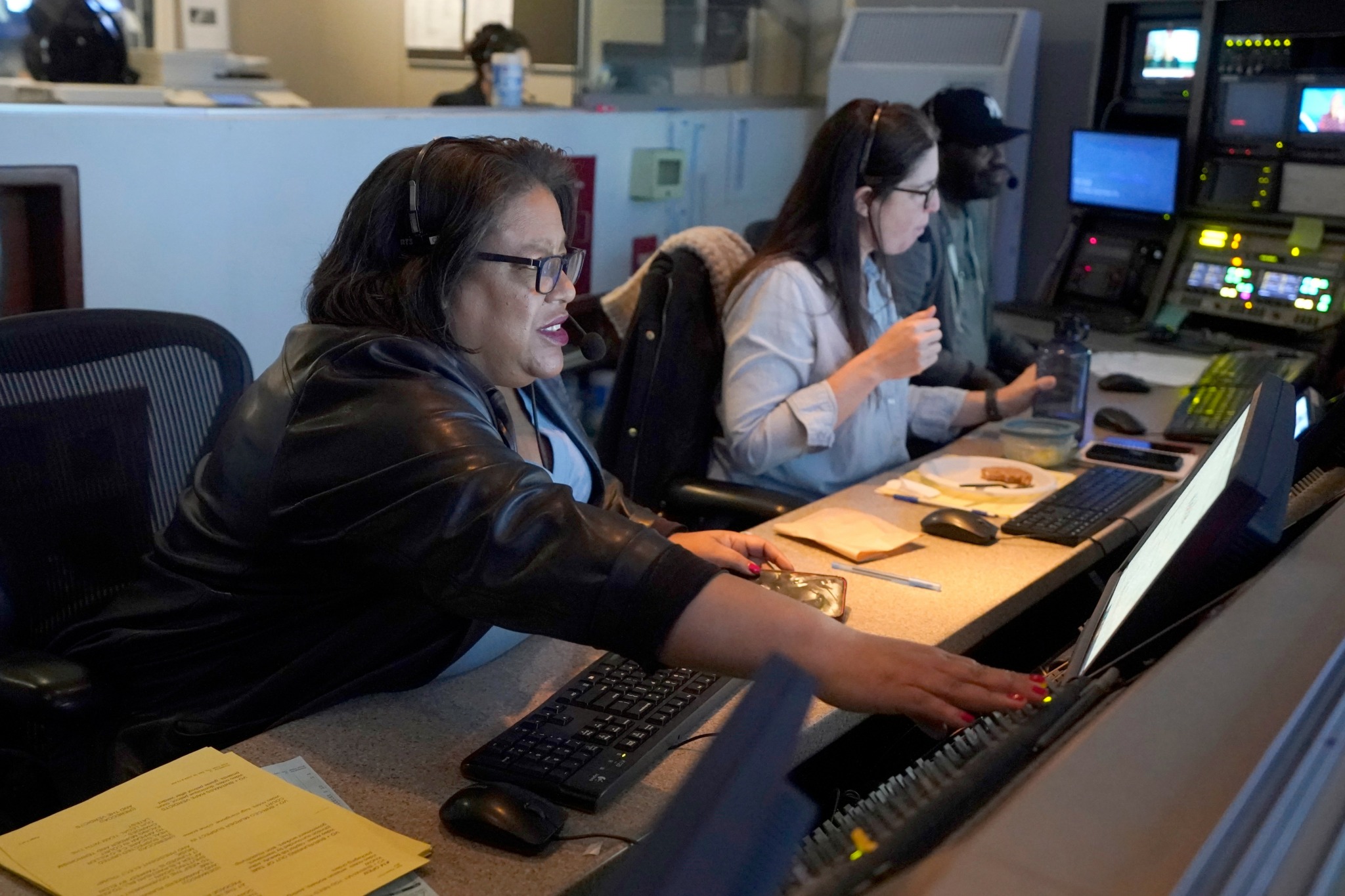
What do you find most rewarding about being a creative?
The Joy Is in the Journey
People often ask what the best part of the job is, expecting me to say it’s the premiere, or the award, or the moment something airs and the audience responds. And those moments are real — I won’t pretend they don’t matter.
But the most rewarding part? It’s everything that happens before any of that.
It’s the moment a project is just a small idea — sometimes barely even that, just a feeling, an instinct that something is worth telling. And then the work begins. What is this, really? What does it want to be? How do you take that original spark and shape it into something with a spine — a vision that can survive contact with a budget, a timeline, a team, a set of constraints you didn’t see coming?
That process of honing — of pushing an idea through every practical and creative challenge until it becomes something executable — that’s where I come alive. It’s equal parts art and problem-solving, and I love both halves.
Then comes the team. There is nothing quite like finding the right people, putting them in a room together, and watching what happens. A great production team doesn’t just execute a vision — they expand it. They see things you didn’t see. They bring their whole lives to the work. And that collaboration, when it’s working, feels like something close to magic.
But here’s what I’ve come to understand more deeply the longer I do this: the final product changes people. That’s why we make things. The audience who watches a documentary and sees themselves for the first time, or learns something that shifts how they move through the world — that’s the point.
What I didn’t fully appreciate early in my career is that the work changes the people who make it too. I’ve watched crew members walk off a project different than they walked on. More confident. More curious. More connected to why they do what they do. I’ve seen editors find their voice. Directors take a creative risk they’d never taken before. That transformation — happening simultaneously on screen and behind the camera — is the thing I find most profound about this work.
The destination matters. But the journey is the gift.
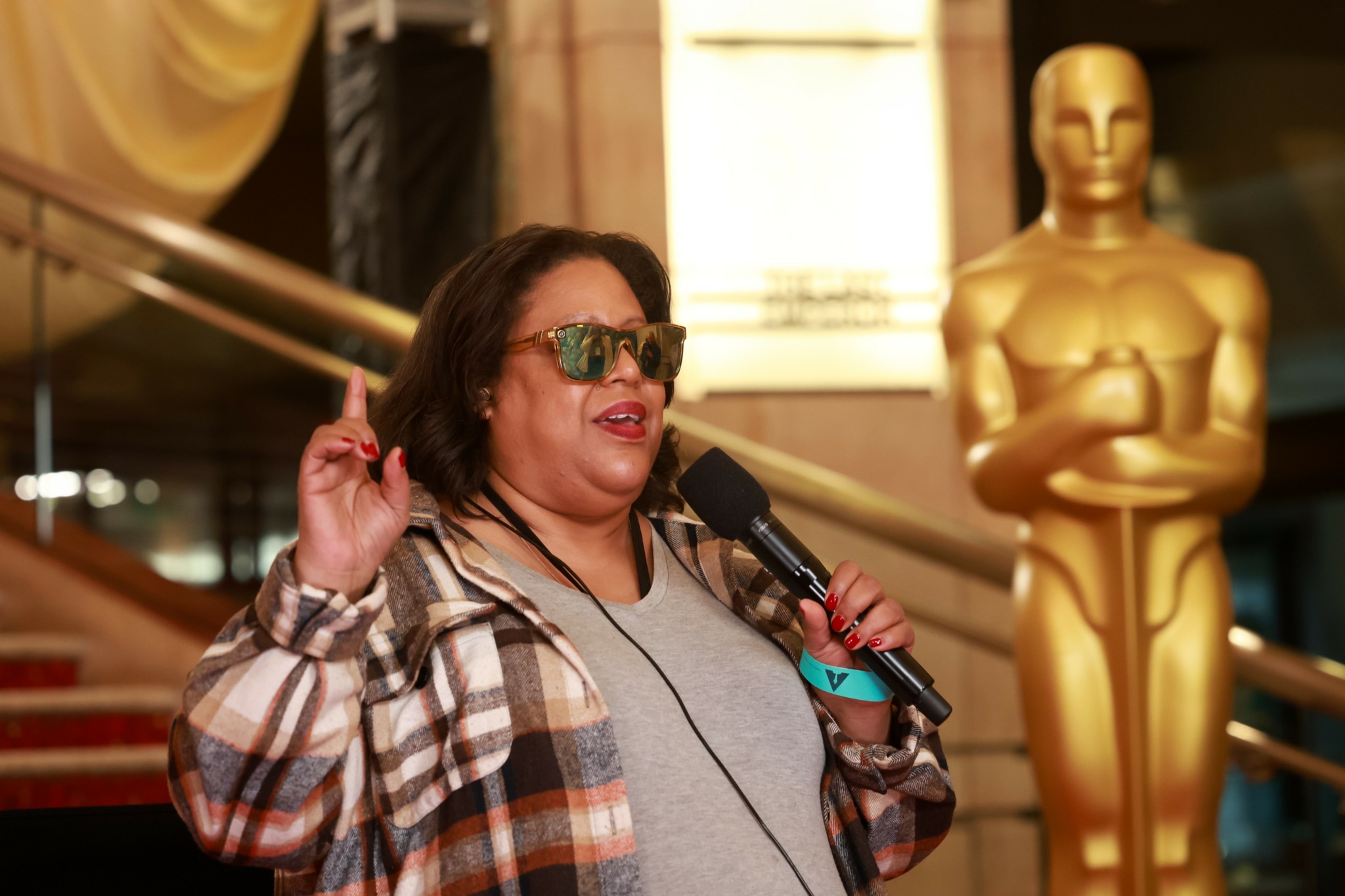
Any resources you can share with us that might be helpful to other creatives?
Get in the Room
If I could go back and give my younger self one piece of advice about resources, it would be this: stop waiting until you feel ready, and get in the room.
I wish I had gone to more conferences and festivals earlier in my career. Not just to network in the transactional sense, but to sit in proximity to people who were doing the work I wanted to do — thought leaders, storytellers, risk-takers who had figured out how to build a creative life on their own terms. Sundance. Tribeca. The kinds of gatherings where the conversation in the hallway between sessions is just as valuable as anything on the official agenda.
There is an energy that exists when you’re physically in a room with people who share your passions and your ambitions. It’s hard to manufacture and impossible to replicate online. It clarifies something in you. It reminds you that what you’re chasing is real, that other people are chasing it too, and that the path — however winding — is worth staying on. I didn’t prioritize that early enough, and I feel the gap.
The second thing I’d point anyone toward, especially if you’re earlier in your journey and budget is a real consideration: Sundance Collab. It’s an online platform from the Sundance Institute, and it is genuinely one of the best creative resources I’ve come across. They offer courses on everything — screenwriting, directing, producing, grant writing, pitching — and many of them are free or low cost. This isn’t surface-level content. It’s deep, practical, taught by people who are actually working in the industry at the highest levels.
The combination of those two things — being in rooms where the energy is electric, and having a resource like Sundance Collab to go deep on craft — is something I wish I had leaned into much sooner.
You don’t have to wait until you’ve arrived to access the tools that help you get there. That’s the thing I’d most want other creatives to hear.
Contact Info:
- Instagram: catmac29
- Linkedin: https://www.linkedin.com/in/catherine-mckenzie-2770431/
- Other: https://substack.com/@catscorner29
Image Credits
Heidi Gutman
Michael LeBrecht