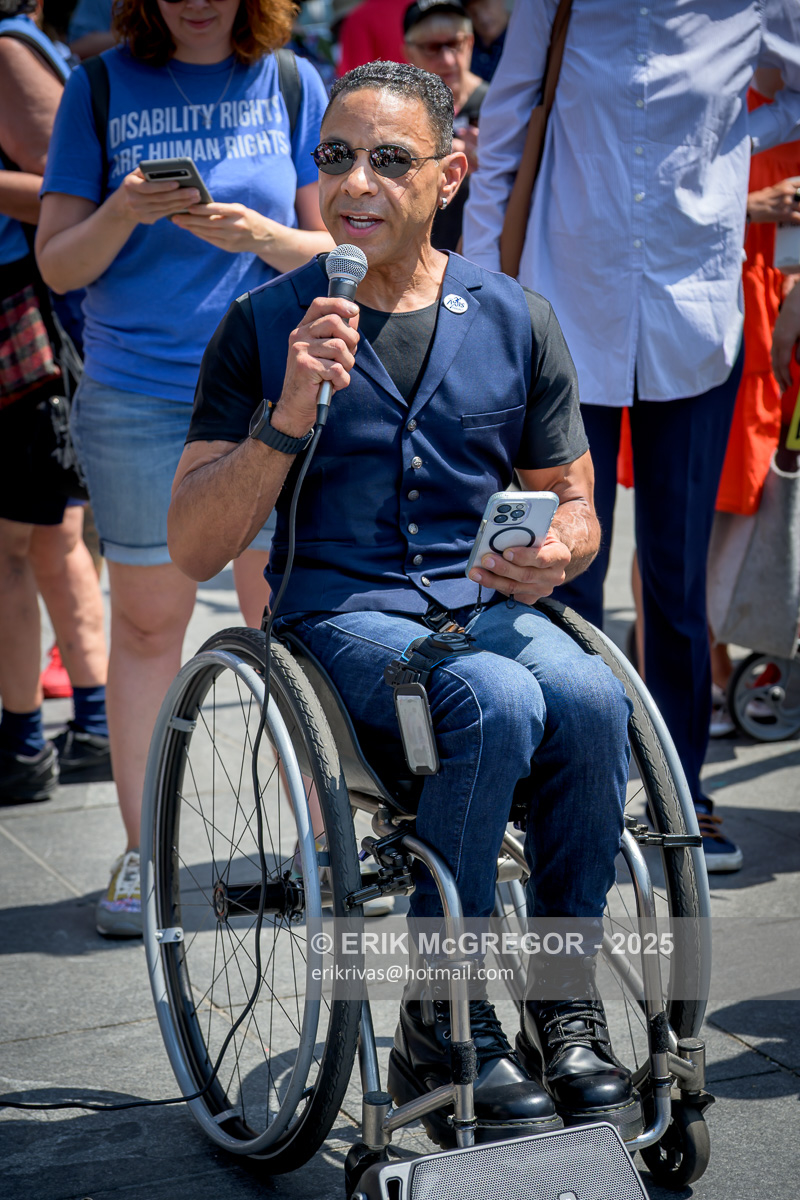

We caught up with the brilliant and insightful George Gallego a few weeks ago and have shared our conversation below.
George, thanks for joining us, excited to have you contributing your stories and insights. How did you come up with the idea for your business?
The idea did not come to me in a boardroom. It came from living the problem.
In 1992, I became paralyzed after a fall that changed my life forever. I went from being a young man moving through New York City with freedom and confidence to suddenly having to relearn everything: how to move, how to work, how to be seen, how to belong, and, honestly, how to believe in myself again.
What I learned very quickly was that the physical injury was only part of the challenge. The harder part was realizing how many systems were not built for people like me. Fitness spaces were not built for us. Social spaces were not built for us. Employment pathways were not built for us. Restaurants, recreation, transportation, wellness, community, so many parts of daily life either excluded people with disabilities or treated us like an afterthought, and I kept thinking: this cannot be the standard.
For years, I watched people with disabilities be offered services that helped them survive, but not enough opportunities that helped them live fully. There is a big difference between being kept safe and being given access to strength, purpose, dignity, independence, friendship, health, confidence, and joy. That is really where Axis Project was born.
I wanted to create a space where people with disabilities were not coming in as patients, or clients, or problems to be managed. I wanted them to come in as athletes, creators, leaders, neighbors, professionals, and whole human beings. I wanted a place where adaptive fitness, wellness, community, advocacy, mentorship, and empowerment could live under one roof.
The logic was simple because the need was so obvious. If people without disabilities benefit from gyms, wellness spaces, networking, community, recreation, and personal development, then why would people with disabilities not need those same things? Why should our opportunities stop at medical care or basic services? Why should the goal only be survival?
I knew it was worthwhile because I had lived both sides. I knew what it felt like to be isolated, underestimated, and forced to fight for access. But I also knew what happened when I found movement again, when I became an athlete, when I competed with Team USA in paratriathlon, when I crossed marathon finish lines, when I found community, and when I realized my life still had power, purpose, and possibility.
Running, racing, training, and building community did not just transform my body. It transformed my identity. It gave me proof that disability did not mean the end of ambition. It meant I had to build a new relationship with ambition. That is what got me excited, the idea that we could create that same transformation for other people.
The Axis Project was not created because I thought the world needed another nonprofit. It was created because I knew people were falling through the cracks, and I knew those cracks were not accidental. They existed because people with disabilities were too often left out of the design process. We were expected to adapt to spaces and systems that were never created with us in mind.
So I decided to help build something different.
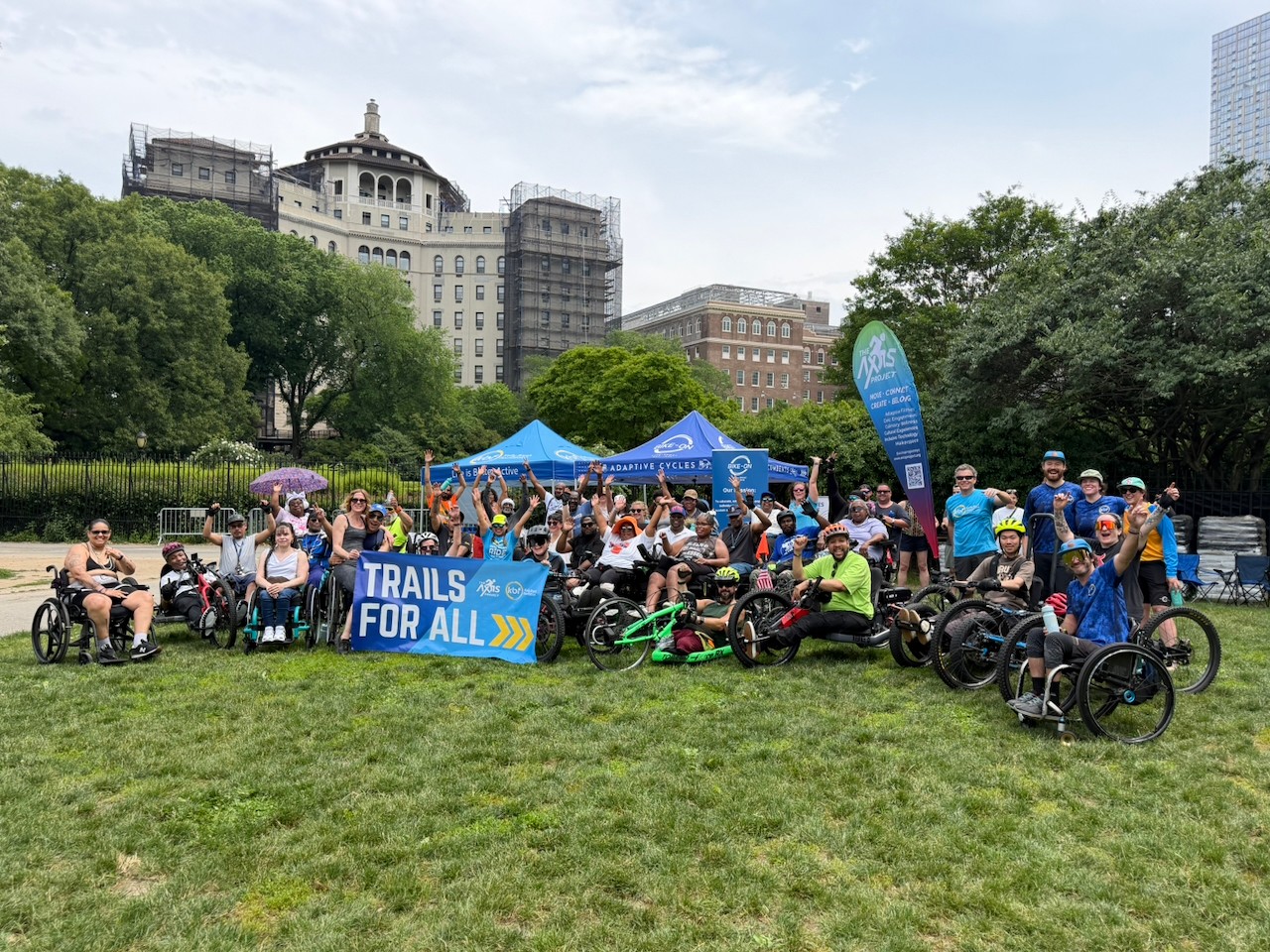
Over time, that same belief expanded into Access Initiatives, a social adult day and adaptive wellness space for seniors and people with physical disabilities, and into Wheels of Progress, which supports people transitioning from nursing homes and institutional settings back into the community. The common thread is always the same: people deserve more than access on paper. They deserve access in real life.
What made the work unique was not just that we offered adaptive programs. It was that we built them from lived experience. We understood the emotional part. The fear. The frustration. The desire to be independent. The need to be seen as more than a diagnosis or a wheelchair. We understood that community is not a luxury. It is a health intervention. It is a confidence builder. It is sometimes the difference between someone giving up and someone deciding to try again.
I believed this would work because I had seen what happens when people are given the right environment. People who were quiet begin to speak up. People who thought they could not exercise begin to train. People who felt invisible begin to take up space. People who were disconnected begin to build friendships. Families begin to see possibilities again. That is the real business and mission behind the work: creating spaces where people can reclaim their sense of self.
For me, this has never been just about programs. It has always been about freedom, dignity, and human potential. I built what I needed when I was trying to rebuild my own life, and I built what I wished existed for thousands of other people who were still waiting for a place that saw them fully.
Awesome – so before we get into the rest of our questions, can you briefly introduce yourself to our readers.
My name is George Gallego. I am a native New Yorker, a husband, a father, a social entrepreneur, a wheelchair user, a former Team USA paratriathlete, a marathoner, a restaurateur, a disability advocate, and the founder of several mission-driven organizations created to solve problems I experienced firsthand.
In 1992, I became paralyzed after a fall that changed the entire direction of my life. At the time, I did not know that one moment would eventually lead me into my life’s work. I only knew that I had to rebuild. I had to relearn how to move through the world, how to advocate for myself, how to be independent, and how to hold on to the belief that my life still had purpose.
That experience brought me into the disability community, but it also opened my eyes to how much was missing. I saw people with disabilities being offered services, but not always opportunities. I saw people being supported medically, but not always socially, emotionally, physically, economically, or spiritually. I saw brilliant, capable people isolated by systems never designed with us in mind.
So I started building. I am the founder of Axis Project, a nonprofit organization that creates adaptive fitness, wellness, community, education, advocacy, and empowerment opportunities for people with disabilities. Axis is not just a gym. It is not just a program. It is a space where people with disabilities can come in and be seen as athletes, leaders, creators, professionals, neighbors, and whole human beings.
Through Axis, we provide adaptive fitness classes, strength training, wellness programming, peer support, community events, self-advocacy opportunities, and programs that help people build confidence, independence, and connection. We also create pathways for people to explore employment, leadership, public speaking, creative expression, and community engagement.
I also lead Access Initiatives, a Social Adult Day Center and adaptive wellness hub serving seniors and people with physical disabilities. Access Initiatives was created to provide people with a place to build health, community, routine, purpose, and dignity outside institutional settings. We support people who want to remain connected to their community, maintain independence, participate in meaningful activities, and experience life beyond just care coordination.
I am also part of Wheels of Progress, an organization that has supported people transitioning out of nursing homes and institutional settings back into the community. That work is deeply personal to me because I believe freedom is not theoretical. People deserve the tools, support, education, and community relationships needed to live with dignity in their own homes and neighborhoods.
My work has also extended into hospitality. I was one of the driving forces behind Contento NYC, a fully accessible East Harlem restaurant that became nationally recognized not only for its food and wine, but for proving that accessibility and excellence belong together. Contento showed the industry that inclusion is not charity. Inclusion is hospitality done correctly.
Across everything I do, the problem I am trying to solve is the same: too many people with disabilities are forced to live inside systems that limit them before they even get a chance to show who they are. My work exists to challenge that.
We solve problems around access, isolation, health inequity, lack of adaptive fitness options, lack of inclusive community spaces, lack of representation, lack of economic opportunity, and the low expectations that society too often places on disabled people. We create environments where people can rebuild their strength, confidence, identity, and sense of belonging.
What sets my work apart is that it is built from lived experience. I am not observing disability from the outside. I live it every day. I understand what it feels like to fight for access, to navigate inaccessible spaces, to be underestimated, to have to prove your value over and over again. But I also understand what happens when someone is given the right environment, the right community, and the right opportunity. I know what transformation looks like because I have lived it.
After my injury, I went on to become a competitive athlete. I represented Team USA in paratriathlon, won a bronze medal at the world level, earned multiple national silver medals, and completed the New York City Marathon many times. Those experiences taught me that disability does not erase ambition. It reshapes the way you pursue it. That mindset is at the center of my brand and my work.
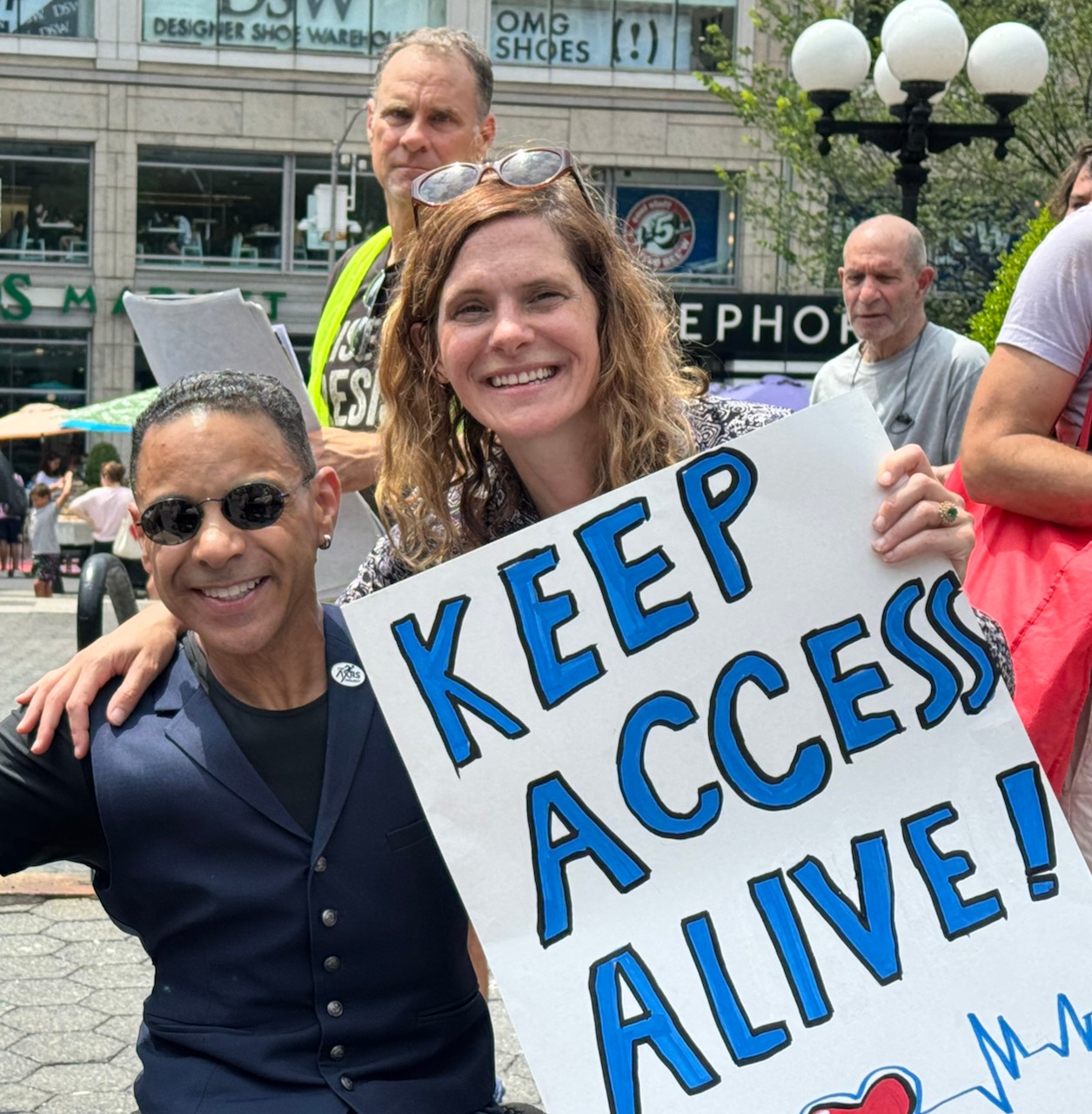
I believe people with disabilities do not need pity. We need access. We need investment. We need an opportunity. We need spaces where we are not treated as an afterthought. We need to be included in the design, leadership, decision-making, and ownership of the systems that affect our lives.
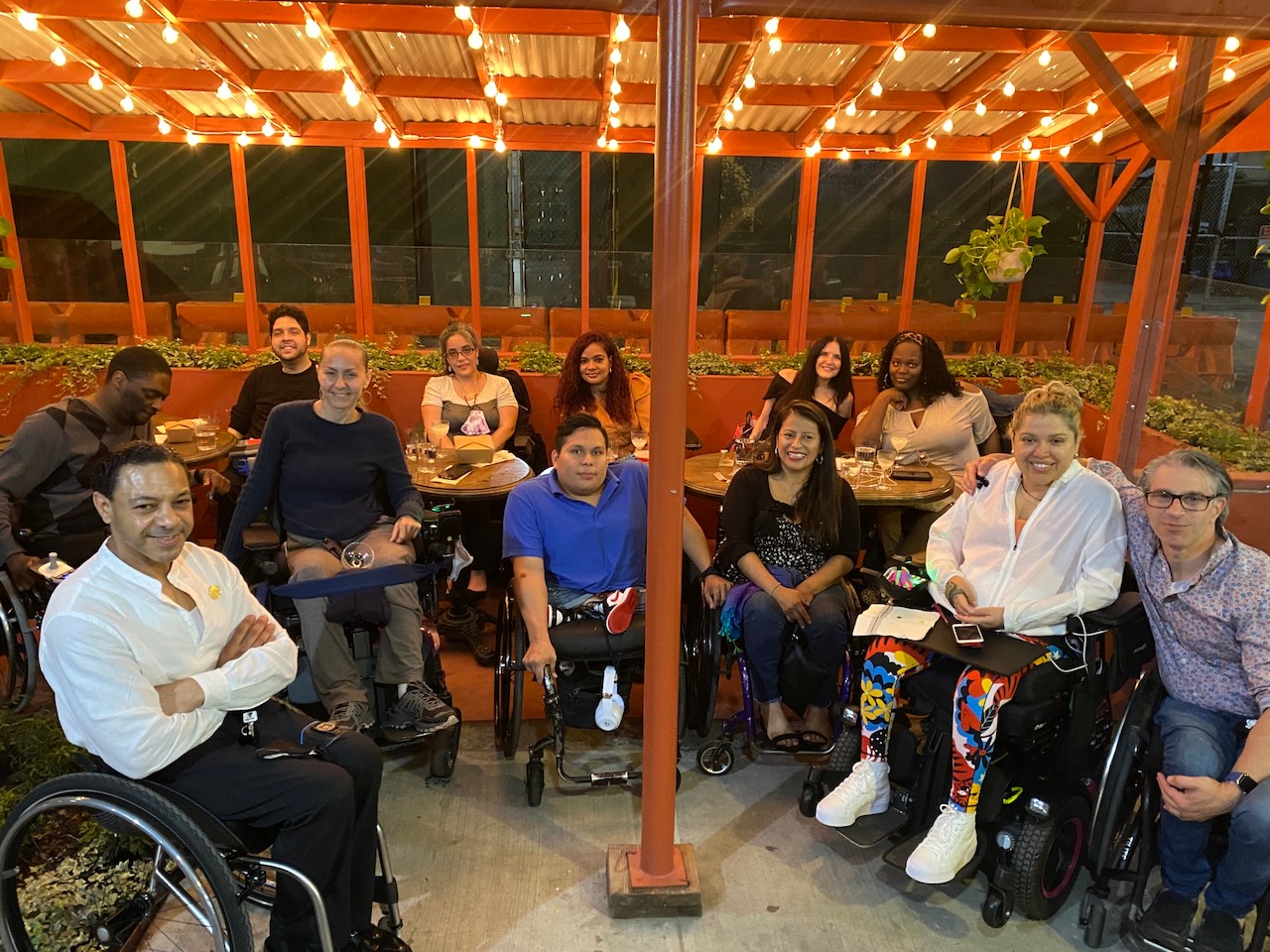
I am most proud of the communities we have built. I am proud of every person who came into Axis unsure of themselves and left stronger. I am proud of every family member who saw the possibility again. I am proud of every person who moved out of an institution and back into the community. I am proud that we created spaces where people could laugh, train, work, advocate, create, and belong.
I am also proud that we have done this work in New York City, a city I love deeply, but a city that can be very difficult to navigate if you have a disability. New York has shaped me. It has challenged me. It has pushed me. And I believe New York can also become a national model for what real inclusion looks like when people with lived experience are at the table. What I want people to know about me is that I am not just building programs. I am building possibilities.
My work is about helping people reclaim their lives, their bodies, their voices, their confidence, their independence, and their rightful place in the community. Whether through adaptive fitness, social adult day services, community transition work, accessible hospitality, public speaking, advocacy, or coalition-building, the mission is always the same: to create a world where people with disabilities are not simply accommodated but valued, included, and expected to thrive.
At the heart of everything I do is one belief: access is not the finish line. Access is the beginning. What comes after access is opportunity, dignity, freedom, and power. That is the work I am committed to.
Can you tell us about a time you’ve had to pivot?
One of the biggest pivots of my life happened after my spinal cord injury in 1992. In an instant, everything I thought my life was going to be had to be reimagined. I had to relearn how to move through the world, how to advocate for myself, how to be independent, and how to rebuild my identity from the inside out.
At first, that pivot was deeply personal. It was about survival. But over time, it became the foundation for everything I would eventually build.
I realized that the problem was not just my injury. The bigger problem was that the world was not designed for people with disabilities to fully participate. Too many spaces, systems, and opportunities were built without us in mind. That realization forced me to pivot from simply trying to get my own life back to helping create pathways for others. That is how my life shifted from personal recovery to community-building and social entrepreneurship.
Years later, I had to pivot again in business. Through Axis Project, Access Initiatives, Wheels of Progress, and Contento NYC, I was building work rooted in access, dignity, wellness, independence, and inclusion. But the last few years tested everything. We went through the pandemic, financial pressure, operational challenges, delayed payments, the closing of Contento, and the need to relocate and rebuild parts of our work when we were already stretched thin. There were moments when it felt like we were not building anymore; we were just trying to hold everything together. But that is where the pivot happened.
For a long time, we were in survival mode. We were doing whatever we had to do to protect the mission, protect the people we served, and keep the vision alive. But survival mode cannot be the permanent strategy. At some point, you have to pivot from reacting to rebuilding. That is the season we are in now.
Today, I think of the work as moving from survival mode to sustainability mode. We are not on completely solid ground yet, but we are building differently. We are strengthening our systems, deepening partnerships, telling our story more clearly, and positioning our organizations not just as programs, but as necessary infrastructure for the disability community. That pivot taught me something important: sometimes the challenge is not whether you can keep going. The challenge is whether you can keep evolving.
I have had to reinvent myself more than once, as a person, as an athlete, as a business owner, as a nonprofit founder, and as a leader. Every pivot has required me to let go of something, but it has also forced me to get clearer about what matters.
For me, the mission has never changed. The form has changed. The strategy has changed. The business model has changed. The partnerships have changed. But the purpose has remained the same: to create spaces where people with disabilities, seniors, and underserved communities are seen, supported, included, and expected to thrive.
That is what pivoting has meant in my life. It is not just changing direction. It is refusing to let circumstance have the final word.
We’d love to hear about how you met your business partner.
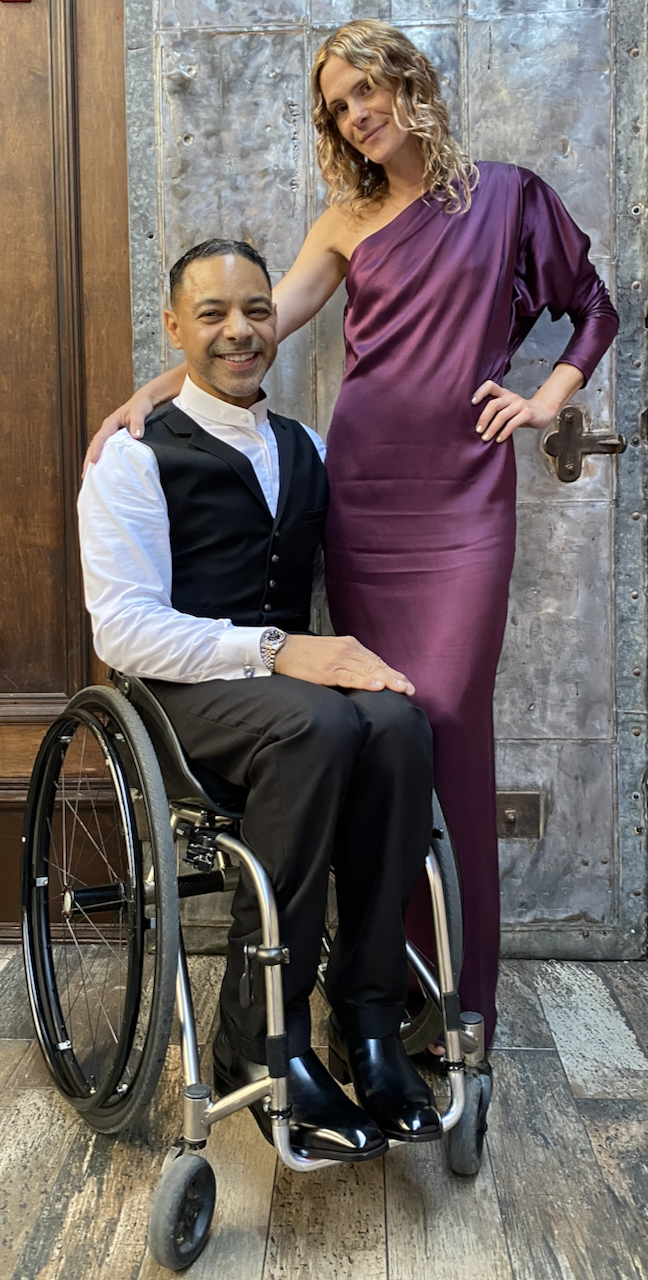
I met my partner, Danniel Swatosh, at a time in my life when I was already deep in the work of building community, creating access, and fighting to keep a mission alive. What I did not know at the time was that I was also meeting someone who would become one of the most important people in my life, personally and professionally.
Danniel and I met on July 11, 2022. From the beginning, there was something different about the connection. She did not just see the organizations or the public-facing work. She saw the weight behind it. She saw the responsibility, the pressure, the vision, and the emotional cost of trying to build something meaningful in a world that does not always make it easy.
Our relationship grew quickly because it was rooted in honesty, love, and shared purpose. Danniel has a creative mind, a strategic eye, and a deep ability to understand people. She is not someone who simply joins a mission from the outside. She helps shape it, strengthen it, and make it more visible.
Over time, she became more than my life partner. She became my business partner, my creative partner, my thought partner, and one of the people most responsible for helping me see the full potential of what we were building.
In Access Initiatives, Danniel became a partner in the business and brought a new level of energy, branding, communication, and strategy to the work. In Axis Project, she has helped tell the story with more clarity and heart. In every part of the work, she helps translate the mission into something people can feel, understand, and connect to.
What makes our partnership special is that we bring different strengths. I bring the lived experience, the history, the advocacy, the relationships, and the big-picture vision that comes from decades of doing this work. Danniel brings creativity, structure, emotional intelligence, communication, and the ability to help turn that vision into something that reaches people.She also challenges me. And that matters.
When you are a founder, especially one who has built from survival and lived experience, it is easy to carry too much alone. Danniel has helped me understand that the mission does not get stronger because one person carries all of it. It gets stronger when the right people help build it with you.
She came into my life during a season when I needed love, but also during a season when the work needed a new level of clarity and sustainability. Together, we have been navigating what it means to rebuild, reimagine, and move from survival mode into sustainability mode.
I am proud of what we are building together because it is not just a business partnership. It is a partnership rooted in love, trust, purpose, and shared belief in the people we serve.
Danniel sees the world I am trying to build, and she helps me build it better.
Contact Info:
- Website: www.axisproject.org, www.accessinitiatives.com, www.wheelsofprogress.org
- Instagram: @gg_contento, @ content0nyc, @accessinitiatives
- Facebook: https://www.facebook.com/gallegogeorge/
- Linkedin: https://www.linkedin.com/in/george-gallego-a809245