



We recently connected with Sarah Beller and have shared our conversation below.
Alright, Sarah thanks for taking the time to share your stories and insights with us today. We’d love to hear about the early days of establishing your own firm. What can you share?
I see my story as having two levels: the outer and the inner journey of starting my venture.
Diving into the outer journey, in the space of three months in 2018, I started training as a coach, left my job and my nonprofit career, took a self-funded sabbatical, and launched Realize Change, my coaching and community-building practice.
For many people, these steps are taken over a longer span of time. But I kind of went cold turkey. I was ready to get going and eager to do the work it would take to start my own business. I feel fortunate that this massive transition was possible for my family and me financially.
I first started taking pro bono coaching clients and shortly after added a pay-what-you-can option, later transitioning to a sliding scale to make my coaching more widely accessible. I put together a bare bones website and emailed my family, friends, and colleagues about my new venture. I enrolled in a business coaching program where I further developed my offerings and outreach practices. I also took advantage of this relatively unstructured time in my career – the first time in years that I was truly in charge of my own schedule – to record an album of original songs. This was a meaningful personal milestone to put my creative work into the world, and therefore to become more equipped as a coach to help others do that too.
At the same time, my inner journey was developing each step of the way. I was learning to trust myself and believe in my potential. I was learning to pay closer attention to my inner guide. I was taking more responsibility for my mood on any given day, which in previous jobs always seemed to be determined by external factors like office dynamics, political tensions, massive expectations, and looming deadlines.
But now that I was the Initiator and Tone-Setter-in-Chief of my professional life, I realized that I had more say over my outlook than I had previously acknowledged.
I was also finding the balance between pure solo entrepreneurship and seeking out support and collaboration. Community has always been a huge value in my life, and I’ve been particularly inspired and shaped by the women-focused spaces that I’ve been part of – including SongRise, a women’s social justice a cappella singing group that I co-founded and have been singing with for the past 16 years.
Feeling lonely or isolated can be an unexpected side effect of running your own initiative, and the balm for that is to connect with others in a similar boat.
You don’t have to face it all by yourself. Peer groups, co-working buddies, mentor coaches, collaborators, and contractors – all of these have made a difference for me, and they could make a difference for other business owners too.
And because I believe you shouldn’t have to go it alone when you’re bringing something valuable into the world, I created a social venture incubator called the Changemakers Circle.
Awesome – so before we get into the rest of our questions, can you briefly introduce yourself to our readers.
My professional background is in social justice advocacy organizations, where I was responsible for educating, engaging, and mobilizing people to action for causes that matter to me – for example, welcoming refugees and pushing American politics towards peace and diplomacy.
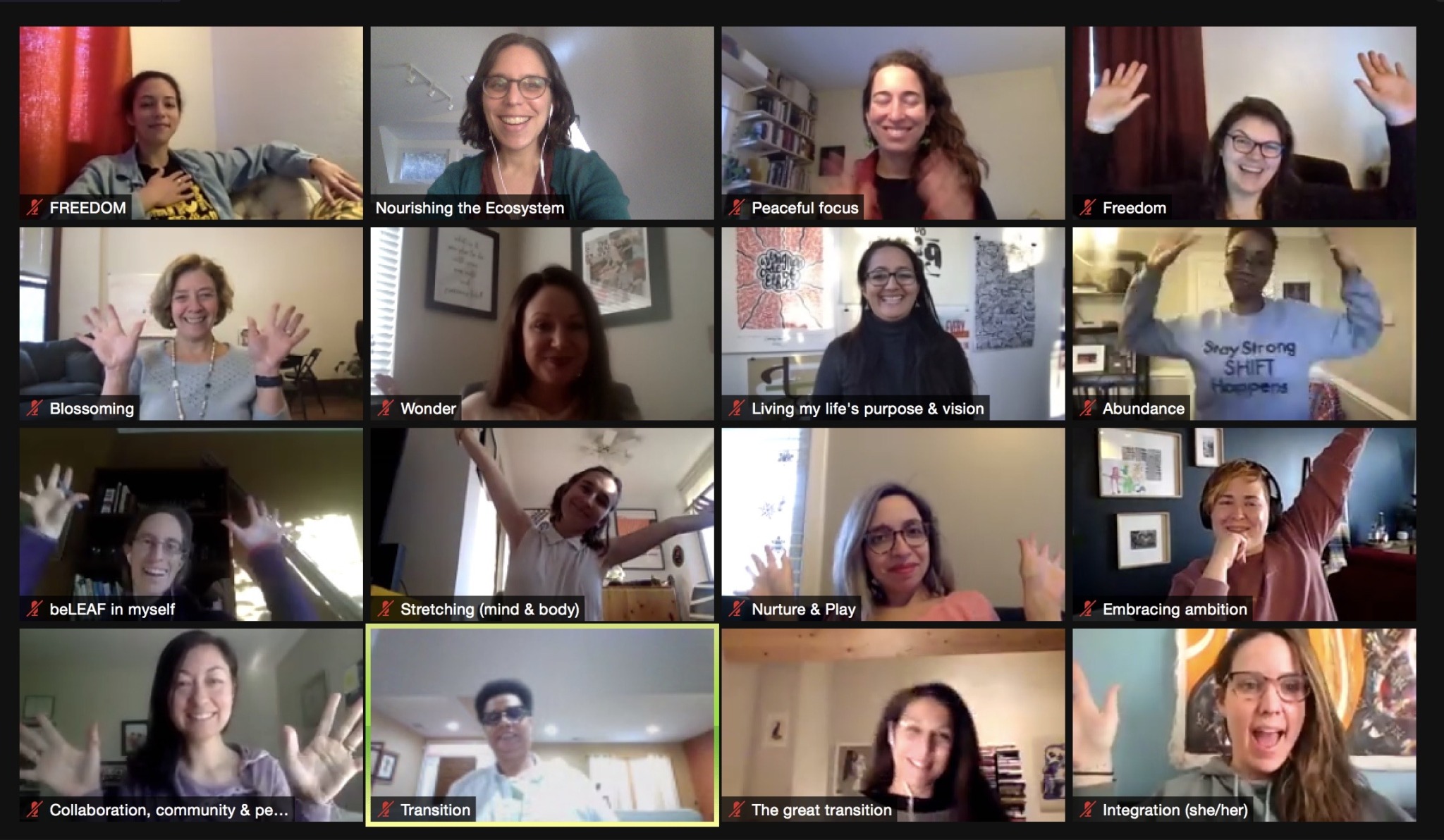
After about a decade working in nonprofits, I founded Realize Change to help women and others navigate purposeful career, leadership, and entrepreneurial journeys – here in Washington DC, across the country, and around the globe. We support people through many key moments in their professional and personal journeys, with a focus on pivoting careers or jobs, stepping into authentic leadership, and cultivating social ventures.
Over eight years of running Realize Change, I have worked with more than 300 individuals spanning six continents (all except Antarctica!) through a combination of one-on-one coaching and group work.
I’ve also worked with universities, nonprofits, companies, community organizations, and professional networks to offer relevant workshops, coaching, and cohort-based courses.
I’m especially proud of the Changemakers Circle, our peer-supported social venture incubator. For the past four years, I’ve been co-facilitating this program with architect-turned-educator erica riddick. We create a warm and welcoming environment for first-time entrepreneurs as well as folks looking to create a new stream of an existing venture. And we define “ventures” very broadly – it could be a business, consultancy, coaching or healing practice, podcast or creative passion project, platform or community, nonprofit organization, or something else entirely.
What makes us different? All of our programs are guided by the values of being strategic, holistic, inclusive, and participatory. (Conveniently, these words form the acronym SHIP, a fitting vessel for going on an adventure!)
The way we facilitate is participatory and inclusive. We don’t talk at you, at least not for very long! Everyone is welcome to share their ideas and experiences so we all can learn together. I deeply believe that everyone is both a student and a teacher, a value that I learned from an important community in my personal life, the National Havurah Committee. Fostering an inclusive environment is key to learning from each others’ wisdom.
Our approach is holistic. With a combination of modalities that awaken our minds, bodies, and spirits, there’s lots of space for folks with different learning styles to connect and engage. One moment we might be filling out a pros and cons chart, and the next moment we’ll be doing a somatic movement practice.
And we’re strategic. Every group program, every coaching session, even every event has a purpose, goal, or intention that guides it. The goals can change, and that’s okay!

Can you tell us about a time you’ve had to pivot?
When the COVID-19 pandemic started, I had just started working again after taking maternity leave with my second child. Suddenly, my husband and I found ourselves running a kindergarten, day care, nonprofit, and coaching practice all under one roof. Since we couldn’t both work full-time, we decided to split the days so that I worked in the morning and he worked in the afternoon, swapping childcare responsibilities.
Up until that point, although I had been doing much of my one-on-one coaching on Zoom, I had not run a cohort online. But life as we knew it had changed, and all bets were off.
I wanted to be of service, and quite honestly, I needed my business to survive. So I asked myself, what might lie at the intersection of what people needed at that moment and what I had to offer?
Drawing on my personal superpowers, I could offer a sense of community as an answer to isolation. And I could create a space of presence and groundedness as an antidote to anxiety about the future.
In March 2020, I held my first online community gathering, which I called a “grounding for your workday.” It was geared towards people who were suddenly confined to their homes, feeling isolated and full of uncertainty. (I acknowledge that first responders had a very different experience during that time.) It took off, and I quickly became quite adept at facilitating on Zoom. When I decided to pivot to a two-month online cohort focused on resilience and understanding your strengths, a whole new stream of my work was born.
Now I can’t imagine Realize Change without online cohorts like the Changemakers Circle and reVision Lab, our career exploration cohort, which I’ll be convening for the 13th time this fall. In reVision Lab, we do exactly what I did at the start of the pandemic: ask ourselves what types of roles, projects, or jobs could be at the intersection of what you have to offer and what the world needs.

What’s a lesson you had to unlearn and what’s the backstory?
For my entire adult life, I’ve been unlearning perfectionism. Growing up, I was good at school, and at some point, the habit of doing everything to an A+ level started to take a toll on me. My inner critic led me to struggle with writer’s block throughout high school and college.
If you had told me then, “don’t let the perfect be the enemy of the good,” I would have given you the side eye and gone back to agonizing over an essay. Sometimes it was tough to even start a project or paper because of the pressure I put on myself for the end product to be amazing.
Fast forward to working in Washington, DC, when my job was to plan an annual conference. We expected 3,000 people to show up, including foreign dignitaries, and the reputation of the organization was on full display. It was high stakes, and it had to be flawless.
I worked all year with my colleagues to develop, plan, and get ready for that three-day conference high (complete with lanyards and stress!). If anything went imperfectly, we’d have to wait another year to redeem ourselves.
If I had taken this perfectionist mindset and way of working directly into my coaching practice, I would not be where I am today. I would have been frozen with fear of doing something wrong, and every step of the way would have been arduous and painstaking. Maybe I wouldn’t have even started.
So I decided to do things differently than I had before. I started to just try new ideas, throwing spaghetti against the wall to see what sticks. I learned this in part from my husband Scott Rechler who leads LearnServe International, an organization that teaches high school students to address problems they see in their communities by creating original solutions.
In LearnServe’s Incubator program, they teach young people that when the full-fledged “wedding cake” version of a project feels daunting, they can start with a smaller, more manageable “cupcake” version. In other words, new entrepreneurs should work through a prototype, pilot, or minimum viable product before scaling up.
I have fully embraced the “cupcake” method of entrepreneurship, and I pass along this mindset to my clients with the goal of reducing perfectionism when it creeps in. Something is better than nothing. Trying is better than freezing. Starting is better than stalling.
Once, my friend saw someone wearing a t-shirt with a memorable slogan that resonated with me deeply. I come back to this nugget of wisdom over and over, and I hope other business owners will too:
“Not perfect… just awesome.”
Contact Info:
- Website: https://www.realizechange.org/
- Linkedin: https://www.linkedin.com/in/sarahbeller/
- Other: Spotify: https://open.spotify.com/artist/7bCgaJphOBIupj5V00XijZ?si=CTsxMqc6Rd-qBrUhRFF2-g


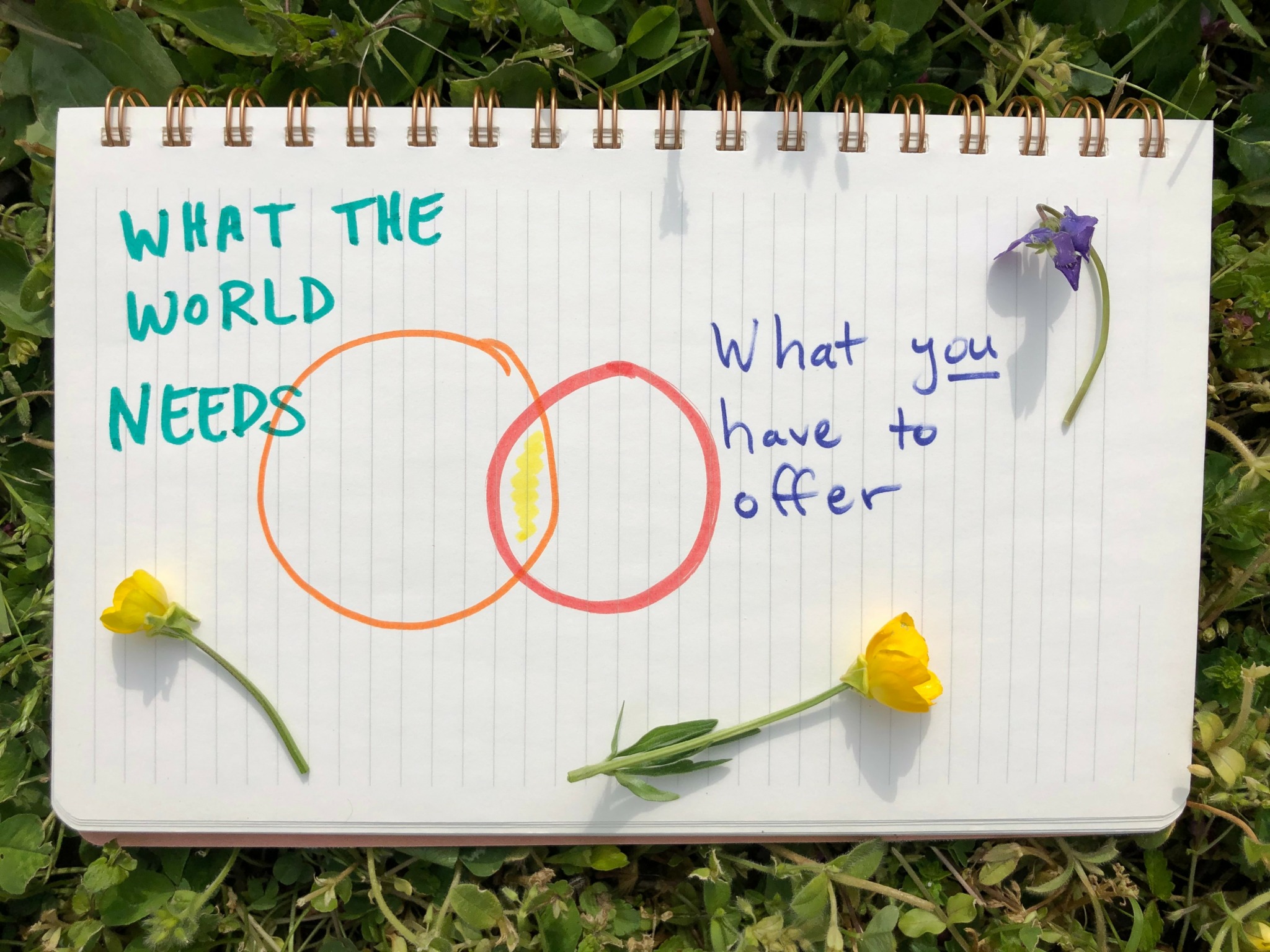
Image Credits
Tara Pokras
Vernee Norman