

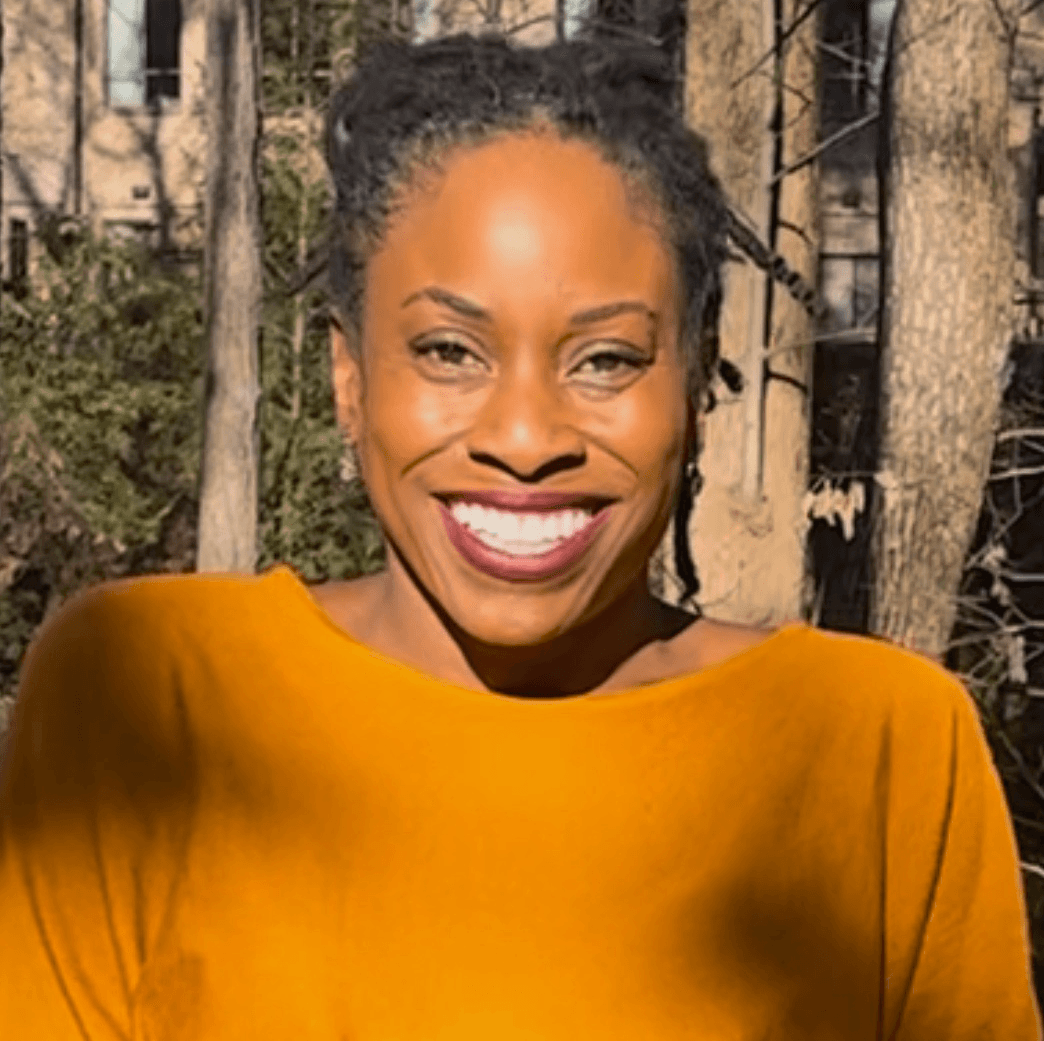

We caught up with the brilliant and insightful Shawna Chase a few weeks ago and have shared our conversation below.
Shawna, thanks for joining us, excited to have you contributing your stories and insights. How did you come up with the idea for your business?
My career was in product and technology leadership — I led teams, built systems, and shipped platforms, and I loved the work of finding a problem and designing my way out of it. I also studied music and theatre production, and I still lean on the arts to stay well.
Livin’in started as a pattern I kept noticing in our modern lifestyle. In 2024 I built and launched its first form in Atlanta as an arts discovery app. What I didn’t expect was how much the process itself would teach me. I hit the same walls as anyone trying to make something inside a complex system. Finding the right community, getting in front of the right people, navigating application processes that loop back on themselves. Showing up at the door that’s supposed to be open and discovering the hidden gatekeepers behind them, these were all illustrating normalized obstacles we’ve come to live with.
Launching a product and meeting cycles of obstruction along the journey helped me map the language. When I zoomed out and started really listening, the pattern went deeper than access. It wasn’t only that people were too frustrated to participate; they were sorted. Already inside their circles, or outside them and too tired to “discover.”
That’s why Livin’in exists, because the space between what exists and what people can actually reach to advance their livelihood needs connective tissue.
This project sits exactly where my entire life has been pointing. The music training taught me structural listening. The tech career taught me systems design. Living inside the broken system myself gave me the problem. Livin’in is where all of it converges.
Great, appreciate you sharing that with us. Before we ask you to share more of your insights, can you take a moment to introduce yourself and how you got to where you are today to our readers.
Livin’in is a community access brand built on a premise that the arts and culture are the front door to everything else. When that door is well-designed, people walk through it — into jobs, resources, relationships, and a sense of their own agency. Creativity is how we find each other and start to trust enough to participate.
The most visible piece right now is Livin’in: Weekly, a newsletter I publish three days a week — arts on Tuesday, technology on Wednesday, culture on Thursday. Every piece looks at how community systems actually function, where the pathways break, and what it would take to design better ones. The platform, livinin.io, maps arts and cultural events across Atlanta — especially the ones without marketing budgets, the ones that never get surfaced and quietly disappear.
What sets the work apart is where it sits: at the meeting point of arts, technology, and community development, asking the design question underneath all three — who built this system, who does it actually serve, and what would it look like if it worked for everyone?
What I’m proudest of is that I’m designing this in public. I show the real research, the open questions, the friction of problem-solving out loud on some of society’s hardest issues. That’s a choice. And honestly, the best collaborations I can imagine start exactly there — someone reads a piece, recognizes their own work in it, and reaches out. If you’re building something that connects people to opportunity, culture, or community, and the work feels aligned, I’d love to hear from you.
What’s a lesson you had to unlearn and what’s the backstory?
I had to unlearn almost everything I thought I knew about marketing and sales — which was convenient, because I had almost no real experience with either. I’d never been on social media in any meaningful way. I’m an introvert and a thinker; I avoid attention by default, I love science, and I’ll miss most pop culture references. I grew up in the ’80s and ’90s, when “wholesome” still counted for something.
So I tried anyway. I worked through Twitter, Facebook, Instagram, all of it, using what little I’d just taught myself about marketing. None of it worked, and the self-promotion felt wrong — I was leading with app features when I should have been leading with the work.
The shift came when I started the newsletter at the beginning of this year. Writing three days a week forced me to find the heart of what I was actually saying, and once the mission was central, the tools finally made sense. I wasn’t promoting myself or the brand. I was putting the work where people could find it. That’s a completely different relationship with visibility — one I can sustain without betraying my values.
I’m still working on it. I don’t think the discomfort ever fully goes away, and honestly, I’m not sure it should. The day self-promotion feels easy is probably the day I’ve drifted from why I started.
We’d love to hear a story of resilience from your journey.
I started researching this project in 2022, before I fully knew what it was. The whole time I was out exploring, the signals were clear: the ground under my own profession was shifting in real time — the same skills that had defined my career were being revalued or automated out from under me.
I spent the first two years looking for support. Community, collaborators, mentors, help of any kind. I applied to things, showed up to things, reached out to people. But we live in genuinely busy times and no one was coming to save me, or hand me the roadmap.
So by the beginning of 2024, I stopped waiting and started building. The last two years have been full DIY: researching and designing the infrastructure, strategizing around what I’d learned, launching the newsletter, writing three days a week, teaching myself everything I didn’t know. That turned out to be exactly what I needed.
Going through the obstacles didn’t just test me, it gave me my answers. My why. The patterns I write about now — broken pathways, designed-out access, the gap between what exists and what people can reach — I didn’t learn those from a book. I learned them by hitting every wall myself and mapping it on the way through.
Contact Info:
- Website: https://www.livinin.io
- Linkedin: https://www.linkedin.com/in/shawnachase/
- Other: https://livininapp.substack.com/