

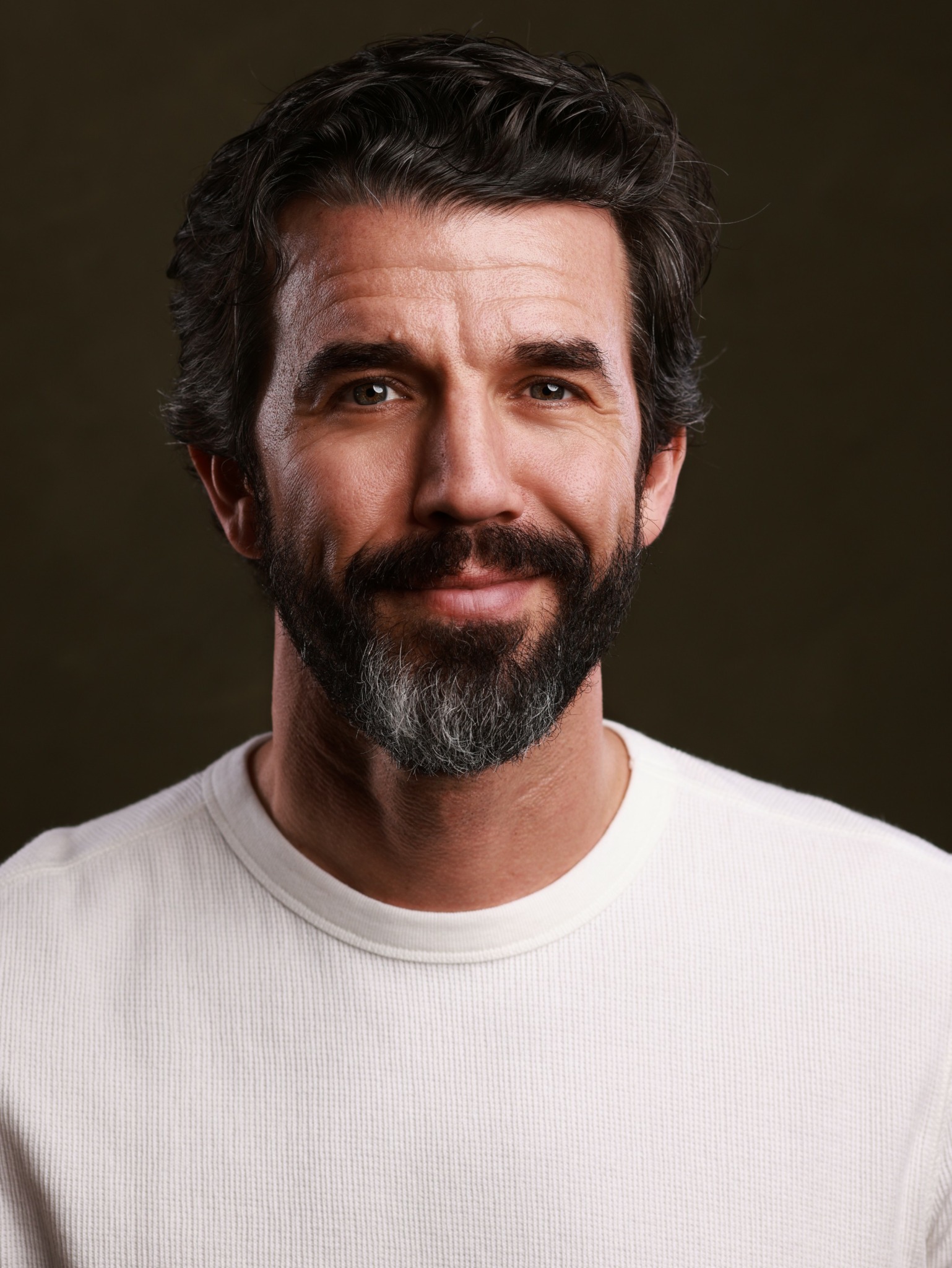

We were lucky to catch up with Joseph Mancuso recently and have shared our conversation below.
Alright, Joseph thanks for taking the time to share your stories and insights with us today. Do you feel you or your work has ever been misunderstood or mischaracterized? If so, tell us the story and how/why it happened and if there are any interesting learnings or insights you took from the experience?
I dont think I’ve personally been misunderstood or mischaracterized but the specific way in which I mostly work is often mischaracterized.
The craft that spoke to me most as an actor is method acting. One of the first lessons I learned was to look at actors whose work you connect with and find out what their training was. For me, actors like Deniro, Pacino, Nicholson, Newman, Brando, Burstyn, and Wilder were everything to me growing up. All of these actors were regulars at the Actors Studio and many trained directly with Strasberg, Adler, and Meisner.
So I knew the direction I wanted to go.
When I started working with Strasberg’s protege, David Gideon, in NYC, something just clicked. The specificity and attention to real response rather than natural response was something I’d been longing for.
Until then, many of my teachers had the directorial ability to get me where I needed to go. But it wasn’t until I started method training that I found a path toward developing a craft that enabled me to get there on my own.
The narrative around method acting today is that actors (mostly white men) need to stay in character, “become” the character, are often rude to their cast-mates, and have some sort of psychosis attached to their craft.
I’d love for people to know that none of this has anything to do with method acting. As talented as many of the actors attached to the method label are, what they are doing is not method acting.
I’ve often simplified my explanation of what method acting is to this statement: Most acting training asks us to “imagine”. Method acting trains the actor to “create” sensorily so that we can imagine. It’s the difference between natural response and real response.
It’s just one more step. And we are already doing it when we imagine. Method training just provides a craft to help the actor engage with their imagination in a way that allows the actor a certain sense of control of their instrument. Simple as that. No staying in character. No getting drunk if you’re playing drunk. No sending dead rats to your cast-mates.
Method acting, as developed by Lee Strasberg and others drawing from Stanislavski, adds an extra layer of specificity: the actor doesn’t just imagine a situation — they create a lived, sensory reality that feeds the imagination. Through tools like sense memory, substitution, and emotional recall (more on this toward the end of this post), the method actor gives their imagination something concrete to work with. The process is immersive: instead of “imagine I’m drinking hot tea,” the method asks, “What does it actually feel like to hold a warm mug? Can I recall that sensation, in my hand, on my lips, in my body?”
In other words, method acting builds the imaginative house brick by brick. It doesn’t reject imagination — it feeds it more deliberately. This doesn’t make method the only “real” acting technique, but it reveals that method acting is not separate from imagination; it is imagination, amplified through sensory and emotional specificity.
All acting techniques rely on imagination. The method doesn’t replace that; it simply deepens it.
As always, we appreciate you sharing your insights and we’ve got a few more questions for you, but before we get to all of that can you take a minute to introduce yourself and give our readers some of your background and context?
I’m an actor first, but over the years I’ve found myself wearing a lot of different hats—writing, producing, editing, and working to bring projects to life from the ground up. None of it was part of some master plan. It mostly came from a desire to keep creating and telling stories, even when the traditional doors weren’t opening as quickly as I hoped.
I’m not sure I believe that anything sets me apart from others because this artform is collaborative. Simply being is what sets us all apart. We are all unique beings. I think if someone is trying to set themselves apart from others for the sake of standing out, I can usually see through that. I’m always searching for like-hearted creatives to work with. That mindset is what eventually led me to make my first feature film, Smile… The Worst Is Yet to Come, which I’m incredibly proud of. It was built with a small team, limited resources, and a lot of people believing in each other. Seeing it connect with audiences has been one of the most rewarding experiences of my career.
It definitely hasn’t been easy. Like most artists, I’ve dealt with rejection, self-doubt, projects falling apart, and long stretches where progress felt invisible. The biggest challenge has probably been learning not to measure success solely by external validation. Early on, I thought success would feel like reaching a certain milestone. What I’ve learned is that the milestones keep moving. The work itself has to be the reward.
The lesson I come back to most often is simple: keep going. Careers are built much more by persistence than by big breakthrough moments. Most of the opportunities I’ve had came from showing up consistently, continuing to learn, and staying open to unexpected paths.
What I hope people know about me is that I’m interested in stories that help us see one another more clearly. The projects that stay with me aren’t the ones that say, “Look at me.” They’re the ones that say, “See me.” Whether I’m acting, writing, or producing, that’s what I’m always chasing—a little more honesty, a little more connection, and work that reminds us of our shared humanity.
What’s the most rewarding aspect of being a creative in your experience?
I believe creativity is the most human of things.
In Sapiens, Yuval Noah Harari writes that the truly unique feature of human language isn’t its ability to communicate information about things that exist, but its ability to communicate information about things that don’t. As far as we know, humans are the only species capable of collectively imagining things we’ve never seen, touched, or experienced.
What that says to me is that creativity isn’t separate from being human—it is one of the defining features of being human.
That’s why creative work has always grounded me. Whether I’m acting, writing, producing, or teaching, the act of creating pulls me into the present. It puts me in my body, in my voice, and reminds me of my place in this brief stretch of time we get on this planet.
I think it’s why we’re here. I know it’s why I’m here.
I’m one of the lucky people who figured out pretty early what I wanted to do with my life. The industry can be unpredictable. Accolades, opportunities, and financial success are never fully within our control. But creativity is. We can all choose to make something, whether anyone is watching or not.
That’s one of the most important lessons I’ve learned along the way: the creative act is not a means to an end. The creative act itself is the reward.
In your view, what can society to do to best support artists, creatives and a thriving creative ecosystem?
Support independent artists.
In 2025, I saw 100 films in theaters. Of those 100 films, I genuinely liked more than 70.
We often hear people say that Hollywood keeps making the same movies or that there’s nothing worth seeing anymore. My experience has been the exact opposite.
I think part of the disconnect is that we’ve become accustomed to having our choices made for us. We shop through algorithms. We stream what gets recommended to us. Our social media feeds decide what we see next. And now we’re entering a world where AI is increasingly being asked to curate our tastes as well.
But here’s what surprised me: of the 70-plus films I enjoyed last year, only a small fraction were major Hollywood releases.
The vast majority were independent films made by artists I had never heard of before. They were original, personal, ambitious, and often far more memorable than the movies with the biggest marketing budgets.
I realize not everyone has the time or desire to see 100 films a year. For me, it was a conscious choice because filmmaking is the life I’ve chosen. But the experience reminded me of something important: there is no shortage of great work being made. There is no shortage of talented artists creating things of value.
Sometimes we just have to step outside the algorithm and go looking for it.
Support independent artists. Take a chance on a film you’ve never heard of. Buy a ticket to a play. Read a book from a first-time author. You might not love everything you find, but every once in a while you’ll discover something that stays with you.
And that’s a lot more exciting than letting an algorithm decide for you.
Contact Info:
- Website: https://www.josephmancusoactor.com
- Instagram: @mancusojoseph
- Other: Tiktok: @decodethefilm
Substack: The Most Human of Things
