

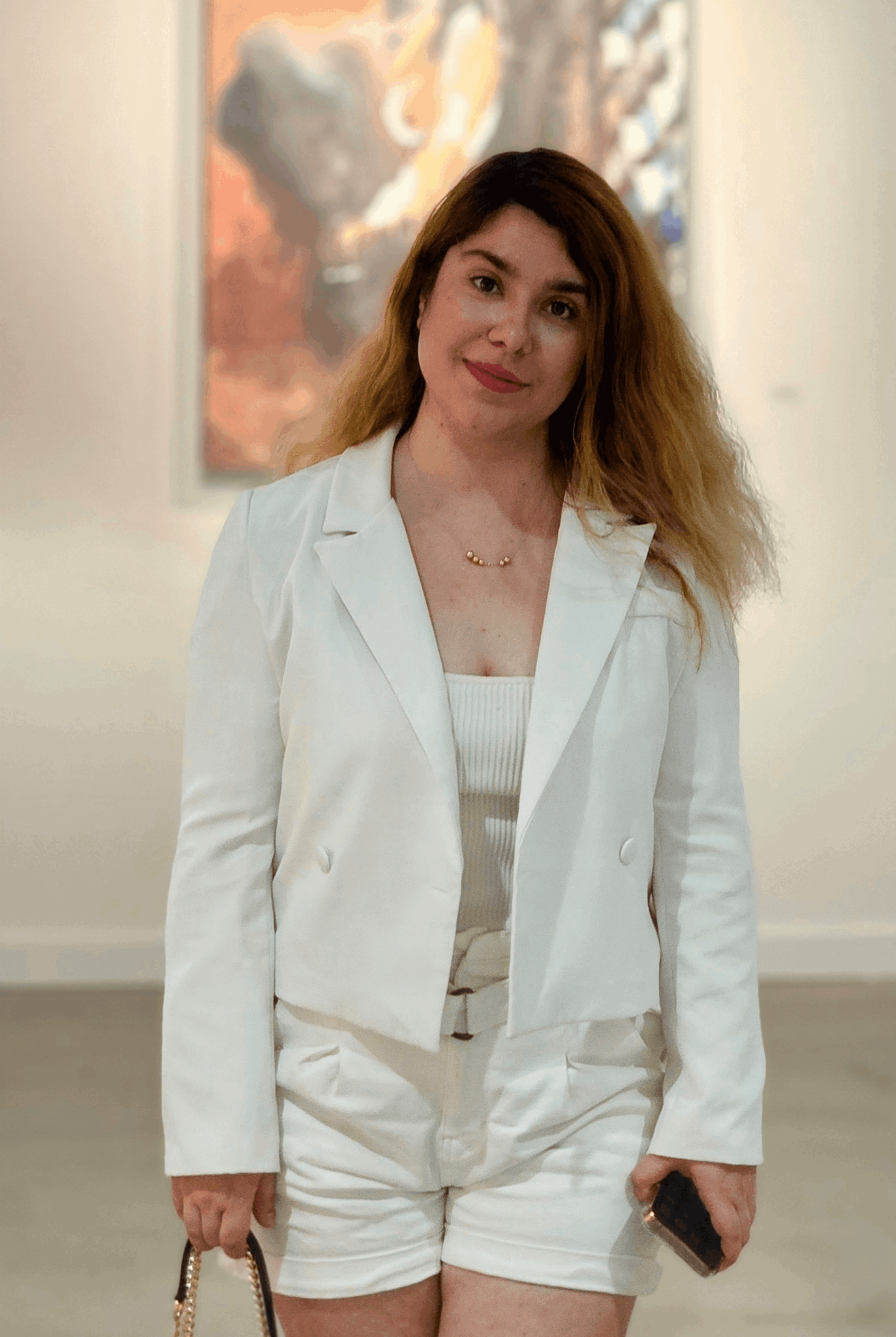

Alright – so today we’ve got the honor of introducing you to Roya. We think you’ll enjoy our conversation, we’ve shared it below.
Roya , looking forward to hearing all of your stories today. When did you first know you wanted to pursue a creative/artistic path professionally?
I think my artistic journey started when I was a child. I loved making things with my hands—drawing, painting, and creating all kinds of crafts. I would spend hours working on small projects just for fun. My mother noticed how much I enjoyed being creative and always encouraged me to keep going. She supported my interests, celebrated my work, and helped me believe that creativity was something worth pursuing.
As I grew older, that childhood passion never faded. Instead, it became a bigger part of who I was. What began as simple crafts and drawings eventually led me to study art and performance professionally and build a career around it. Looking back, I am grateful for those early moments of encouragement because they gave me the confidence to follow a path that still inspires and fulfills me today.
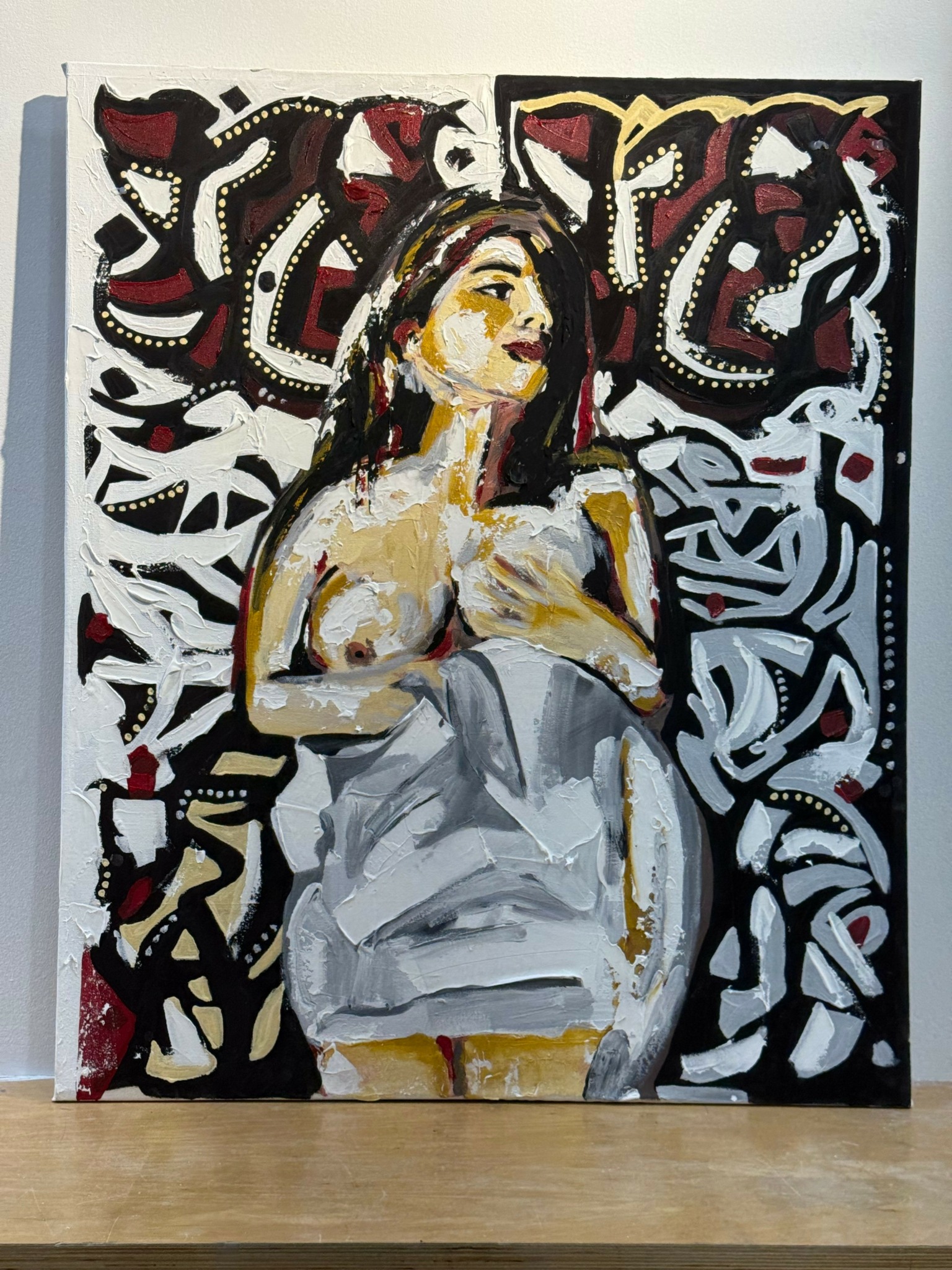

Awesome – so before we get into the rest of our questions, can you briefly introduce yourself to our readers.
I am an Iranian-born multidisciplinary artist, researcher, and educator currently pursuing a Ph.D. in Performance Studies at the University of Illinois Urbana-Champaign. My artistic journey began in childhood when I spent countless hours drawing, painting, and making crafts. My mother always encouraged my creativity, and her support gave me the confidence to see art as more than a hobby. Over time, that passion grew into a lifelong commitment that led me to study graphic design, illustration, painting, and contemporary art practices.
Today, my work spans painting, photography, installation, and performance. Much of my practice explores themes of identity, migration, memory, gender, and the experiences of women navigating cultural and social boundaries. As an immigrant and a woman, I am interested in how personal stories intersect with larger political and social realities. Through visual and performative work, I create spaces where overlooked voices, hidden histories, and complex emotions can be seen and heard. My projects often draw from lived experiences, interviews, archives, and collective memories, transforming them into visual narratives that invite reflection and dialogue.
What sets my work apart is the way I combine personal storytelling with broader social questions. Rather than offering simple answers, I create opportunities for audiences to engage with difficult topics such as displacement, belonging, censorship, resilience, and the search for identity. I work across disciplines because I believe some experiences cannot be fully expressed through a single medium. By bringing together image, sound, space, and performance, I aim to create immersive experiences that connect emotionally with viewers.
Alongside my artistic practice, I am deeply committed to teaching and mentorship. As an educator, I encourage students to see creativity as a powerful tool for critical thinking, self-expression, and community building. Whether in the classroom, the studio, or public exhibitions, I believe art has the ability to foster understanding across cultures and experiences.
Among my proudest achievements are earning my MFA, exhibiting my work nationally and internationally, presenting at academic and artistic conferences, and continuing my research as a doctoral student. However, what I value most is the opportunity to create work that resonates with others and sparks meaningful conversations.
I want audiences, collaborators, and supporters to know that my work is rooted in curiosity, empathy, and a commitment to amplifying voices that are often unheard. At its core, my practice is about connection—between people, cultures, memories, and stories—and about using art as a way to imagine more inclusive and compassionate futures.


Can you share a story from your journey that illustrates your resilience?
One of the most challenging periods of my life was moving to the United States alone to continue my education and pursue my artistic goals. Like many international students, I faced uncertainty, cultural adjustments, financial pressures, and the challenge of building a new life far from my family and support system. There were moments when everything felt overwhelming, and I questioned whether I had made the right decision.
What kept me going was my commitment to my work and my belief in the power of education and art. Instead of letting those challenges stop me, I continued creating, exhibiting my work, applying for opportunities, and pushing myself academically. Over time, those efforts led to exhibitions, fellowships, conference presentations, and eventually acceptance into a Ph.D. program. Looking back, I am proud not because the journey was easy, but because I kept moving forward even when the outcome was uncertain. That experience taught me that resilience is not about never struggling; it is about continuing to grow, learn, and create despite the obstacles in front of you.


In your view, what can society to do to best support artists, creatives and a thriving creative ecosystem?
I believe society can best support artists by recognizing that creativity is not a luxury—it is an essential part of culture, education, and community life. Artists help us understand ourselves and the world around us, often addressing social issues, preserving histories, and creating spaces for dialogue and connection. Supporting artists means investing in arts education, funding creative programs, providing accessible exhibition and performance opportunities, and ensuring that artists are fairly compensated for their work.
A thriving creative ecosystem also depends on building inclusive communities where diverse voices are welcomed and valued. Many artists face financial uncertainty and limited access to resources, especially those from underrepresented backgrounds. By creating more grants, residencies, public art initiatives, and collaborative spaces, society can help artists focus on their work and contribute meaningfully to their communities. When artists are supported, everyone benefits because creativity encourages innovation, empathy, critical thinking, and cultural understanding.
Contact Info:
- Website: https://Www.royanazari.com
- Instagram: @royanazari1992
- Linkedin: Roya Nazari Najafabadi

