



We were lucky to catch up with Branden Cobb recently and have shared our conversation below.
Branden, looking forward to hearing all of your stories today. What was one of the most important lessons you learned in school? Why did that lesson stick with you?
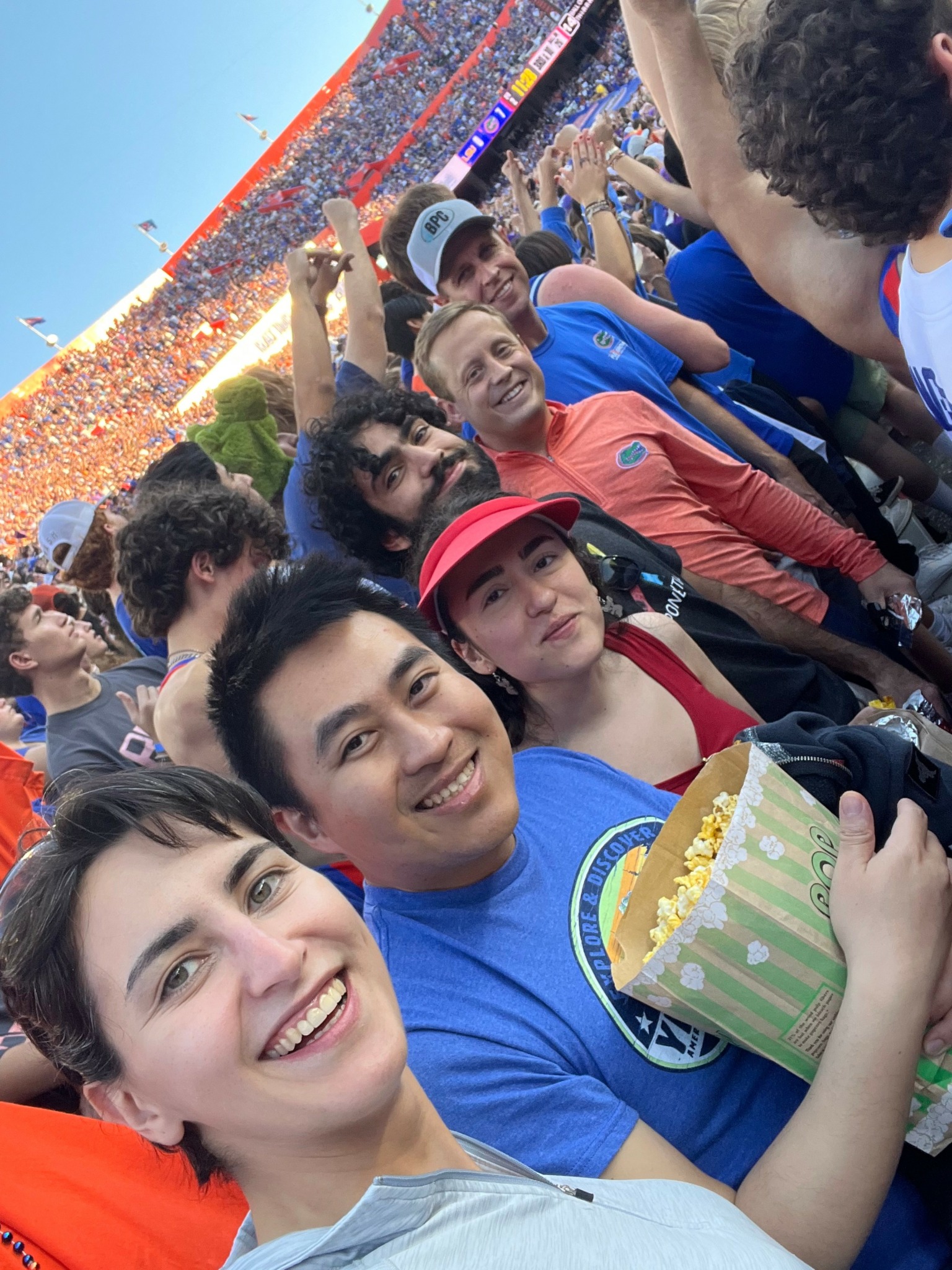
One of the most important lessons I learned in school came early in my Doctor of Business Administration program at the University of Florida.
Over the past three years, I have been in the DBA program developing the research that ultimately became my dissertation. The work focused on how the sequence of advertising modalities can influence the way people process and respond to a message. But before the research became concrete enough to test, I had to learn a lesson about explanation and theorizing.
In one of my first courses, I submitted an idea that I thought was strong. In my mind, it was clear. I understood the logic behind it, the direction it could go, and why it mattered. But when I received the feedback, I was marked down because the idea was not concrete enough.
At first, that was frustrating. I thought the answer was to add more, expand the idea, make it bigger, and show more of what I had in mind. But over time, I realized the problem was almost the opposite. The idea did not need more abstract explanation. It needed to be broken down. It needed to become more specific, more grounded, and more clearly connected from one step to the next.
That lesson stayed with me because it revealed something I had not fully appreciated before. Sometimes when we explain something, it makes sense to us because we already understand what sits underneath the surface. We know the assumptions, the connections, and the reasoning we skipped over. But the person receiving the idea does not automatically have access to all of that. Even if they understand the general point, they may not fully understand the mechanism of how it works or why it matters.
Going through the doctoral process forced me to slow down and explain what I actually meant. That process did not just make the idea clearer for other people. It made the idea clearer to me.
I learned that good explanation requires movement between levels of understanding. Sometimes you start too broad and need to go more specific. Other times, you get so deep into the details that you need to step back and reconnect the idea to the larger purpose. The goal is not simply to sound sophisticated. The goal is to help someone understand the idea at the level they need in order to process it, remember it, and use it.
That lesson also changed how I think about being a specialist versus a generalist, including why both matter. As a generalist, you can often see the big picture quickly. But as a specialist, you begin to notice the small details that appear minor but can completely change the outcome. The more time you spend with a topic, the more you realize that the power of an idea often lives in the mechanism, in how the conclusion is formed, not just the conclusion itself.
At the same time, details only matter if they can reconnect back to the bigger picture. If you go so micro that the broader application disappears, the explanation loses its usefulness. The best thinking connects both levels.
I think about this when I reflect on Albert Einstein’s work. E = mc² is powerful as a conclusion, but its impact expands beyond the formula itself. The equation is more meaningful because it was connected to the reasoning, logic, and theoretical structure that explained why mass and energy are related. A formula can summarize an idea, but the explanation gives it meaning.
Einstein also wrote in a 1954 letter that, in principle, nature’s laws may be expressible in mathematical terms, but in practice human intelligence may limit our ability to connect the most fundamental levels of physics and chemistry to more complex psychological realities. That idea captures something important to me. The micro and the macro may be connected, but making that connection meaningful requires careful explanation.
That lesson has been important in my academic work, my professional work, and my communication with others. Whether I am teaching, presenting research, or explaining a business strategy, I try to remember that clarity is not just about simplifying an idea. It is about building the bridge between what I understand internally and what someone else needs in order to understand it fully.
In that sense, being marked down early in the program became one of the most valuable moments of my education. It taught me that a good idea is only as powerful as the clarity with which it can be explained.

Branden, love having you share your insights with us. Before we ask you more questions, maybe you can take a moment to introduce yourself to our readers who might have missed our earlier conversations?
My name is Branden Cobb, and I am a marketing executive, researcher, and fractional Chief Marketing Officer through MarketingExec.US. My work sits at the intersection of strategy, customer understanding, communication, and measurable business growth.
I have spent more than 18 years in marketing, working across executive, advisory, and hands-on growth roles. Over that time, I have seen marketing from several angles: brand strategy, advertising, customer experience, digital performance, sales enablement, market entry, analytics, and executive leadership. That range has shaped the way I think. I do not see marketing as one channel, one campaign, or one creative idea. I see it as the system a business uses to understand its market, communicate value, earn trust, and create profitable growth.
I originally got into marketing because I was drawn to the connection between human behavior and business outcomes. Good marketing requires both creativity and discipline. You have to understand what people notice, what they care about, how they make decisions, and what makes a message meaningful enough to act on. At the same time, you have to connect that understanding to numbers, strategy, operations, and financial performance. That balance has always interested me.
Through MarketingExec.US, I help companies that need senior-level marketing leadership but may not need, or may not yet be ready for, a full-time CMO. My work often includes marketing strategy, positioning, messaging, customer acquisition, campaign planning, marketing audits, growth strategy, analytics, and executive advisory. In practical terms, I help businesses answer questions such as: Who are we really trying to reach? Why should they choose us? What is the strongest way to communicate that value? Which channels and campaigns are actually working? Where is money being wasted? How can marketing better support revenue, customer experience, and long-term brand strength?
A lot of the problems I solve are clarity problems. Sometimes a company has a good product but the message is not landing. Sometimes the team is busy executing tactics, but the strategy underneath the work is unclear. Sometimes leaders have data, but not enough interpretation. Sometimes there is a gap between what the company thinks it is communicating and what customers actually understand. My role is to help bring structure to those situations so the business can make better decisions and move with more confidence.
What sets my work apart is that I try to combine executive experience, applied research, and practical execution. In my business work, I have had to make marketing decisions in environments where strategy is expected to produce measurable outcomes. In my doctoral work at the University of Florida, I spent the past three years studying how the sequence of advertising modalities can influence the way consumers process and respond to messages. That combination has sharpened how I think about explanation, attention, memory, persuasion, and measurement.
The research side matters because marketing is not just about making something look or sound good. It is about understanding the science of how people process information and how different forms of communication can shape that process. A message may be the same at its core, but the way it is presented, sequenced, repeated, and connected can influence how people understand it and whether they remember it. That idea has become central to how I think about marketing strategy.
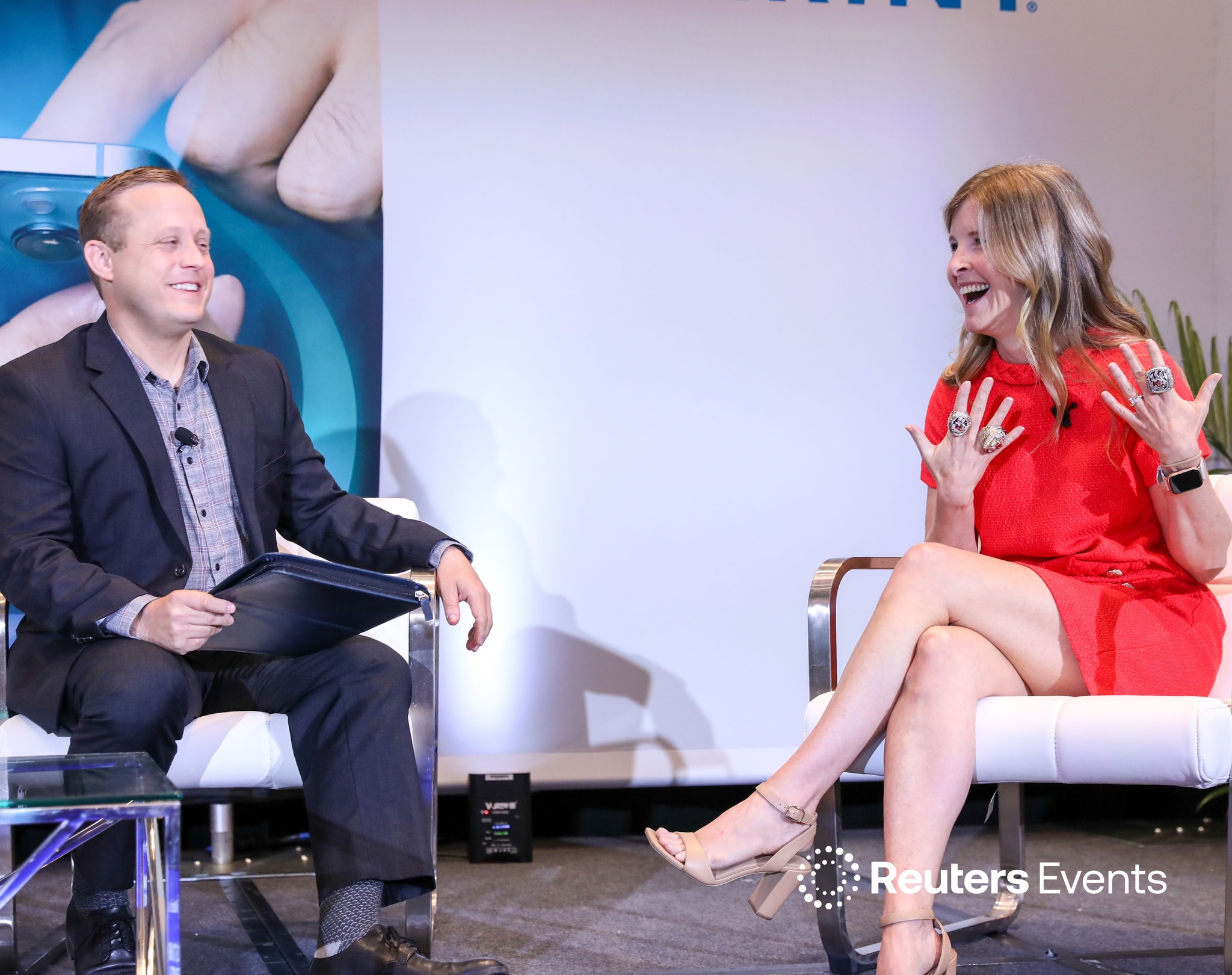
Another important part of my background has been my work as a moderator for Reuters Events, where I have had the opportunity to lead conversations with senior marketing, customer experience, and business leaders across major brands. Those discussions have exposed me to how top companies think about growth, customer insight, innovation, artificial intelligence, marketing transformation, and leadership. I value that because it keeps me close to the issues executives are actually facing in the market.
What I am most proud of is building a career that connects practice and scholarship. I have always wanted my work to be useful, not just impressive on paper. I care about helping people make better decisions, whether that is a client trying to grow a company, a team trying to clarify a strategy, or a student trying to understand a concept. The throughline in my work is helping people move from vague ideas to clear, actionable thinking.
I also think my background as both a generalist and a specialist helps me serve clients well. As a generalist, I can see the broader business picture and understand how marketing connects to sales, operations, finance, leadership, and customer experience. As a specialist, I can go deeper into the mechanics of marketing, communication, positioning, consumer processing, and measurement. Earlier in my career, I tended to think of myself more as a generalist: someone who did not need to know everything about one area, but needed to know enough across many areas to connect the pieces. Over time, I have come to believe the strongest marketing leaders need both capabilities. They need to see the whole system, but they also need to understand the specific details and tasks that can change the outcome.
For potential clients, I would want them to know that I am not interested in marketing activity for its own sake. I am interested in marketing that is grounded in strategy, connected to the customer, and accountable to business outcomes. I care about clarity. I care about evidence. I care about whether the message actually makes sense to the people it is intended to reach.
For readers or followers, I would want them to know that my work is really about bridging worlds: the creative and the analytical, the academic and the practical, the strategic and the tactical, the big picture and the details. Marketing is often treated as either art or science, but I think it is strongest when both are working together.
At MarketingExec.US, the goal is to help businesses communicate more clearly, grow more intelligently, and make marketing decisions with greater confidence. That is the work I care about most.

We often hear about learning lessons – but just as important is unlearning lessons. Have you ever had to unlearn a lesson?
One lesson I had to unlearn was the belief that every piece of feedback deserves the same amount of attention.
Earlier in my career, I think I treated feedback almost like a direct instruction. If a client reacted strongly to something, if one campaign result looked different than expected, or if one person gave a very confident opinion, I would sometimes feel the need to immediately adjust around that signal. That instinct came from a good place. I wanted to be responsive. I wanted to improve quickly. I wanted to take feedback seriously.
But ultimately, I was often working from a small sample size. Over time, I learned that taking feedback seriously does not mean over-optimizing around every individual reaction.
The backstory is that marketing exposes you to a constant flow of feedback. Clients give feedback. Customers give feedback. Sales teams give feedback. Campaigns give feedback through data. Markets give feedback through behavior. Some of that feedback is extremely valuable, but some of it is specific to one person, one situation, one audience, one timing issue, or one environment. I started to understand that feedback is data, but not all data has the same weight. A single reaction may matter, but it needs to be interpreted in context: whether it reflects a broader pattern, whether it matches other signals, and how specific it is to that particular situation.
If you react too strongly to every single piece of feedback, you can end up chasing noise. You may fix something that was not really broken. You may change a strategy because one person disliked it, even though the broader audience would have responded well. You may mistake a one-time result for a pattern. In trying to respond to every signal equally, you can actually become less strategic.
That was something I had to unlearn.
My doctoral work reinforced that lesson. In research, one result is not automatically the truth. You look at the design, the context, the measures, the sample, the pattern of results, and whether the finding makes sense alongside existing theory and evidence. You update your understanding, but you do not rebuild your entire worldview around one data point.
That way of thinking has helped me in business too. I still believe feedback matters deeply. But now I try to treat feedback as something that should update my baseline understanding, not automatically replace it. If the feedback is consistent across people, settings, and outcomes, then it deserves more weight and the baseline understanding shifts. But if it is highly specific to one person or one situation, then it still matters, but it may need to be interpreted more carefully.
The lesson I had to unlearn was the idea that being responsive means adjusting immediately. Sometimes the better approach is to listen carefully, identify what the feedback is really telling you, and then let patterns emerge.
That has changed how I make decisions. I try to think in probabilities rather than absolutes. One piece of feedback may slightly increase or decrease my confidence in a direction. A repeated pattern may shift the strategy more meaningfully. The goal is not to ignore feedback. The goal is to understand what kind of feedback it is and how much weight it should carry.
For me, that has become an important part of leadership, marketing, and research. You have to stay open enough to learn, but grounded enough not to be pulled in every direction. The strongest decisions usually come from balancing responsiveness with patience, context, and pattern recognition.

We’d love to hear about how you keep in touch with clients.
I think the key to keeping in touch with clients and fostering brand loyalty is presenting the right message, at the right time, in the right place.
I do not believe strong client relationships require constant communication. In some cases, going a period of time without reaching out can actually make the next interaction more meaningful, as long as the relationship has been built on trust and the communication is relevant when it happens. The goal is not to stay in someone’s inbox just to remind them you exist. The goal is to communicate when there is a real reason to reconnect.
For me, the best client communication happens when the person receiving the message is both able and motivated to process it. That might be when something has changed in their business, when there is a market shift, when a relevant local or world event creates a natural reason to connect, or when I have an insight that could genuinely help them think through a decision. Those moments create better conversations because the outreach feels timely, useful, and connected to something they already care about.
I also think loyalty is built by making communication easy to engage with. A message should not require too much work from the client, especially if the relationship has gone quiet for a while. It should be clear, relevant, and simple enough to enter quickly, but still thoughtful enough to be worth their attention. That balance matters. If the message is too vague, it gets ignored. If it is too dense or too demanding, it may feel like work. But if it is useful, timely, and easy to respond to, it can reopen the relationship in a natural way.
I think of it a little like walking into a room and starting a conversation. You usually do not begin with the deepest details immediately. You start with something wider, something familiar or relevant, and then move narrower as the conversation develops. Once the client is engaged, you can get into the details, solve the problem, or discuss the opportunity. Then you can end wide again by connecting the conversation back to the larger relationship or broader business goal.
That is how I think about client loyalty. It is not just about frequency. It is about relevance, timing, usefulness, and trust. Durable relationships are built when you know how to enter deeper conversations when they matter, then step back without forcing the relationship. Clients appreciate people who understand their context, respect their time, and show up with something meaningful when it matters.
Contact Info:
- Website: https://www.marketingexec.us
- Linkedin: https://www.linkedin.com/in/brandencobb1/
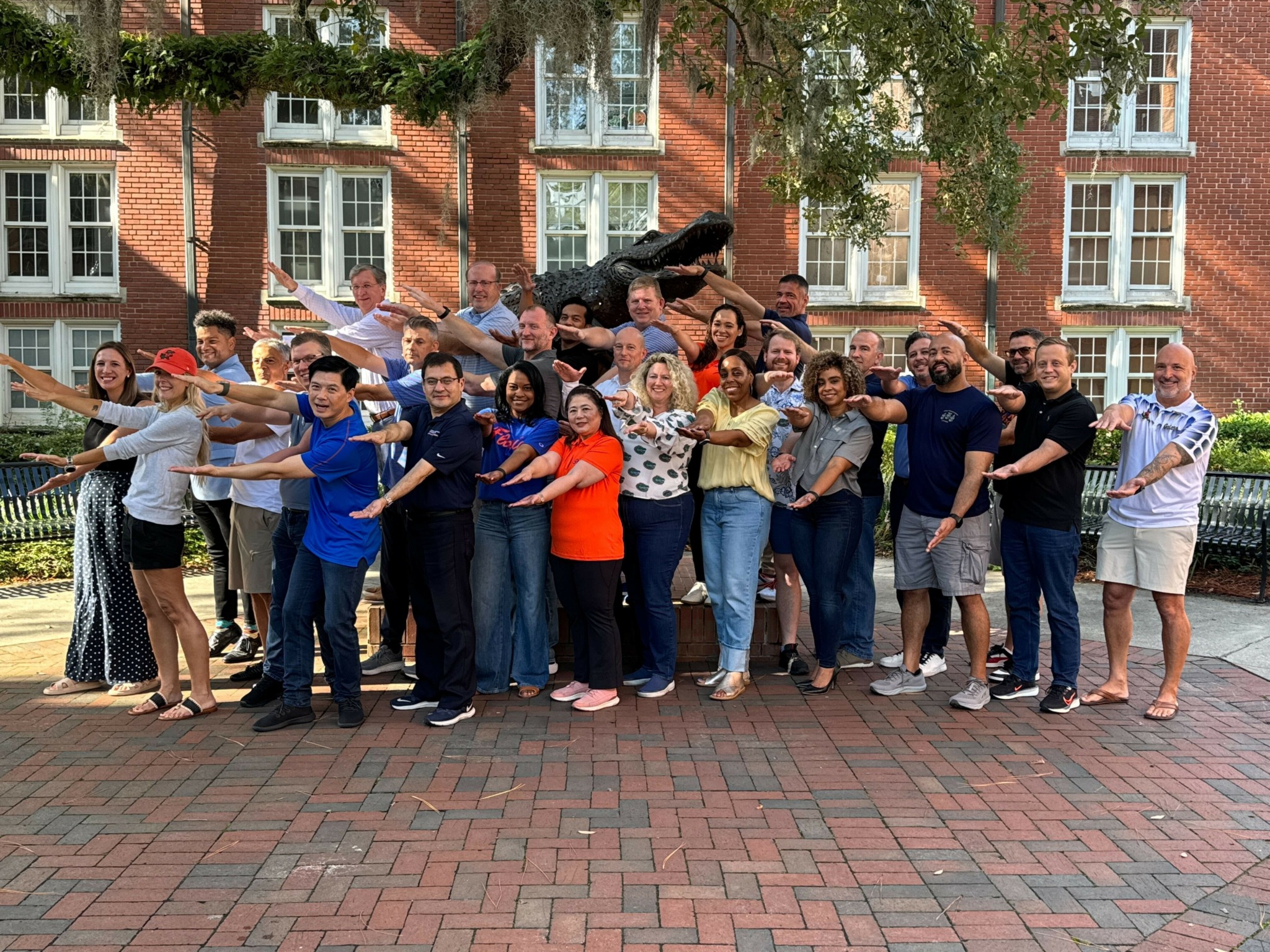
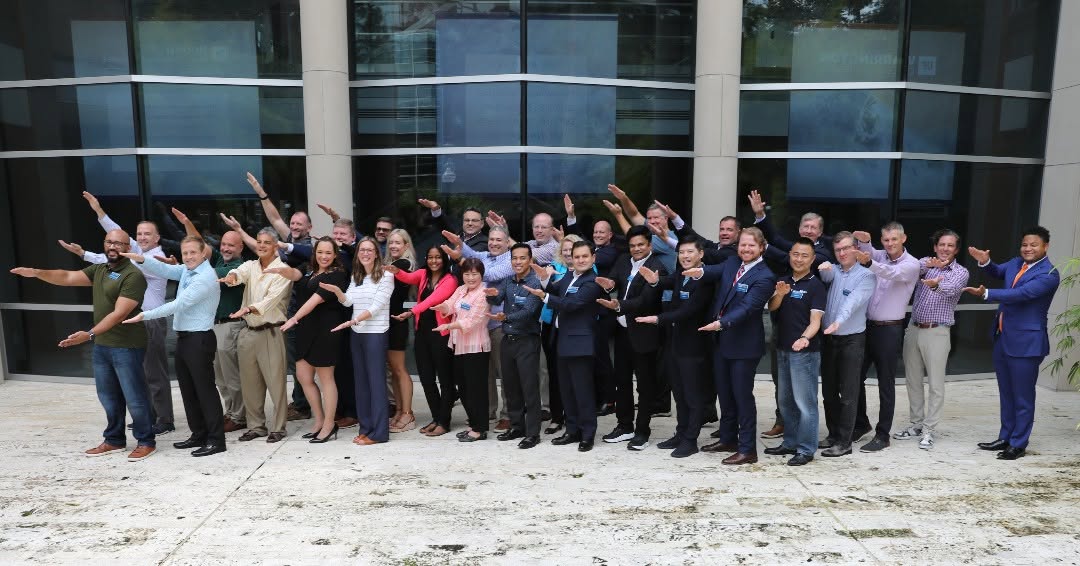
Image Credits
Warrington College of Business, University of Florida; Reuters Events