

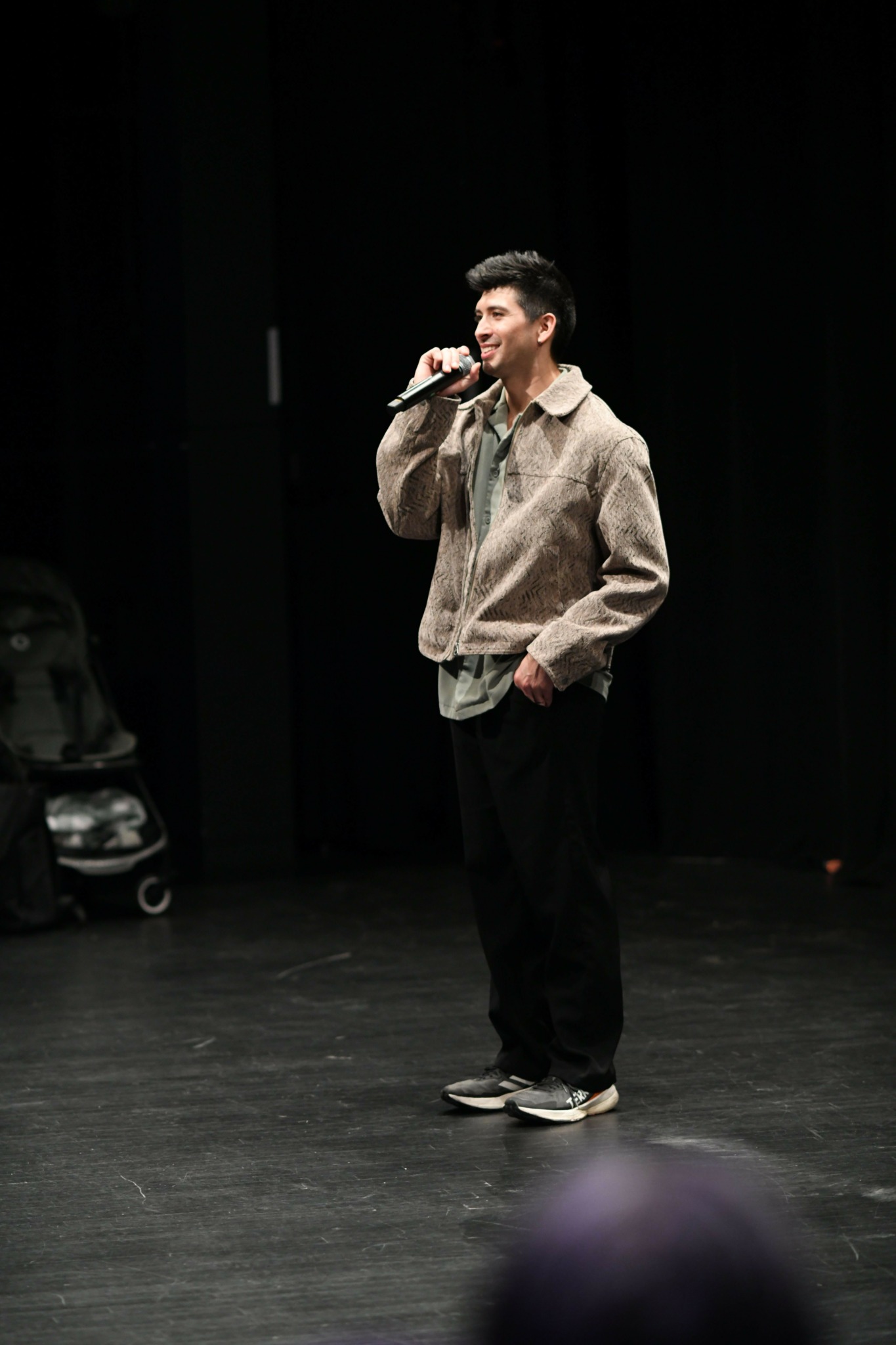

Alright – so today we’ve got the honor of introducing you to Alfonso Abraham Cervera Jr. We think you’ll enjoy our conversation, we’ve shared it below.
Alfonso Abraham, looking forward to hearing all of your stories today. Can you talk to us about a project that’s meant a lot to you?
One of the most meaningful projects I’ve worked on recently is a solo work called RP and its current work in progress evolution, RP II. The project has honestly been a long time coming. I’ve been developing it for about three years now, spending a lot of time experimenting in the studio and trying to understand my own relationship to the world of Retinitis Pigmentosa. I think it’s important to say that I do not have RP myself but have a personal relationship to it. My mother and sister were both diagnosed at birth, so while I don’t share the genetic condition, I was absolutely raised within that world. A large part of my upbringing involved learning how to support them and navigate life alongside them. I learned how to describe things in detail, how to think about accessibility, how they moved through space, how they perceived images, and how they interpreted their surroundings. Those experiences became such a normal part of my life that I didn’t realize until much later how much they had shaped the way I understand the world.
What has really grounded the work, however, has been the shared relationship to Ballet Folklórico. My sister Denise danced alongside me in a folklórico group growing up, while my mother, Maria, worked closely with my grandmother, Vilma Ojeda, to construct many of our costumes. Folklórico became one of the spaces where our family came together, despite experiencing the world differently. As I began developing the dance RP, I found myself returning to those memories and thinking about how dance, labor, care, and cultural practice connected us. The work became not only an exploration of visual impairment, but also an archive of our family’s relationship to movement and the ways we have supported one another through dance.
As a choreographer, I became interested in how contemporary dance could help me investigate those experiences. The work explores questions around perception, memory, navigation, and care. How do we experience space differently? How do we move through the world when visual information isn’t the primary source of understanding? How do family members learn to support one another through those experiences?
What has made the project especially meaningful is that it has allowed me to reflect on what I often describe as my queered upbringing. Growing up in a household shaped by disability, adaptation, and alternative ways of perceiving the world taught me to think differently about bodies, movement, communication, and care. The project isn’t necessarily trying to provide answers. Instead, it creates space to better understand those experiences while also documenting my mother and sister’s relationship to RP through movement, conversation, archives, and performance.
RP II continues those explorations but expands them beyond the solo form. One of the questions I’ve been asking recently is whether this world can exist with others inside it, who may not have a specific connection to my family. What happens when I invite other dancers into these memories, systems of care, and methods of navigation? How does the work shift when it becomes a shared experience rather than a personal one? RP II explores those questions through collaboration, projection, sound, and movement, attempting to build a larger world where multiple bodies can inhabit and respond to these ideas together.
In many ways, the work is still unfinished, and I think it always will be. Every conversation with my family reveals something new. Every iteration uncovers another layer of memory or understanding. The project feels less like a finished dance and more like an ongoing dialogue with my family, my upbringing, and the many ways people experience and navigate the world.
Ultimately, the work is about awareness, empathy, and understanding. It has given me an opportunity to honor my family’s experiences while also reflecting on how those experiences shaped who I am as an artist, educator, and person.
Great, appreciate you sharing that with us. Before we ask you to share more of your insights, can you take a moment to introduce yourself and how you got to where you are today to our readers.
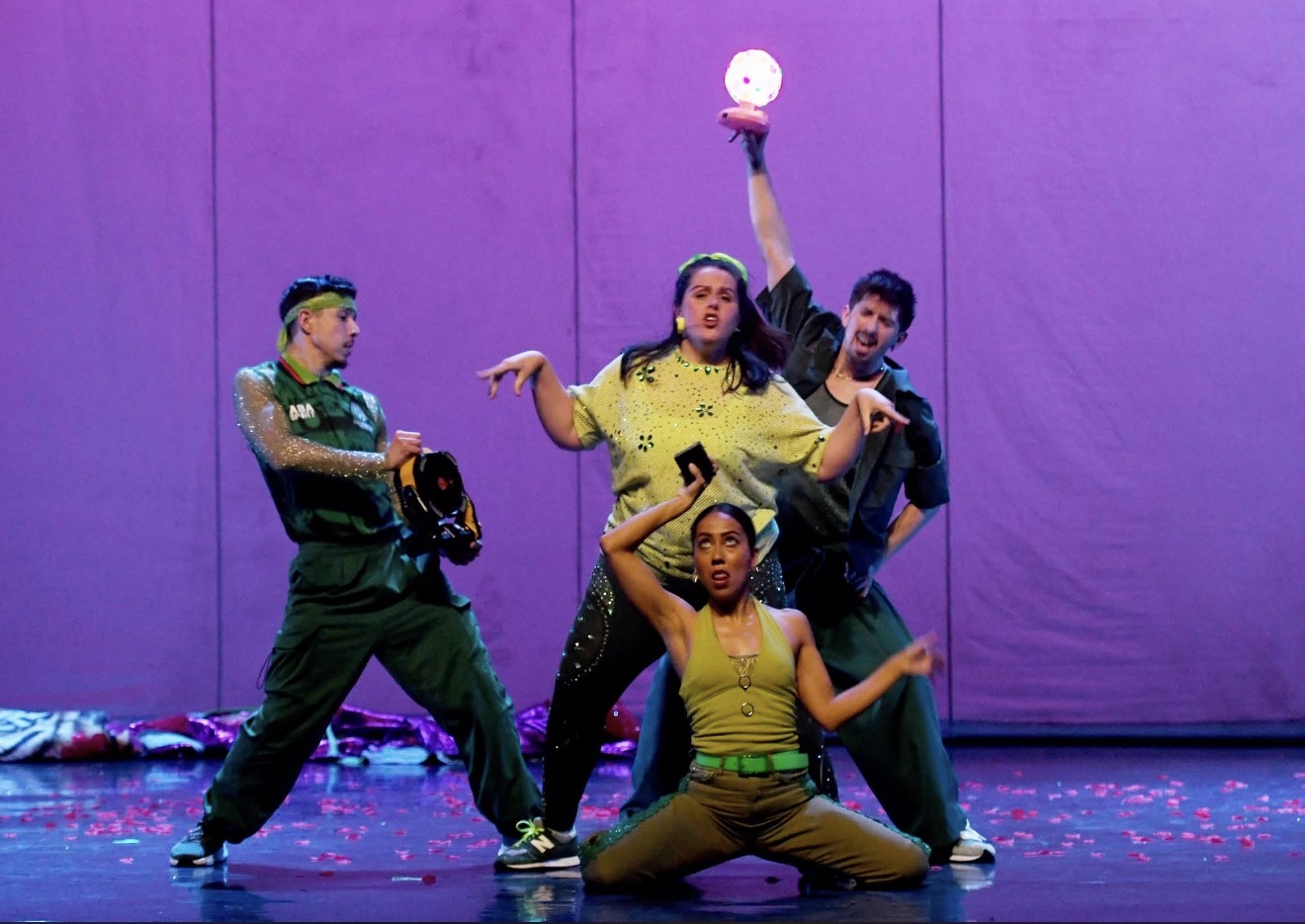
In this moment, I would say that I’m a choreographer, educator, and artist currently based between Columbus, Ohio and Los Angeles, California. I currently teach in the Department of Dance at The Ohio State University, where I create new work, teach contemporary dance and composition, and mentor students as they develop their own artistic voices.
My journey into dance started pretty early. I began dancing at the age of four in a local folklórico group called Ballet Folklórico Cultural in Colton, California. At the time, I don’t think anyone in my family imagined it would become my profession. It was simply a part of our lives and our community. I stayed involved with folklórico throughout my childhood and eventually found my way into college dance, where I was introduced to contemporary and modern dance practices. That experience completely changed my perspective and opened up a whole new world for me. Not long after, I declared dance as my major and never really looked back.
Over the years, I’ve had the opportunity to perform, tour, attend festivals, collaborate with artists from different backgrounds, and create my own work. Those experiences helped me understand that I was interested not only in performing but also in creating work and teaching. Graduate school was really where that became clear to me. That’s when I started developing my voice as a choreographer and educator and thinking more deeply about the kinds of stories I wanted to tell through dance.
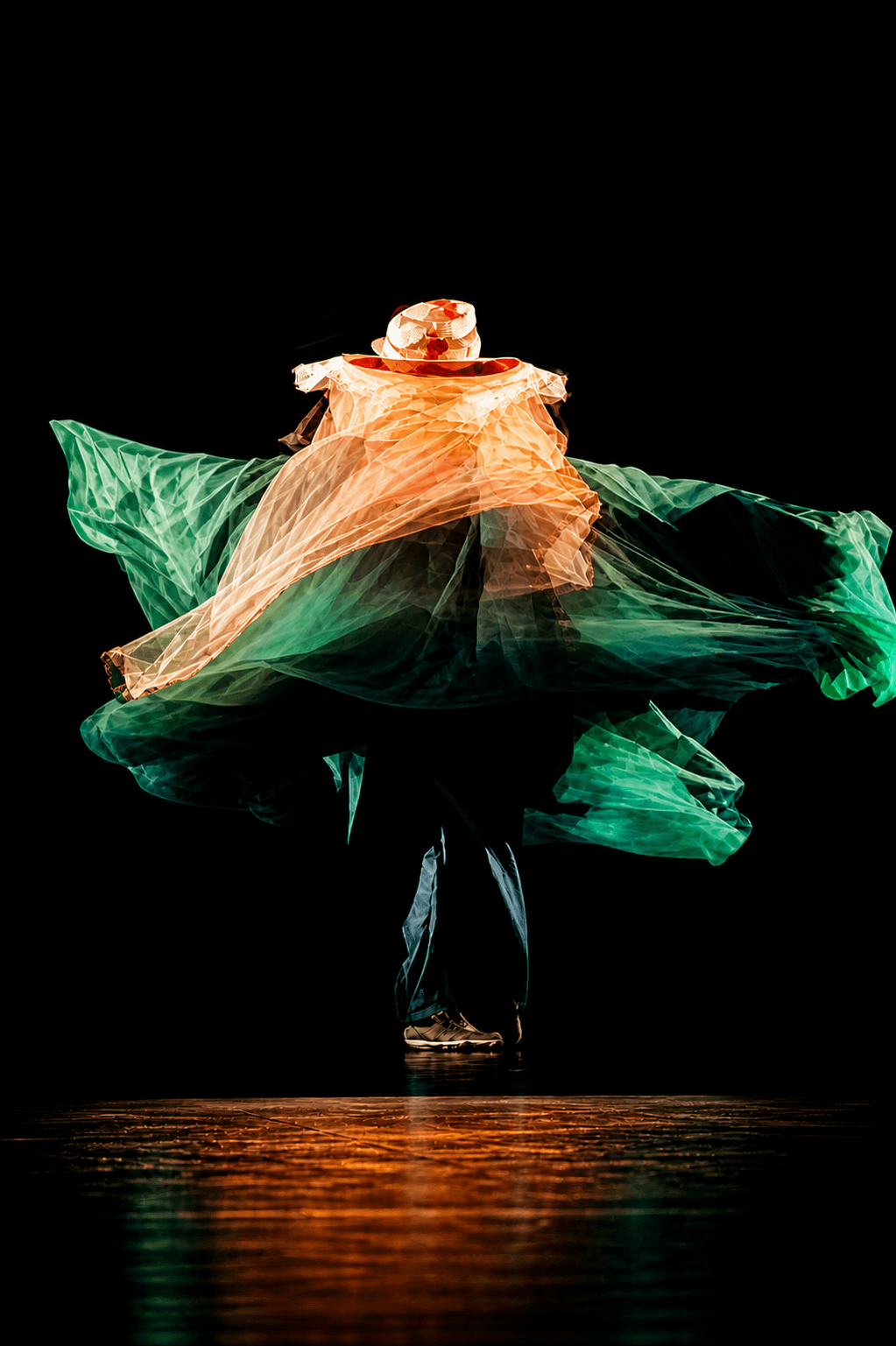
A lot of my work today lives between folklórico and contemporary dance. I’ve spent years thinking about what happens when those forms are placed in conversation with one another and how they can be used to tell stories that often aren’t represented in mainstream concert dance spaces. Much of my choreography explores Mexican American identity, queer experiences, family histories, archives, memory, and community. I often pull from personal experiences while also thinking about larger cultural questions.
If there’s something that sets my work apart, I think it’s that I move between a lot of different worlds. I care deeply about folklórico traditions and the communities that sustain them, but I’m also interested in experimentation, contemporary performance, and asking questions about how traditions evolve over time. I’m not interested in choosing one or the other. Instead, I’m interested in the space in between and what new possibilities can emerge there.
One thing I’m especially proud of is helping create visibility for artists and communities that don’t always see themselves reflected in contemporary dance spaces. Whether that’s through my work with Primera Generación Dance Collective, my own choreography, or my teaching, I’ve always tried to create opportunities for people to feel represented and connected.
At the end of the day, I think my work is really about stories, relationships, family, community, and finding ways to preserve and share those experiences through movement. I want audiences to walk away feeling connected, not only to the work itself, but to the people and histories that inspired it.
What do you find most rewarding about being a creative?
For me, the most rewarding aspect of being an artist has been the people. Dance has allowed me to travel to places I never imagined I would visit, but what stays with me most aren’t necessarily the performances or the venues but rather the relationships I’ve acquired with various people.
When I look back on my career, I think about the incredible artists, educators, students, collaborators, and community members I’ve met along the way. Some of my closest friendships have come through dance. I’ve built relationships through community folklórico groups, universities, festivals, residencies, and performance projects all over the country and beyond. Those relationships have shaped who I am both personally and professionally.
I often find myself reflecting on how many people have poured into my life, challenged me, supported me, and inspired me over the years. Every collaboration leaves something behind. Every community teaches you something. Every student changes the way you think. I don’t think I would be the artist or educator I am today without those experiences and those people.
As artists, we spend so much time thinking about the work itself, but for me the real gift has been the community that comes with it. It’s a pretty amazing feeling to look back and realize that dance has connected me to people from so many different backgrounds, places, and experiences. Those connections continue to influence the way I create, teach, and move through the world.
At the end of the day, the work is important, but the relationships are what I hold onto most.
Is there something you think non-creatives will struggle to understand about your journey as a creative? Maybe you can provide some insight – you never know who might benefit from the enlightenment.
I think one thing that people outside of the arts sometimes struggle to understand is that we don’t really live normal lives and if I can be blunt.. it’s fucking hard lol. There can be this assumption that what we do is fun all the time, that we’re constantly creating, traveling, performing, and enjoying ourselves. And while there are certainly beautiful moments, the reality is that being an artist can be incredibly demanding.It’s exhausting at times. It’s hard on the body, hard on the mind, and often asks you to be vulnerable physically, emotionally, spiritually, and mentally. You’re constantly putting parts of yourself out into the world and inviting people to respond to them. That can be incredibly rewarding, but it can also be challenging. I also think people don’t always realize that being an artist is rarely a job that stays at work. It’s not really a 9-to-5 profession. The work follows you everywhere. You’re always observing, questioning, researching, reflecting, and thinking about the world around you. You’re constantly trying to understand what feels relevant, what stories need to be told, and how to communicate those ideas in meaningful ways. Another thing that I think people don’t fully understand is how difficult it can be to sustain a career in the arts. Especially right now, funding opportunities continue to shrink while the number of artists seeking support continues to grow. A lot of time is spent writing grants, building relationships, finding presenters, fundraising, and advocating for why the work matters in the first place.
I also think it’s important to be honest about the fact that access to funding is not always equitable. Relationships matter. Networks matter. Sometimes who you know matters just as much as the work itself. There are many incredible artists doing important work who struggle to receive support, while the same artists and organizations often continue to be funded over and over again. I don’t say that to diminish anyone’s success, but I do think it’s a reality worth talking about if we care about creating a more vibrant, diverse, and sustainable arts ecosystem. At the same time, artists are constantly being asked to innovate, respond to shifting cultural conversations, and imagine new possibilities for the future. Art is always evolving, and as artists we are always evolving with it.
I don’t mean any of this in a negative way. In fact, it’s one of the reasons I love being an artist. But I do think it’s important for people to understand that creativity isn’t something we turn on and off. To make art, we have to immerse ourselves in the world. We have to pay attention to people, communities, politics, relationships, joy, grief, and everything in between. We have to saturate ourselves in humanity and then find ways to reflect it back.
For me, that’s both the challenge and the gift of being an artist.
Contact Info:
- Website: https://www.cerveraalfonso.com
- Instagram: fonzy110990
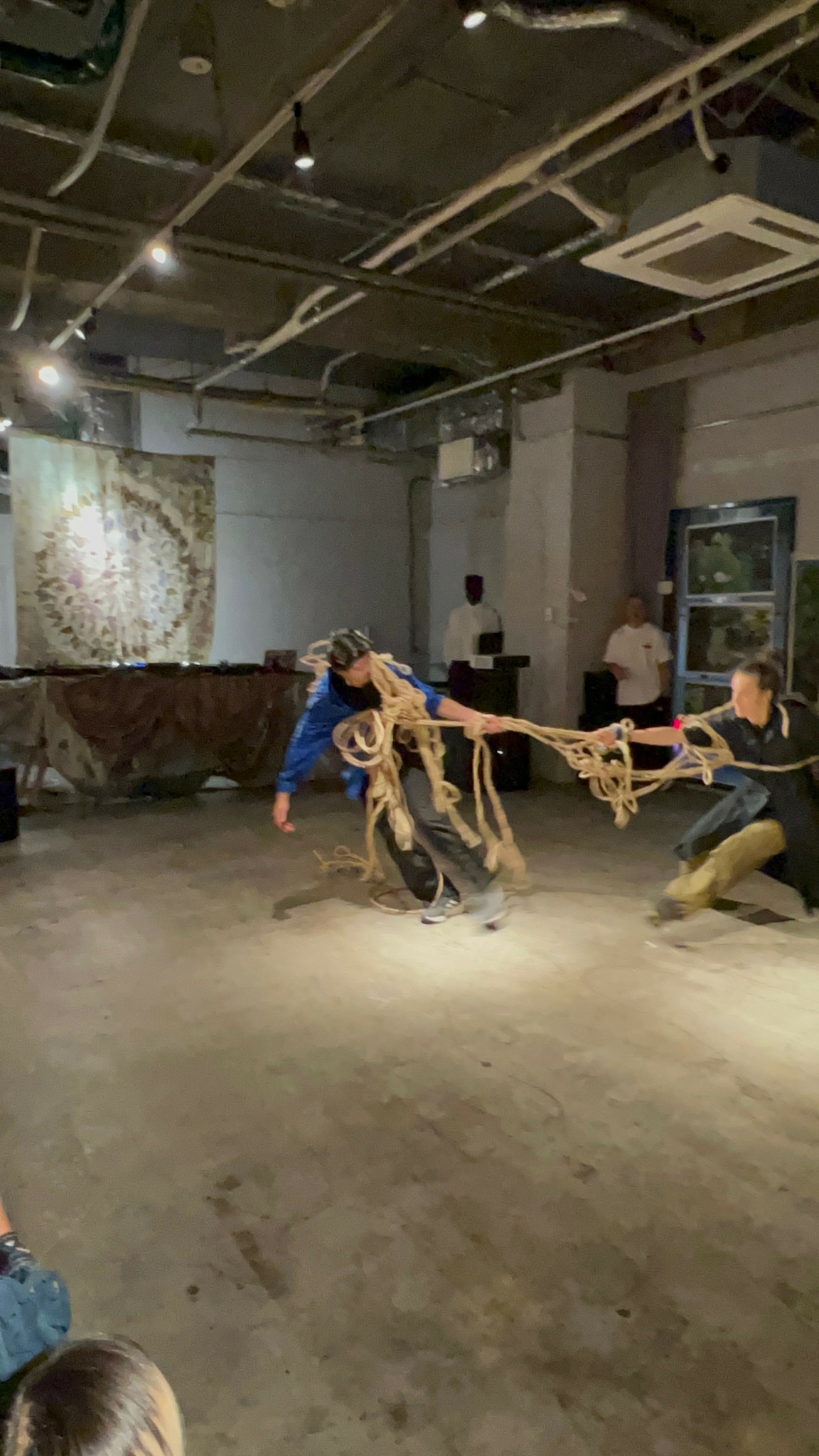
Image Credits
Pictures by Alfonso Abraham Cervera