

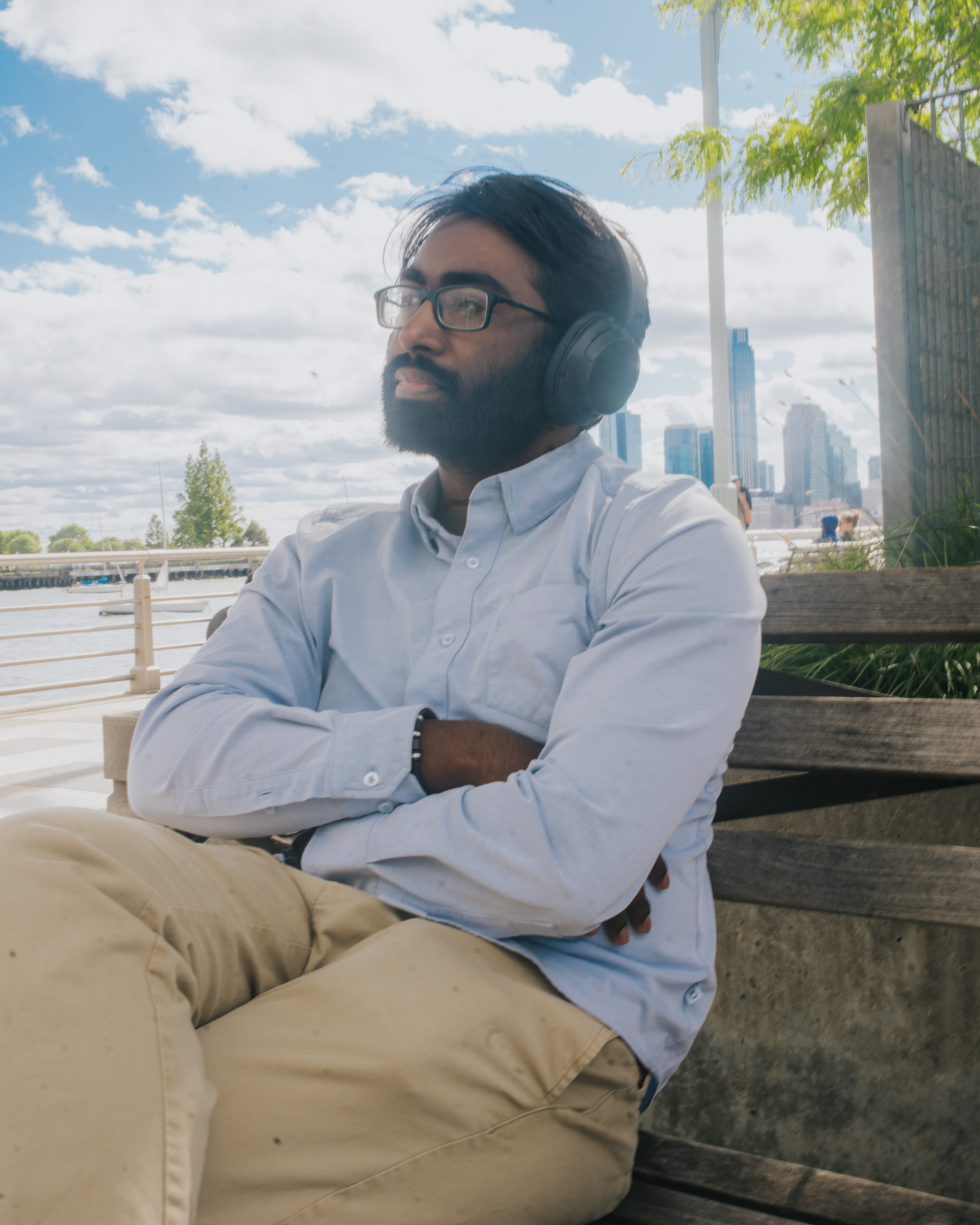

We were lucky to catch up with Guru Ramanathan recently and have shared our conversation below.
Hi Guru, thanks for joining us today. What’s been the most meaningful project you’ve worked on?
If I may, I’m going to cheat and share two examples because one impacted me greatly as a director and another as a writer.
AS A DIRECTOR: The first film I ever made was a feature-length documentary, “Hyper—,” about the school system of the town that I grew up in, Winchester, MA (a suburb 20-30 minutes north of Boston). Education has always been a topic I have been passionate about and while I went to a very good high school (Winchester is renowned for its education system — the kind of place where you move there for the schools), I wanted to generate conversation around hypercompetition and academic toxicity that I observed, and raise larger questions around student motivation and academic policies in the town.
As a one-man crew, I directed, produced, filmed, and edited it by myself (my friend Victor composed the score). I did an independent study course that semester and made this project the focus, so that I could justify working on it so extensively as a “school project.” I should mention that I was 16 — so, I still needed to do well in my other classes, keep up with extracurriculars, study for the SAT, and do college tours.
I filmed the whole thing, including 30+ interviews with students, teachers, administrators, and parents, and wrapped up the first cut all within six months (because I needed to produce some product for the independent study). I made more revisions over the summer (even held some “test” screenings with friends) and got in contact with a local community organizer about the film (I knew her because I was on the high school Tech Crew and filmed some of her events), who helped set up public screenings. We held screenings at a small theater in Winchester (that was the “premiere”), the middle school, high school, and Town Hall.
The response in each screening was positive and very rewarding. But, most special of all was actually hearing from teachers who said they were going to change their homework policies after watching the movie; students who felt seen but also had a mirror held up to them; and I’ll always remember one middle school mom tell me, “I’m so glad I watched this before I ruined my kid’s life.”
Admittedly, “Hyper—” did not go to any festivals or streaming service (I mean, it’s on YouTube right now if you’d like to watch and judge me), but it reached its core audience and actually led to tangible impacts in people and at the school. What else could I ask for as a storyteller?
Now, 10 years later, I am in production on another education-focused documentary, “Teaching Tomorrow,” which centers on student teachers in NYC navigating their final field placements amid unprecedented strain on the American education system (however, this time I have an amazing team of friends/collaborators working with me on it — thank you Lu, Jake, and Sutton!).
AS A WRITER: the most impactful script I have written is a TV pilot called “Londoni.” Here’s a quick synopsis: “After immigrating to Whitechapel, England, in 1980, Indian doctor Abhimohan “Abhi” Sushant is pulled into a violent gang war between South Asian gang Londoni Yard and neo-nazi group Brass Lions while trying to carve out a life for himself.”
That’s based on some real history, by the way. But, the thing is I almost never wrote this script.
The initial concept of “Londoni” came to me when I was in an Advanced TV class in my second-to-last semester at NYU Tisch. I learned some interesting history about South Asian immigration in Britain in the 1970s/80s, including how gangs formed in response to a rise in violence from neo-nazis during that time. I am an immigrant myself and moved to the United States from Tamil Nadu (a state in southern India) when I was three years-old. Thankfully, my life has not had any intersections with the gangster underworld, but this felt like an opportunity to also address several burning questions I had been wrestling with throughout my life as an immigrant/son of immigrants. I wanted to unpack this historical period, both from the lens of a prestige drama that would center Brown immigrants, but I also wanted to blend in commercial action elements and in-depth world building that the gangster genre is known for. As an avid fan of both Western and Indian content, I was inspired by the potential of mixing “Peaky” with Indian gangster films like Vetrimaaran’s “Vada Chennai” and Pa. Ranjith’s “Kaala.”
But, then the doubt kicked in. Up to that point in my life, I hadn’t felt comfortable writing something specific to my cultural background, out of fear that I didn’t have the capability to broach these themes or do justice to the communities that I aimed to uplift, and that other people wouldn’t “get it” anyway. But, I was really into the concept and, truthfully, couldn’t come up with another idea, so I decided to go all in.
Fast forward to today: that pilot is the best script I wrote in college and remains one of the strongest pieces in my portfolio, having been recognized for awards, residencies, and contests, as well as the story that changed the way I write.
At graduation, I was recognized by my department with the Dramatic Writing Award for Excellence in Episodic Writing by an Undergraduate for this pilot. I was also selected for the department’s TV Festival (which had to be done virtually due to the pandemic) and received a staged reading with professional actors. After college, I was referred by a professor to apply for the New York Stage and Film Filmmaker’s Workshop residency and was accepted (as the youngest person in that cohort). Most recently “Londoni” was selected as one of the top nine TV pilots for the 2025 Golden List competition.
Beyond the recognition, “Londoni” changed the way I write. As I progressed through the first draft, I overcame a lot of my own inhibitions (and of course was supported and propelled by a really fantastic class group, led by the brilliant professor Cheri Magid). From the reception in that initial class to the accolades and experiences I garnered since then, this script gave me so much artistic and personal validation, providing me the confidence to explore stories about my identity and cultural community, and to do it in the styles that most appealed to me. Today, I am more determined than ever to explore and spotlight South Asian immigrant narratives more prominently.
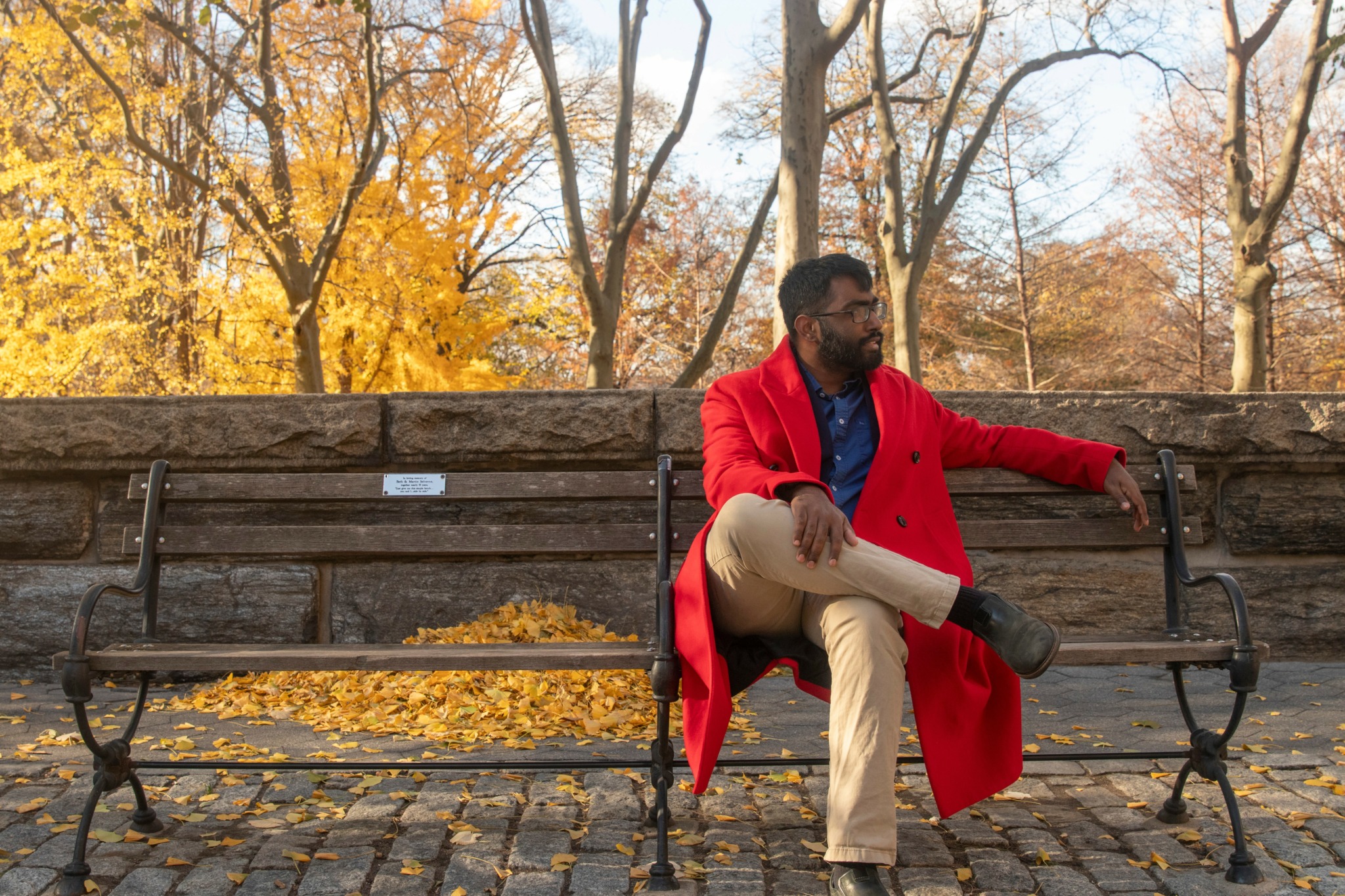
Great, appreciate you sharing that with us. Before we ask you to share more of your insights, can you take a moment to introduce yourself and how you got to where you are today to our readers.
I am a NYC-based creator with diverse experience across filmmaking, podcasting, and brand communications, and I aim to tell stories that are as thought provoking as they are entertaining. I am currently in production on a feature-length documentary, “Teaching Tomorrow,” which centers on student teachers in NYC navigating their final field placements amid unprecedented strain on the American education system. I also work in the PR/marketing space with experience in product and content launches, celebrity/brand partnerships, event management, copywriting, executive visibility, and social media campaigns. I have strategically elevated an array of high caliber clients, such as Dolby, Nintendo, Hasbro, Twitch, Reddit, Peloton, Rotten Tomatoes, and IMAX.
By the time I get to the end of my career, I hope to have built a very erratic resume. I am a serial multitasker/overworker, but it is always driven by a need to push the limits of my potential. I want to continue honing all these forms of storytelling and expanding my repertoire. While some people in my space have taken a very linear path (and that’s no shot at them, everyone’s journey is different and fulfilling in its own way), I know that I cannot see myself only doing one thing. I used to be afraid of not knowing how to “brand myself” (ironic, I know), but now I have come to embrace the label of being hard to label. To put a better spin on it, I am a versatile storyteller with a wide and effective range of skills who comfortably wears many hats, and is always on an ambitious search for more.
I credit my love of cinema to my parents. Growing up, my mom showed me countless Hollywood classics ranging from “The Lion King” to “Raiders of the Lost Ark,” using movies as the vehicle for me to understand American pop culture. But, my dad pretty much solely watched Indian movies, so I saw many films, especially from Tamil Nadu, with him. I grew up with a hybrid of cultures through movies and this very much impacted my passion for storytelling.
At 13, I started writing screenplays and was initially self-teaching myself by reading scripts (some favorites include “Inception,” “The Shawshank Redemption,” “Pulp Fiction,” and “Little Miss Sunshine”) and studying film more rigorously. The first script I wrote was a (embarrassingly awful) feature that I was desperate to make and could never get off the ground (yes, pity 13/14-year old me). But, I decided to spend more time just focusing on writing, took some summer classes on film/video production and writing, and got great practical experience from joining the high school Tech Crew. Over time, I got more grounding in how to shoot and use tools like Final Cut Pro and Adobe Premiere.
A few years later, I made the aforementioned feature doc and then I started making shorts for fun (thank you to all my friends who were gracious enough to be my actors).
I went to the Tisch School of the Arts at New York University and majored in Dramatic Writing. We were given foundations in screen, TV, and playwriting, but as we went through the program we were expected to specialize in one of the fields. Although I came in with an interest in screen, I ultimately chose to go down the TV path so that I could take more classes to build up that skillset (and good thing I did because I wouldn’t have written “Londoni” otherwise). I continued to make shorts on the side with friends, and also took producing and business of entertainment courses.
Outside of classwork, I was heavily invested in Washington Square News, NYU’s official student newspaper and one of the most reputable college newspaper in the country. I started as a staff writer reviewing movies and doing interviews with student artists and professional filmmakers and actors, before eventually becoming the Film/TV Editor, then leading the whole desk as Arts Editor, and then finally served as the Managing Editor of Under the Arch, WSN’s magazine. In that role, I managed a team of editors and staff writers to publish long-form investigative features, photo essays, videos, creative writing, and special issues. Perhaps my favorite projects I led was the Spring 2019 Arts Issue, which I designed to focus entirely on first-gen and immigrant student artists, and conducting an interview with legendary Bollywood actor Anupam Kher.
I was also the Marketing Director for Views from NYU, a student-run talk show, and a co-Editorial Director for the Fusion Film Festival for a semester. I co-created and co-hosted a podcast, “The Passion Project,” with three good friends from DDW (shoutout Michael, Alyssa, Lani) where we interviewed guests about (you guessed it!) what they were passionate about, what inspires them, upcoming projects, and some other cool stuff, too (that ran for over 60 episodes).
In college, my internships were not set to a linear path at all. My first formal internship was with the philanthropic fashion magazine Mission Magazine and then I went to Insignia Films, a major documentary production studio. I eventually sought out more experience in other sectors of the entertainment industry, namely in business and marketing. I didn’t want to just do this by taking marketing courses and was wondering if I could get an internship somewhere, when I suddenly remembered I had been building relationships with publicists for the last few years through my work at WSN. So, I cold-emailed some agencies and landed an internship at ID PR, one of the leading Hollywood PR agencies with thriving talent, content, brands, and digital divisions. While I came in with an interest for content and talent, the benefit of their internship program was that it was a floating system, so I got exposure to all departments, and that actually gave me more of an interest in brands. I ended up interning there for two consecutive semesters, through my entire third/final year (I graduated a year early).
I graduated in May 2020 (with the accolades and experiences garnered from “Londoni” mentioned above) and subsequently entered a black hole — the pandemic plunged my post-grad path into an abyss and I moved back to MA. Nevertheless, I stayed creatively active. That summer, I was accepted into NYSAF; I began working on a new story for a graphic novel (this became a multi-year project and while it has stalled, we did produce several concept designs and about half a chapter’s worth of finished pages); and I helped form an artistic collective that served collegiate artists of colors, and served as Vice President for two years, including building the infrastructure for the org, producing docuseries, and virtual events!
In Fall 2020, I did an internship with Cinetic Media, another renowned PR agency whose focus was primarily in the indie/international/documentary space. I had a fantastic experience there and then, through some serendipitous timing, I got a call from ID a week before the Cinetic internship ended — they wanted a temp for the Brands Department. So, I jumped over in December 2020, then a month later I was hired full time as an Assistant. I was there for four years, eventually growing to be an Account Executive.
To this day, my time at ID remains an incredible education to my communications experience and a foundation for my whole professional career. A lot of other friends were entering the industry by becoming a PA or talent agency assistant (in some special cases a showrunner’s assistant, but that was rare). I was an outlier going down the PR route. Some creative friends thought I was quitting writing; the publicists wondered how I wound up there with such a creative background. To me, I always looked at PR like another form of storytelling and it offers an interesting blend of creativity and corporatism (but, can definitely lean more on the latter). It isn’t my end goal, but it has been very rewarding, challenging, and illuminating.
Some highlights… I designed content collaborations with The New York Mets and had athletes play “Mario Kart 8 Deluxe” and “Nintendo Switch Sports” on the Citifield Stadium jumbotron. I led strategy, partner relations, and media relations for Hasbro’s “Transformers” and “Power Rangers” brands. I amplified the work of non-profits ranging from the Legal Defense Fund’s critical civil rights activism to CORE’s timely emergency relief operations domestically and abroad. In a really niche full circle moment, I got to meet and work with Mark Ellis, a YouTuber/comedian I loved growing up (shoutout Schmoes Know). Mark is a correspondent for Rotten Tomatoes and I secured interviews for him in outlets like The Athletic, Digital Trends, and The Washington Post, but we also just became friendly and I even attended some of his standup shows (seriously, if you ever have the chance to see him live, do it!!).
After a few years at ID, I then went to work at Dolby. While I primarily oversaw the Cinema, Streaming, and Mobile/PC categories, they are also so omnipotent across several industries that everyday also wound up being a new adventure, too. I have worked on the latest Dolby Cinema releases, staffed premieres at the Dolby Theatre (a pinch me moment being in the same room where the Oscars take place), and managed studio partnerships; at the same time, I was curating demos for CES, revving up press drives for the Cadillac OPTIQ launch, and unveiling the world’s first Chromebook to support Dolby Atmos.
Throughout my entire PR career, I continued to stay active on my artistic projects. As much as I like the day job, I never wanted to let my creative pursuits slow down. Over the last number of years I have worked on everything from the aforementioned graphic novel and collegiate arts collective to being a dramaturg for a one-act musical and producing an experimental dance/poetry film. I most recently co-created a visual essay podcast, “Found in Translation” (for which I also served as host and editor, and shoutout my creative partner Alejandra), which interviewed first/second-gen Americans and immigrants about their relationship to their cultural language. I started a newsletter, “Thought Capsule,” in which I write about the state of the entertainment and media industry, analysis on storytelling trends, and occasional musings on how technology influences our media consumption. I recently started dabbling in poetry. And, of course, I continue to write screenplays and pilots. I just finished a draft of a feature in 2025.
My main creative priority right now is “Teaching Tomorrow,” but trust that I am working on a few other things simultaneously.
For you, what’s the most rewarding aspect of being a creative?
Part of the joy of making something is the self-expression. I find it easier to articulate how I actually feel about something through storytelling than just talking about it. But, then it is also incredibly rewarding getting to share the work (in essence, a piece of me) with an audience, seeing how they react, and then having their response further recontextualize what I made. The beauty of art is in how it cultivates and sustains community.
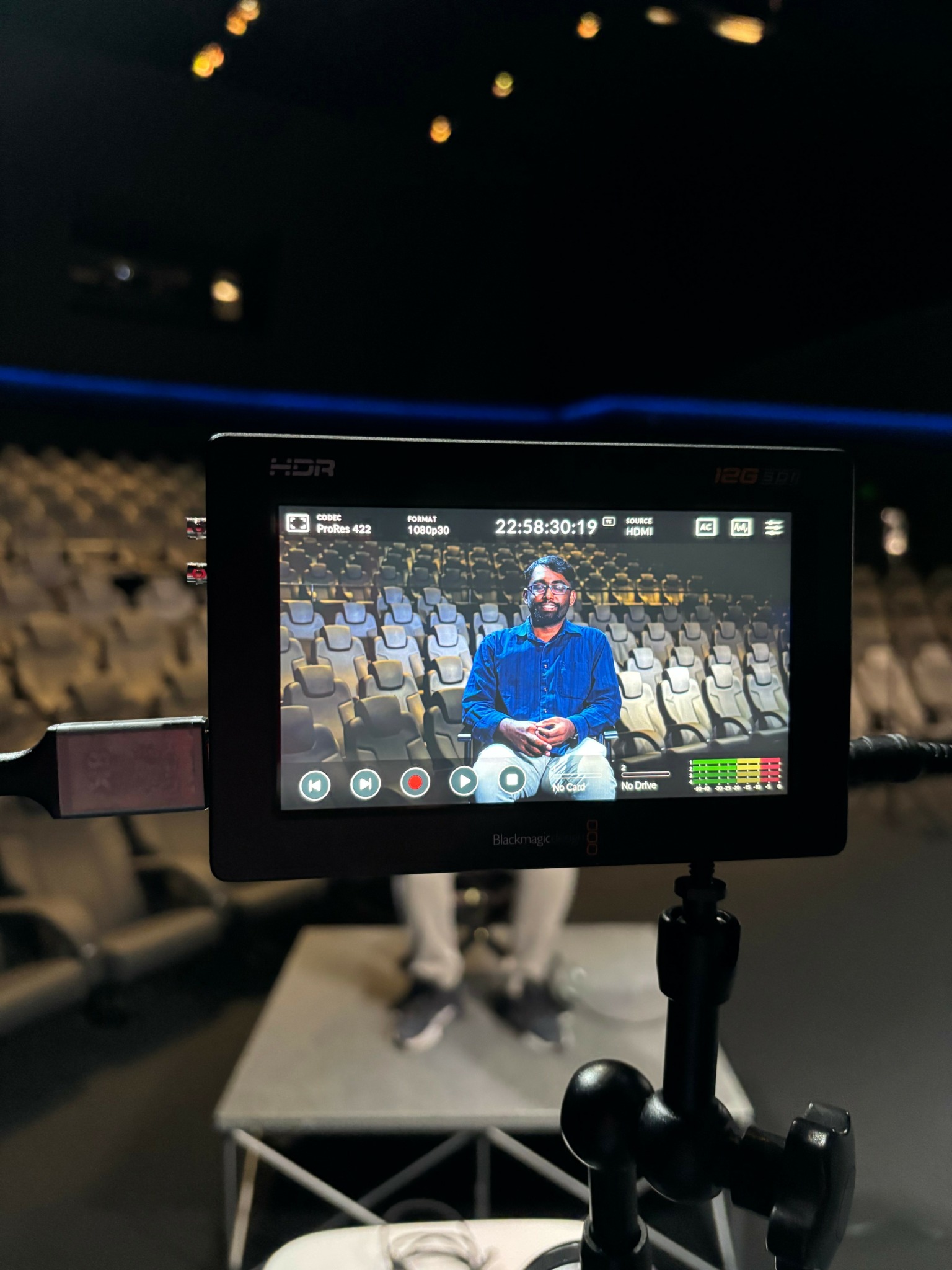
Are there any books, videos or other content that you feel have meaningfully impacted your thinking?
Vir Das’ The Outsider: A Memoir for Misfits: I’m not a big memoir guy (don’t know why), but Das is my favorite comedian and one of my favorite writers/speakers. I highly recommend that anyone go see his specials on Netflix (“Abroad Understanding” is a good one to start with). As for the book, it is simultaneously hilarious and profound, and it’s a must-read for any artist or anyone in the standup space because he is a trailblazer in the Indian/global comedy scene and has a unique background of jumping between/crashing out/redeeming himself in standup and film/TV.
Beyond that, his story has a lot of universal themes in here that anybody with a smidge of creativity, ambition, or entrepreneurship can relate to. The way Das constantly reinvents himself is mind boggling, yet inspiring. What is especially meaningful is his ability to articulate the constant paradox of being discomforted yet accepting of his “outsider” status in any space he enters. He says it himself, but this memoir is very much for anyone who feels aimless, exploratory, or stuck in limbo a lot (yes, I count myself in that).
Contact Info:
- Linkedin: https://www.linkedin.com/in/guru-ramanathan-78ab99159/
- Other: Newsletter: https://gururamanathan.substack.com/
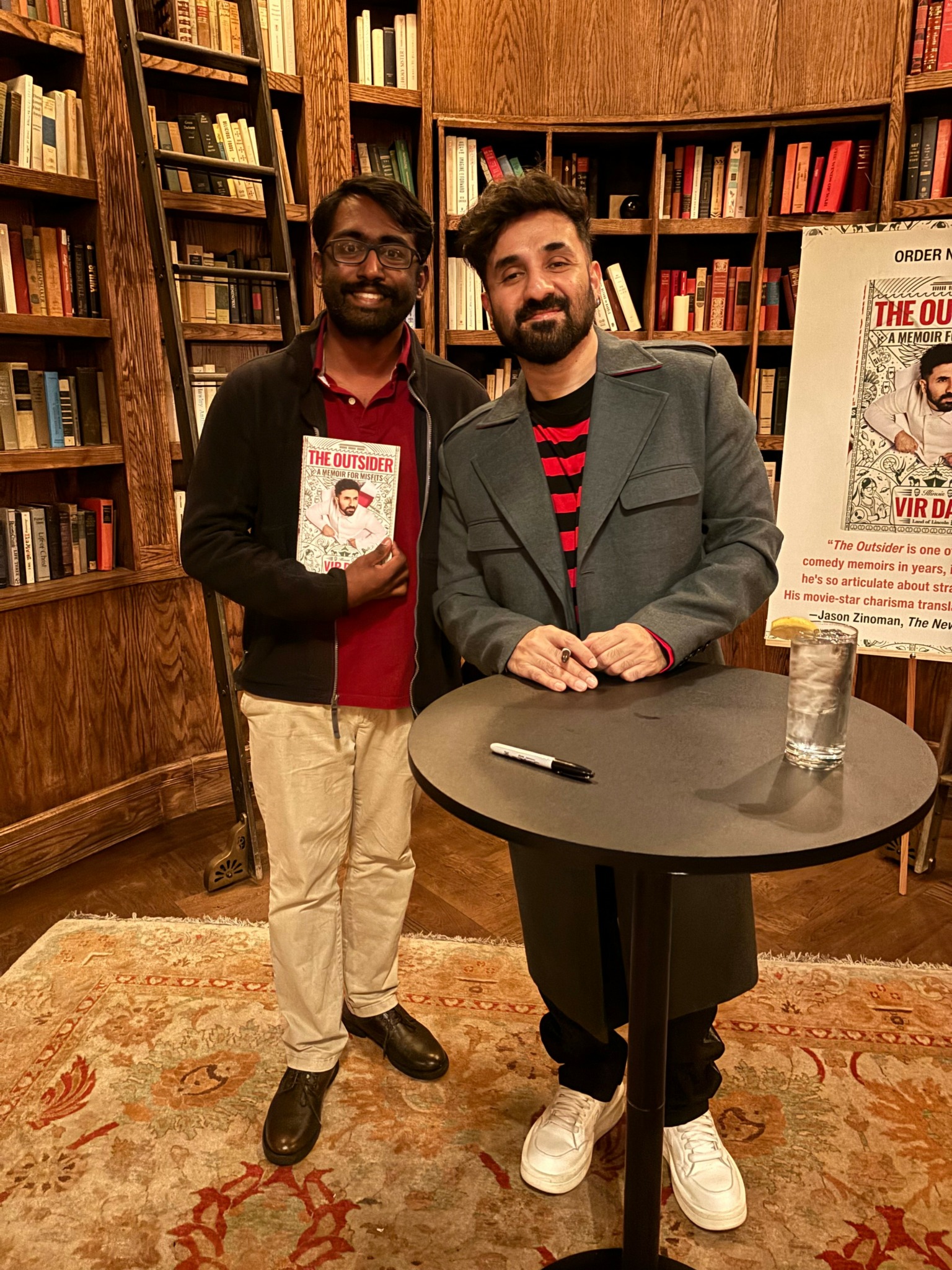
Image Credits
Jake Schick, Mands Montes, Ben Kaufman-Shallet