

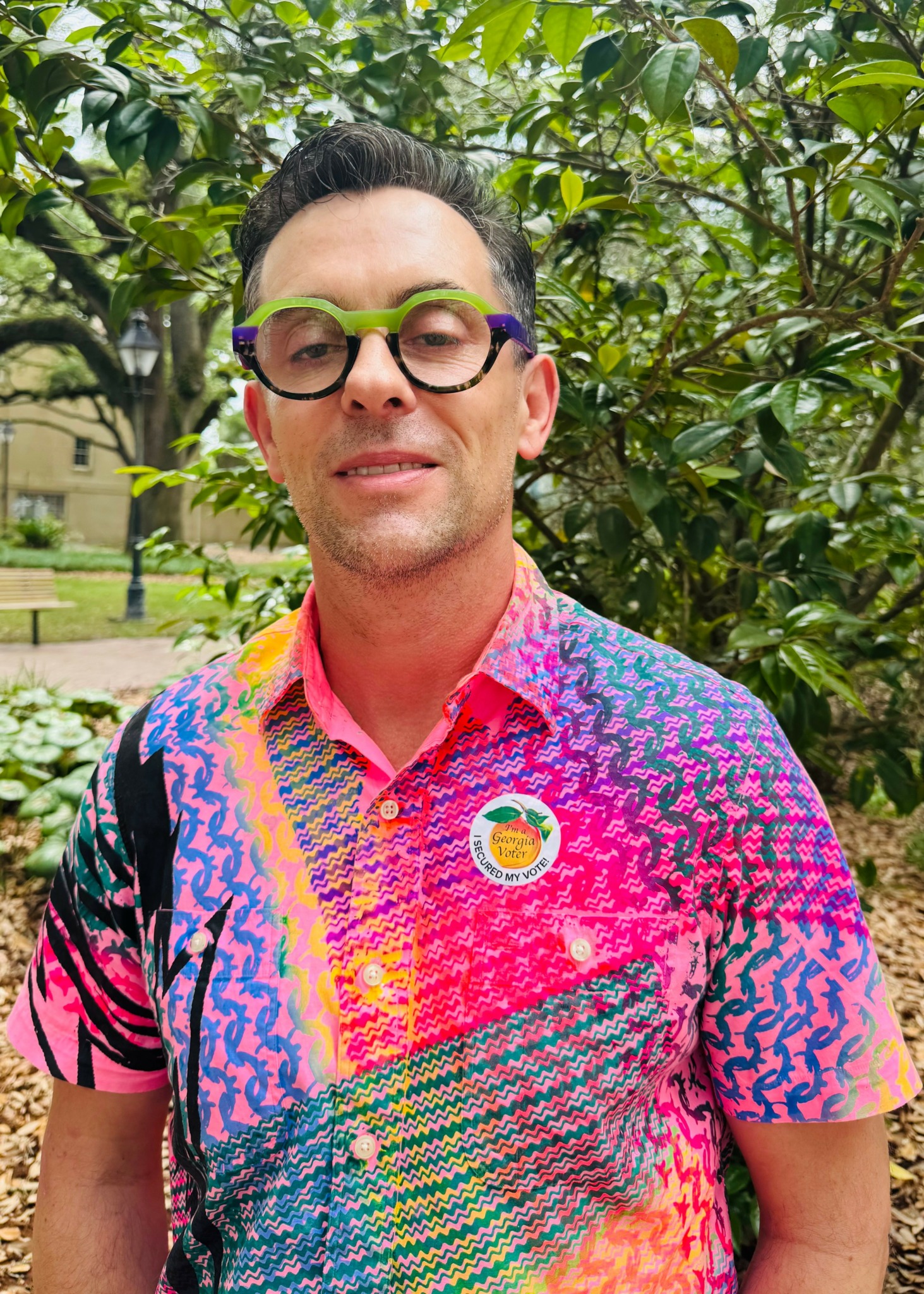

We caught up with the brilliant and insightful Ben Copperwheat a few weeks ago and have shared our conversation below.
Ben, thanks for taking the time to share your stories with us today Can you talk to us about a risk you’ve taken – walk us through the story?
After 15 years living and working in New York City, I made the bold decision to leave and apply for a professor position in the Fibers department at SCAD in Savannah, Georgia. I knew just one person in Savannah, someone I had attended grad school with in the early 2000s, so it truly was starting over from scratch. It was a significant risk to leave behind the city, my friends, and the professional connections I had spent over a decade building. But seven years later, it stands as one of the best decisions I’ve ever made.
Since moving, I’ve built a full and meaningful life here. I’ve established my studio in Savannah, grown my artistic practice, and steadily developed my business alongside my career as a professor. I now have wonderful friends, a beautiful home, and two cats and a dog to come home to.
Sometimes the biggest risks lead to the richest rewards.
Great, appreciate you sharing that with us. Before we ask you to share more of your insights, can you take a moment to introduce yourself and how you got to where you are today to our readers.
My name is Ben Copperwheat, and I’m a multidisciplinary artist and designer whose entire creative universe revolves around one deceptively simple tool: the squeegee. Screen printing is the heartbeat of everything I do, from hand-printed wearable art and one-of-a-kind garments, to large-scale squeegee paintings on canvas, to printed textile collections for some of the world’s most recognizable fashion houses. My path into this world began at Bath Spa University, where I completed a BA in Creative Arts, and was fully crystallized at the Royal College of Art in London, where I earned an MA in Printed Textiles in 2001. The RCA gave me an extraordinary foundation: rigorous, experimental, and deeply committed to the idea that craft and concept are inseparable. It was there that I developed the technical mastery and artistic fearlessness that still define my practice today.
After early exhibition work in London (showing at Studio Voltaire in 2002 alongside artists including Erdem Moralioglu and Holly Johnson), I moved to New York City in 2003, and the city accelerated everything. I quickly established myself as a print design consultant for luxury fashion, creating textile collections for brands including Gucci, Calvin Klein, DKNY, Tommy Hilfiger, 3.1 Phillip Lim, Peter Som, and Stephen Burrows. That commercial work was exhilarating: it demanded both creative vision and the ability to translate that vision into something wearable and commercially viable at scale. I loved the problem-solving dimension of it. How do you take an idea that lives in your gut and make it sing on a jacket, a dress, a swim short?
In 2009, I co-founded COPPERWHEAT, an avant-garde menswear line with my cousin Lee. His tailoring and my hand-printed designs were a natural marriage: five collections shown at New York Fashion Week, covered by Dazed Digital, Vogue Italia, and Surface Magazine. It was a pivotal chapter that cemented my belief that clothing can be both impeccable craft and fine art simultaneously.
But the work that I consider the most purely me is my hand screen-printed wearable art: one-of-a-kind pieces where every print is mixed and applied by hand in my studio. No two are alike. The front and back often feature entirely different print compositions, and the layering of color and imagery creates something that functions as a collectible object as much as a garment. My canvas works follow the same logic: large-scale squeegee paintings that use screen printing inks in ways more associated with painting than printmaking. The “Neon Sunrise/Sunset” series, for instance, uses fluorescent inks dragged across canvas in atmospheric, horizon-like sweeps that are both meditative and electric. These pieces have been exhibited at The Superfair in San Francisco.
What sets me apart? I think it’s the refusal to separate commerce from fine art, or craft from concept. My work has dressed Beyoncé and Blue Ivy, Boy George, Liza Minnelli, and Pat Cleveland, and it has also hung on gallery walls. I created the Manhattan Bridge print for the legendary Stephen Burrows in 2006, a piece worn by Liza Minnelli and featured in New York Magazine. Commissions have come from David Collins Studio and Luisa Via Roma in Florence. The breadth isn’t scattered; it’s all expressions of the same obsession with print, color, and the handmade mark.
Seven years ago, I made what I consider one of the most important decisions of my adult life: I left New York City and relocated to Savannah, Georgia, to become a Professor of Fibers at SCAD (the Savannah College of Art and Design). That move was a genuine risk. New York was my world, my network, my identity in many ways. But I’d come to believe that teaching at the highest level, mentoring the next generation of textile artists and print designers, was both a responsibility and a privilege I couldn’t walk away from. Savannah gave me space (physical and mental) to deepen my studio practice while investing in the craft’s future.
At SCAD I teach courses in Color Lab & Textile Trends, Digital Textile Design, Screen Printing, and Drawing for Surface Pattern. This summer, I am embarking on a SCAD funded sabbatical in Japan, a research journey through Tokyo, Kyoto, Osaka, exploring Japanese textile traditions including indigo dyeing, shibori, and screen printing. Japan has long been a creative touchstone for me, and that trip has already begun to feed back into both my studio work and my teaching.
What am I most proud of? Honestly, the longevity and coherence of the practice. Twenty-five-plus years in, the work is still recognizably mine: loud, handmade, color-saturated, and unapologetically itself. I’m proud that my pieces are treated as collectibles rather than commodities. I’m proud of every student who has gone on to build their own creative practice. And I’m proud that the screen printing table in my studio still gets used every week, because that physical relationship with the process is where everything begins.
For anyone discovering my work for the first time: I make things that cannot be replicated by a machine, and that’s entirely the point. Whether you’re a collector, a fashion house looking for a print collaborator, or someone who simply wants to wear something that carries genuine artistic intention, that’s what I offer. Color you can feel. Prints with a pulse.
Have you ever had to pivot?
Can you share the story of a time when you had to pivot? The pivot that defined everything came in 2018, when I made the decision to leave New York City and move to Savannah, Georgia, to take up a full professorship at SCAD.
I had been living and working in New York for over 15 years, and as much as I loved it, I was genuinely burnt out. The city demands a particular kind of relentless energy: the constant hustle, the networking, the pressure to be visible and relevant at all times. It’s exhilarating when you’re in it, but after a while I could feel it grinding me down. I also missed nature in a way that surprised me. Trees, specifically. Green, quiet, breathing space. New York is extraordinary, but it doesn’t give you that, (unless you live close to Central Park; I did not).
Teaching had always been a thread running through my career. I was an adjunct professor at New York University at the time, and before that I’d taught at the Royal College of Art in London, Northumbria University in Newcastle, and the Academy of Art University in San Francisco. So when the opportunity at SCAD presented itself, it wasn’t completely out of nowhere, but saying yes to it was still a genuine leap of faith.
I was leaving behind my entire social world: friendships built over years, professional connections, the roots I’d put down in one of the greatest cities on earth. And I was moving to a part of the country I didn’t know at all. Savannah was, to me, essentially a blank page. That was terrifying and, as it turned out, exactly what I needed.
Seven years on, I can say without hesitation it was one of the best decisions I ever made. I’ve built a real life here: a home, a studio, a community, a thriving teaching practice. The slower pace didn’t slow my creativity; it deepened it. I have space to make work, to think, to experiment in ways that the New York hustle simply didn’t allow. The pivot wasn’t a retreat. It was an expansion.
How’d you build such a strong reputation within your market?
What do you think helped you build your reputation within your market? Consistency, above everything else. I’ve been showing up to the press, the squeegee, the screen, for over twenty-five years, and I think people can feel that longevity in the work. There’s no shortcut to it. Reputation in a creative field isn’t built through a single breakthrough moment; it accumulates slowly, through thousands of hours of practice, through the refinement of a visual language that becomes unmistakably yours.
And that’s the second thing: developing a style that is genuinely my own. Electric color, bold graphic imagery, the handmade mark. Those qualities didn’t arrive fully formed. They evolved through years of experimentation, through pushing the screen printing process into places it wasn’t necessarily designed to go. When people encounter my work, they tend to know it’s mine before they see my name on it. That kind of recognition is something you can’t manufacture or rush. It has to be earned.
But I think the deeper engine behind my reputation is joy. I make work that brings me joy, and I believe that transmits. The colors I choose, the energy in the compositions, the sheer exuberance of the process; it’s all genuinely felt. Clients and collectors respond to that because it’s real. You can’t fake that quality in handmade work the way you might be able to in other mediums.
Which brings me to what I think truly sets my offering apart: the one-of-a-kind nature of every piece. Each garment, each canvas, is hand-printed by me in my studio. No two are identical. In a world saturated with mass production, with algorithmic design and AI-generated pattern-making, there is a growing hunger for objects that carry the trace of a human hand, a specific creative mind, a singular moment in the studio. My clients understand that when they invest in a piece, they are acquiring something that will never exist again. That’s not a marketing position; it’s simply the truth of how the work is made. And I think that truth, held consistently over many years, is what reputation is actually built from.
Contact Info:
- Website: https://www.bencopperwheat.com/
- Instagram: https://www.instagram.com/bencopperwheat
- Linkedin: https://www.linkedin.com/in/bencopperwheat
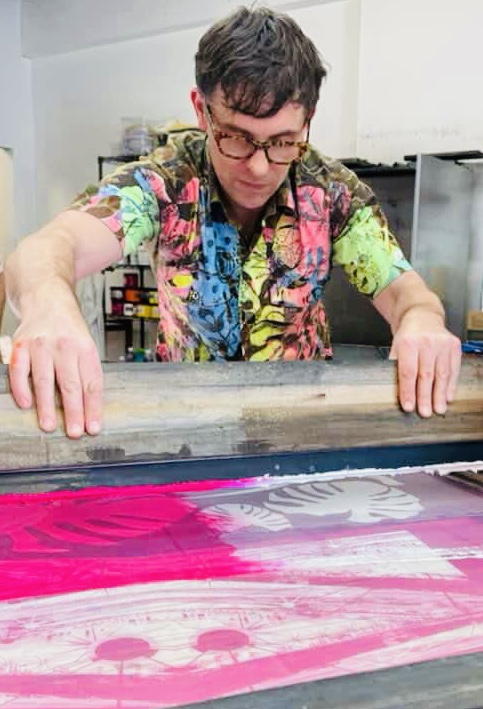
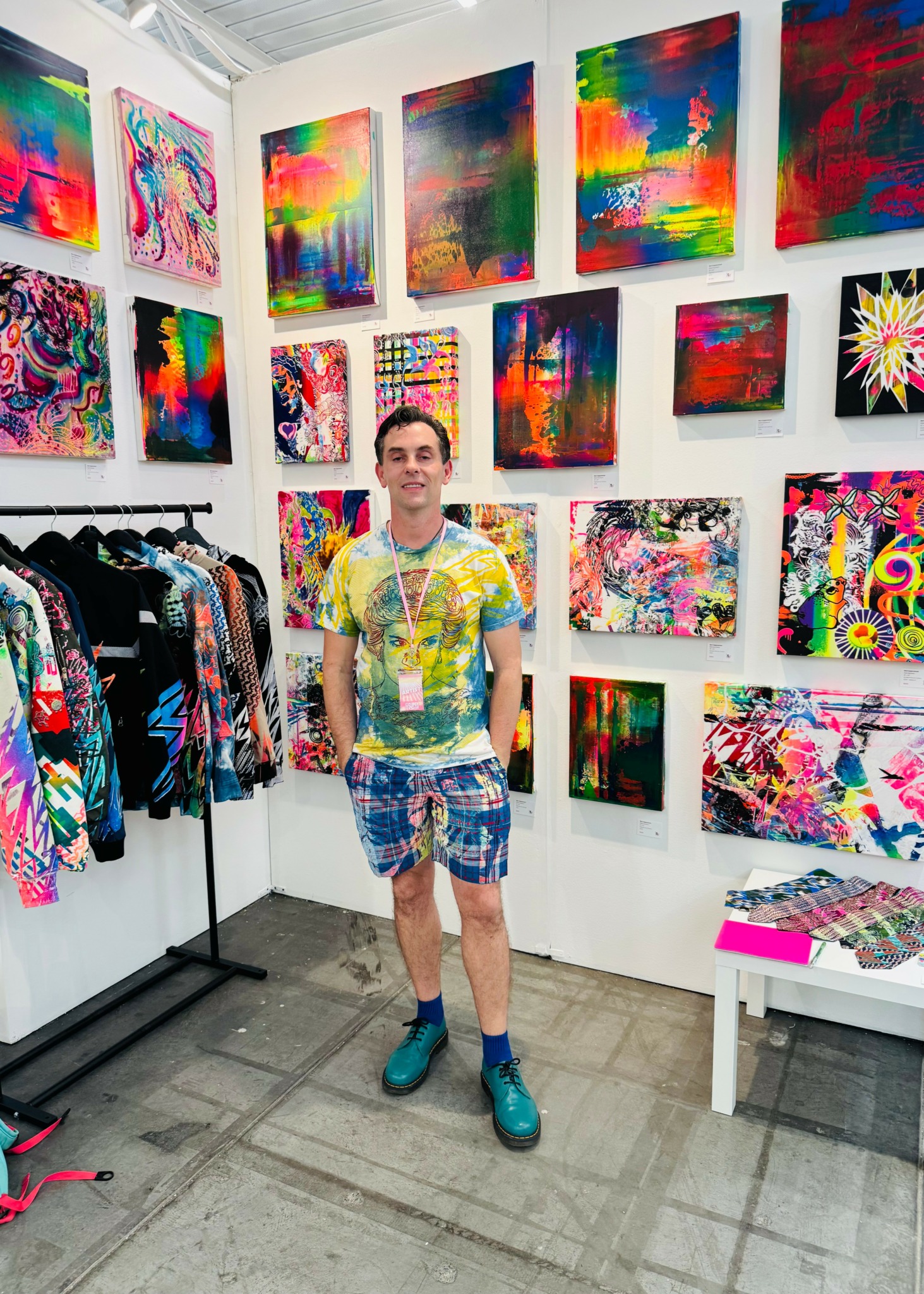
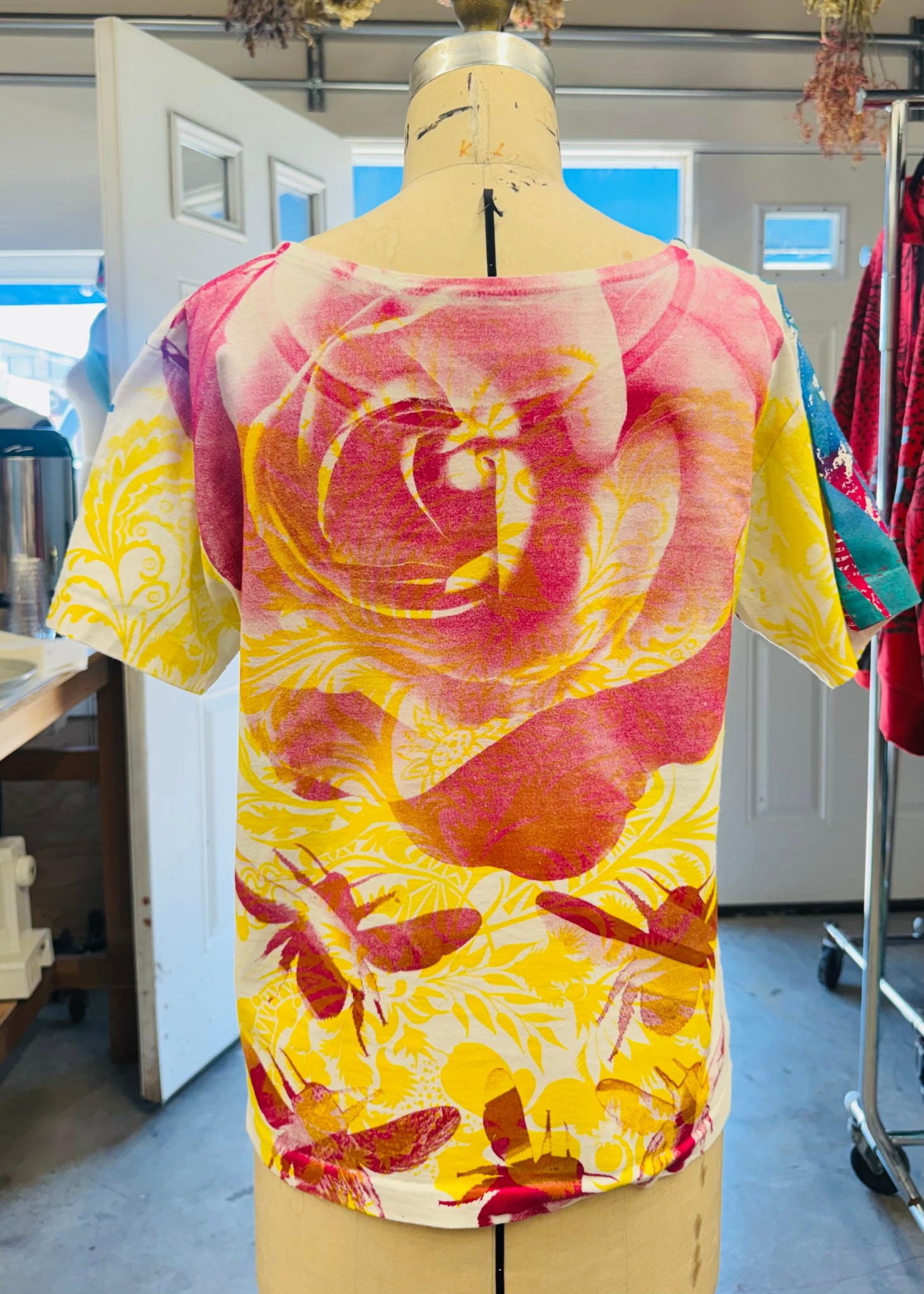

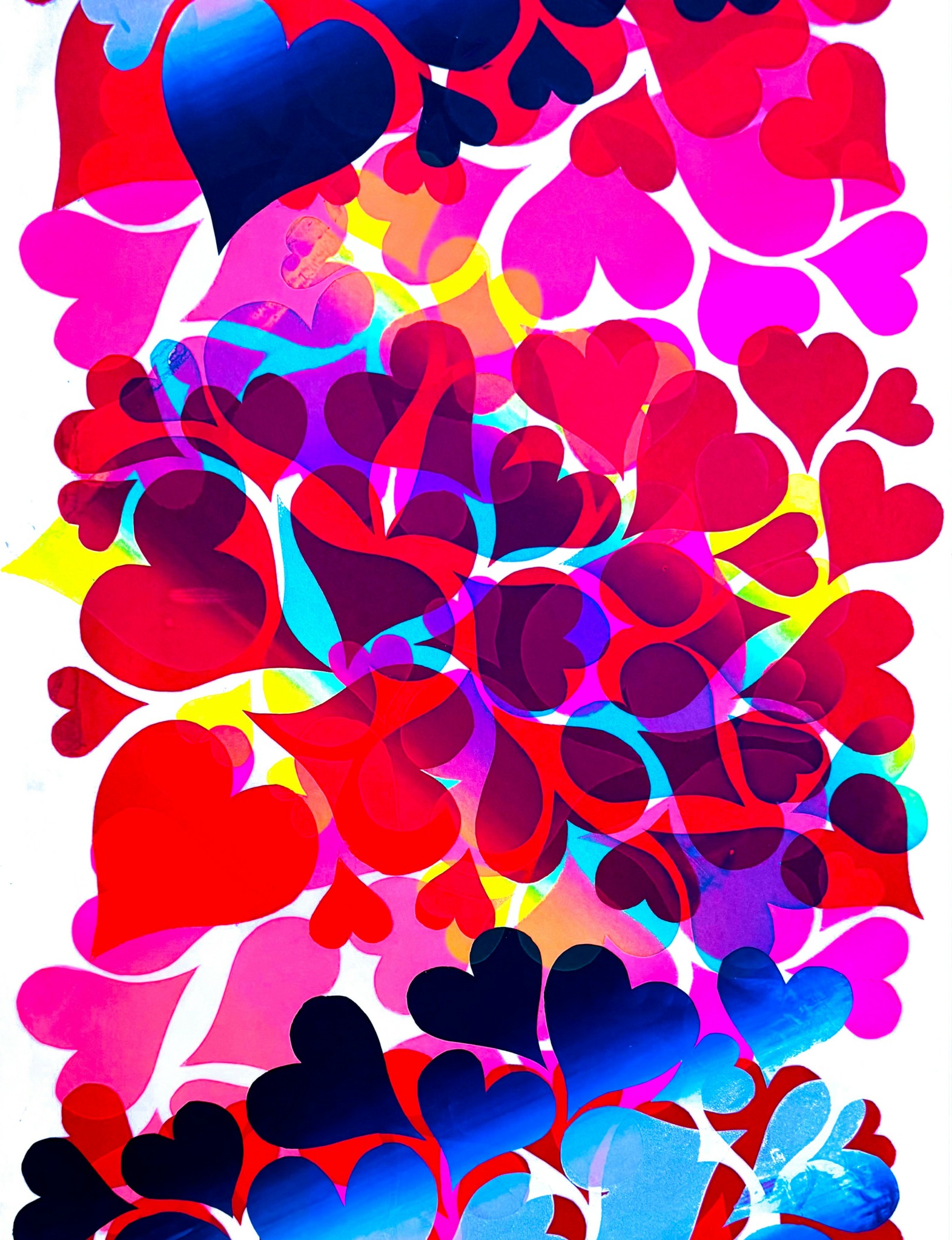

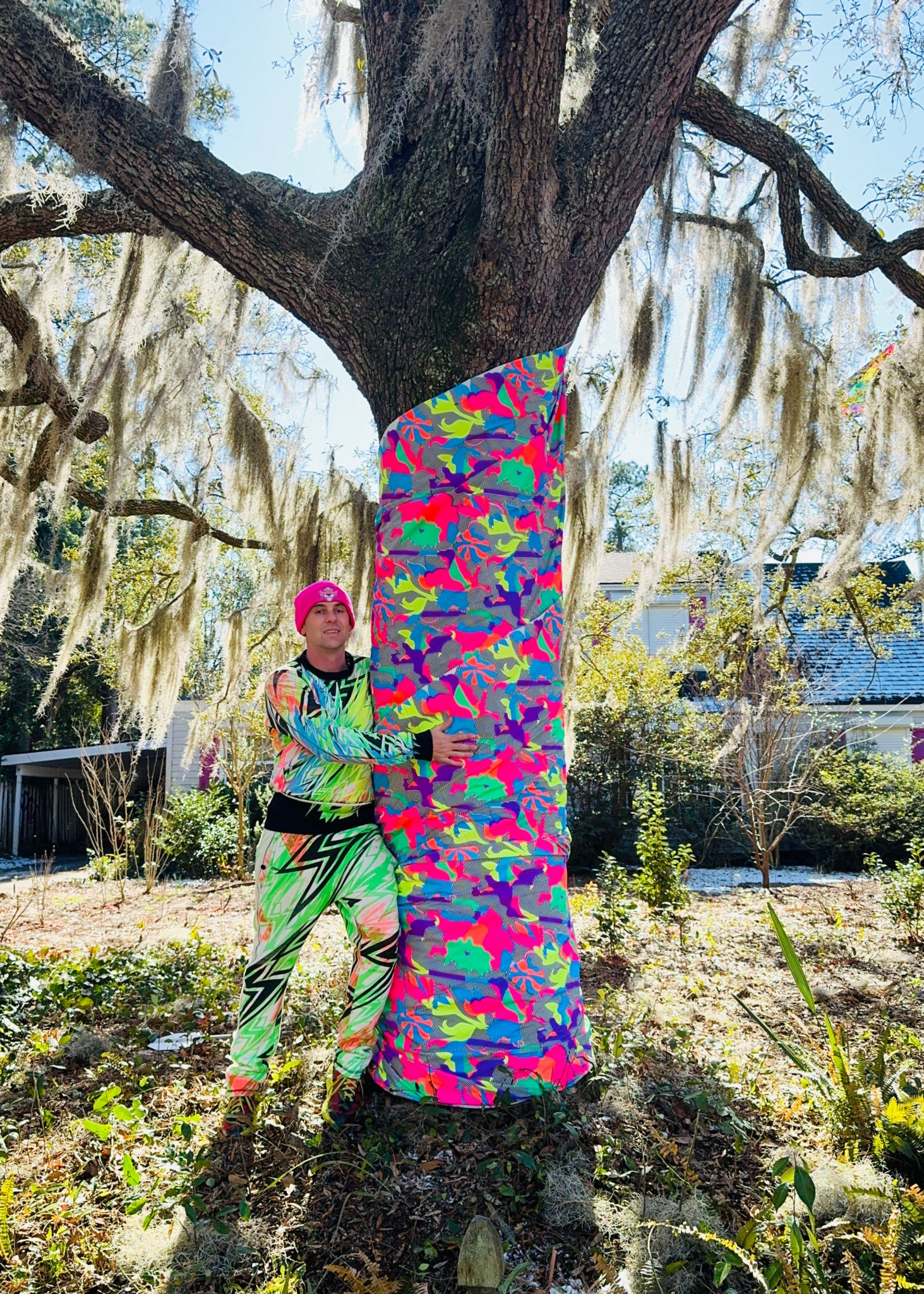
Image Credits
Personal photo: Photo by Katie Glusica