


We recently connected with Malkalm and have shared our conversation below.
Malkalm, appreciate you joining us today. If you could go back in time do you wish you had started your creative career sooner or later?
Honestly? I started at 10. Choir. So in a lot of ways, music has always had me — I didn’t choose it as much as it claimed me early.
But there’s a difference between starting and beginning. I started singing at 10. I began becoming somewhere in between the losses, the heartbreaks, the health scares, the seasons where I didn’t know if I was built for this — or if this was even still something I deserved.
Growing up Nigerian and Sierra Leonean, raised between New Jersey and New York, creativity wasn’t always framed as a career. It was a gift. Something you did alongside real life, not instead of it. So even with the voice, even with the dance training, even with everything in me pointing toward a stage — there was a version of me that kept waiting for permission. Waiting for the right moment. Waiting to feel ready.
And life has a way of testing that wait.
I’ve faced health scares that reminded me the body isn’t promised. I’ve sat in the dark weight of depression and had to learn what it means to keep moving when you genuinely don’t feel like it. I lost my best friend too young — the kind of loss that doesn’t just break your heart, it restructures how you see time. What you spend it on. Who you spend it with. What’s worth building and what’s just noise.
And after all of that? I still chose music.
Not because it was easy. Because it was true.
So when people ask me if I wish I started sooner — I understand the question. Because from the outside, you look at the timeline and you think about what could have been built earlier. More years on stage. More music in the world. More time.
But here’s what I know now: the depth that makes my music what it is — that didn’t come for free. “How You Make Me Feel” hits the way it does because I actually felt it. “Choose” means something because choosing hasn’t always been simple for me. Every stage I’ve stood on — opening for Rema, Omah Lay, Olamide, Asake at Barclays — I wasn’t just performing. I was testifying. And you can’t testify about something you haven’t lived yet.
Starting sooner might have given me more time in the industry. But it would have given the world a younger, less forged version of me. And I don’t think that version could have carried what this music is carrying right now.
Starting later? That was never an option my soul was going to allow. Not with everything I’ve been through. At some point, staying quiet stops being humility and starts being self-betrayal.
So the honest answer is — same time. Right when it got hard enough to mean something. Right when I had enough fire and enough scar tissue to actually say something worth hearing.
We’re just now getting to the part of the story where people are paying attention. And I’m good with that. Because I didn’t rush to get here — I survived to get here.
And that difference? You can hear it in every note.
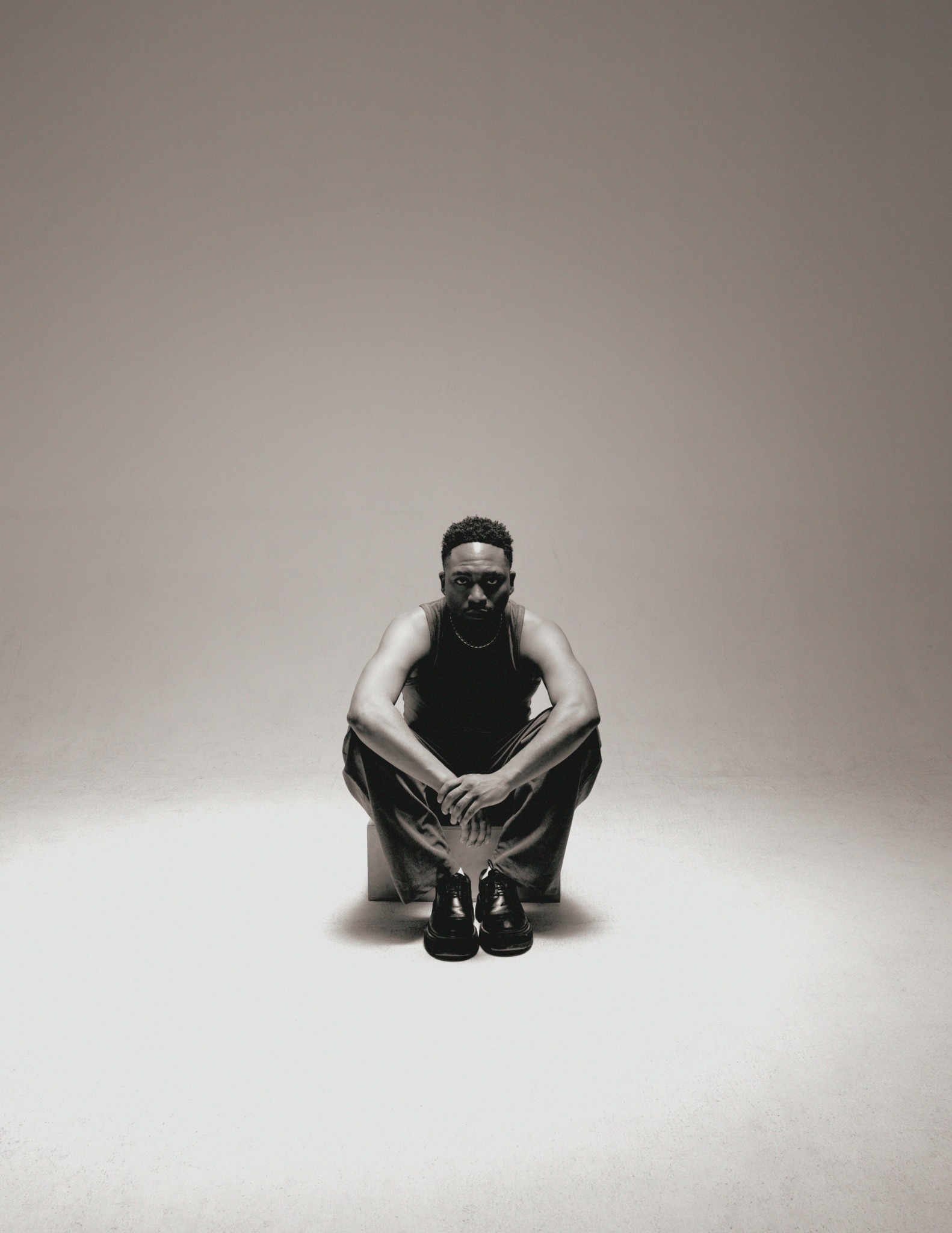
As always, we appreciate you sharing your insights and we’ve got a few more questions for you, but before we get to all of that can you take a minute to introduce yourself and give our readers some of your background and context?
Let Me Introduce Myself Properly
My name is Malkalm. And if you’re hearing about me for the first time — good. That means you’re right on time.
I’m an R&B artist of Nigerian and Sierra Leonean heritage, raised in the creative corridor between New Jersey and New York. But before I was an artist in the way the world sees it now, I was a kid in choir at 10 years old who didn’t fully understand yet that music wasn’t just something he did — it was something he was.
I’m also a trained professional dancer. And I say that not as a footnote but as a foundation. Because the way I move, the way I feel rhythm, the way I approach a song — it’s all connected. When I perform, it’s never just a vocal. It’s a full body experience. Every run, every pause, every moment on stage is intentional. That’s the dancer in me. That’s the craft.
How I got here wasn’t a straight line. It was a survival story.
I’ve dealt with health scares that made me reckon with my own mortality earlier than most people my age. I’ve navigated depression — real, heavy, the kind that doesn’t just make you sad but makes you question your purpose. I lost my best friend far too young. And through all of it, I kept coming back to music. Not because the industry was calling me. But because something inside me refused to let the story end there.
Over the past two years I’ve been building where it counts — on the stage. I’ve opened for Afrobeats heavyweights like Rema, Omah Lay, Olamide, and Oxlade. I supported Asake at Barclays Center. I’ve toured with Nigeria’s iconic Show Dem Camp and shared stages with Mr. Eazi and Sho Madjozi. These aren’t names I drop for clout — they’re proof that the culture has already recognized something real in what I’m doing, before the mainstream fully caught up.
In 2024 I stepped fully into my own voice with emotionally charged singles, led by “Stallin.” Then 2025 arrived and I came back with “VIP” — premiering on On The Radar — followed by “How You Make Me Feel,” a soul-baring ballad that I think surprised a lot of people with its depth. And now with “Choose,” I’m going even further into the truth. Because that’s the direction I’m always moving — deeper, not louder.
What I create is music that lives at the intersection of Afrobeats, R&B, movement, and meaning.
I’m not chasing a trend. I’m carving a lane. My music is for the person who has been through something real and needs to hear that someone else felt it too. It’s for the late nights and the hard mornings. The heartbreaks you never fully explained to anyone. The hope you kept quietly even when life gave you every reason to let it go.
What sets me apart? Honestly — the journey. You can’t manufacture what I bring to a stage or a record. The cultural fluency, the vocal training that started in childhood, the dance background, the pain I’ve alchemized into art — that combination doesn’t exist on a template. It exists because of a very specific life, lived very honestly.
What am I most proud of?
I’m proud that I’m still here. Still creating. Still choosing this.
I’m proud that every stage I’ve stood on, I earned. Nobody handed me a co-sign and told me the world was ready. I showed up, I performed, I grew, and the culture responded. That’s real.
I’m proud of the music I’m making right now — because it’s the most honest I’ve ever been. And I think people can feel that difference.
What I want fans, followers, and future supporters to know:
I’m not here to make noise for the sake of it. Every release, every performance, every move I make is intentional. I’m building something that’s meant to last — music that means something five years from now the same way it means something today.
I’m still finding my footing in some ways. I’ll be the first to say that. But there’s a difference between someone who is lost and someone who is en route. I know exactly where I’m going. The path just requires courage every single day to keep walking it.
So if you’re someone who believes in art that’s earned — in stories that are real — in music that doesn’t just sound good but means something — then Malkalm is exactly who you’ve been waiting to find.
The scene is just now catching up.
Welcome to the journey.
Can you share a story from your journey that illustrates your resilience?
Resilience is one of those words people use so casually now that it’s almost lost its weight. So I don’t really lead with it when I talk about myself. But if you ask me for a story that shows it — I have one. And it’s not easy to tell.There was a season in my life where everything that could shake a person did. Not one thing at a time, the way you could maybe manage it — but all at once, the way life sometimes doesn’t warn you before it comes.I was dealing with my health in ways I wasn’t fully sharing with people around me. When your body starts sending signals you don’t understand and you’re young enough to think you’re supposed to be untouchable — that fear is isolating in a way that’s hard to explain. You look fine on the outside. Inside you’re quietly terrified. And you’re still showing up. Still trying to move like everything is okay because you don’t want to be the person who fell apart.And in the middle of that — I lost my best friend.Not a falling out. Not distance. Gone. At an age where that’s not supposed to happen yet. Where you’re not supposed to know that kind of grief yet.I remember the specific weight of that period. The kind of grief that doesn’t just make you sad — it makes you question the entire framework of your life. Why keep building? Why keep hoping? What is any of this for when the people you’re building it to share with can just disappear?And then depression settled in. Not the kind people recognize immediately from the outside. The quiet kind. The functional kind. Where you’re still moving through your days, still showing up to things, but internally you’re running on something closer to survival than living.That was my reality for a stretch of time.
What can society do to ensure an environment that’s helpful to artists and creatives?
This is probably the most damaging thing we do culturally. We tell young creatives, especially those of us from immigrant households, from Black and Brown communities, from working class backgrounds — we tell them that art is something you do on the side. Something you pursue after you’ve secured something “real.” And then the moment an artist blows up, suddenly everyone celebrates the dream they quietly discouraged.
The damage that does to a person’s timeline, their confidence, their willingness to invest fully in their craft early — it’s real. I started in choir at 10. I’ve been training my whole life. But the world didn’t always make it easy to treat that as legitimate preparation for a legitimate career. Society needs to close the gap between how it celebrates artists at the top and how it treats artists on the way up.
Contact Info:
- Instagram: https://www.instagram.com/iammalkalm/
- Youtube: https://www.youtube.com/channel/UC9gLb_TVijuO2mlv1NY4hXw
Image Credits
Castro (@afterlifecastro)