

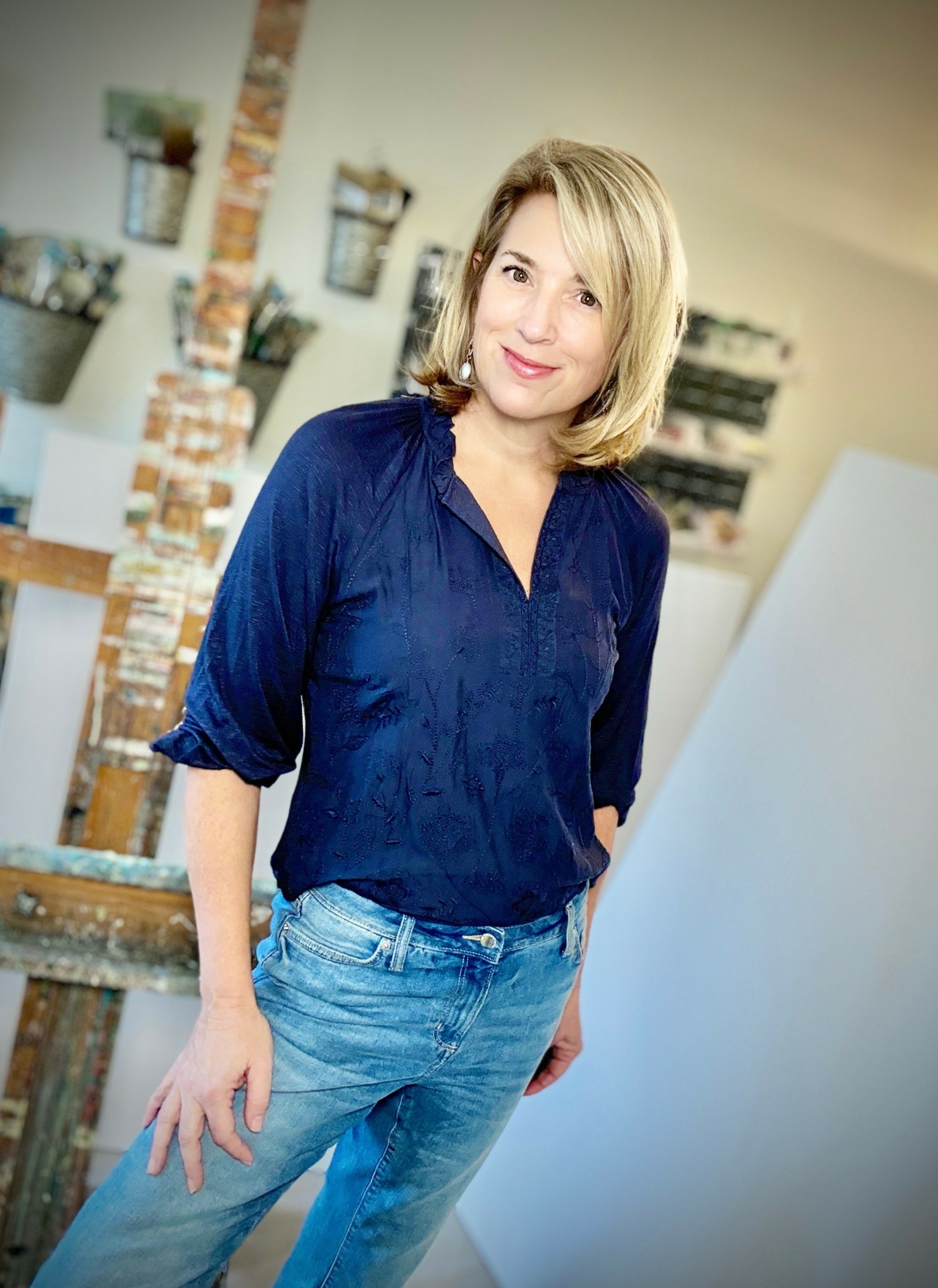

We recently connected with Christina Doelling and have shared our conversation below.
Christina, looking forward to hearing all of your stories today. Learning the craft is often a unique journey from every creative – we’d love to hear about your journey and if knowing what you know now, you would have done anything differently to speed up the learning process.
Artists are often asked the following question: How long did it take to do this painting? With this inquiry, most collectors are trying to gauge value, and calculate a kind of dollars/ per hour assessment. This question usually causes me to launch into an explanation about how the creative process itself dictates this; how no two original creations or situations are exactly alike; how some paintings can emerge quickly, while others fight back and can be a long, exhausting battle to resolve. Recently though, after finishing a commission, I was asked this question by a client and my answer was, with a smile and a laugh, “Thirty years. It took me thirty years to do this painting for you.” I wasn’t trying to be cheeky, but that is how long I’ve been honing my craft, and learning how to paint so I can turn it on and create a painting requested of me with precision and experience. There’s painting for pleasure, then there’s being a professional artist. The latter is not an overnight accomplishment.
Learning the craft is learning how to paint with a strong, distinctive, signature style. You can easily master the basics of how to mix paint and be shown different ways to apply the materials. But to find your voice? To discover who YOU are as an artist, and to stand out from the hundreds of thousands of incredibly talented artists out there with YOUR own style that is recognizable even without your name on it? I’d argue that takes decades of working. Yet, even then, there can exist a constant and natural evolution. My style continues to shift subtlety over the years and I see differences in my own work every 5 years or so. I believe you can always nurture your own style yet explore new ideas within the framework of maintaining your signature elements, without stagnation, forever. This is why there are so many successful, lifelong artists.
Christina, before we move on to more of these sorts of questions, can you take some time to bring our readers up to speed on you and what you do?
My path to becoming a painter wasn’t a totally straight line. I grew up in Europe, surrounded by extraordinary art, and I always had a pencil or paint brush in hand. I earned a Fine Arts degree at Skidmore College, then spent a decade working in advertising as an Art Director, but I always painted when I could. In 2001, I took a leap of faith, embraced abstract painting on a more serious level, and I have never looked back.
What drives me is something I can only describe as the magic of emergence. I walk into my studio with a general intention but no fixed destination, and from there, it’s instinct — brushes flying, layers building, the painting slowly revealing itself on the easel. Abstract expressionism is total freedom from the literal world. There’s no subject to replicate, no reference to follow. It’s just you, the canvas, your gut and emotions, and whatever happens next. That exciting uncertainty — what’s going to appear today? — is what pulls me into the studio every day.
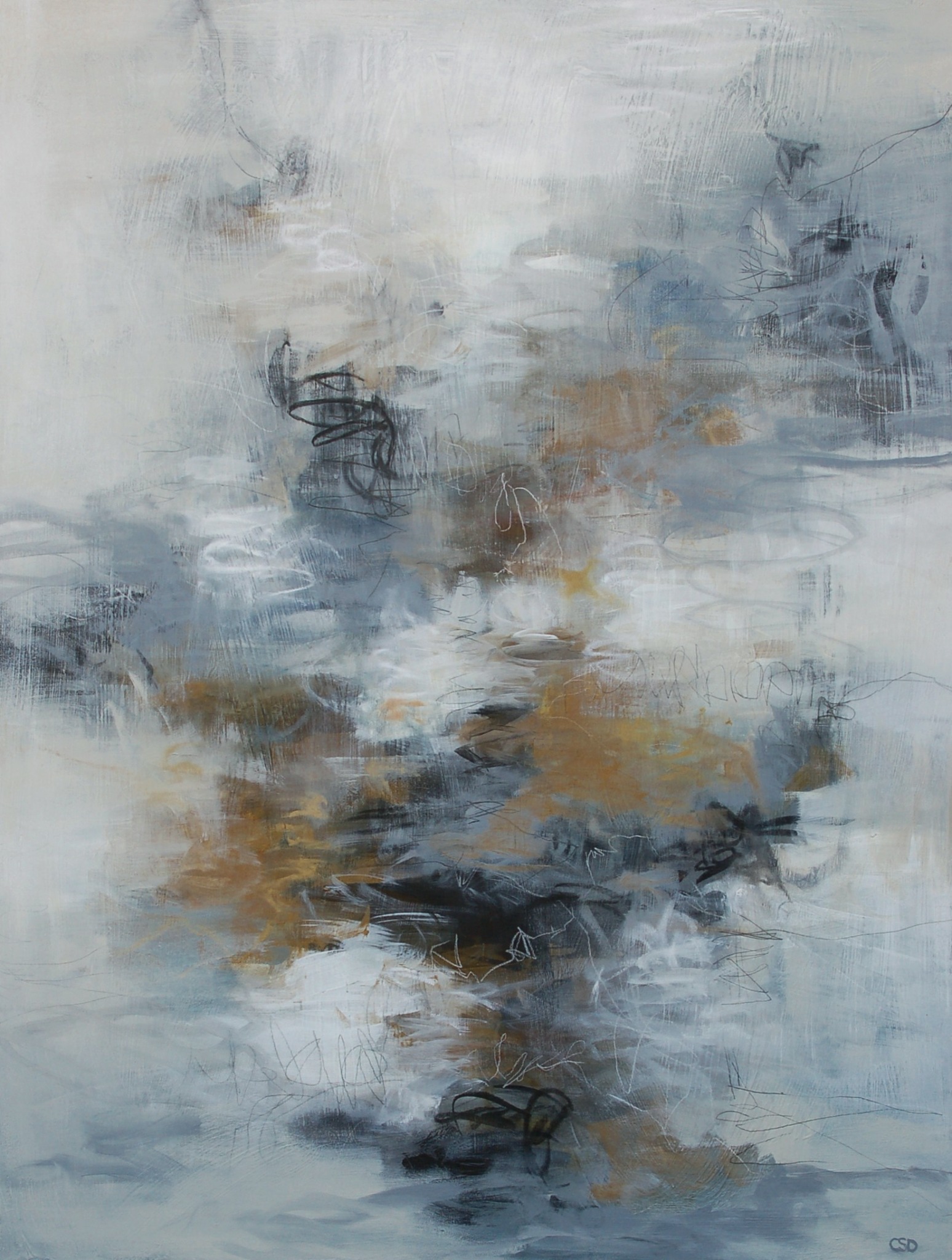
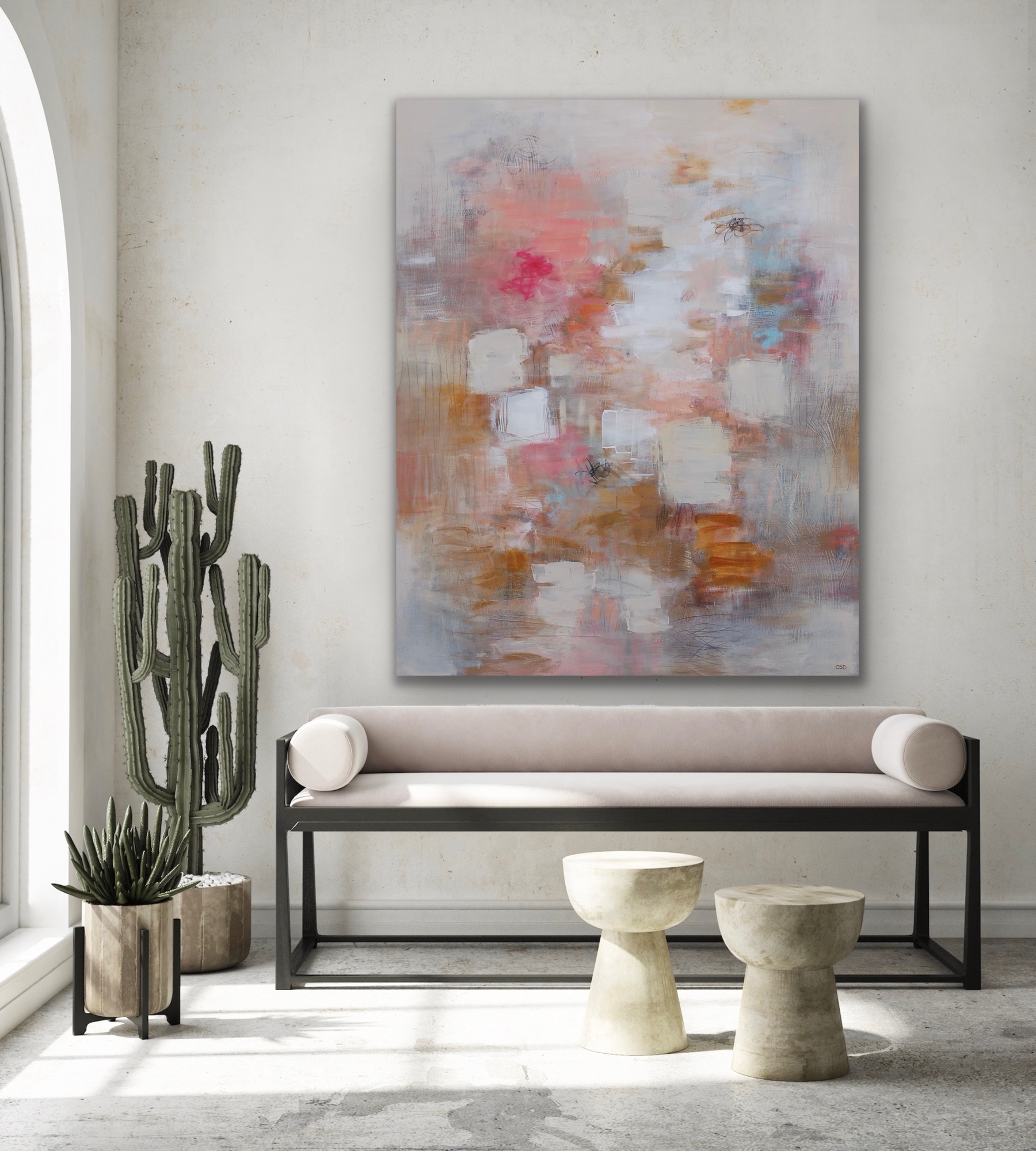
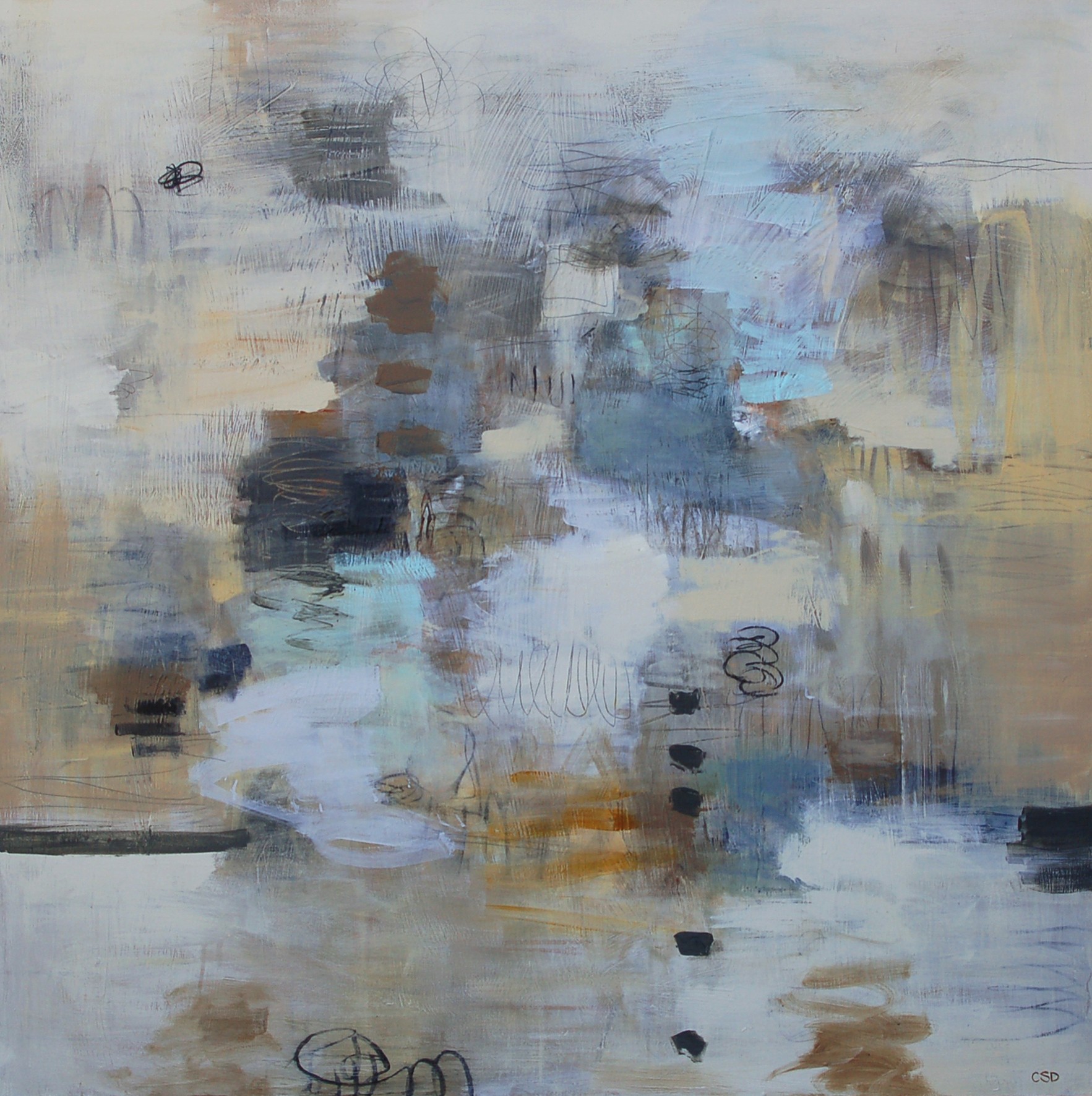
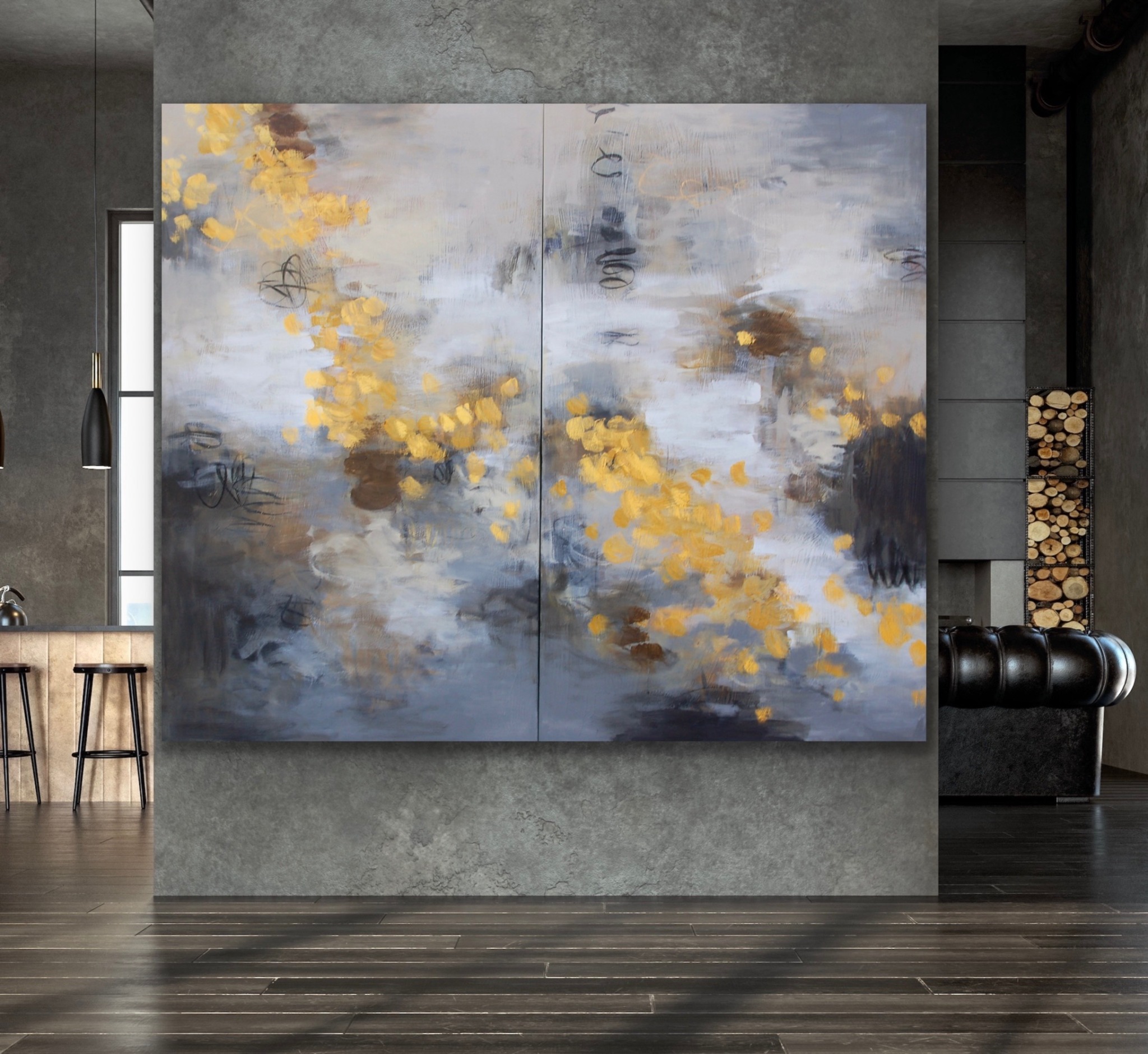
My work is large, textured, and kinetic. I paint with visible energy, layered marks, and expressive brushwork. Mixed-media elements like charcoal, pencil, and oil sticks are woven throughout. I’m drawn to warm, muted palettes that feel collected and livable rather than loud. There’s often a thread of playfulness running through everything I make. Each painting balances moments of action against areas of stillness, and I love playing with contrasting tones, geometric shapes, and line work, all of which keeps the eye moving and the composition interesting.
What sets my work apart is the cumulative depth of process. Every canvas has underpainting colors and marks that peek through subsequent layers, creating a richness and a sense of life beneath the surface. Texture is central to everything I do, and the mark-making — whether it’s loose brushstrokes, scratched-in lines, or strong edges from a wedge-tool — carries its own distinct personality.
For collectors, here’s what I want you to know: every painting I make is unique and original. There are no editions, no reproductions, and I never create the same thing twice. When that art finds its way to your home or office, you’re living with something that exists nowhere else.
The highest compliment anyone has ever paid me is that my art makes them happy every time they look at it. That’s the whole point — to connect, and to bring something genuinely beautiful into your everyday life. My mission has always been simple: create what I love, and hope that some people may love what I create. After several decades, that quiet conviction is still what keeps me grounded, and still what pulls me into the studio, looking forward to what’s going to emerge on my easel next.
Is there a particular goal or mission driving your creative journey?
I explore the “what ifs” each time I enter the studio. It can be as simple as trying a new color palette. For example, recently I put sage green, cream and muted coral together and realized that somehow, I’ve never done this exact color combination before. Would it work, or would it be terrible? (It worked.) A few years ago, I bought several new wedge tools that make really interesting application marks, and it made a huge impact on my art. The key is to be open to trying things, to enjoy that feeling of adventure and discovery, and to allow yourself to just PLAY on the canvas. When that little voice inside lets you know, yes, something interesting is happening right now, you have to let it run and see where it goes. An abstract painting will emerge and reveal itself in time, as it’s supposed to, and I have always loved the entirety of that amazing creative process. That feeling that comes when you step back, see and recognize the finished painting? That’s the ultimate feel-good moment, like a huge release of dopamine. The joy found in creating something that is new, different and beautiful is what drives me.
For you, what’s the most rewarding aspect of being a creative?
I feel a mental, emotional and even physical need to paint every week. I just love to make things and be creative, and am grateful that I have this outlet and am blessed to do what I love. Everything I paint is intended for other people, and I always hope as many paintings as possible end up in wonderful homes. When collectors discover one of my paintings that sparks with them, that makes their faces light up, there is no greater feeling. When they tell me my art brings beauty or makes a statement in their home, or it just makes them feel happy, that is the truly the ultimate reward.
Contact Info:
- Website: https://www.christinadoelling.art/
- Instagram: @christinadoelling
- Facebook: https://www.facebook.com/ChristinaDoellingArt
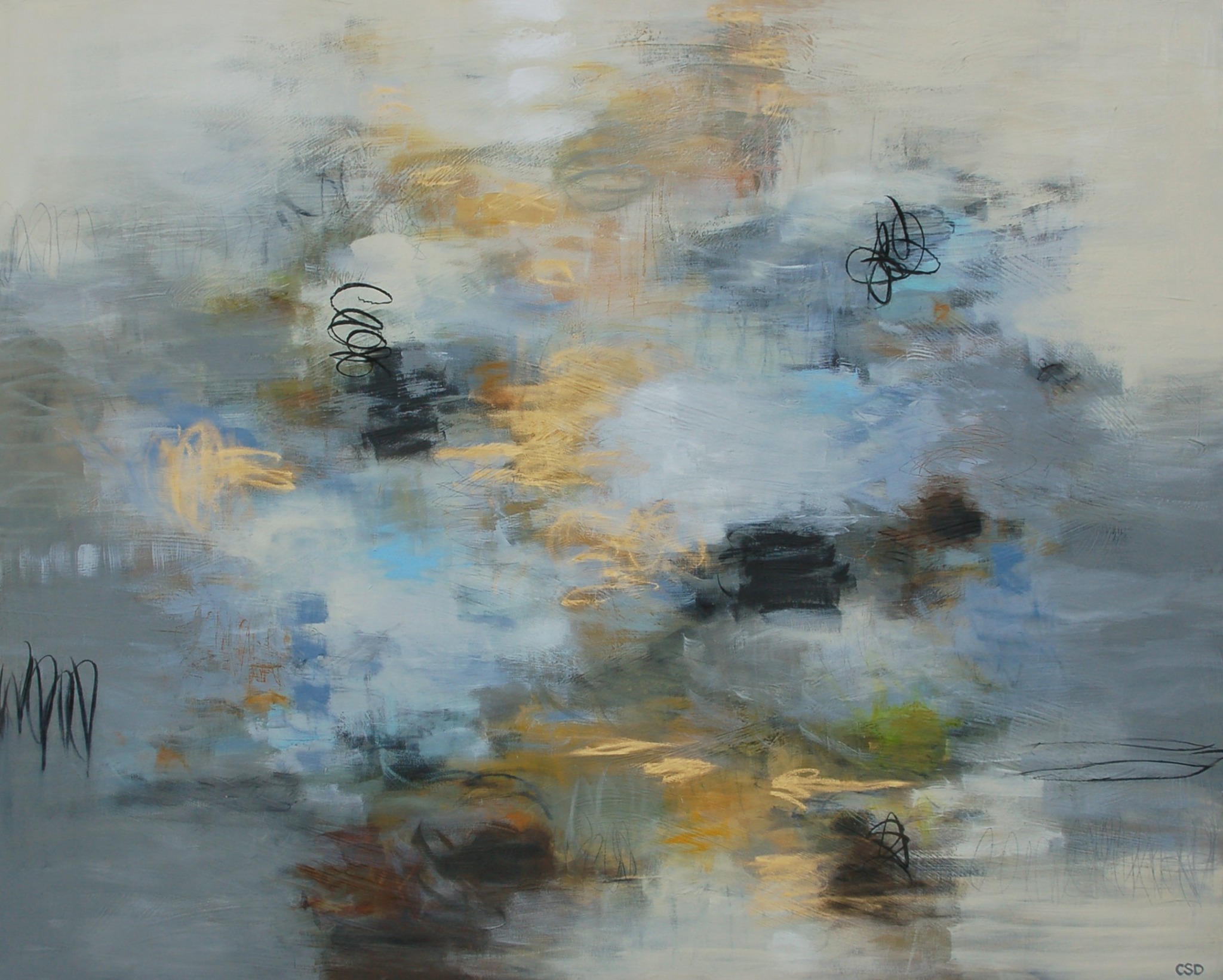
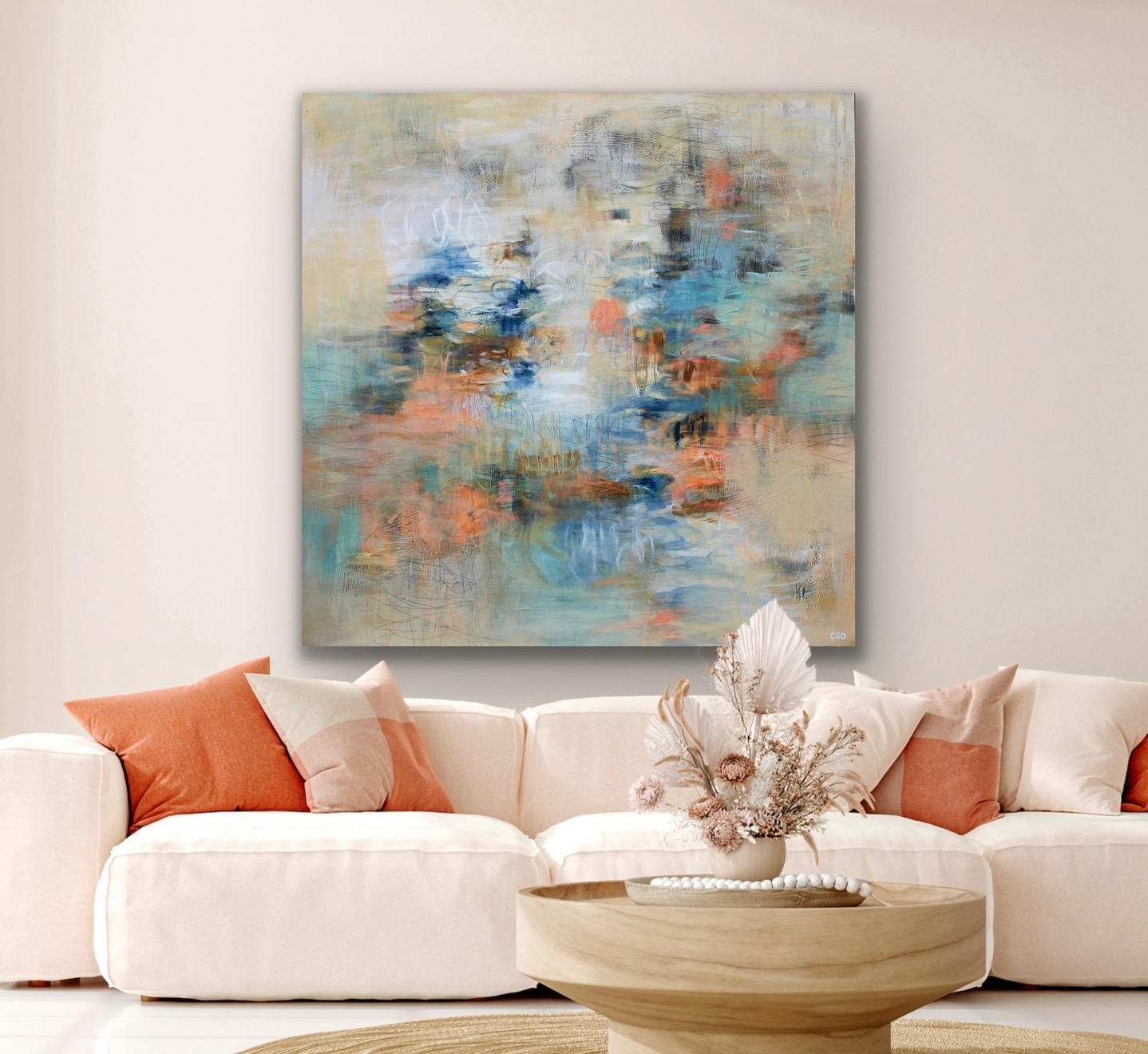
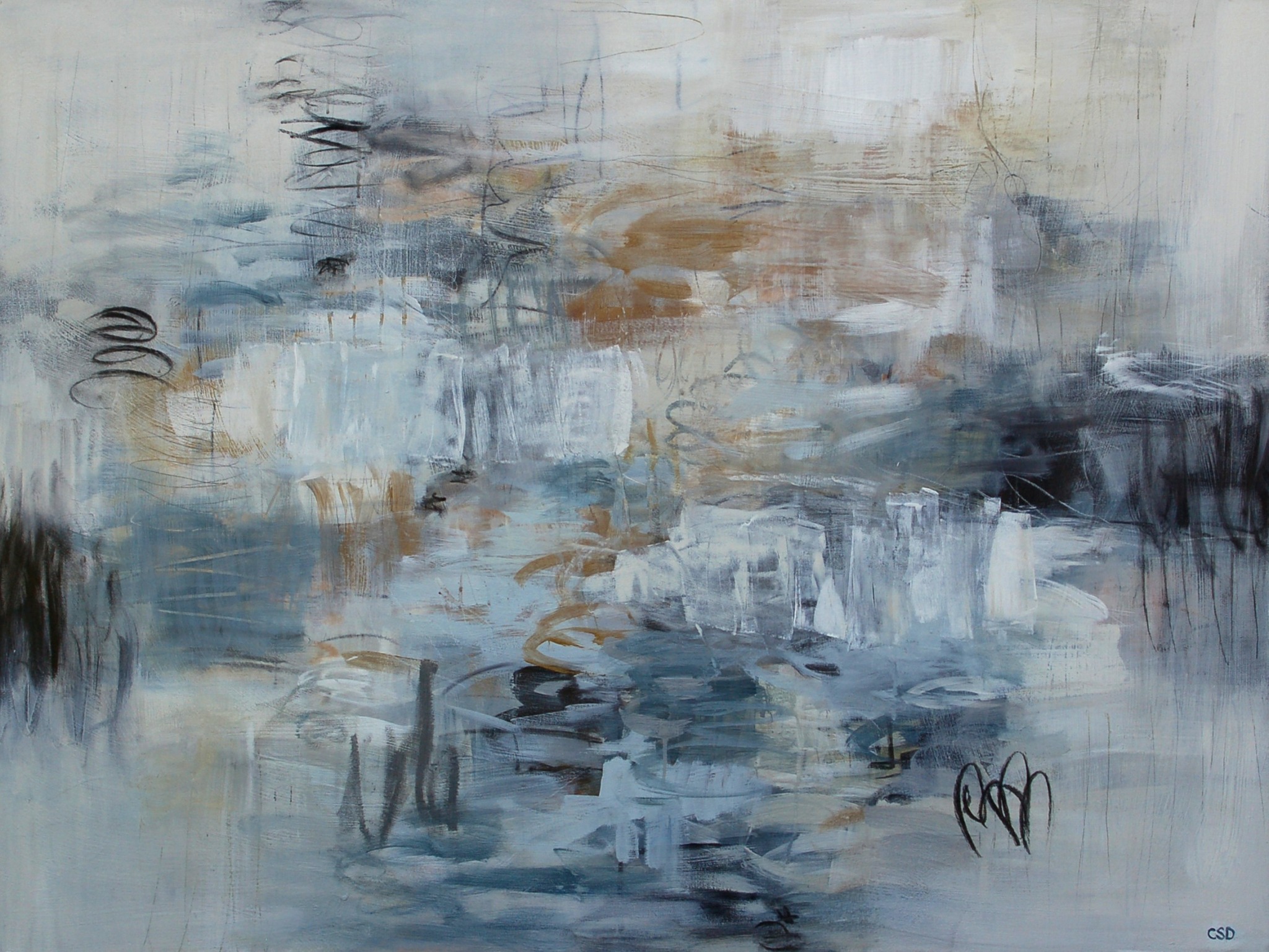
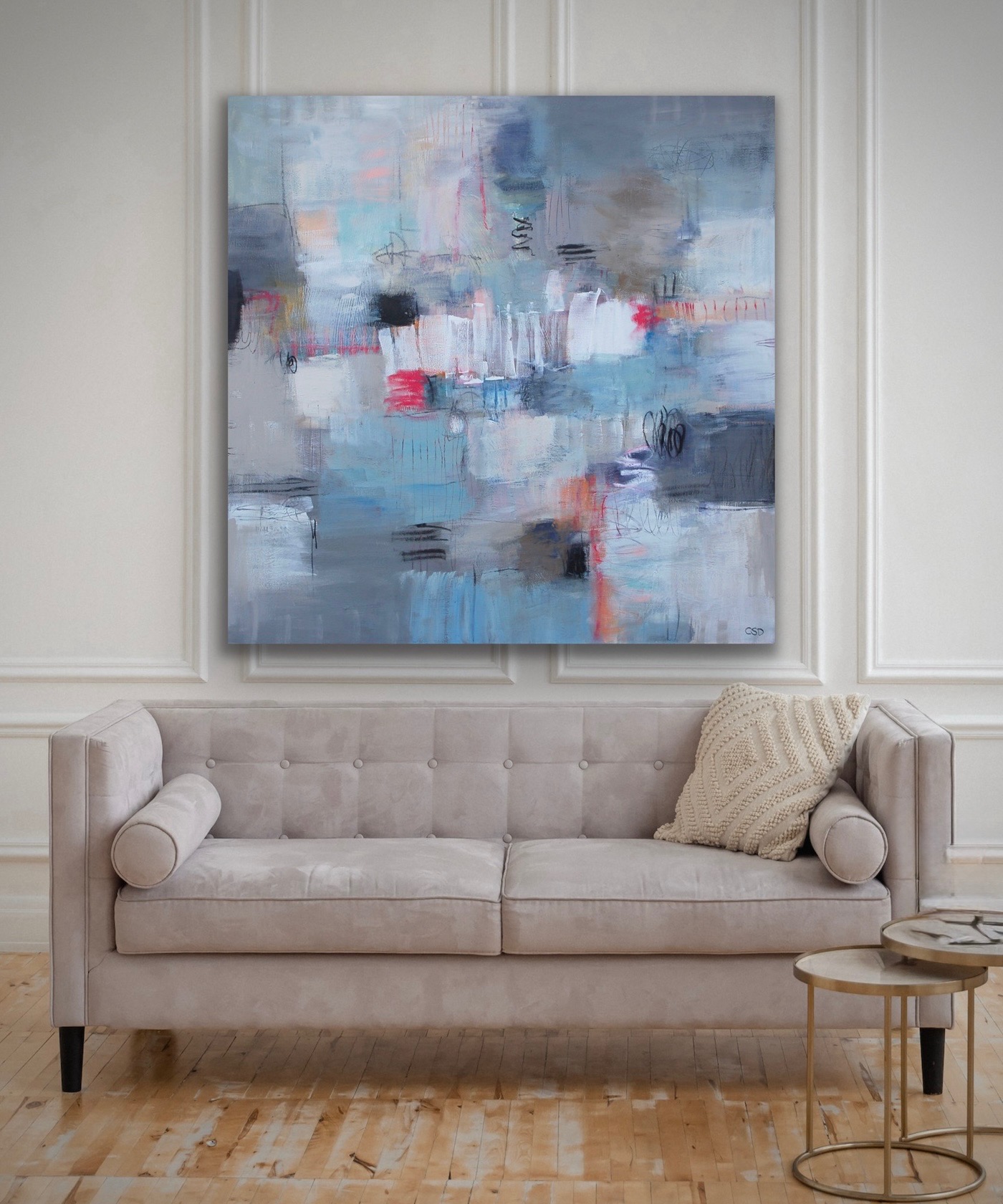
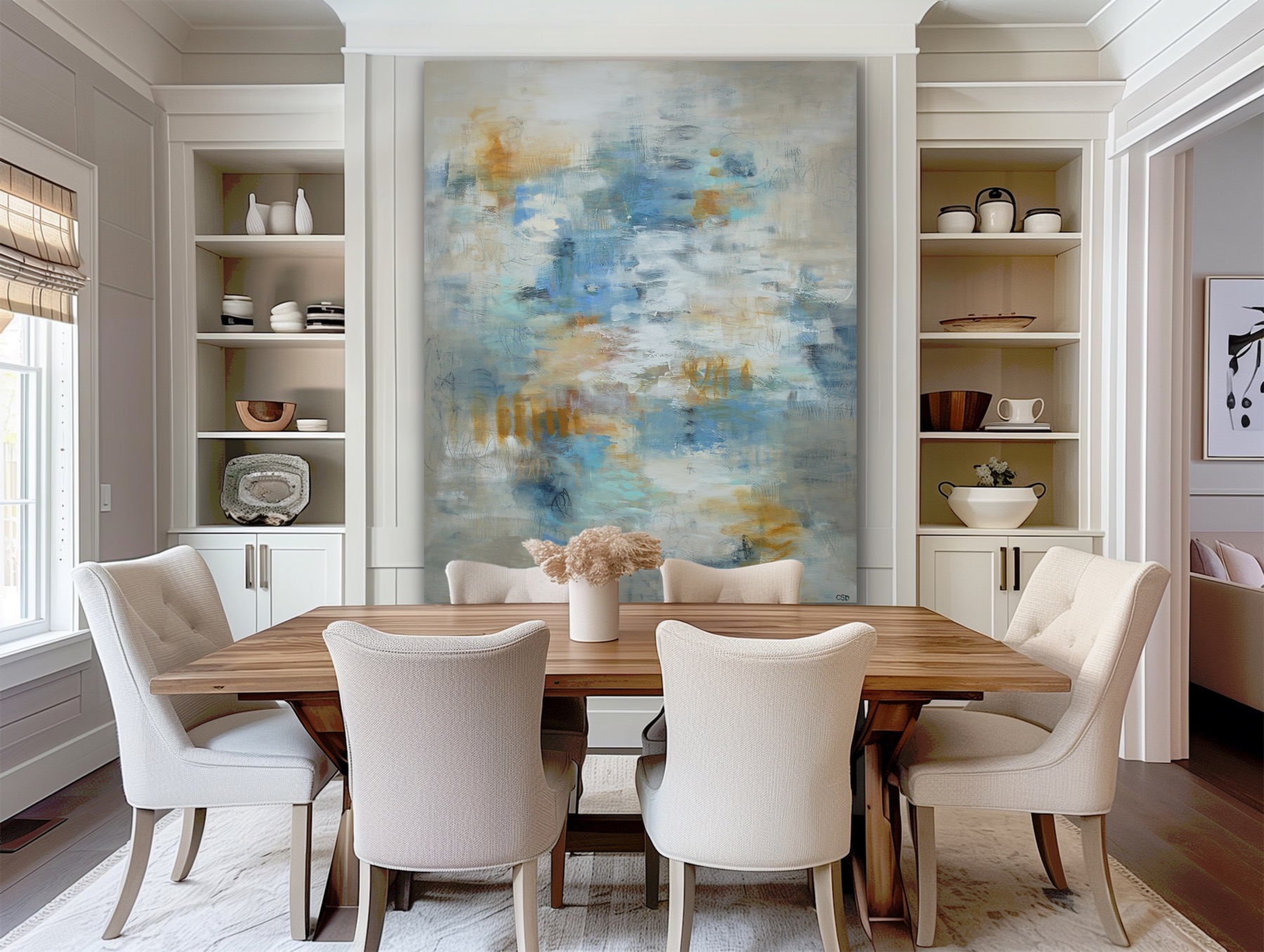
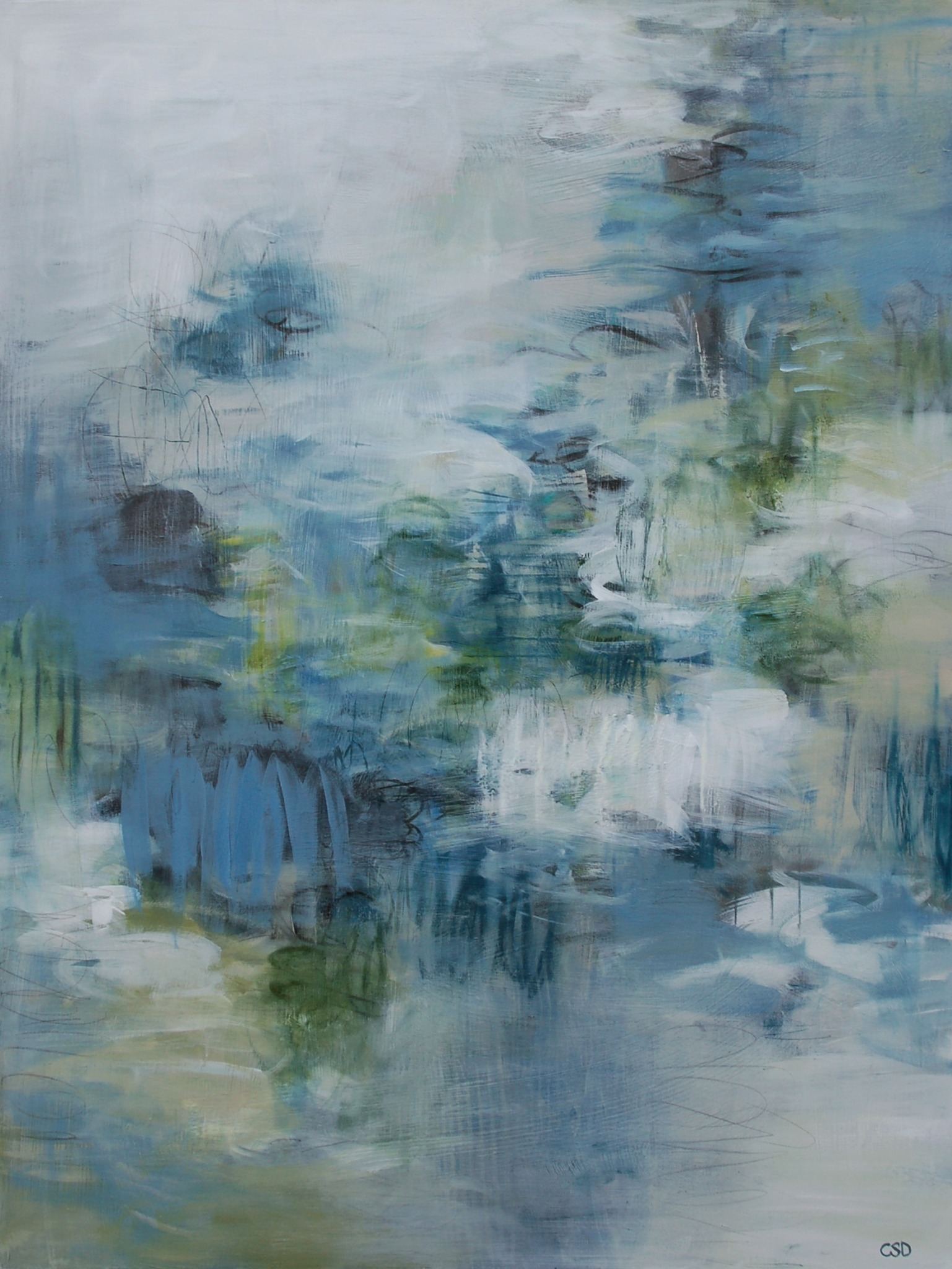
Image Credits
Christina Doelling