


We were lucky to catch up with Ruchen Cai recently and have shared our conversation below.
Alright, Ruchen thanks for taking the time to share your stories and insights with us today. We’d love to hear about when you first realized that you wanted to pursue a creative path professionally.
I didn’t truly realize what I wanted to create until I was almost thirty.
At the time, I had just left my job as a designer and started returning to the basics of drawing again. I spent my days practicing, posting work online, and constantly trying to improve. But honestly, updating social media became emotionally exhausting for me. I desperately wanted my work to reach more people, yet the response was often far from what I hoped for. That gap between expectation and reality left me feeling frustrated and deeply discouraged.
One day, after a huge argument with my partner, I suddenly realized that the emotional state I had been trapped in was no longer affecting only me — it had started affecting the people closest to me as well. That moment forced me to confront myself. I thought, if I can’t properly express these feelings in words, maybe I can paint them instead.
Not long after that, I created my first true personal illustration piece, Praise Ceremony (赞礼). For me, that work marked the beginning of something important. It was the first time I stopped creating purely to fulfill a task or expectation, and instead allowed my own emotions, experiences, and inner world to fully enter the work. In many ways, it became the starting point of my journey as an independent artist.
As always, we appreciate you sharing your insights and we’ve got a few more questions for you, but before we get to all of that can you take a minute to introduce yourself and give our readers some of your background and context?
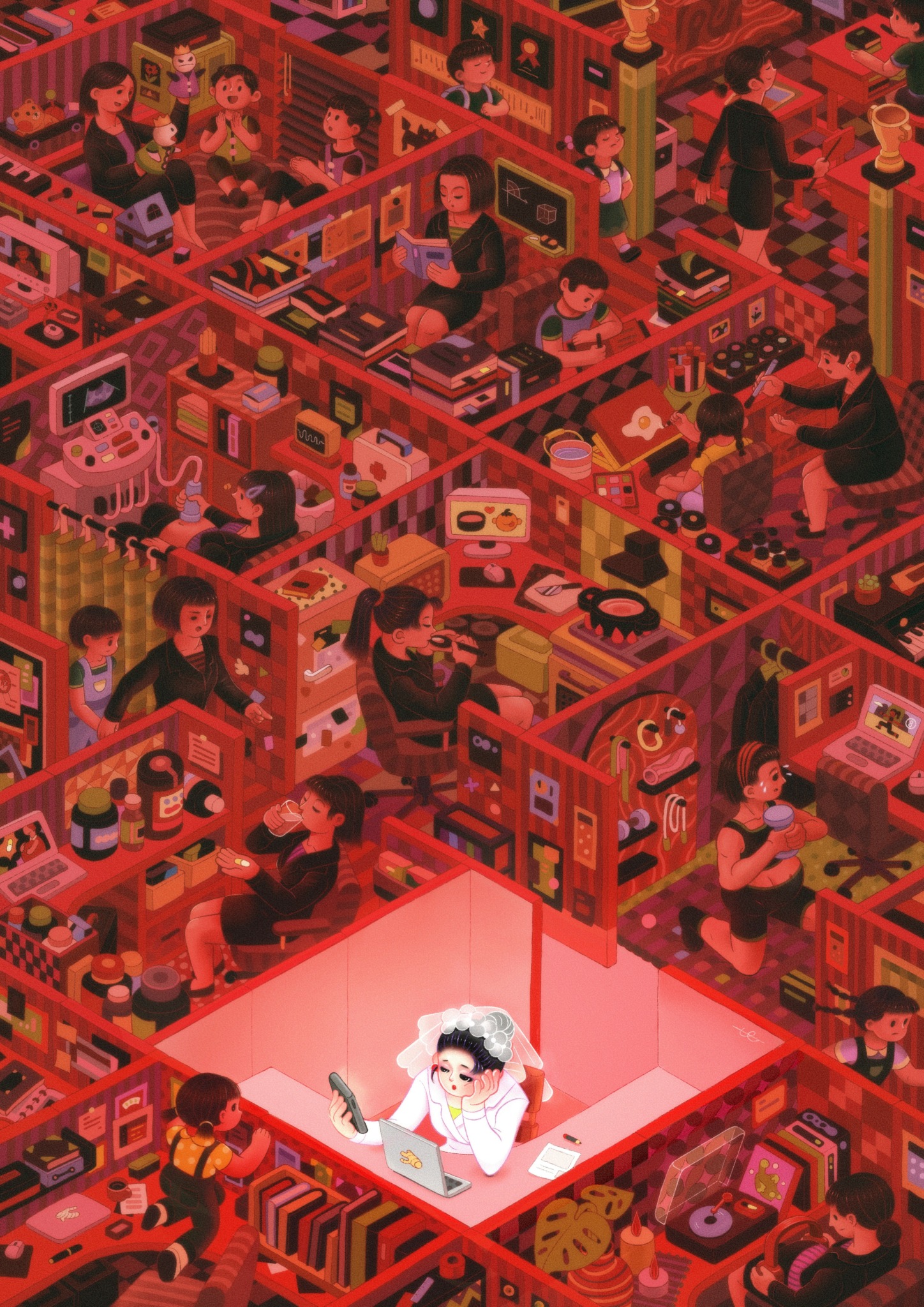
I come from a very traditional and rigorous fine arts education background. After graduating from university, I worked in the design industry for six years. Growing up, I was always the “well-behaved” child — quiet, compliant, careful not to cause trouble. That personality naturally carried into my professional life as well. As a designer, I often suppressed my own voice and intentionally softened my personal style in order to fit expectations and industry standards.
Around my fourth year of working, I hit a serious creative plateau. During that time, I began studying with a design mentor, and one thing about him completely changed the way I viewed creativity. Despite being extraordinarily skilled and highly respected in design, he had never received formal training in painting — not even for a single day. Yet through years of visual sensitivity, observation, aesthetic accumulation, and practice, he had built an incredibly rich and multidimensional creative language of his own.
That experience impacted me deeply. It made me realize that creativity is not only about technical mastery. More importantly, it’s about how you perceive the world, how honestly you respond to it, and whether you have the courage to express those responses.
After finishing that period of study, I finally made the decision to become an illustrator. For a long time afterward, I balanced my full-time job while teaching myself illustration more seriously, until eventually I left my job and committed to creating full time.
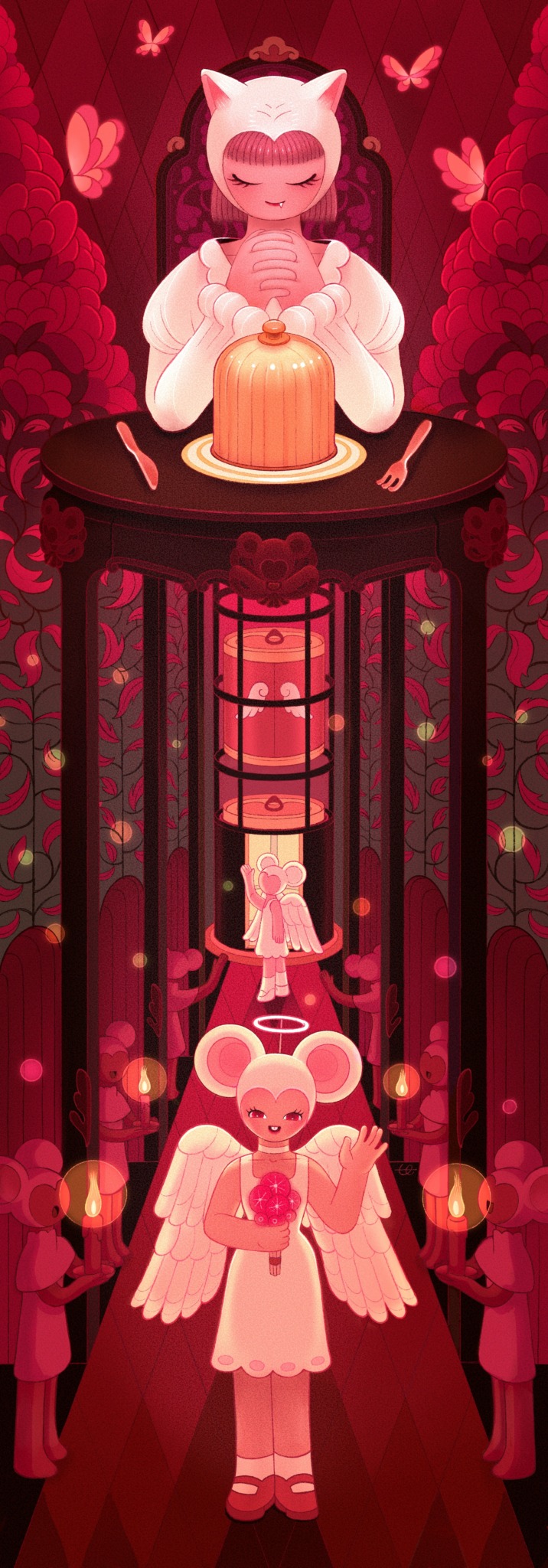
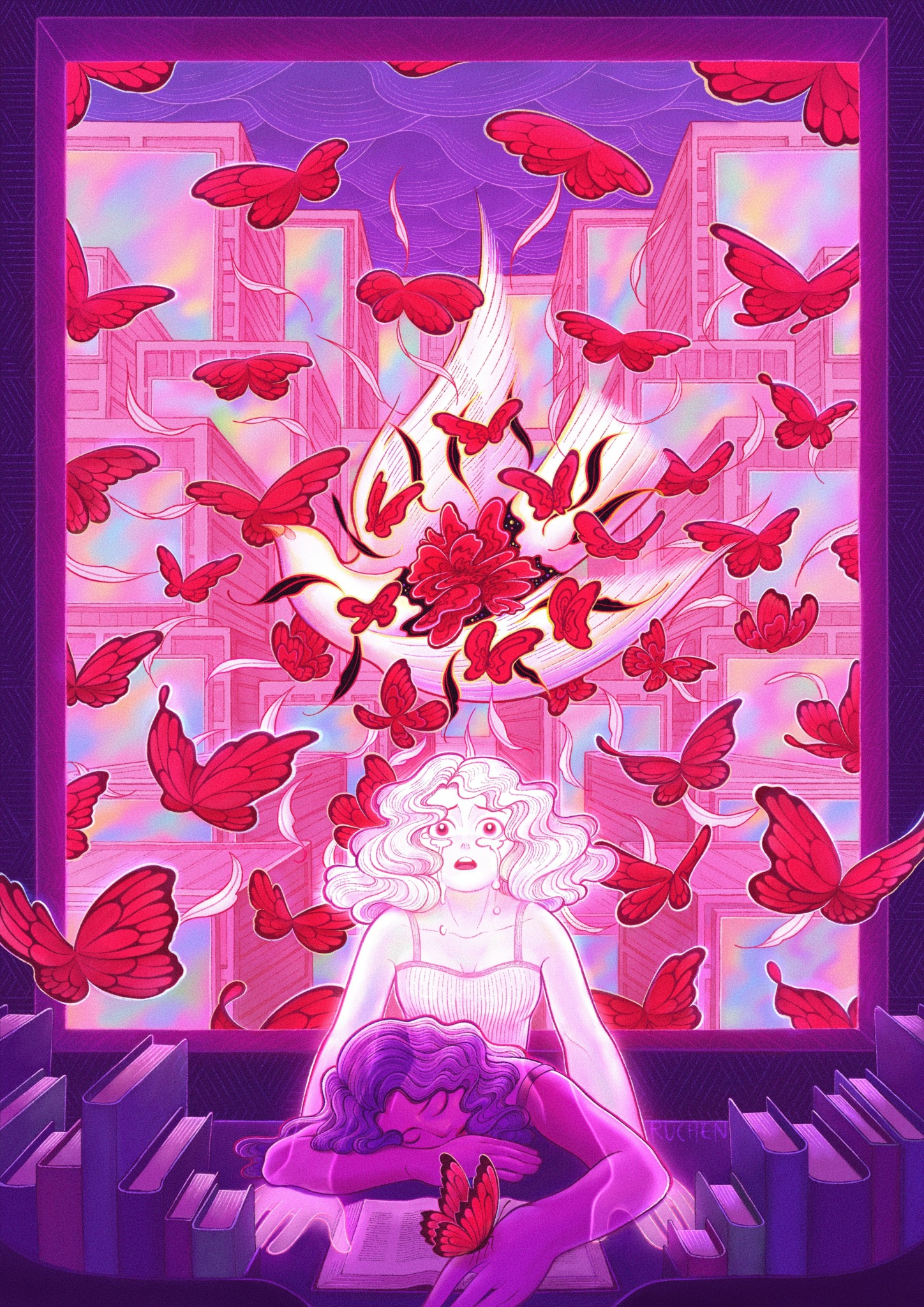
A lot of my work revolves around storytelling — emotions, perspectives, dreams, and psychological spaces that exist somewhere between reality and imagination. Some viewers describe my work as slightly unsettling or even eerie because I often use dense compositions, tension, and emotionally charged imagery. But for me, those visual elements are not meant to create fear. They’re a way of expressing emotional complexity and the contradictions within human experience.
At its core, though, I believe my work is ultimately optimistic. More than anything, I hope people can feel a sense of honesty and courage in the images — the courage to confront emotions directly, to acknowledge vulnerability, and to exist truthfully without constantly trying to make oneself more acceptable.
What’s the most rewarding aspect of being a creative in your experience?
For me, the most rewarding moment is not necessarily when a piece is finished, but when it resonates with someone else.
Whenever I share new work, I genuinely look forward to reading people’s responses — especially when viewers begin sharing their own stories and emotions because of something they saw in the piece. I think that kind of exchange is incredibly meaningful.
Art, to me, is never a one-sided form of expression. It becomes valuable when it creates recognition between people — when someone sees a part of themselves reflected in your work.
Sometimes the things we think are the most personal or difficult to talk about end up being the things that connect most deeply with others. Whenever someone opens up emotionally because of one of my illustrations, I feel that the work has fulfilled its purpose.
In your view, what can society to do to best support artists, creatives and a thriving creative ecosystem?
I think what independent artists need most is a more inclusive and open creative environment.
Right now, the commercial paths available to independent illustrators are still fairly limited. Many industries and collaborations continue to prioritize standardized or “safe” visual languages, while more personal, experimental, or emotionally driven work often struggles to find space within the system.
But I believe that the true value of creativity comes from individuality and difference. A healthy creative ecosystem shouldn’t only make room for commercially predictable work — it should also allow space for risk, experimentation, and distinct voices to grow.
I think there are still many possibilities left unexplored, whether in the relationship between art and commerce or in the way audiences engage with illustration and visual storytelling. Of course, being understood matters to artists, but even more important is having the freedom and space to continue expressing ourselves honestly.
Contact Info:
- Website: https://dotfriends.art/ruchen-cai/
- Instagram: https://www.instagram.com/dotfriends/
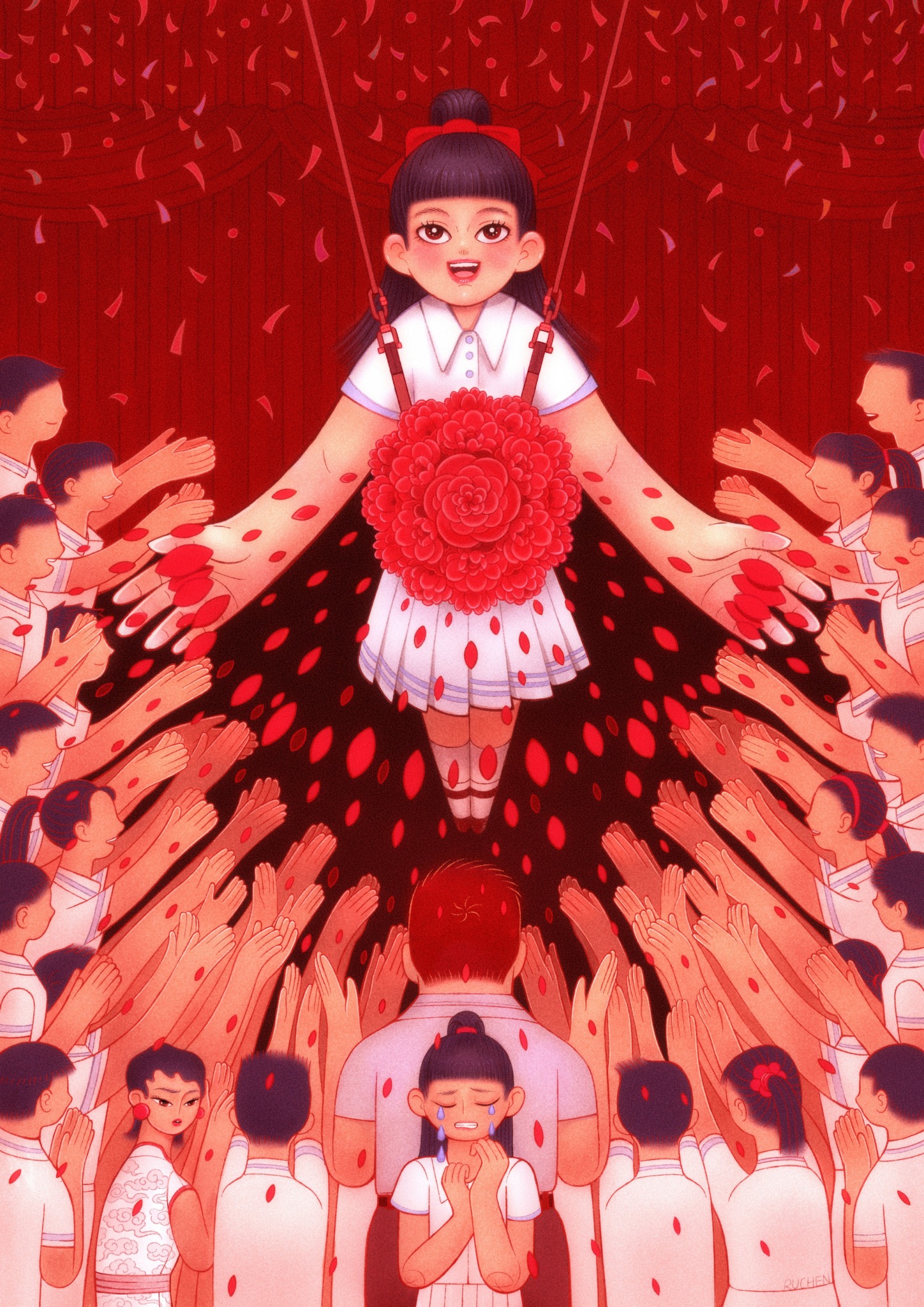
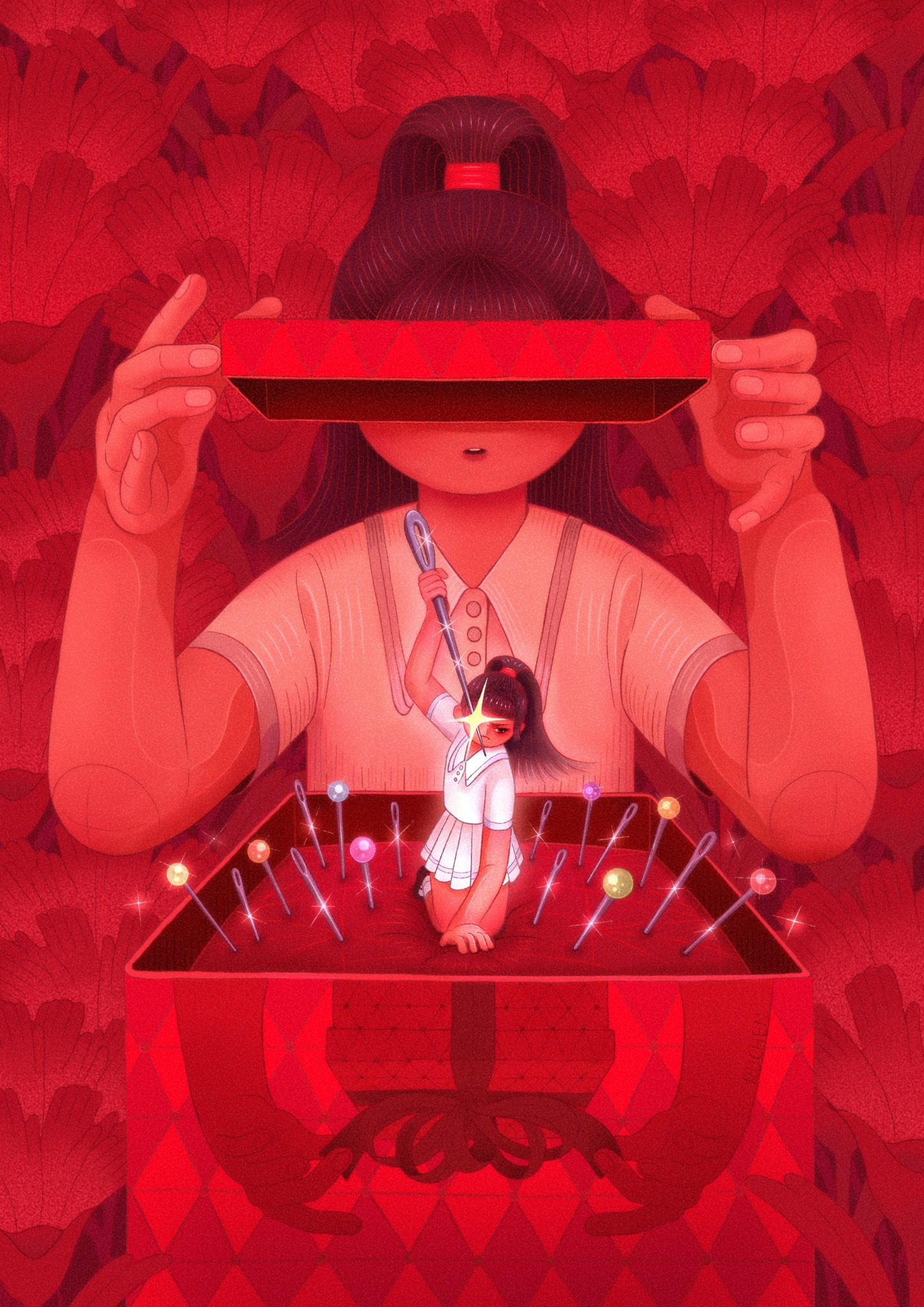
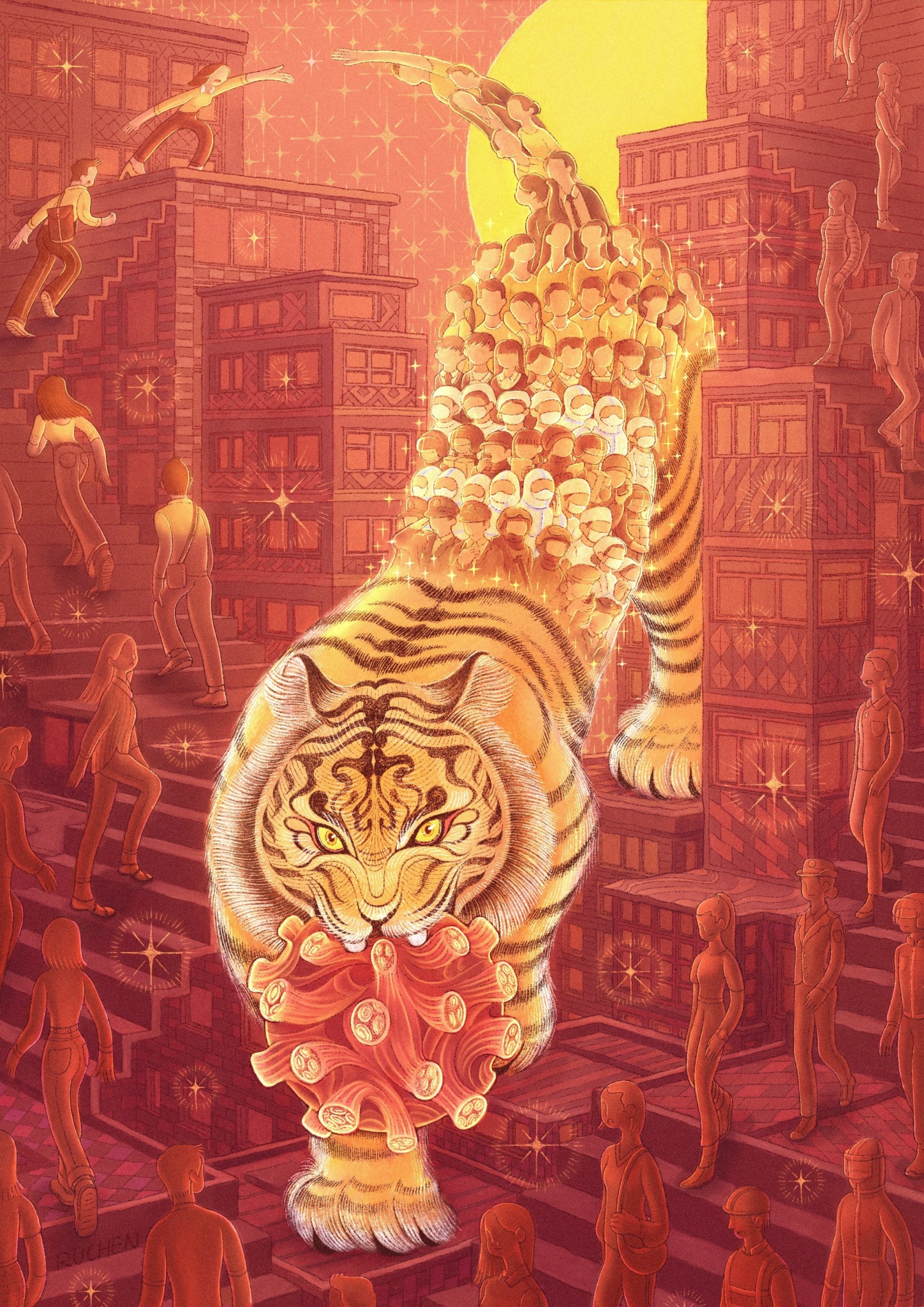
Image Credits
By Myself