

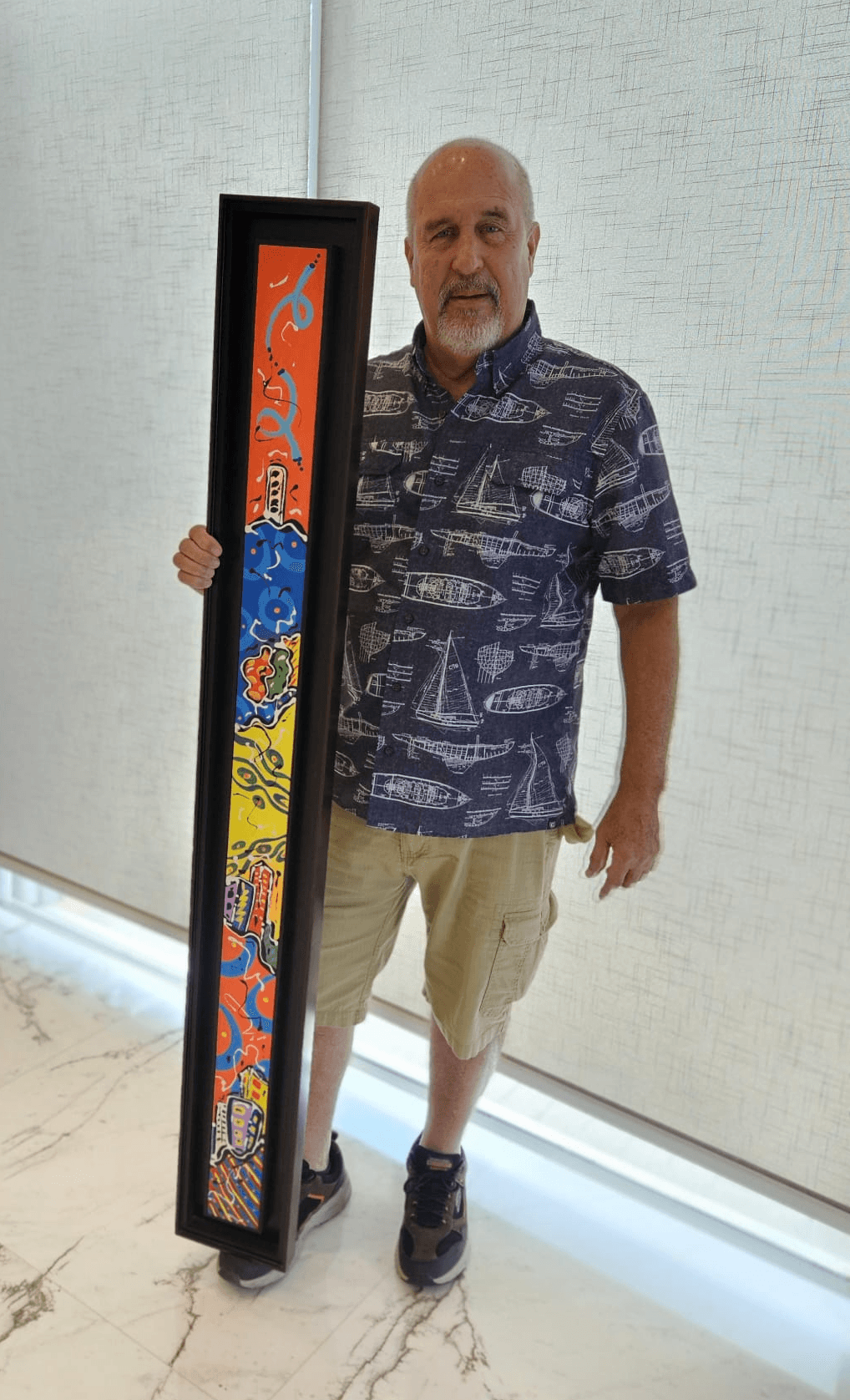

We caught up with the brilliant and insightful Arnoldo Diaz a few weeks ago and have shared our conversation below.
Arnoldo, thanks for joining us, excited to have you contributing your stories and insights. It’s always helpful to hear about times when someone’s had to take a risk – how did they think through the decision, why did they take the risk, and what ended up happening. We’d love to hear about a risk you’ve taken.
The subject I address here is the act of living—something inextricably linked to the presence of risk. This occurs every time we make a decision, whether small or large; what happens is that we step onto a different plane of uncertainty—one over which, most of the time, we have little to no control.
This is precisely what happens to me every time I create a work of art—a painting, or an idea translated onto canvas.
At the age of seventeen, I traveled alone from Venezuela—my country of origin—all the way to London, without knowing where I would end up and with very little money. My luggage consisted of a single suitcase packed with dreams, colors, a guitar, a package I was asked to deliver, and expectations of a brand-new world. Oh—and I was also accompanied by fear; a great deal of fear.
It is a long story, so I will try to summarize it as best I can. Just before boarding the plane, my heart went cold for a few brief seconds, and I was on the verge of turning back. But when I looked behind me, I saw several friends waving goodbye; that sight, in a way, compelled me to press on with my adventure—one for which I had absolutely no plan.
Upon arriving at Heathrow—England’s airport—we disembarked. While standing in the immigration line, I was detained and subjected to a barrage of questions. They inspected a package of medicines that someone—whose name I can no longer recall—had asked me to deliver to a relative. They confiscated the package for analysis while simultaneously searching for an interpreter, as I did not speak English. That entire process took about two hours, after which they finally granted me entry into the country—though only with a permit valid for fifteen days.
By that time, the line of passengers from my flight had completely vanished; however, there was another line, which I joined. We boarded a bus, and after some time, it pulled to a stop within the city, and everyone began to disembark. The place was teeming with people and bustling with activity; it was around two o’clock in the afternoon. Not knowing where to go, I began walking with my guitar, my suitcase, and the package I was carrying. I walked for a while until I reached a small square, where I sat atop my suitcase to take stock of all the madness—specifically, the lies I had told my parents about someone meeting and looking after me once I reached my destination. It was an elaborate ruse designed solely to obtain permission to travel, as I was still a minor.
Well, I sat there on my suitcase for a few minutes, and tears began to well up in my eyes; I simply didn’t know what to do.
It was there that I learned we are never truly alone, even when it seems that way.
Out of nowhere, a man of Italian descent appeared. He told me—repeating it constantly in Italian, yet I understood him in perfect Spanish—that he, too, had arrived in exactly the same manner.
“He kept saying: *’Eh, bambino! I came just like you did!'”*
That Good Samaritan led me—not far from that very spot—to a place where I could stay: a “bed and breakfast.” Back then—some 56 years ago—it cost just one pound, the equivalent of about two dollars.
Once I had dropped off my luggage and felt the security of having a roof over my head, my mood shifted radically. As for the package of medicines that had initially seemed like such an inconvenience? It turned out its intended destination was located right near where I was staying. That very afternoon, I delivered it; the couple who received it—who happened to be Venezuelans—helped me track down an address a friend had given me years earlier. Fortunately, that friend was still living at the same place. From that moment on, as they say, the rest is history.
I spent two consecutive years there, then returned to Venezuela for a few months. I fell in love, got married, and went back to England for another year—though this time not to London; instead, we settled in Brighton, a seaside town on the country’s southern coast.
I painted throughout my entire time living there and accomplished a great many things. My fear vanished, and from that time forward, I came to understand that taking risks—no matter how small—is precisely what allows us to experience life in its absolute fullness: physically, emotionally, and spiritually. So, every time I set to work on a blank canvas, it is a challenge to life, to creation, and to the unknown—within a scale of values where, to press on, you need courage—and sometimes, a great deal of courage.
Thanks!
Great, appreciate you sharing that with us. Before we ask you to share more of your insights, can you take a moment to introduce yourself and how you got to where you are today to our readers.
Since childhood, the artistic realm has always been my true passion. Among my school assignments, freehand drawing was what I enjoyed most.
I remember owning a small wooden box filled with oil paints; their distinct scent felt almost mystical to me. I created many small paintings with no other purpose than to work with my hands and give tangible form to the ideas swirling in my mind. I have always felt this process to be magical—a sensation I still experience every time I paint.
By my teenage years, I had accumulated a few paintings that I kept for myself, having already given most of my earlier works away as gifts. Together with a fellow painter (Carlos Corrales), I began entering various art competitions at both the state and national levels—a way to build a professional portfolio and showcase my work to a wider audience.
To avoid burdening my art with the pressure of financial necessity—and to ensure I could support myself economically—I spent a year working as a street vendor, selling juices and food from a van I had specially outfitted for the purpose.
This allowed me to meet my financial needs without forcing my art to serve as a mere means of economic survival.
Later, I shifted trades and began working with wood, crafting tables, beds, chairs, and planters using traditional artisanal methods. Although physically demanding, this work offered a unique experience; wood possesses a life of its own, teaching you lessons and conveying very distinct sensations. I pursued this trade alongside my career as a visual artist for a time, until—little by little—people began to discover my paintings. Through numerous national and international exhibitions, I eventually reached a point where I could sustain myself entirely through my art—a reality that remains true to this day, and for which I feel deeply grateful.
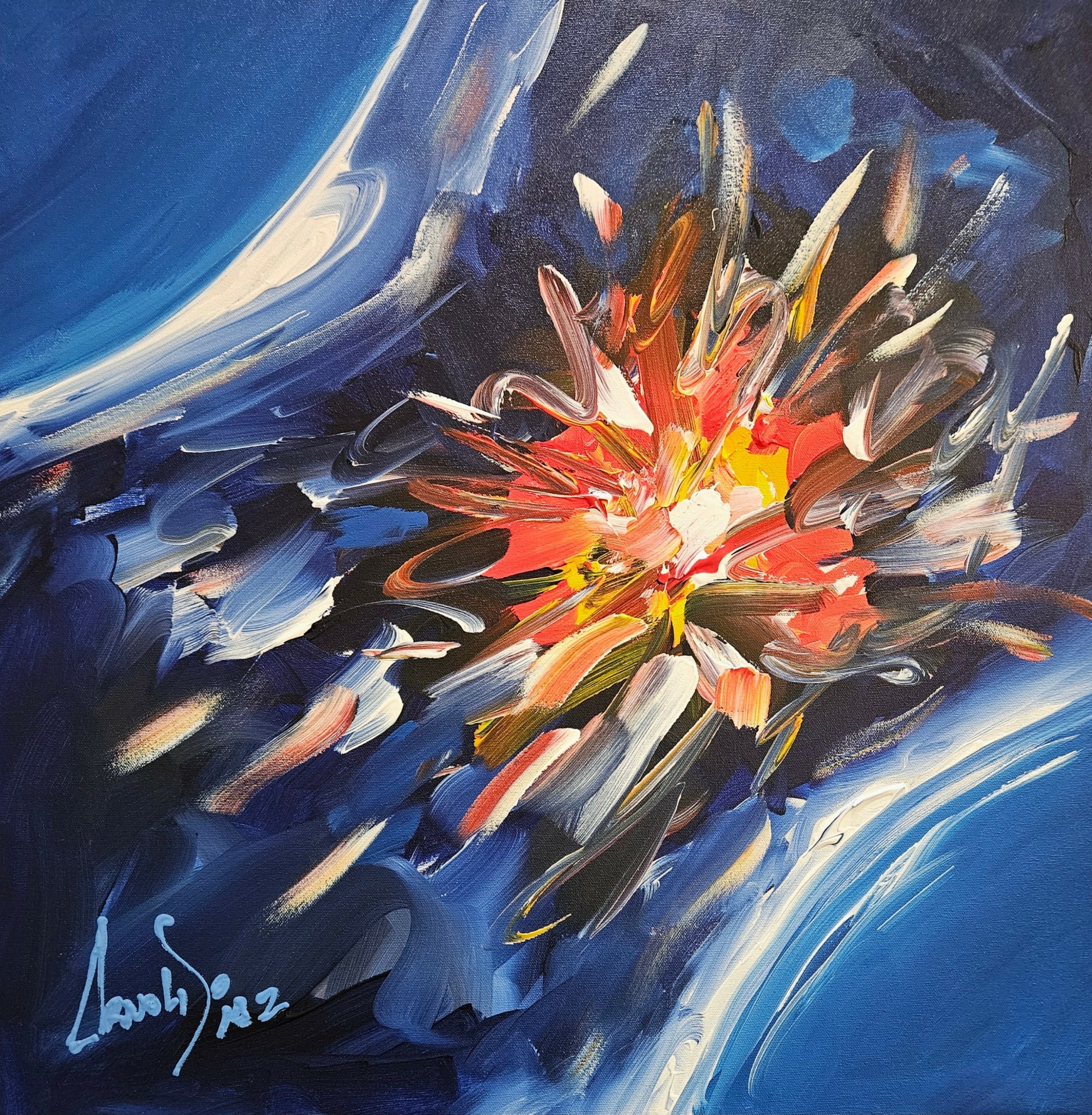
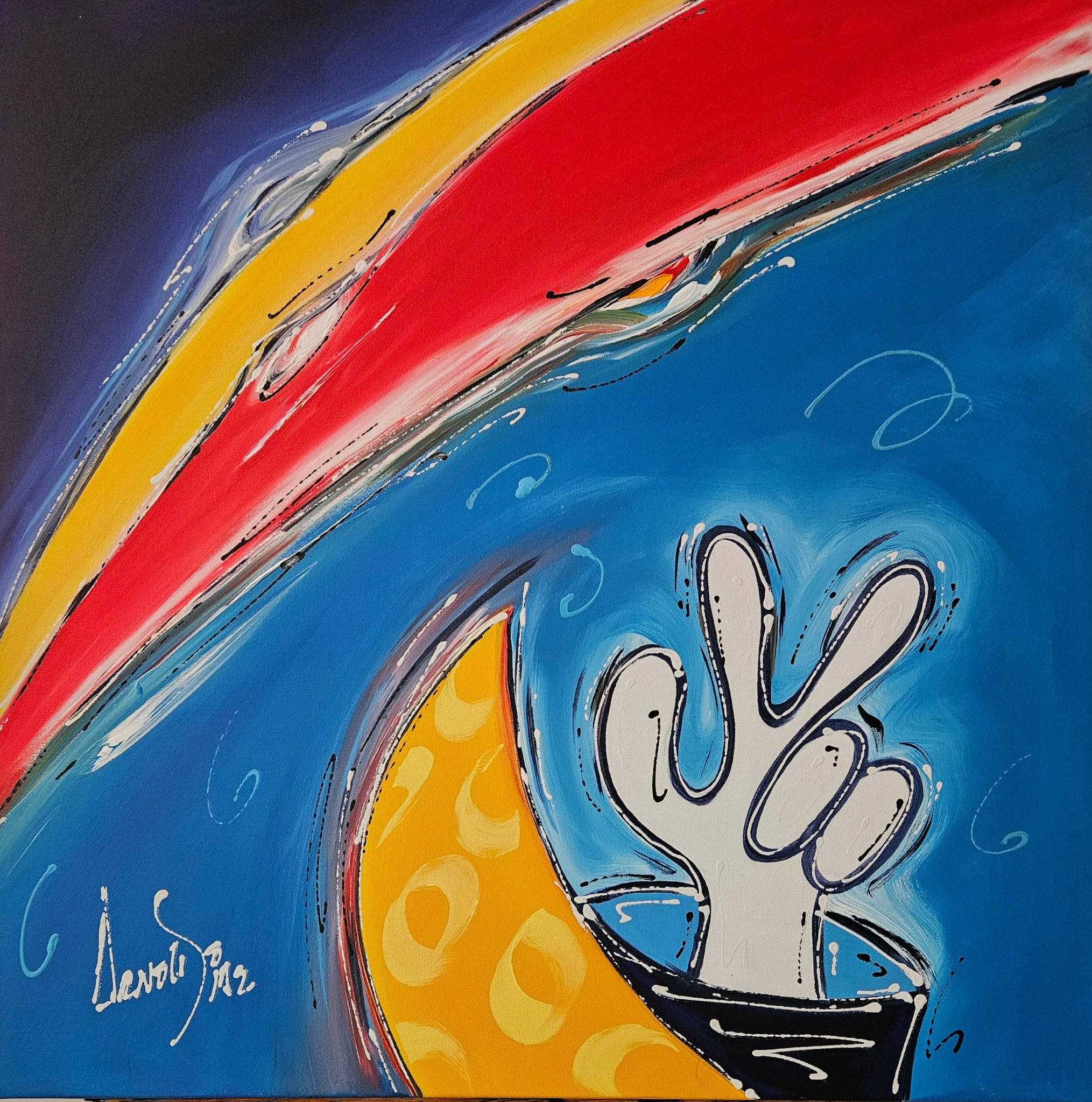
I have been fortunate that people appreciate my art and choose to invest in my work. I consider myself more a painter of color than of line, for I believe that life is color, and color is life.
It is my wish that many people might come to own a piece of my work—regardless of its size—provided it is an original piece. The vibrations and essence contained within an original are distinct and authentic; in some beautiful, intangible way, that energy is transmitted directly to the person who owns it. I believe that, as a creator, one should not bind oneself to any formula; instead, one should always remain open to new forms of expression.
It is a journey that is never fully traversed; even when one passes into another state of being, the work remains—its presence still felt wherever it may be.
Expression is free, and its interpretation is free as well.
Can you share a story from your journey that illustrates your resilience?
This is a little story of resilience that happened to me while I was here in the U.S. in late 1995.
I used to travel here from Venezuela, stay for about five months, and then return home; I did this about four or five times in all.
As I was preparing to head back to my country, I was staying at my sister’s house; we had already handed over the apartment where we had been living, and we had packed and stored all our belongings for the return trip.
During that particular stay in 1995, I had struck up a friendship with Joe—a Dominican man who owned an art gallery where I exhibited my work.
As I was saying my goodbyes to him—since I was due to leave in just a few days—he mentioned an art competition hosted by Absolut Vodka and noted that they were accepting submissions right around that time. I thanked him for the tip, but I explained that I had already packed away all my art supplies and was on the verge of departing. I pointed out that, since I was spending my final days at my sister’s house, painting for the competition would be both inconvenient and a real uphill battle.
On my way back to the apartment, my friend’s suggestion began to swirl around in my head—after all, the very reason I traveled to this country was to promote my work.
Around that time, I had read a short story about an American man who owned a plot of land where he believed there was oil beneath the surface. He began drilling until, at a depth of 42 meters, he hit a layer of extremely hard rock. Discouraged from continuing, he abandoned the project and sold the land.
The new owner took up the task, drilled just one meter deeper into the rock—and struck oil.
So, I asked myself: Was I at “42 meters”? I immediately headed to an art supply store, bought the necessary materials, taped a canvas to the glass doors of my sister’s apartment, and painted two pieces, which I then submitted to the competition. After that, I headed back to Venezuela. My friend Joe from the gallery kept me informed about what was happening; there were three rounds of selections—a necessity, given that there were thousands of participants in this worldwide competition.
“You cleared the first hurdle,” he told me, “then the second.” Shortly thereafter, I received a fax notifying me that one of my pieces had been selected as the winner of the event.
Subsequently, many significant things unfolded in my life—and in my artistic career—as a direct result of that moment.
Life sends us signals; if we remain attentive—if we can somehow perceive them and act accordingly—doors and opportunities will open up to us in unimaginable ways.
So, when you find yourself at “42,” remember that you are close to achieving your goal.
What do you find most rewarding about being a creative?
I believe that every person possesses, in potential, an inner power—talents and possibilities that we might otherwise deem impossible within ourselves.
For those who recognize their talents and cultivate them—focusing on what they love—their creativity and performance will flourish exponentially.
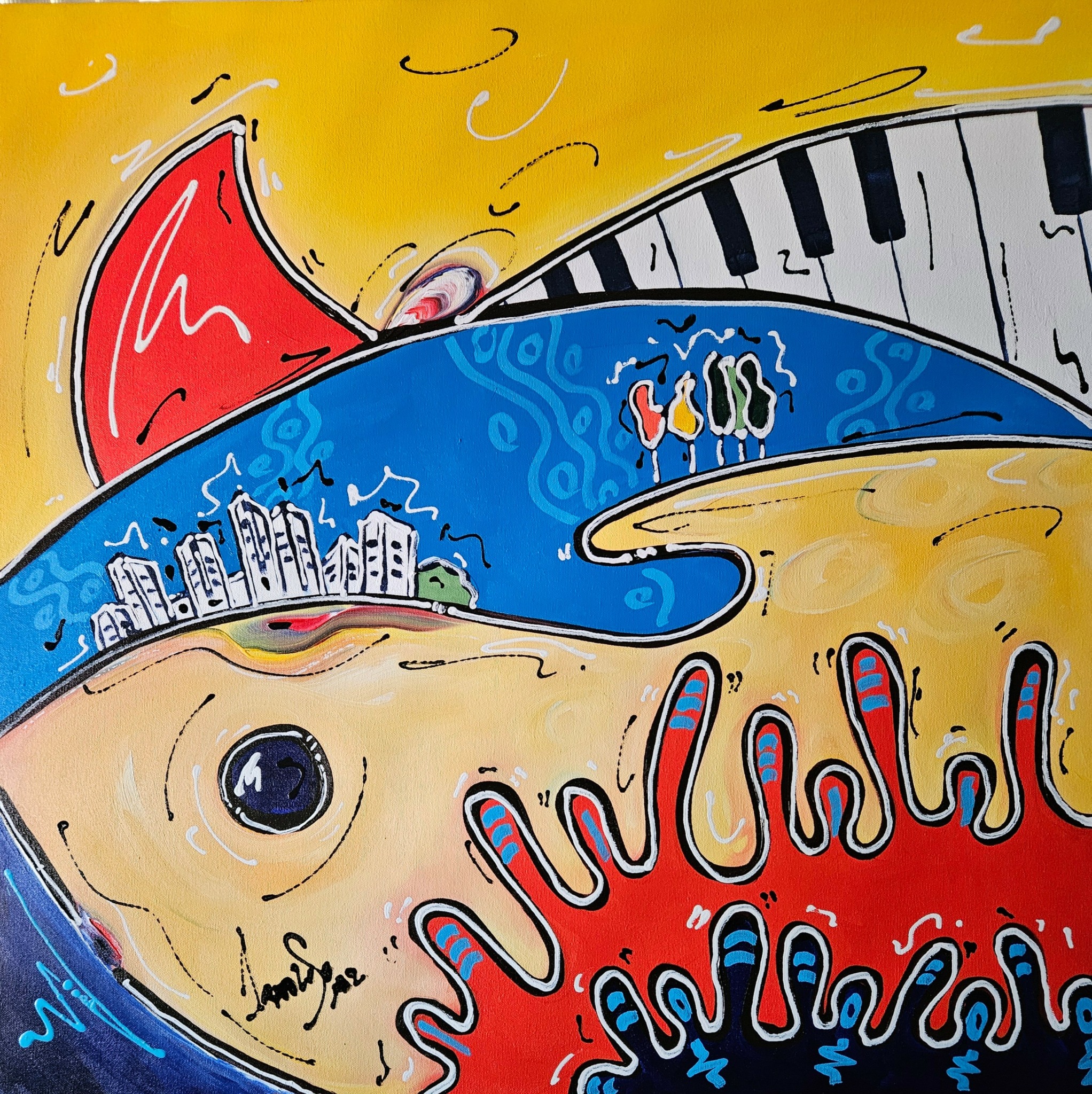
In my own case—precisely because I conduct myself differently, act distinctly in certain circumstances, think with an open mind, perceive things with a deeper sensibility, find beauty throughout all of creation, create my own explosions of color, love what I do, and know that I am superior to no one—I feel at peace with myself. I find comfort in knowing that my own ignorance drives me to keep learning, making me receptive to the wisdom of nature and to life itself.
Life is beautiful, though we do not always fully appreciate it in all its dimensions; my greatest reward as an artist has been to make it my companion, my teacher, and my source of inspiration.
Contact Info:
- Website: www,artediaz.com
- Instagram: @artnoldodiaz
- Facebook: artnoldodiaz
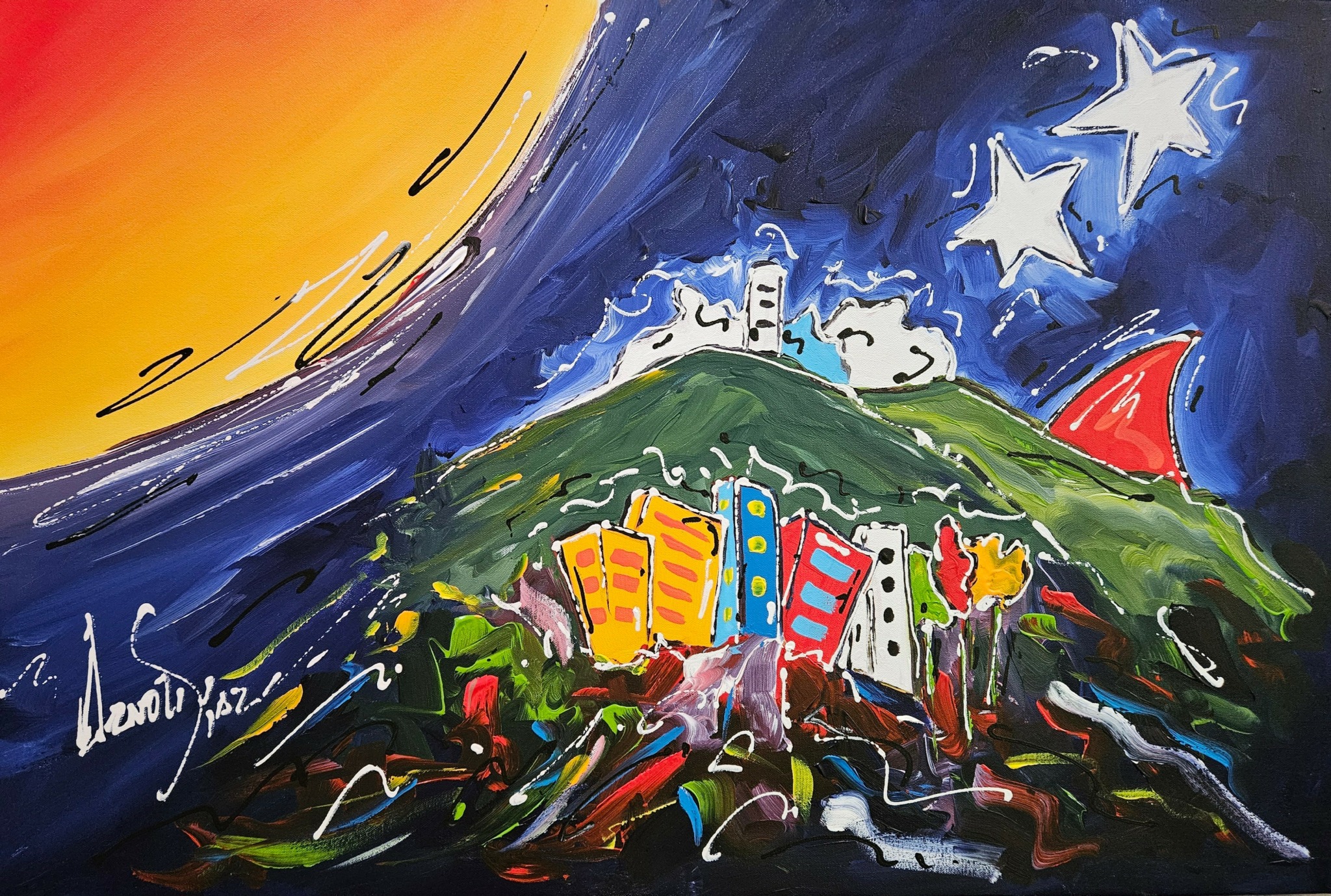
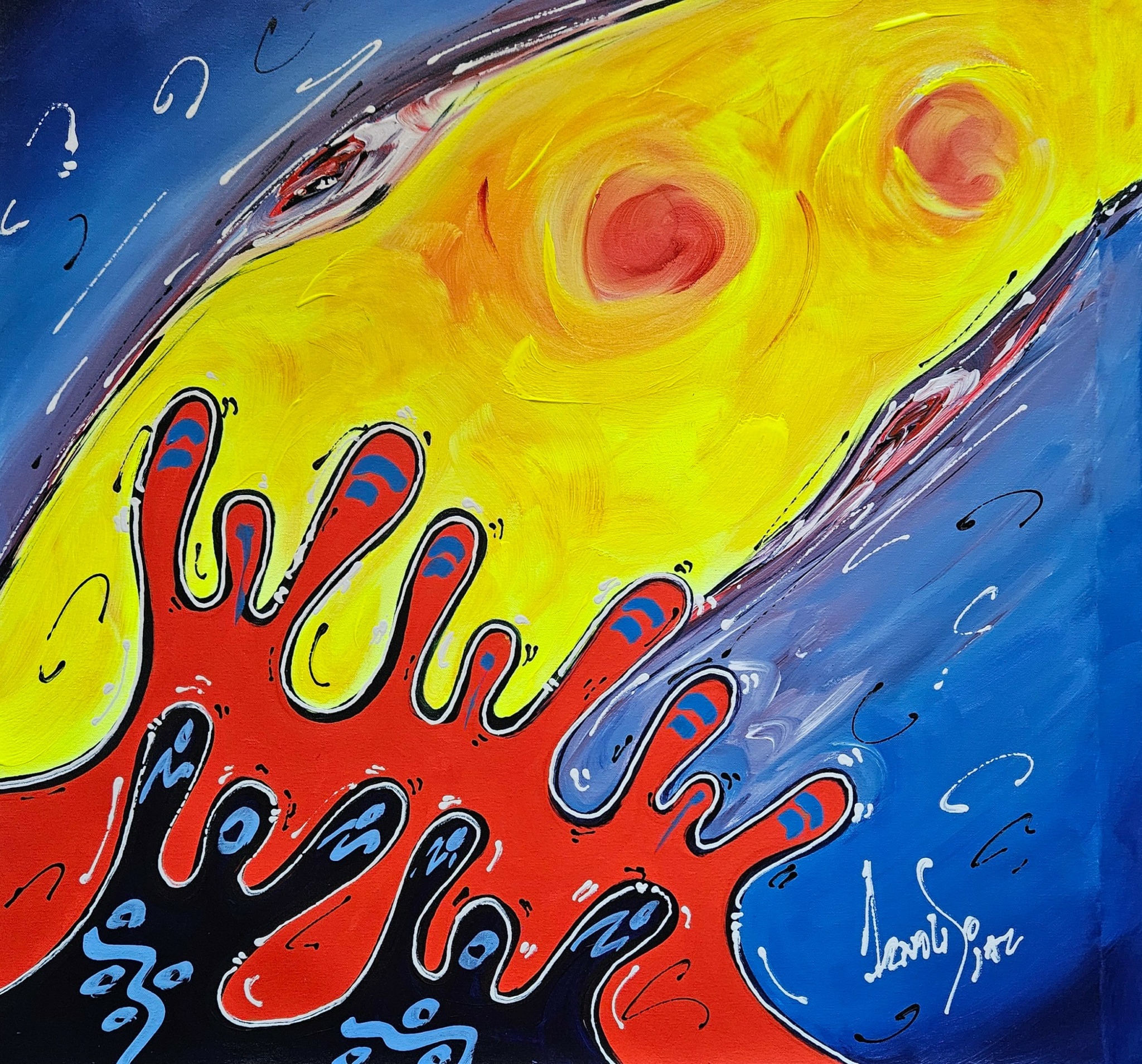
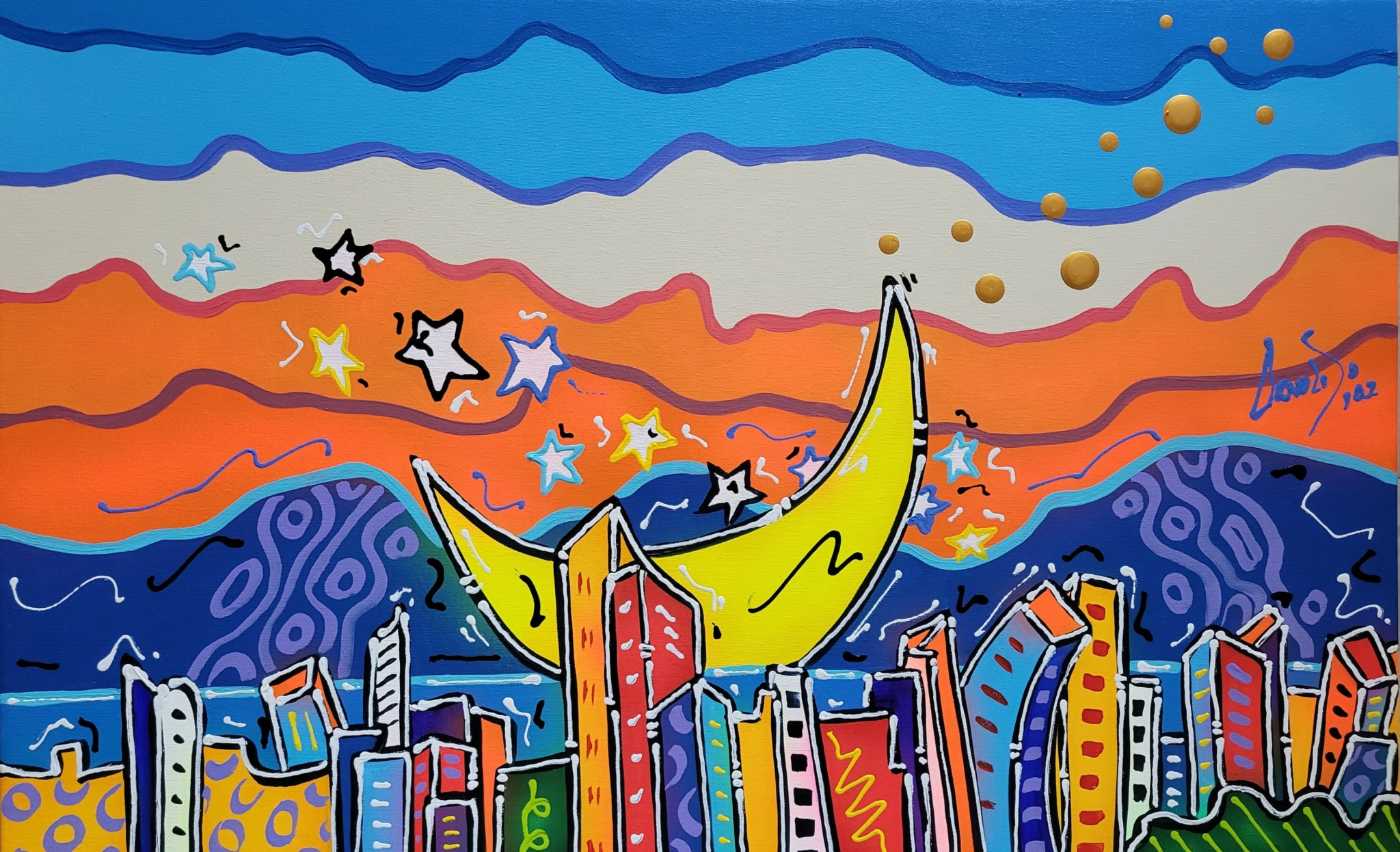
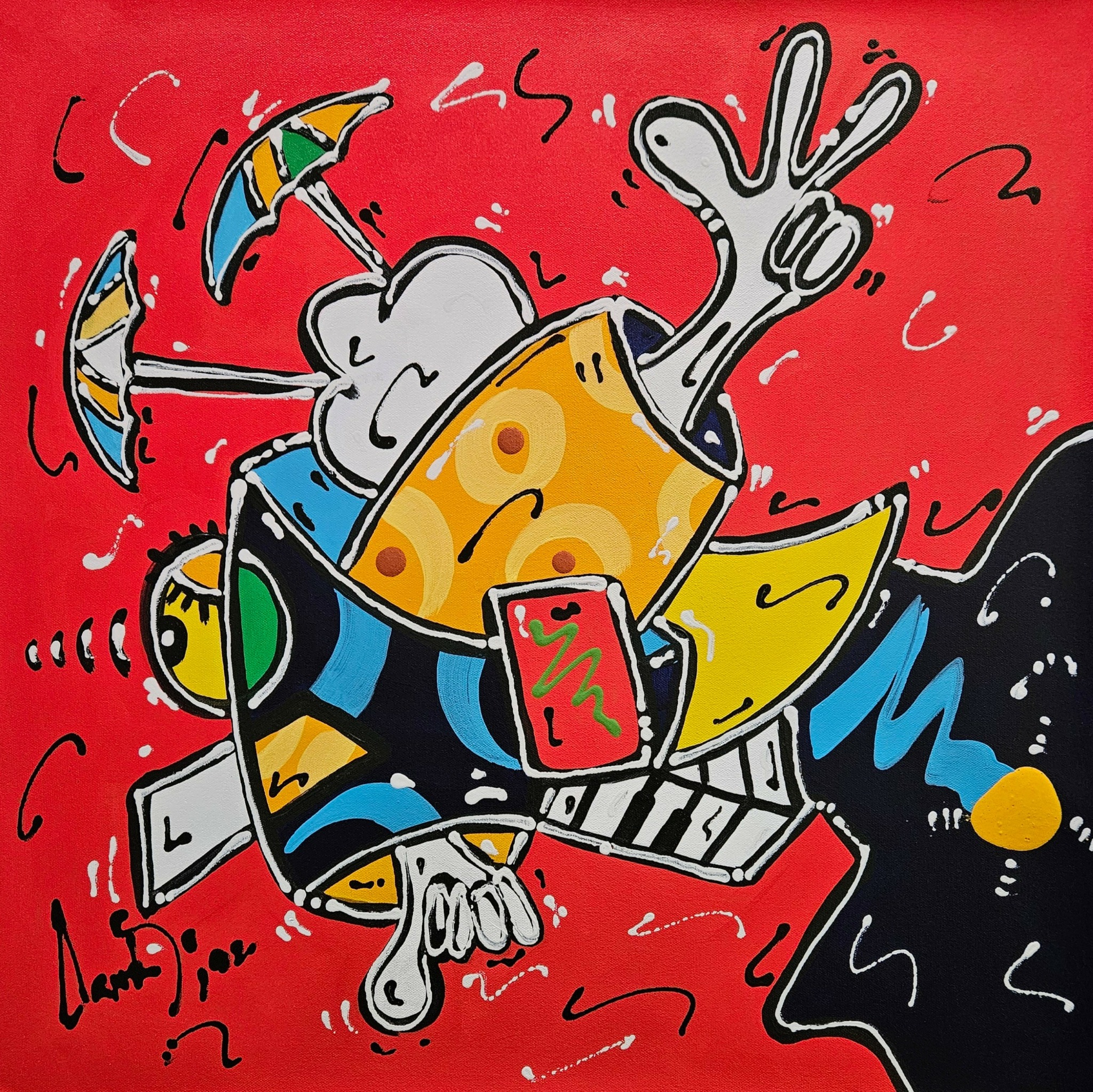
Image Credits
Absolut Diaz.