

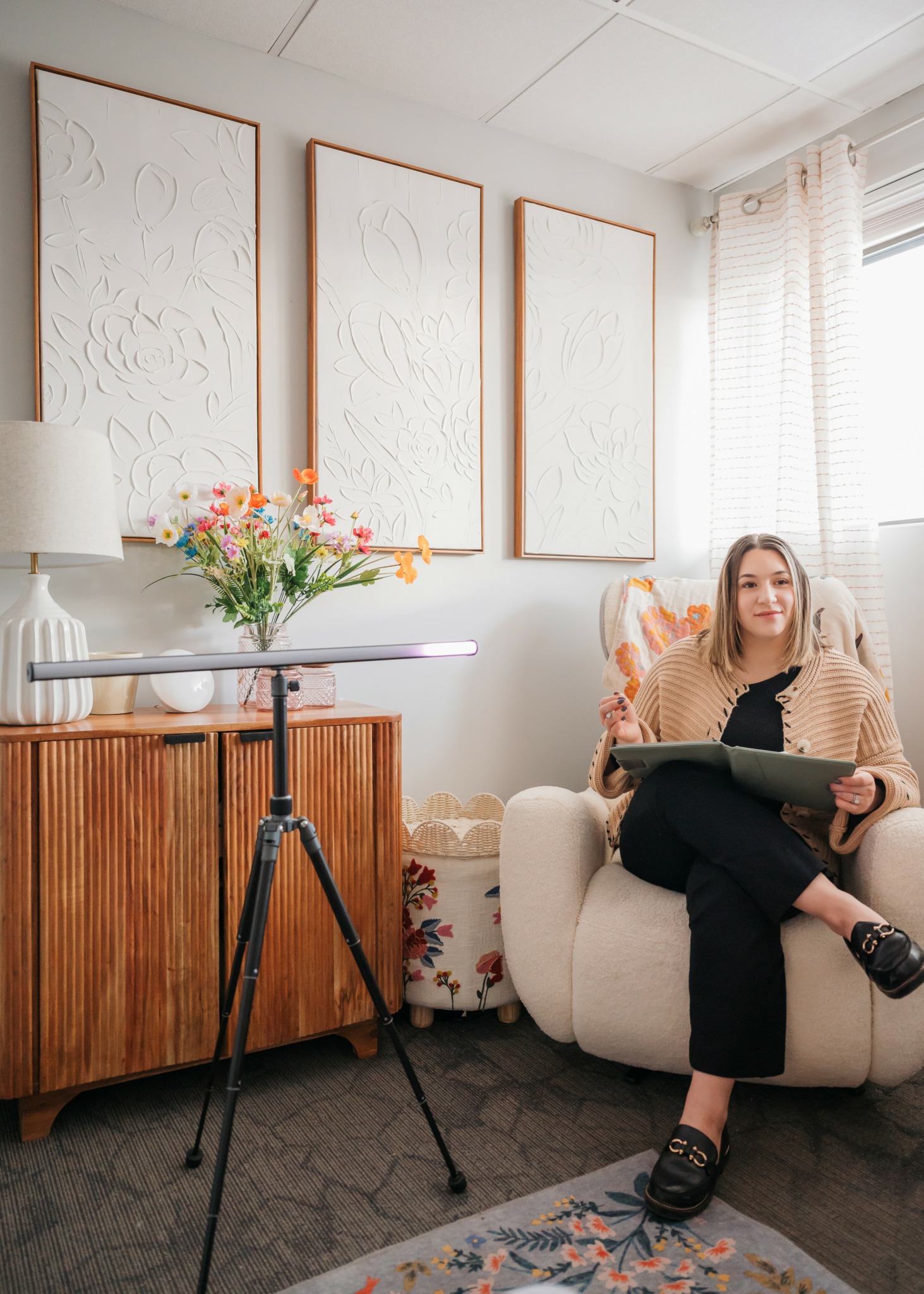

We caught up with the brilliant and insightful Caitlin Silverstein a few weeks ago and have shared our conversation below.
Caitlin, thanks for taking the time to share your stories with us today We’d love to hear the backstory behind a risk you’ve taken – whether big or small, walk us through what it was like and how it ultimately turned out.
The biggest risk I’ve taken wasn’t just starting my practice. It was starting it in one of the most vulnerable seasons of my life… being postpartum. At the time, I was navigating one of the most vulnerable transitions of my life. I had just become a mother, and like many women, I was moving through the identity shift, the mental load, and the constant pressure to “do it all.” But what became very clear to me was that the traditional work structure I was in was no longer sustainable for the life I wanted. I felt bound. Bound to schedules that didn’t consider my needs as a mother. Bound to deadlines, productivity expectations, and the feeling that someone was always looming over me. I was missing moments that mattered, like bedtime, and constantly trying to fit myself and my family into a system that wasn’t built for us. And I knew something had to change. I didn’t just want to build a business. I needed to build something that worked financially, clinically, and for my children. I wanted to create a life where I didn’t have to worry about taking a sick day, where I had autonomy over my schedule, and where I could show up fully both as a clinician and as a mom. Starting a practice in that season was a risk. I was postpartum, sleep-deprived, and stepping into financial uncertainty. Most people would have waited for things to feel more stable. But I knew that if I kept waiting, I would stay in a system that was no longer aligned with me. So I took the risk on myself. I trusted my clinical skill set, my professionalism, and my vision. I knew I didn’t want to build a high-volume, burnout-driven practice. I wanted something boutique and intentional. A space where clients felt deeply cared for, and where I could practice in a way that felt sustainable and meaningful. The early days were not easy. I was building during nap times, working at night, and learning how to run a business while also learning how to be a mother. There was fear, especially around building stability and whether it would all come together. But over time, it did. The practice grew. Referrals came in. I became known as a go to provider in women’s mental health, perinatal mental health, and pregnancy and infant loss. And I was able to create something that truly supports my life, rather than competes with it. It has since expanded into a group practice, allowing me to not only support more clients but also create opportunities for other clinicians who want a different kind of work environment. Looking back, the risk wasn’t just about starting a business. It was about choosing to build a life that actually works for me and my family.


Caitlin, love having you share your insights with us. Before we ask you more questions, maybe you can take a moment to introduce yourself to our readers who might have missed our earlier conversations?
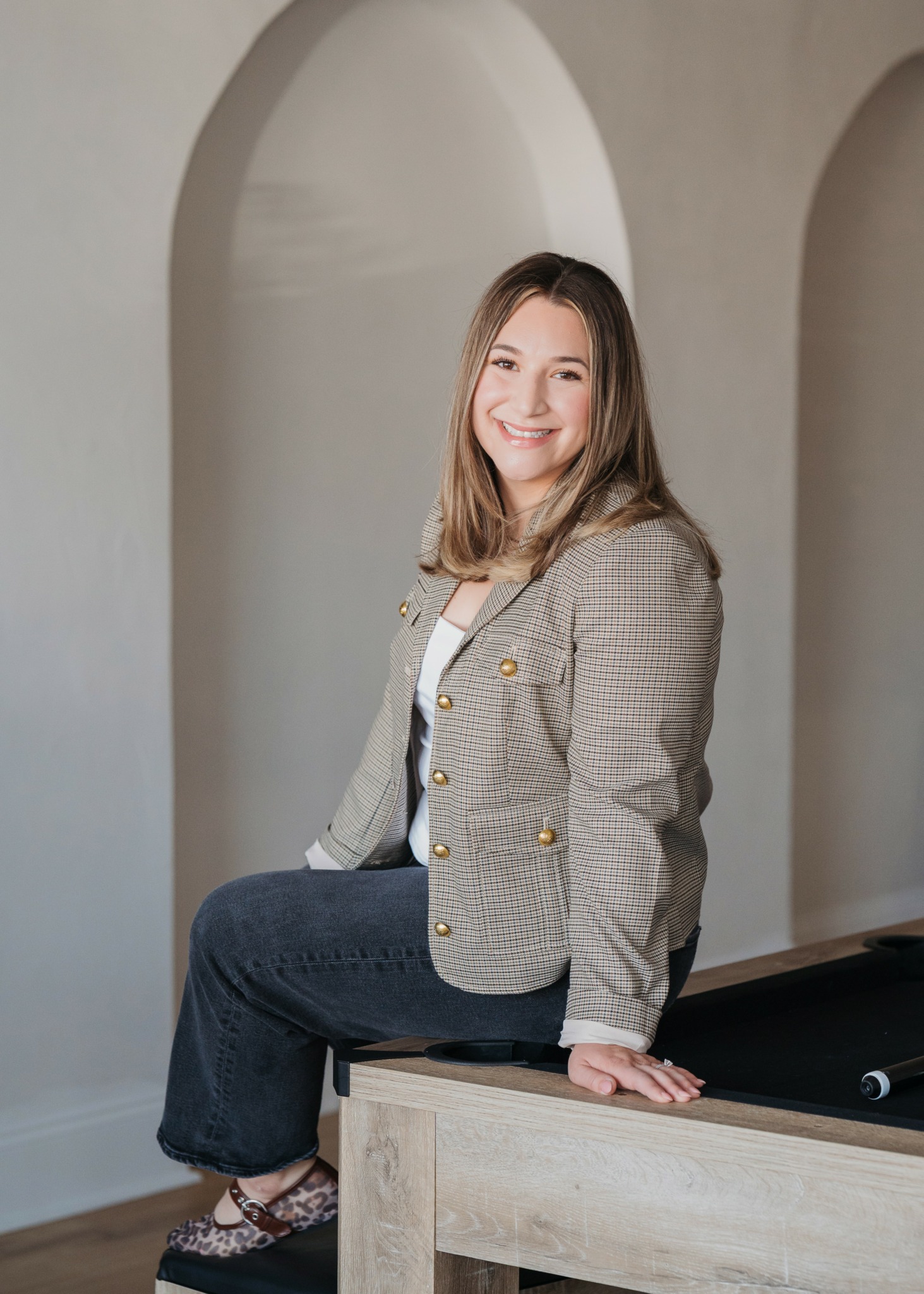
I’m Caitlin Silverstein, a Licensed Clinical Social Worker in New York and Florida. I’m the owner and Clinical Director of a boutique private practice based on Long Island, specializing in perinatal and women’s mental health. I’m certified in Perinatal Mental Health through Postpartum Support International and a Certified Clinical Trauma Professional.
I was drawn to working with women, families, and children early in my career while working in hospital settings. I supported patients navigating high-risk pregnancies, traumatic births, and pregnancy and infant loss. I sat with families in some of the most devastating and vulnerable moments of their lives. What stood out to me wasn’t just the intensity of those moments, but what happened after. There was a clear gap in support once families left the hospital.
That gap stayed with me.
It shaped how I practice and ultimately led me to build something of my own. I wanted to create a space where women, especially mothers, didn’t have to hold it all together or suffer silently.
Today, my practice focuses on supporting women through pregnancy, postpartum, motherhood, and grief. This includes postpartum anxiety and depression, identity shifts in motherhood, fertility challenges, pregnancy and infant loss, and navigating relationships and the mental load that often comes with this stage of life.
My work is grounded in evidence-based approaches like CBT and trauma-informed care, and I incorporate EMDR for clients working through trauma. But beyond any specific modality, what I offer is a space where clients feel deeply understood. Many of the women I work with are high-functioning on the outside but internally overwhelmed, anxious, or disconnected. I help them untangle that and understand why they’re feeling the way they do, without shame or judgment.
What sets my work apart is that it’s both specialized and deeply human. I’m not trying to be everything to everyone. I’ve intentionally built a boutique practice where the focus is on quality of care, not volume. My clients are not just another appointment on a schedule. Their stories matter.
I’m also a mom, which adds another layer to how I show up in this work. I understand the complexity of motherhood not just professionally, but personally. The identity shifts, the pressure, the invisible mental load, and what it means to be a working mother. That lived experience allows me to connect with clients in a way that feels authentic, not clinical or detached.
What I’m most proud of is that I’ve built something that truly aligns with my values. A practice that supports my clients deeply while also supporting my life outside of work. It has grown into a group practice, allowing us to reach more women while maintaining the level of care and intention I set out to create.
For anyone considering working with me or following along, I want you to know this: you don’t have to keep pushing through and pretending you’re fine. You can unravel here and I’ve got your back. There is space to slow down, process what you’ve been carrying, and feel like yourself again.
Any stories or insights that might help us understand how you’ve built such a strong reputation?
I think my reputation was built on a combination of consistency, specialization, and the way I show up for my clients.
From the beginning, I was very clear about who I serve and the kind of work I do. I didn’t try to be everything to everyone. I focused on perinatal mental health, pregnancy and infant loss, and the emotional realities of motherhood. That clarity helped both clients and referral sources understand exactly what I offer and when to send people my way.
I also built trust through how I showed up in the work itself. Especially coming from a hospital background, I’ve sat with women and families in some of their most vulnerable moments. I carry that same level of care into my practice. Clients feel that. Referral sources notice that. Word of mouth became a big part of how my practice grew.
Another piece was using my voice outside of the therapy room. Through social media and content, I speak directly to what a lot of women are experiencing but not always saying out loud. That kind of honesty resonates. It helps people feel seen before they even reach out.
And I’ve been consistent. I didn’t build this overnight. I kept showing up, even when it felt slow or uncertain. Over time, that builds credibility.
I think what really sets it apart is that I’ve built something that feels both clinically strong and again just being a human. They’re looking to feel safe and cared for in a clinically appropriate way that helps heal. And that’s always been at the center of my work.
We often hear about learning lessons – but just as important is unlearning lessons. Have you ever had to unlearn a lesson?
One of the biggest lessons I had to unlearn was that I can pivot my career path for what best aligns with my family and my needs.
Early in my career, I was in systems where productivity, structure, and hierarchy defined success. You show up, you meet expectations, and you keep pushing through. And for a while, I did that well.
But when I became a mother, that mindset started to crack.
I was trying to fit myself into a system that didn’t consider my needs, my family, or the kind of life I actually wanted. I was missing moments that mattered, and constantly feeling like I was falling short in one area no matter how much I gave to the other.
At the same time, I had this growing awareness from my clinical work. I was supporting women through burnout, anxiety, trauma, and identity loss, many of whom were also trying to live up to unrealistic expectations placed on them. And I realized I was not immune to that.
The backstory is really that tension. Professionally, I knew better. Personally, I was still operating within those same rules.
Starting my own practice forced me to unlearn that.
I had to let go of the idea that success meant overworking, constant availability, or proving myself through productivity. I had to trust that I could build something different. Something that allowed me to be present as a mom and grounded in my work without burning out.
That wasn’t easy. There was fear in stepping outside of what I knew. There was uncertainty in doing things differently. But over time, I realized that the old model wasn’t sustainable for me, and honestly, it wasn’t aligned with the kind of care I wanted to provide either.
Now, I define success very differently. It’s not just about growth or numbers. It’s about alignment. It’s about building a practice that supports my clients deeply while also supporting my life too. This balance makes me a better therapist and also a better mom, wife and over all human.
Contact Info:
- Website: https://www.nurturedbloomtherapy.com
- Instagram: motherhoodunrocked
- Facebook: https://www.facebook.com/nurturedbloomtherapy/
- Linkedin: https://www.linkedin.com/in/caitlinsilversteinlcsw/
- Other: Tik Tok: Motherhoodunrocked


Image Credits
Erin Rechler