

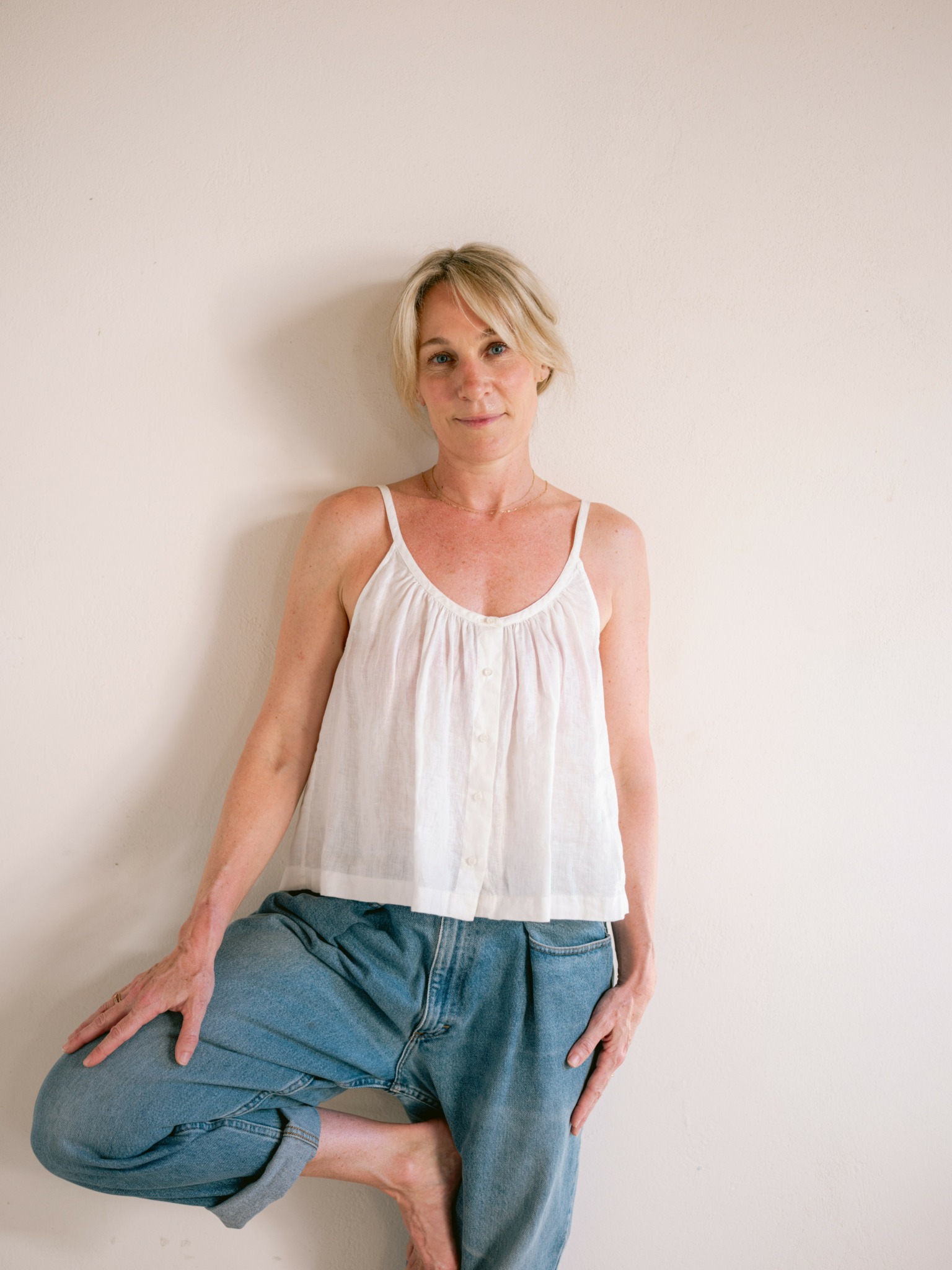

We recently connected with Meghan Hunter and have shared our conversation below.
Alright, Meghan thanks for taking the time to share your stories and insights with us today. How did you get your first job in the field that you practice in today?
I didn’t set out to become a yoga teacher. My first job out of college was as a mental health counselor at one of the largest high schools in New Jersey – and I loved it. My days were energetic and full: running psycho-educational groups, meeting with students one on one, developing wellness programming for both students and staff. Outside of work, I was completely immersed in my own practice – logging hours on the mat, bouncing between studios in New York and New Jersey, soaking up everything I could.
For a while, those two worlds ran parallel. Then in 2009, Newark made national headlines – newly elected Mayor Cory Booker had thrown his support behind bringing yoga into public schools, and the results were turning heads. That ripple effect found its way to me, and before long I was being asked to get certified and bring yoga and mindfulness programming to students and staff across the district.
What followed was probably the most valuable training I could have had. I clocked hundreds of hours teaching mostly teenagers; with wildly variable abilities, moods, and buy-in. As anyone who’s spent time with that age group knows, you can’t fake ANYTHING in a room full of teens. They’ll tell you exactly how it’s going with their eyes, their posture and plenty of other less subtle signals.
I never set out to become a yoga teacher AND it never ceases to amaze me that I’m able to spend my days doing this work. It’s truly such a privilege.
Awesome – so before we get into the rest of our questions, can you briefly introduce yourself to our readers.
I’ve spent the better part of the last fifteen years developing a practice grounded in the understanding that what we know continues to evolve – and so should we. I consider myself a forever student, and that curiosity is at the heart of everything I bring into the room.
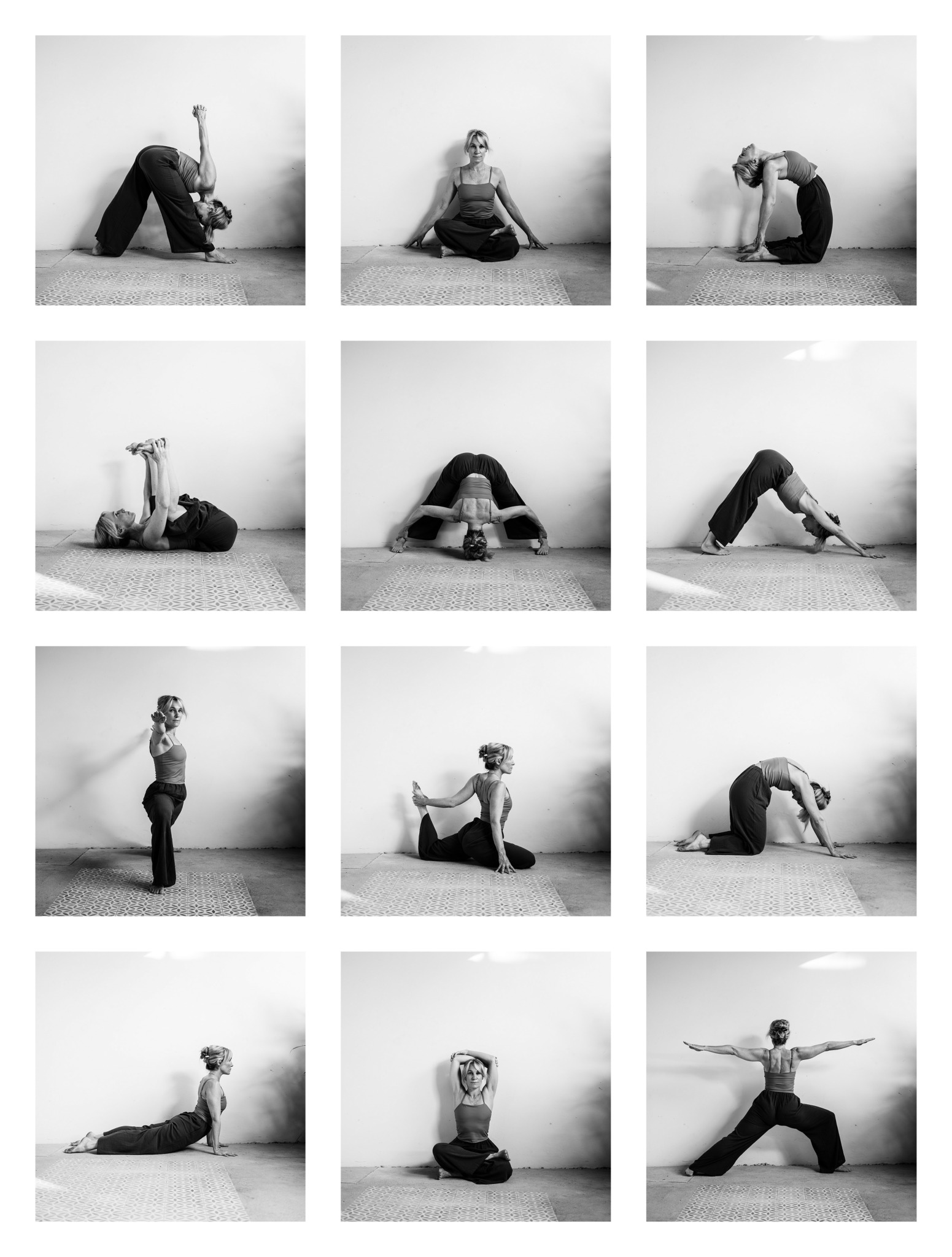
I offer group classes, private one-on-one sessions, workshops, and retreats. My group classes are primarily vinyasa: breath-centered, anatomically informed and designed to build a genuine balance between strength and flexibility.
I want students to leave practice feeling clear, steady, more at home in their bodies and with a greater sense of agency over how they feel. My Restorative classes are the opposite end of the spectrum; quiet, dark, still, and deeply supported. I think there’s enormous power in both, and I love teaching across that full range.
At the core of everything I do is a belief that yoga gives us real, practical tools for self-regulation, for compassionate self-inquiry, and ultimately for a kind of freedom that’s hard to find anywhere else. I draw on modern science, yogic wisdom, and a genuine love of movement to build programming that meets the demands of our modern lives. My teaching has been most directly shaped by Jason Crandell and Judith Hanson Lasater, two teachers whose rigor, depth, and humanity I deeply admire and try to bring into my own work.
While vinyasa classes tend to be precise and athletic, they’re grounded in something bigger – an invitation to pay attention, to get curious, and to use the practice as a mirror. The students and clients with whom I work range from retired adults, those navigating injuries, athletes, artists and professionals. Generally speaking, those dealing with stress, anxiety, big life transitions and wanting new tools to feel more at home in their bodies.
I’m also incredibly excited to share that I’m opening a new studio called, Temple Street Yoga in Rockland, Maine, late this spring. The name says everything about what I love most about this practice. The studio itself is a (very nice) converted two-car garage. Ordinary, familiar, completely unassuming. But that’s exactly the point. What makes a space a temple isn’t the architecture, it’s the people who fill it and the intention they bring. What makes movement yoga isn’t the posture, it’s the consciousness we bring to it. Temple Street is an exercise in that exact philosophy: finding the sacred in the everyday, making something profound out of something plain. I cannot wait to welcome everyone!
What I’m most looking forward to is what happens in a small community when people share a space like this – when neighbors and strangers alike show up on their mats and, without necessarily saying a word, witness each other doing their very best to be well. Some days it’s a strong, focused practice. Other days it’s simply showing up. Either way, there is something very powerful about a space where people feel safe enough to be sincere and real.
Other than training/knowledge, what do you think is most helpful for succeeding in your field?
Kindness and consistency. I keep coming back to those two things above everything else.
Kindness sounds simple, but it’s worth saying plainly: students (humans) should feel welcome, seen and appreciated.
And then there’s consistency. Showing up on a reliable schedule matters. Students need a rhythm they can build their lives around, a class they can count on being there week after week. But it goes deeper than just keeping the lights on. When the practice itself is consistent – when there is a coherent thread running through the work over time – students get to witness their own development in a way that’s genuinely transformative. They remember what they couldn’t do six months ago. They feel the difference in their bodies. In my experience, that kind of progress doesn’t happen in a drop-in culture where every class is a standalone event. It happens when a teacher is committed enough to build a curriculum that students can actually grow inside of.
Have you ever had to pivot?
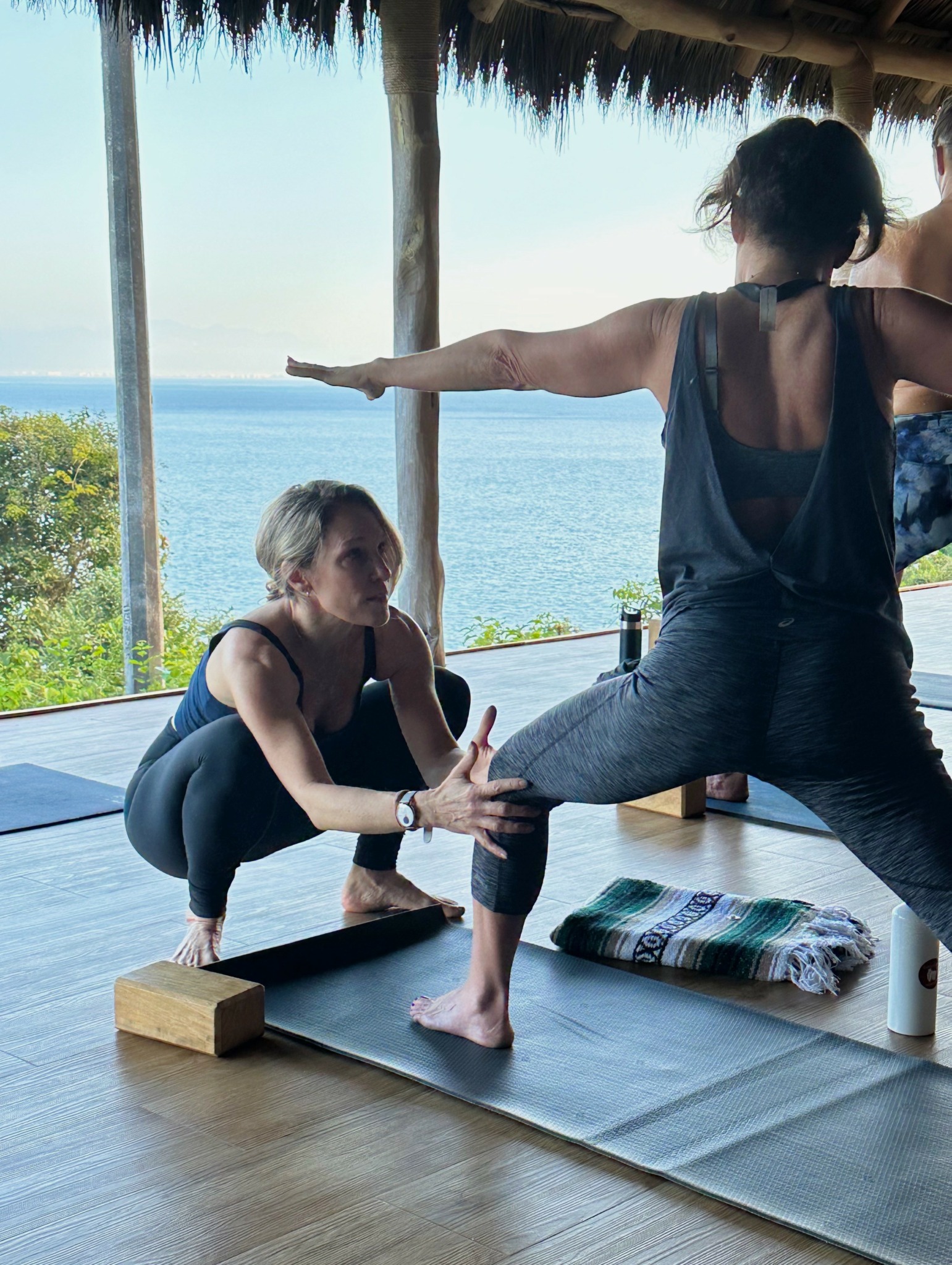
March 2020. Like all of us, there was no runway. It was simple: adapt immediately or go dark, and going dark didn’t feel like an option. I got online as fast as I could, which meant fumbling through clunky Zoom setups, tech mishaps, and learning in real time what works and what doesn’t when you’re trying to guide a physical practice through a laptop camera.
The teaching itself had to shift too. Students were scared and stressed, and planning classes to meet that energy required a different kind of attentiveness. In many ways, it forced me to get really clear on the practices I personally found most durable, potent, and impactful; and the rest fell away.
I guess that’s what I remember most fondly about those wild years: the clarity. I think, those of us who were lucky enough to be relatively safe, working and practicing, became incredibly clear about our values, our relationships, and the practices worth holding onto.
And my hope is that I’m always slowly pivoting, as comfortable or uncomfortable as that might be.
Contact Info:
- Website: https://meghanhunteryoga.com
- Instagram: https://www.instagram.com/meghan.hunter.yoga/
Image Credits
images: Professional images – Raisa Zwart Photography