
Alright – so today we’ve got the honor of introducing you to Bradley Kahabka. We think you’ll enjoy our conversation, we’ve shared it below.
Alright, Bradley thanks for taking the time to share your stories and insights with us today. How did you learn to do what you do? Knowing what you know now, what could you have done to speed up your learning process? What skills do you think were most essential? What obstacles stood in the way of learning more?
In my current role as a Master Luthier at the shop I run, I think there was just a unique mix of the skills I’ve acquired over the years as well as a fair bit of luck involved. Growing up my dad always worked on cars, so I ended up doing that as well, being very mechanically adept at a young age and learning to operate all sorts of tools really has helped me out in a lot of ways. Just being aware of how things mechanically work and having the ability to fix things or reverse engineer them has been such a tremendous life skill to have. This also helped me in my sculptural endeavors as well, being able to transition between all of the various types of shops and mediums pretty flawlessly allowed me to work with pretty much all materials comfortably.
The place I work at now, I was doing instrument setups part time while I was attending school the whole time. There was always sort of talk about wanting a custom shop to make U.S.A. instruments and to elevate the brand to a new height, as most companies involved in instruments do. Covid happened, things quieted down a lot, and I was given the opportunity to start buying machinery and experimenting a bit to see what I could do. Lutherie is one of those skills that is more of a traditional craft, or it can be, where you don’t necessarily go to school for it, or even if you do it takes years of apprenticeship or hands on training to become proficient at it, kind of like how to old masters taught oil painting. Also, the people involved really like to keep their secrets so it can be a bit hard to learn at times. I just began reverse engineering some instruments, made my own improvements, and just experimented over and over again for about the first year until I had something that resembled and instrument. I would still help out doing set ups here and there, but once the shop started growing and I was proving that I could actually make something I moved in there full time. It really was a lot of trial and error, YouTube of people that would share some things, and just refining the instrument into what I wanted it to be as a player. Also, I was never a woodworker, but the mechanical ability I’ve gained over the years, and my sculptural work really helped me translate those skills into whatever material I choose to work with. The drawing and painting really made my inlay work what it is today also.
If there was something I could have done more to speed up the process it would have been knowing someone else with the experience to help me or at least show me how to do some things, especially just basic wood working. Money was tight of course, especially with covid so I was basically on my own and still am.
The most essential skills were just the basic fundamental understanding of mechanical components and how things work. I was able to design and make my own jigs, tools and molds with moving parts and have them all index with each other, so things fit together properly. As much of a traditionalist as I am, learning 3D modeling and CNC milling is also essential to me, especially in a one-man shop. If I want to be putting out more than a handful of instruments a year, I needed the repeatability and precision of being able to machine parts and free myself up to do other tasks. Luckily as far as CNC goes, there is a ton of content out there on how to learn to do it, although applying that knowledge to the real world does take some time. For about the first entire year I would go to the shop and teach myself woodworking, figure out all the parts and measurements, and then I’d go home and just program as much as I could on my own. I wanted to be to the point as quickly as possible where I understood things enough to be able to just make them quickly, use the machinery and free up myself to physically make things at the same time. I know also that learning 3D modeling and CNC will be a useful skill to have for life.
The biggest obstacle is time, there’s never enough no matter what you do. I just had to constantly break things into smaller and smaller parts and processes, chip away at them slowly and watch them come together. Secondly is just people wanting to keep their secrets when it comes to making instruments. I ended up turning to videos of cabinet makers, people that spray car finishes, and people that make furniture to learn some essential skills. You kind of have to take that knowledge that you can find and adapt it to instrument making, while at the same time being innovative as well so there are some things I’ve made so far that could not be taught, I just had to do them and figure it out.
Great, appreciate you sharing that with us. Before we ask you to share more of your insights, can you take a moment to introduce yourself and how you got to where you are today to our readers.
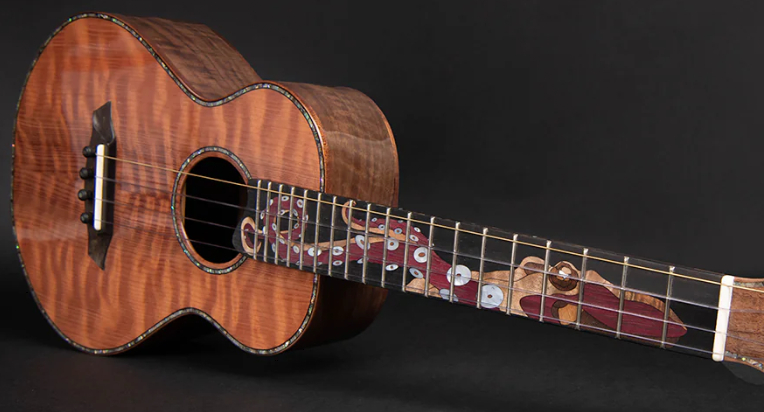
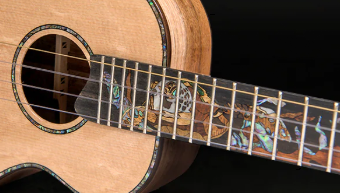
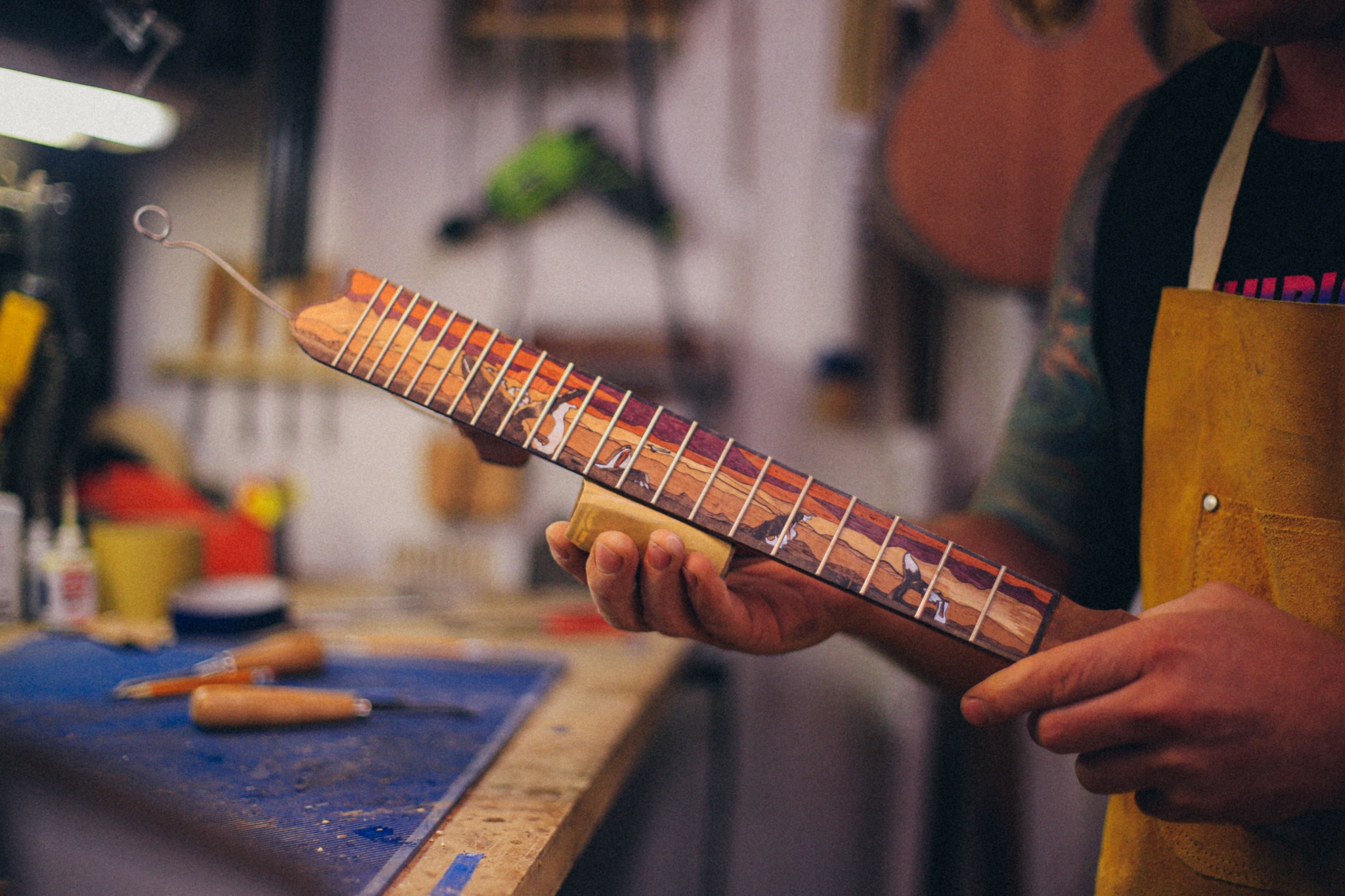
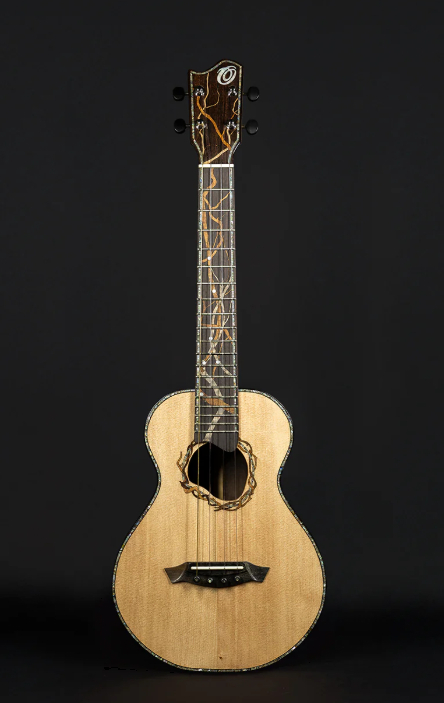
So at my current job I am the Master Luthier at a shop that makes instruments, primarily ukuleles, acoustic and electric, but I do also make an electric bass as well and have plans to make guitars in the near future. I think one of the major problems I solve is that when a musician gets to a certain point in their life, they want something truly unique, one of a kind, and held to a higher quality standpoint than is otherwise available, and that’s kind of where I step in. There is something more unique about custom shop instruments that you just won’t find in factory made instruments. I get to buy and choose the wood carefully, specifically, and often use pieces that would get thrown out by major manufacturers. Not because they are defective, just because they aren’t typically as uniform as they want or sized exactly right. No two instruments I make are ever the same, and I also get to experiment with different techniques and ideas constantly, I’m never locked into a single way of doing something. I know where the wood comes from, I’ve even met a lot of the people that cut the trees themselves, and most of the wood I get is from the pacific northwest of the US and Canada. I carefully choose the sets of wood, pair them with a blank for a neck that has specific grain or something special I am looking for, and the result is one of a kind. I’ve also had requests to do inlaid fretboards with unique designs, names, anything that resonates personally with the client. There are of course collectors out there also that really don’t play all that much but just admire the work. There are some instruments that almost bridge the gap from a playable instrument to becoming a piece of artwork in themselves.
I think what sets me apart from a lot of builders is that many out there have the technical woodworking skills to make great instruments, but not the artistic ability to create something truly unique or something that really tells a story. I’ve got the ability to do both, so that’s what I do. I also mix traditional and modern woodworking techniques pretty well. I’ve got all the hand and power tools that a traditional shop would, but also have laser engravers/cutters, CNC machines, a 3D printer, and a handheld UV wand for the paint so it dries instantly. Alot of those tools just allow me to free up my time so I can be as streamlined as possible.
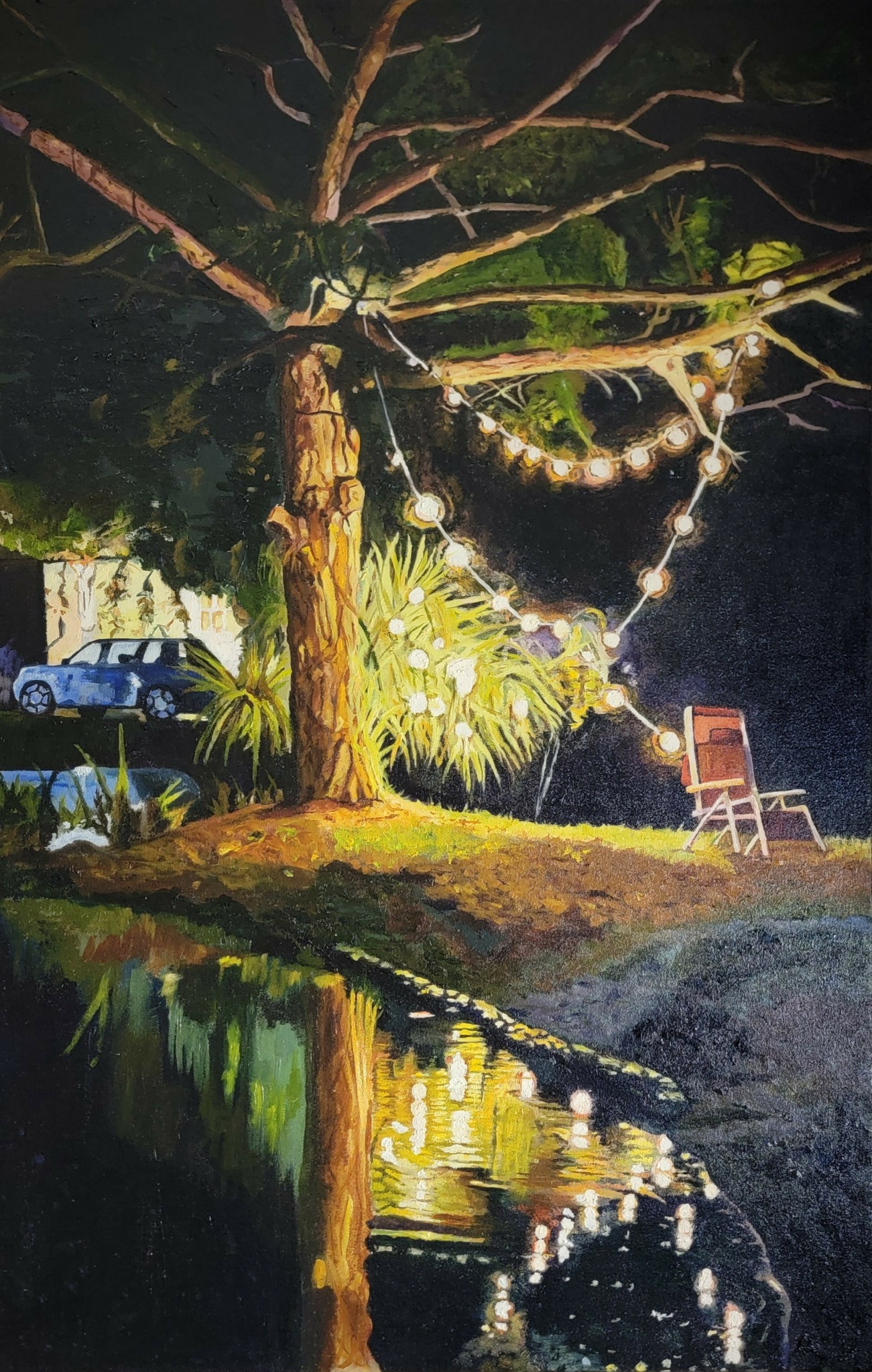
My personal work is mostly oil paintings. In school I was always drawn towards landscapes and figures, and those are primarily my two subjects when I do paint. I usually end up incorporating the ocean or water in some way recently, but I have a tendency to also be drawn to these kinds of dystopian subjects or of things that have been thrown away and outlived their usefulness. I just don’t like how we live in a throwaway society, where we are rushing so fast to the future that we don’t stop to think of what it’s doing to our present. I believe in progress of course but I guess you could say I am a minimalist at heart. The most important thing in a painting though is to tell a story to resonate with people, not just to create something pretty for the sake of doing so. I drive a 1979 Goldwing motorcycle I fixed up as my daily driver for example, and I just a kind of retro paint job on it, but I think that describes my style pretty well and what I hope to capture in my paintings is a retro-modern feeling.
We’d love to hear your thoughts on NFTs. (Note: this is for education/entertainment purposes only, readers should not construe this as advice)
I think it’s safe to say that we can all agree that NFTs were a quick fad that has faded away and isn’t coming back. I’d like to expand this into the realm of A.I. as well, especially regarding artists. I believe that there is nothing that will truly replace artists or negate the demand for them. Sure, AI can create some amazing things and do it quickly, but I read an article recently I forget by whom but in it they said that the reality of things is that when people know something is created entirely by computers that the interest for that subject dies almost immediately. People care about the story, meaning and people behind something, not necessarily for the actual thing itself. There is nothing inherently interesting about anything AI creates other than aesthetics, there’s substance behind it and I think people realize that.
What do you think is the goal or mission that drives your creative journey?
I don’t necessarily have an end goal in mind, I just create work with the satisfaction of knowing that I’ve created something out of nothing more than an idea that came entirely from myself. I guess there is a sense of leaving a legacy behind, but I think many business owners or self employed people probably have a similar sense of pride in themselves. That you pay your way through life with these ideas that once only existed in your head but are now a tangible thing that people actually want. Not just being an employee but having a sense of controlling your own destiny, and the work is a lens into what that looks like. Of course there are the ideas behind the instruments, inlays and paintings I make that mean something on their own, perhaps it’s a scene I witnessed or something that captures a particular way I felt at a certain time, but those ideas are small goals inside of the bigger picture of the creative journey. In a way perhaps the goal represents freedom, to have the choice of what to make, what to make it about, and how I make it gives me a sense of control over aspects of my life.
Contact Info:
- Website: https://ohanacustomshop.com
- Instagram: @kahabkart