

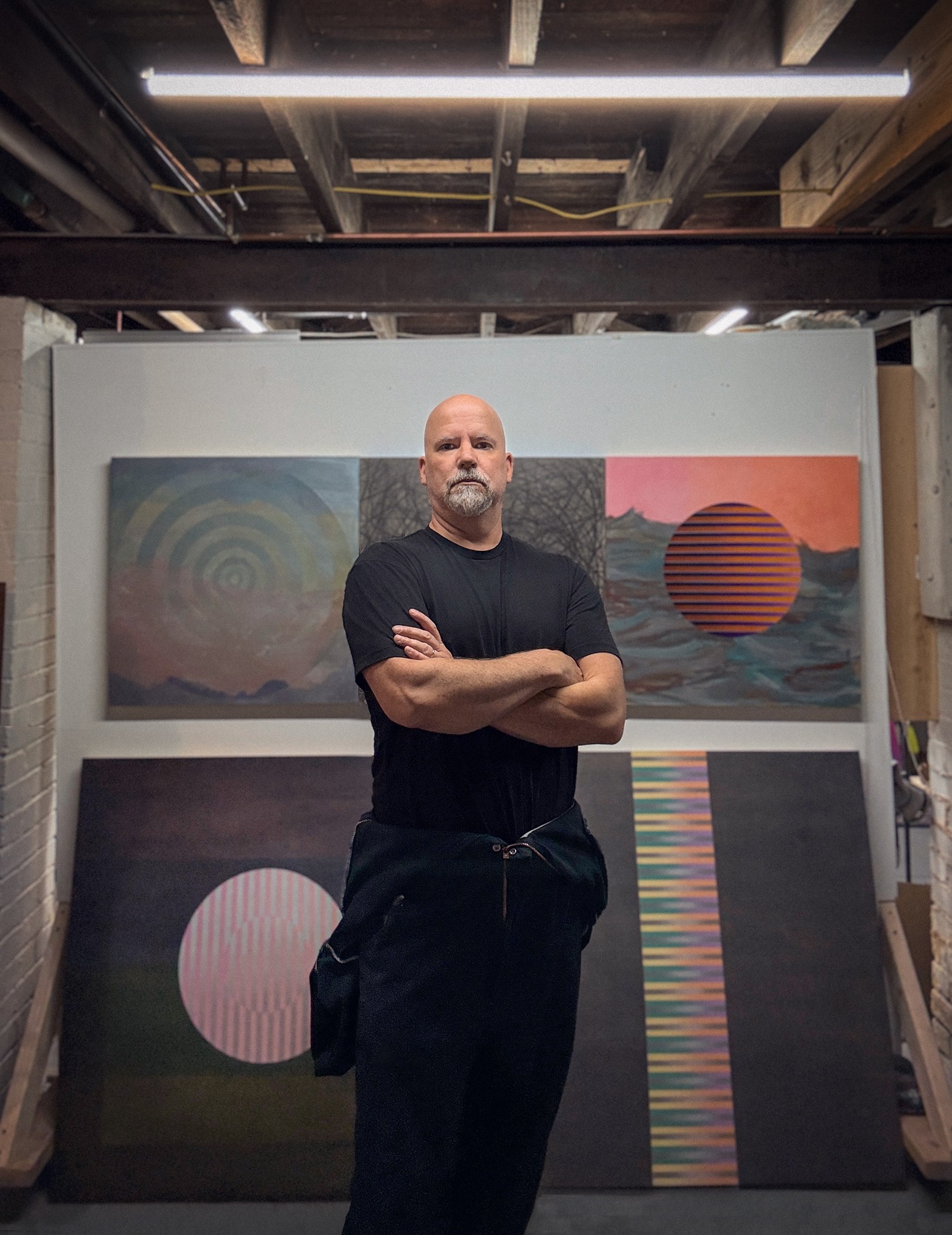

Alright – so today we’ve got the honor of introducing you to Jordan Scott Gaunce. We think you’ll enjoy our conversation, we’ve shared it below.
Jordan Scott, thanks for taking the time to share your stories with us today When did you first know you wanted to pursue a creative/artistic path professionally?
The first time I knew I wanted to pursue a creative path professionally was somewhere between eighth grade and high school. Having a dyslexic brain meant I learned differently and navigated problem-solving from a unique point of view. I saw the world through my own lens, nothing like the Normies. I had the dyslexic advantage.
I remember an eighth grade shop class where we were making CO2 derby cars. I painted mine all black with flames along the side, starting with a group of red flames, then a group of orange flames within the red, and finally a group of yellow flames within the orange. The layered effect came naturally to me through masking and spray painting.
What made that moment stand out was my shop teacher’s reaction. He was completely amazed by the technique and couldn’t understand how I had done it. Wait, what? You don’t know how I did that? That moment burned itself into my memory, and over the years I have reflected back on it with warm affection. Here was an adult, a teacher who ran a pretty advanced class where we operated lathes, built cabinets, and worked with serious technical equipment. It was a lot to handle for eighth graders, but somehow nobody got hurt. And yet this skilled, experienced teacher didn’t know how to do something I had figured out on my own.
That was the moment I realized I was talented. I had something unique to offer, something that came directly from my own way of seeing and understanding the world.
Jordan Scott, love having you share your insights with us. Before we ask you more questions, maybe you can take a moment to introduce yourself to our readers who might have missed our earlier conversations?
I am an abstract artist born and raised in Albuquerque, New Mexico, where the land and culture have shaped the way I see and experience my world. I hold a BFA in painting from the Ringling College of Art and Design and now live and work in St. Louis, Missouri, where my work is represented by Duane Reed Gallery.
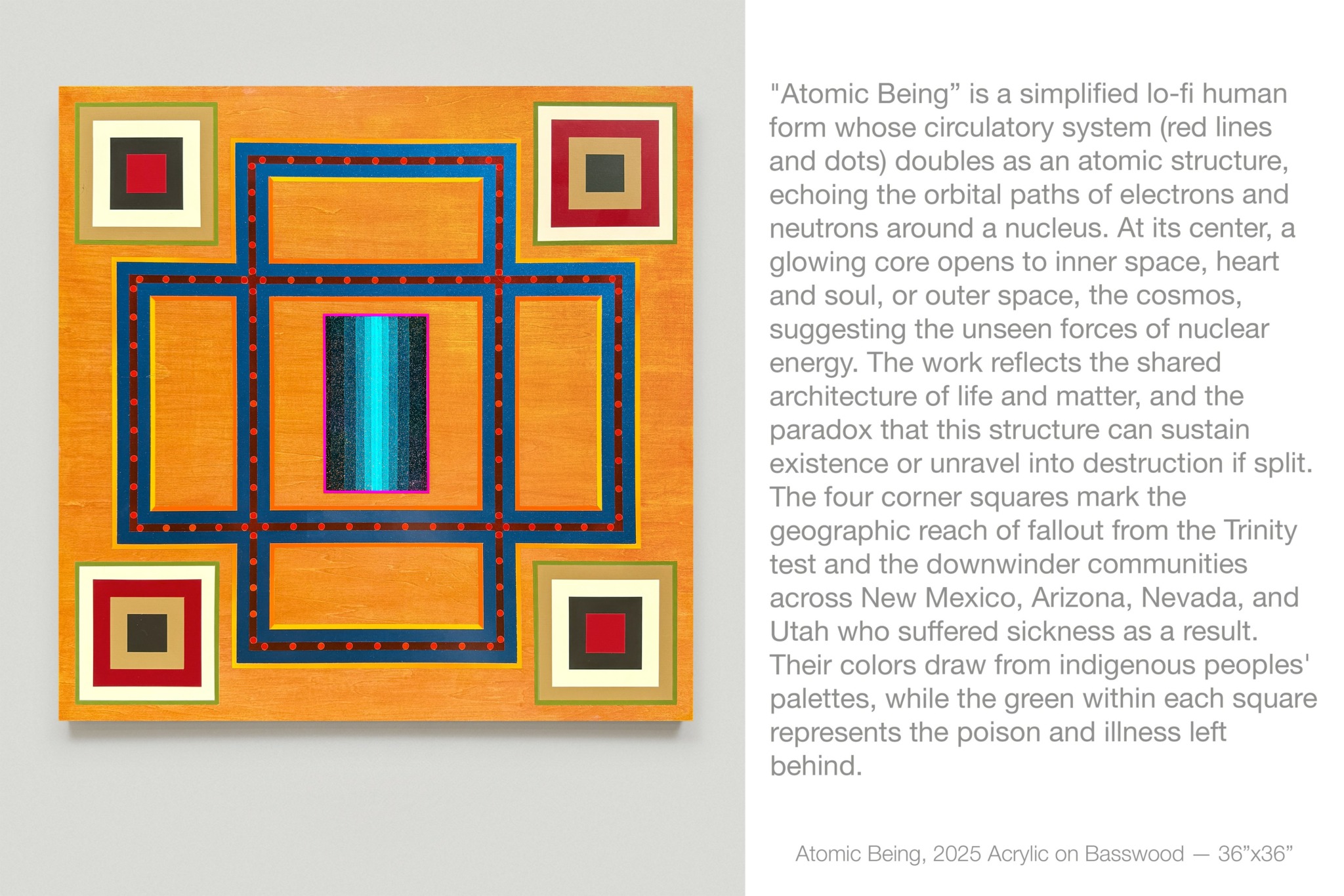
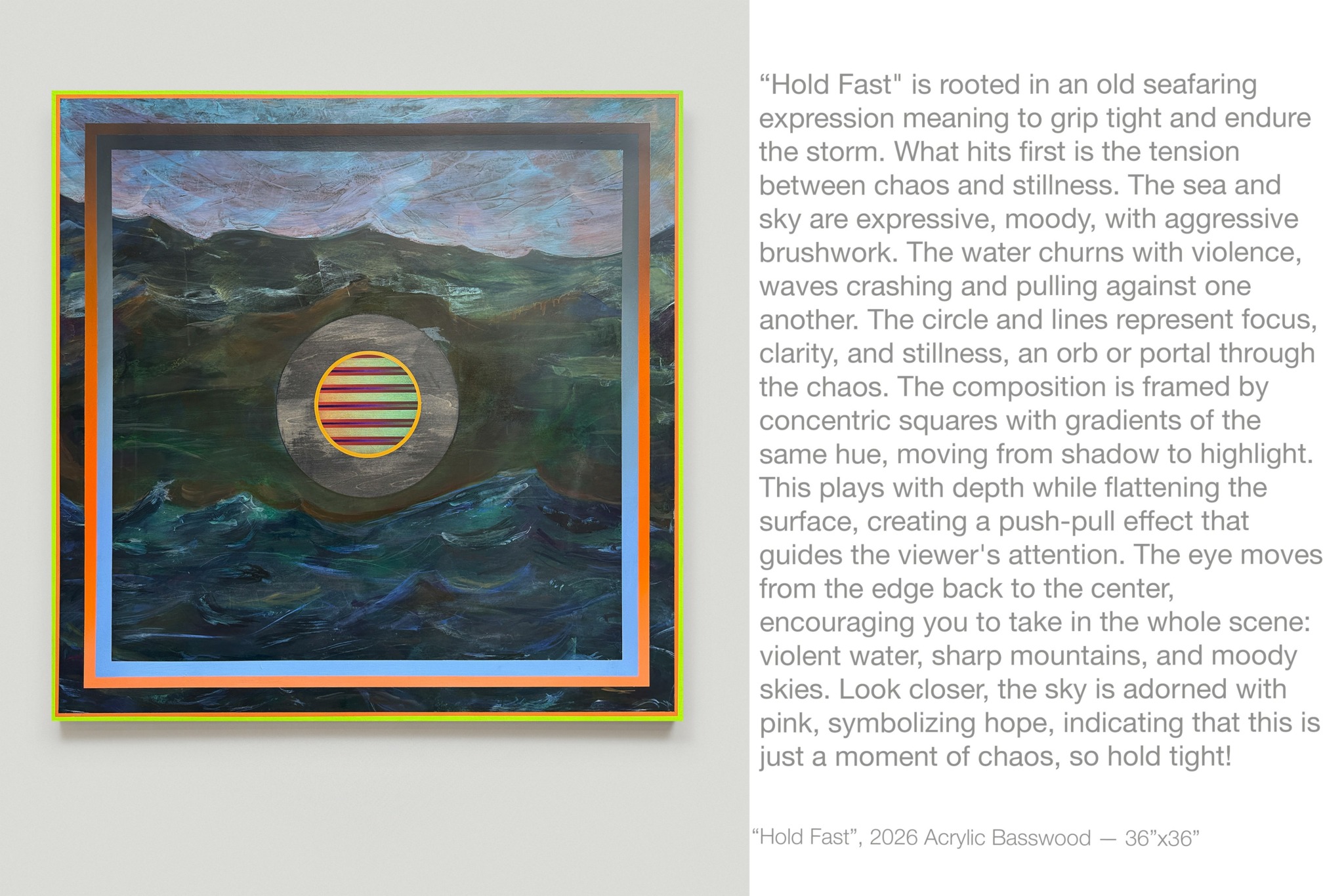
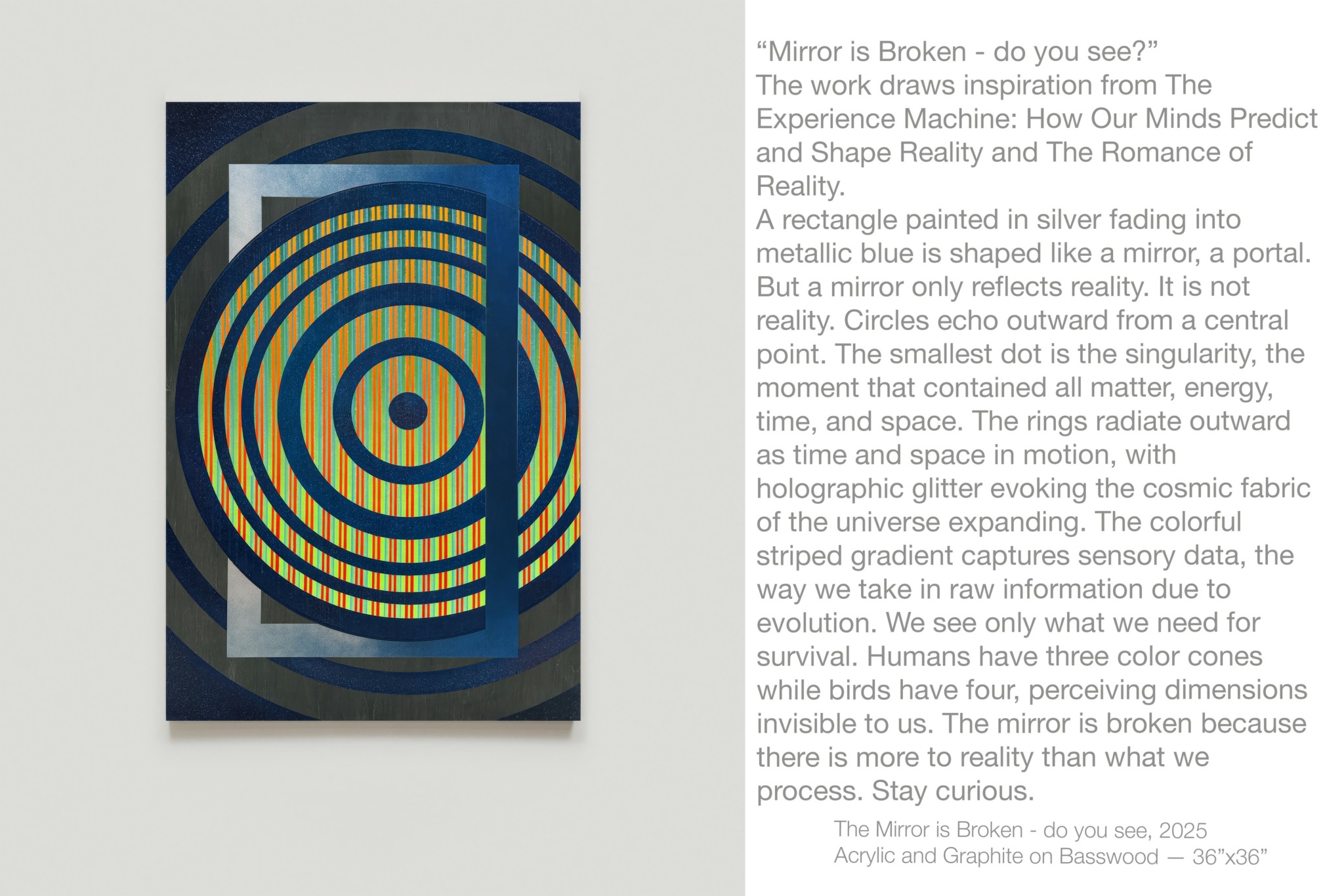
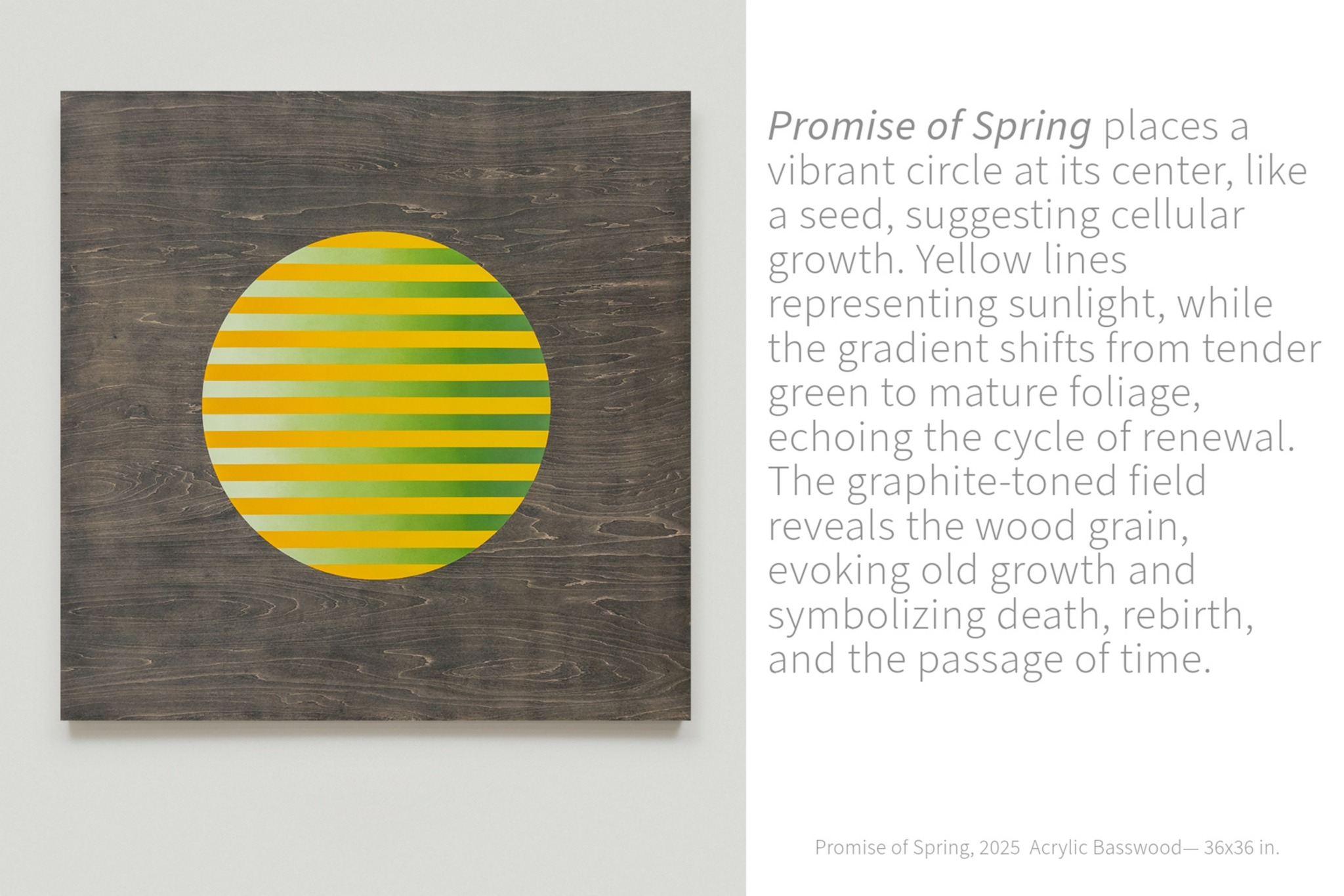
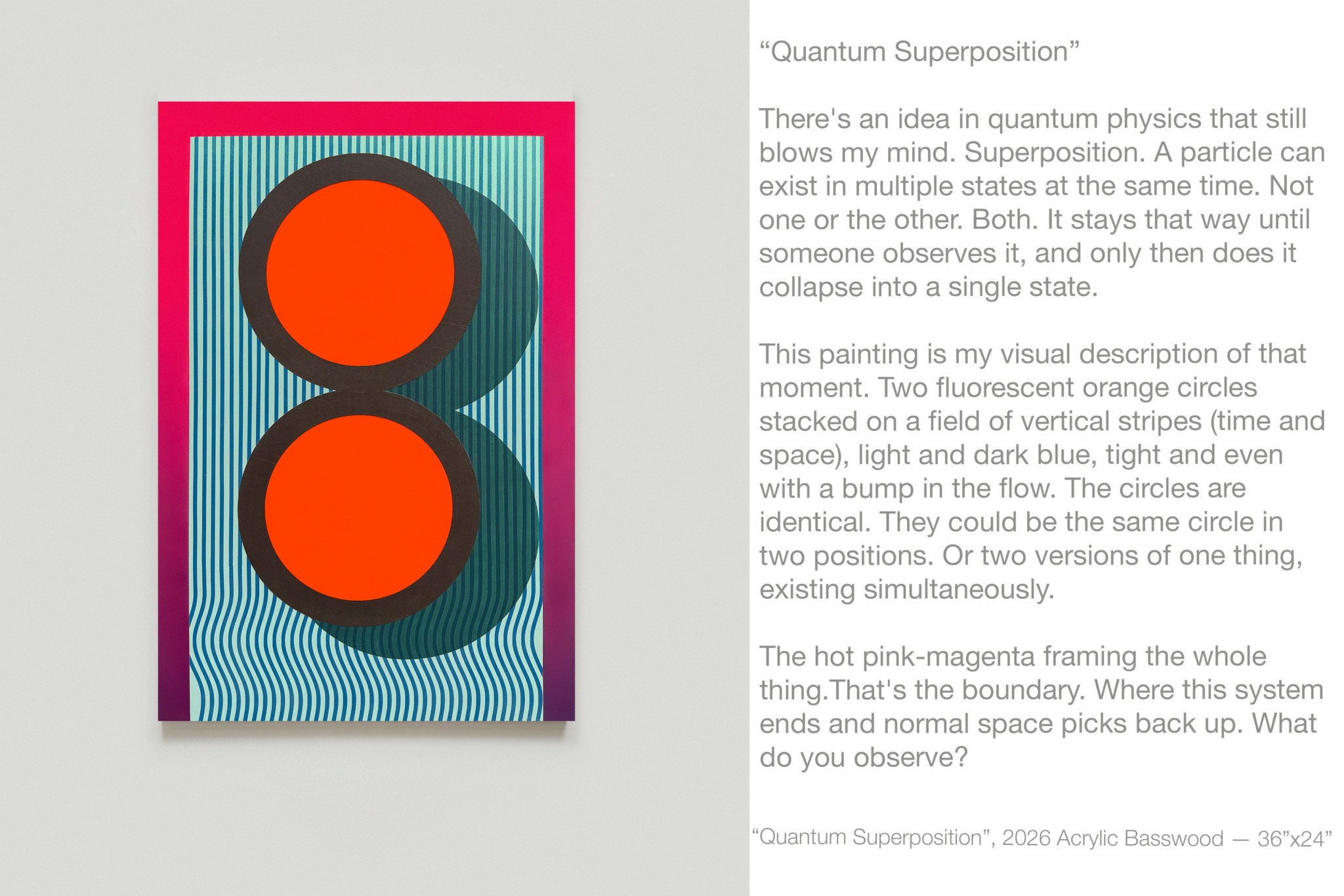
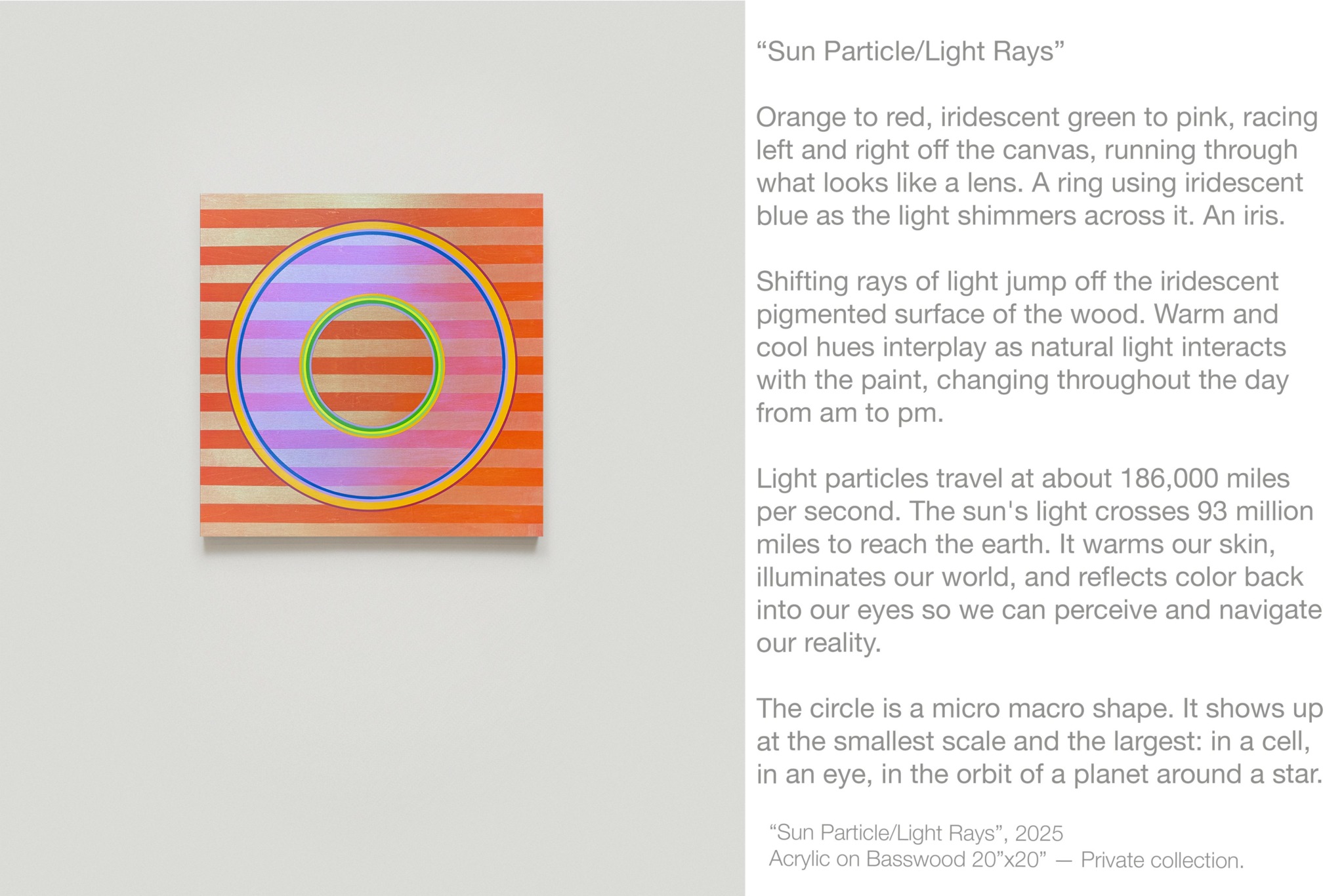
My paintings begin with a question: what might the machinery beneath reality look like? I am drawn to the hidden forces that shape human perception, sound and light, and how we experience the shifting of time. My practice draws from color theory, neuroscience, and music, using color and geometry as a language to map invisible systems.
Two things set my work apart. First, my upbringing in New Mexico, a state with hundreds of different cultural heritages that shaped my beliefs and guides the way I see, paint, and use color. Second, a mild synesthesia that has always been part of how I experience the world. Certain sounds suggest colors and shapes that form in my mind like a sketch. From there I bring those shapes onto the canvas. I think of myself less as an inventor and more as an archaeologist, uncovering patterns that were already there.
Original paintings are available for sale and private studio viewing by appointment. The work translates well across digital platforms, but it is made to be experienced at full scale. In person, color and geometry do something a screen cannot. To inquire or arrange a visit, contact the studio directly at studio@jordanscottgaunce.com or reach out through Duane Reed Gallery at (314) 361-4100.
You can currently see my work on view at:
Angad Arts Hotel, 13th Biannual Exhibition
3550 Samuel Shepard Dr, Saint Louis, MO 63103
info@angadartshotel.com
What’s the most rewarding aspect of being a creative in your experience?
For me, the most rewarding aspect of being an artist is communication, but in a form that is entirely unique to the individual and equally subjective to everyone who experiences it. In my case, that vehicle is painting. What follows from that are the conversations, the moments when someone experiences the work and we begin to bridge the gap between our separate human experiences, because we all move through this world in our own way.
But ultimately, the most satisfying part is the creative process itself. The act of inventing, of creating, of bringing into being an image or approach that has never existed in quite this way before. It may have never been expressed through the lens of my particular point of view and my specific world experience.
There is something powerful in recognizing that you are a point in time that will never repeat. Your combination of experiences, memories, influences, and perspective has never existed before. So when you create, it is not just a new object entering the world. It is a singular perspective making contact with existence.
Learning and unlearning are both critical parts of growth – can you share a story of a time when you had to unlearn a lesson?
Art school was one of the most valuable experiences of my life. The community of colleagues and professors, the opportunity to learn how to speak and write about my work, and the exposure to art history and the broader art canon. I am genuinely grateful for all of it.
But here is what took me a while to unlearn. With all of that came noise. And for someone with my personality, those voices got loud. The questioning, the pressure to define the grand meaning behind what I was making, to justify my place in the art canon, to find my voice. What I didn’t realize at the time was that I was constantly auditioning, not for any real audience, but for the ones living in my head. That auditioning interfered with everything. It drowned out my intuition and had me second guessing the work before it even had a chance to breathe.
Once I let go of that, something shifted. I started being genuinely surprised by the work I was making. Genuinely disappointed by it too. I realized both reactions were signs I was getting somewhere. When the work can surprise you or let you down, it means it is speaking honestly. That’s when I started to understand my own voice, my own visual language, my own way of approaching painting.
The lesson was not to abandon what I learned. It was to stop letting the noise override what I already knew. At the end of the day, the truth is simple. You have to paint for yourself. Not for the art canon, not for your friends, not for your critics. You have to be alone in your studio, your laboratory. Feel the space. Listen to when the work fails. Listen to when it resonates.
Social media can become its own version of that trap. I see many artists constantly posting their process, every step along the way, as if the work needs validation before it has had time to breathe. Whether the response is praise or criticism, it is still noise. What often gets lost in that cycle is time for incubation, that private space where you discover what you like, what you hate, what works and what does not. Share when you’re ready, if you’re inclined. But protect that time first.
The last thing I had to unlearn may be the most important. Nothing you make is so precious that it should stop you from pushing further. That kind of preciousness arrests the process. It becomes a wall between you and whatever is waiting on the other side of the painting. Treat it as an enemy, but a supportive one. The resistance that preciousness creates is actually pointing you toward something deeper. Mess it up. Risk it. That is where the real discoveries live.
Now go paint, have fun, and remember you are having a completely unrepeatable experience.
Contact Info:
- Website: https://www.jordanscottgaunce.com
- Instagram: https://www.instagram.com/jordanscottgaunce/
- Other: https://substack.com/@jordanscottgaunce
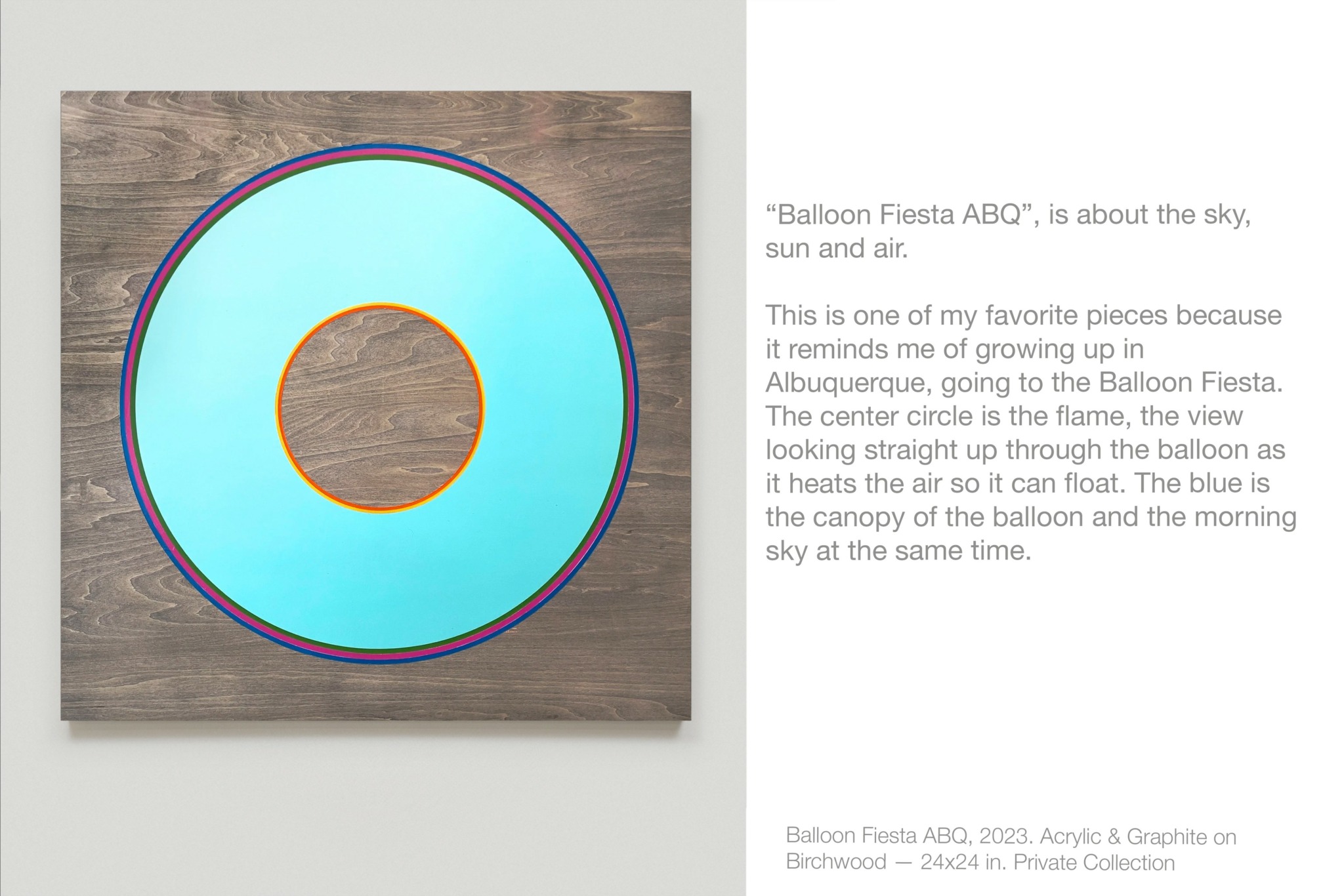
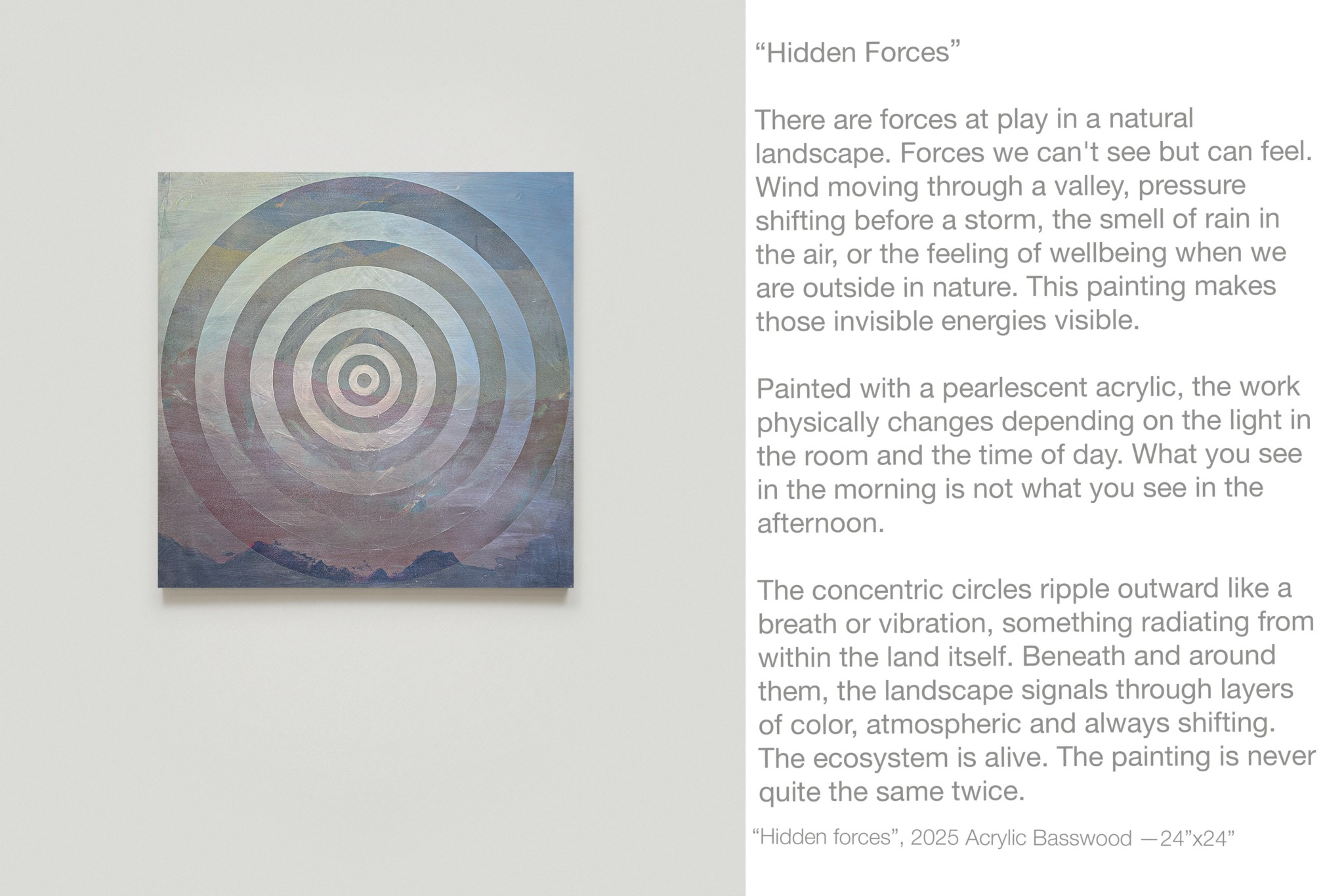
Image Credits
Jordan Gaunce