
We caught up with the brilliant and insightful Scott Field a few weeks ago and have shared our conversation below.
Scott, appreciate you joining us today. Alright, so one thing we think people don’t talk about nearly enough is investments – either time or money. What’s one of the best or worst investments you’ve made and what did you learned from the experience?
I have a couple of stories that go in both directions, best, and worst! I’ll start with the worst investments. Our first was spending a large amount of money upfront for a person who would help create a really good sketch comedy show for our venue. This person had ALL of the qualifications. They were well regarded as a Comedy Writer in Hollywood, they had a long track record of really funny sketches, they had helped produce several second city review shows, and they seemed to be a very positive member of our comedy community here in Nashville. However, as it turns out, being good at something, and having that long history of quality and success does not translate into directing a group of people independently. In hindsight, it would be better to select somebody for their ability to direct and command a group effectively and a second set of criteria would have been some demonstrable skill at comedy writing. I did it in reverse. As a result, we spent a lot of money and got nothing similarly another bad investment occurred when trying to purchase a commercial property with a group of investors. Tremendous investment in legal fees for paperwork that ultimately did not get used because there were too many people giving too much last-minute feedback and demands on too many documents. In hindsight here, I think it should’ve just been my business partner and I putting terms on the table rather than trying to make everybody happy.
I think some of the best decisions have also come in our investments in people. Our artistic Director and training center assistant directors, as well as some of our part-time people who do marketing are really phenomenal people. Honestly, the business now runs largely on their very capable shoulders. And in talking with other venue owners and the executive director of NIVA, Stephen Parker, I know that we pay well above industry average in our salaries. I’m proud of that, and I think that is money really well spent. Finally, we invested in the teachers in our training center about a year and a half ago. We rationalized the pay structure, made everything very transparent, and increased both hourly rates and bonus options. We also streamlined the way our teachers got paid so that they could get a mid course payment as well as end of course payment. Our faculty are really excellent in the classroom, we get great reviews from our students, consistently. They reports being very happy and now our training center is growing by leaps and bounds in terms of enrollment. I attribute a percentage of that growth, and frankly, I don’t know what that percentage is, to this investment.
Scott, love having you share your insights with us. Before we ask you more questions, maybe you can take a moment to introduce yourself to our readers who might have missed our earlier conversations?
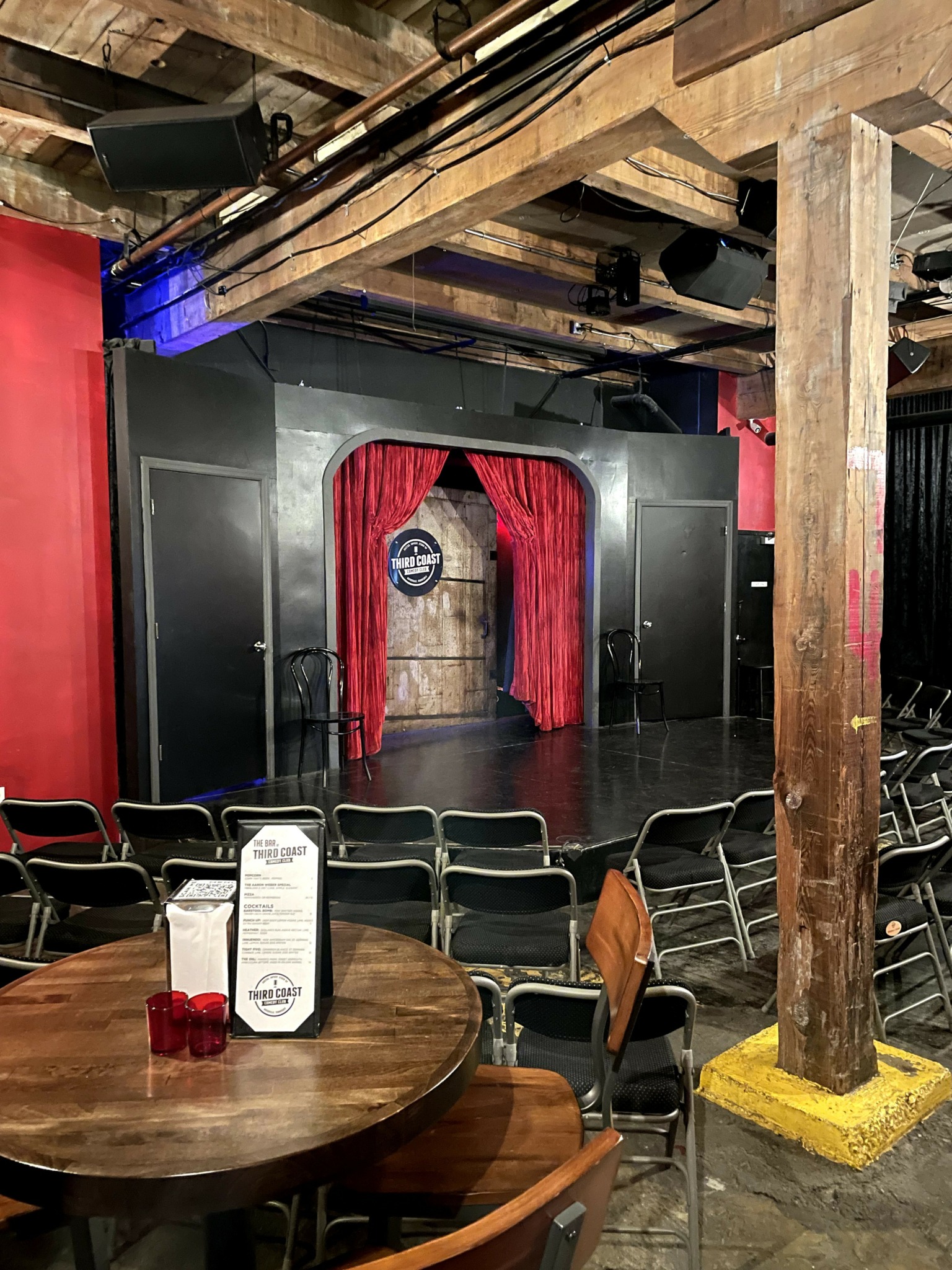
I am a career classroom teacher, and former athlete. I have been a lifelong goofball, with members of my Cross Country and track teams from high school college and after, and at every single place I’ve ever worked. I have always been the person who simply cannot take things super seriously. It’s just not in me to do that. It’s not a big surprise that I cofounded a comedy venue. It is a surprise that it has been so successful. I mean, when 60% of our industry loses money on an annual basis, the fact that where profitable means we are killing it. I attribute the success of our venue operation to some strategic investments in our people, and the luck of the draw of the business partner I teamed up with. We complement each other very well, and that is purely accidental. A partnership is a kind of marriage, and we had no premarital counseling. We both had a love for the art form that we created our venue around, so maybe that interest was what fostered our positive relationship.
We originally intended to have fun as comics and performers, and create a space that we would want to perform in. And while that lasted for the first few months of our operation, we are now purely venue operators. We provide really entertaining shows, and we are an incubator Comedy Theater and help a lot of people discover their inner comedic voices. And all we’re doing is providing a rational, easy to access venue. For the city at large, we have become an integral part of a diversifying nighttime entertainment ecosystem. And, we have a positive attitude about other venues and other entertainment forms, which is that the rising tide lifts all of the boats. In other words, the more stages and venues we can get opened in the city, the better it is for the other stages and venues. To a point. We are nowhere near capacity for nighttime entertainment in Nashville!
I am most proud of the fact that our business has made a lot of people find their best friend, find their friend groups, give people a third place to go after work, and make customers have an enjoyable experience with their family and friends. It’s a feel good venue!
And now that we’re 10 years in, I can clearly see the next step in our evolution. We need to stabilize the properties that venues operate out of. As I said, the majority of small to medium sized venue operators in this country lose money. That is not a good situation to be in. The theater that I started with in Boston, ImprovBoston, got unceremoniously, kicked to the curb during the Covid pandemic because they could no longer pay rent. I am determined to see what we can do to help venue operators have a space that they can reliably count on being available to them for long periods of time. It’s a unique challenge to venue operators, but it’s critically important to be in the same place for a long time and to know that you’re going to remain open there for a long time. Venues create communities in third places. They can’t open and close, and they can’t just be pushed around in different locations in neighborhoods.
How did you put together the initial capital you needed to start your business?
I don’t know that this is going to be a super inspiring reality, and I cannot not tell it just because it’s not a cool, vibey answer.
The dirty reality of small business is that it is a very financially risky endeavor. In order to open the Third Coast Comedy Club I had to get a second mortgage on my home. I wrote checks for our buildout from that equity fund. We had a successful, kickstarter fundraiser, and that ended up funding roughly a quarter of our expenses. But the reality is that money was useless because it was insufficient. Had the venue not made it, I personally would have been on the hook for a large amount of money. And there would’ve been very little recourse for me to recoup it. I would have blown an enormous financial hole in my life, in the middle of my life! So, I can’t in good faith say go start a small business. It’ll be great! It’s only great because I’m in the future, and I know that we are doing well. There was a time where I was very terrified.
My brother recently talked to me over several weekends and over several hours about a business idea that he had. He ultimately decided not to do it because of my own transparency about the risks involved. The honest truth? If I had to do it all over again I wouldn’t. The consequences of a failure at that point in my life would have been devastating to me personally. I just would not have recovered, and I would be a poor older person right now.
Our system favors people who have assets and money. I had a substantial asset. Most recently, my partner and I have been trying to buy a commercial property and we cannot get our foot in the door. We have good cash flow, but we don’t have enough to unlock a down payment size to make a commercial property purchase for our venue. And I am not putting my house at risk ever again.
Have you ever had to pivot?
I have two pivot stories.
In my 20s, I had ambition to be a really fast distance runner and after college continued to train with some really good athletes and coaches out west. When I moved to Boston, I joined up with a running club and ran hard track workouts in long distances. One day after a particularly hard, indoor track workout. I was doing a cooldown run across the Charles river. It was a very blustery sleet driving New England winter evening. I was stumbling along a snowy sidewalk on the bridge and I was cold and I couldn’t see because of the sleet. And I just stopped in the middle of the bridge and looked at the Boston skyline. I stood there for a couple of minutes, just stunned by the question in my head: “what am I doing?”I couldn’t stop wondering why I was doing this anymore. I was clearly fast, but I wasn’t THAT fast and I was in my late 20s. My peak years were now, or already, over. It was at that moment that I gave up that identity of being an elite distance runner. And that was a lot of freedom for me!
The next pivot story is a story that doesn’t have an ending yet. It’s in process. Our venue was founded on the idea of regular improv comedy shows. And while improv comedy is a lot of fun, it’s a bit like inside baseball for the people who truly enjoy it. It’s a bit of a harder cell to a general audience. Stand-up Comedy and sketch comedy are much easier for people to relate to. So, the pivot is diversifying our weekly lineup of shows, and developing talent in new directions. We’ll see how it goes, but we both feel pretty confident that this is the right direction to move the business in.
Contact Info:
- Website: https://www.thirdcoastcomedy.club/
- Linkedin: https://www.linkedin.com/in/scott-field-3a905014/